Episode Transcript
[00:00:07] Speaker A: Welcome to that Makes Total Sense, a podcast dedicated to exploring God's generosity and justice. I'm Alexis Busetti, a Christian, aiming to ask good questions and encouraging you to do the same.
Every one of us is wired by God to live out generosity and justice, but the how sometimes eludes us. That makes Total Sense is a way for us to get together, posture ourselves as learners, and challenge one another to practice generosity and justice in a tangible way every day.
Okay, Malcolm, I'm here. That was officially. Okay. I have three things. Three things that I don't know are official. This is the first officially unofficial thing. I think that's the shortest prerecorded conversation I've ever had on this podcast.
I don't even think it was a minute.
[00:01:00] Speaker B: Yeah, probably not.
[00:01:01] Speaker A: It was like, this is old hat. Let's press record.
I said, because we're gonna be ticked if we don't catch what we say because we always have a good pre record.
[00:01:12] Speaker B: Oh, yeah. Well, I'm a regular. I'm basically a regular. That's what I'm saying.
[00:01:17] Speaker A: So this was a. You read my mind. So this was. And you know, this wasn't pre record because we didn't have a conversation. I was like, malcolm, I'm sitting here thinking.
I didn't check because I'm writing a paper right now. Can I just say that this is finals week for me? I took my first final exam as a PhD student on Monday.
It. The anticipation was devastating for me. The exam wasn't that bad.
But the. But the weeks leading up to it, you would have thought I was gonna. I don't know, that I was gonna have to, like. Anyway, it was awful. But the exam wasn't that bad. Anyway, now I'm writing my final. My last final paper for this quarter. So forgive me. I didn't look up all the things. Okay. But one of the things I was like, are you the. I feel like you might be the first guest that. This is the third time that we've talked. I've had a lot of two timers.
[00:02:09] Speaker B: I'll take it.
[00:02:10] Speaker A: Like, a lot of two timers. But you were also one of the ones who, like, just jumped in with me this. Real early in this thing.
[00:02:16] Speaker B: Yeah. Yeah. When did you start? When did you start?
[00:02:19] Speaker A: I started in September of 2019.
[00:02:22] Speaker B: Okay.
[00:02:22] Speaker A: And we talked pretty early in 2020. I feel like that's 2020.
[00:02:25] Speaker B: Yeah.
[00:02:26] Speaker A: Yeah. So anyway. So that. So you might be it. So you're a regular. I feel like we should just call, like, we need to rebrand. We'll just call this the Malcolm and Alexis show and we'll just do this, like, more regularly. It would not hurt my feelings.
[00:02:37] Speaker B: Great. Sounds good to me.
[00:02:38] Speaker A: It would not hurt my feelings.
Anyway, I've actually made a mental list of, like, there are folks that I would say I don't care if we have anything to talk about. They're just so fun to talk to. And you're definitely on that list where I'm like, I don't. I don't care. What do we talk to Malcolm about? Doesn't really matter.
The weather.
We've read our pets. I don't care. It doesn't really matter. Let's just. Let's just talk. So that's when I think you might be. You might be. Well, as you're officially unofficial, the first guest that I've had on three times and I've re aired episodes of yours too, so you're like, all over catalog, which is so fun.
Here's the other thing. I didn't go back. We could scroll our messages. Have we been messaging about this book for a year? It's gotta be close.
[00:03:26] Speaker B: Don't you think it's possible? It's definitely. It's definitely possible. It's been. It's been a bit.
[00:03:32] Speaker A: It's been a bit. I think we. I'm like, has it actually been a year? It's been close to a year that I think we've been talking about this book that at that point wasn't written yet and now is in my happy little hands. Oh, but look at this. Isn't this awful? You can see it. No one else can see it.
[00:03:53] Speaker B: Oh, yeah.
[00:03:53] Speaker A: Look at this. Look at my puppy. We have a beagle puppy.
[00:03:57] Speaker B: Oh, no. It ate the book.
[00:03:59] Speaker A: She did. She took a bite out of Kristen's endorsement.
[00:04:04] Speaker B: Wow.
[00:04:06] Speaker A: Gone. And I was like, okay, her name's Delilah. I was like, delilah, talk to me about this.
Is this because you are vehemently opposed to Malcolm's messaging?
[00:04:18] Speaker B: It's just so iconoclastic. Even your dog, like, do you have.
[00:04:23] Speaker A: A real problem with this? Or maybe it's the opposite. Maybe she's like, give me. Like, I need to consume this material. This is good for my soul. I don't know. But she kept going back after it. And I will tell you, I wanted to tell you. It has been sitting on top of my Howard Thurman book that I'm using as a devotional. It's been sitting on top. She's not touched Thurman.
So I don't know. Thurman's real sacred. I guess she's just like, you know, I know better. But Malcolm maybe I can mess with. I'm not sure. But she tore this book to shreds. But I did get to finish it and I ended up obviously learning eventually and putting it on a higher shelf. Although that's also difficult for a beagle. So. Anyway, but the book is in my hands and I'm ridiculously excited. How do you feel?
[00:05:19] Speaker B: Yeah, I mean, I'm just excited about it. I mean, it will soon get into more people's hands, but I'm excited that it's in your hands. I'm excited to hear. I'm excited to hear what you thought about it.
[00:05:31] Speaker A: Oh, my goodness.
[00:05:34] Speaker B: It was entirely a labor of. Labor of love writing it last. Last year.
But it's very much kind of me pouring in many ways all of myself into a very short 166 page book. So.
[00:05:50] Speaker A: It is a very short 166. I think at the end you call it mercifully short, which I thought was hilarious.
I'll just say on a side note, reading the book, the most fun part of it for me was, as we mentioned, we've chatted a bit. The most fun part about it for me was that it was just so much your voice. I'm like, I don't. I read a lot. You know, I read a lot of books like this.
[00:06:17] Speaker B: Yeah.
[00:06:17] Speaker A: I'm like, there are more explanation points in this book than most books I read like this. And I loved it. I mean, I'm the. I'm the meme on the email. Like, I have to stop myself from putting exclamation points after every sentence. And so I'm like, this was it. I also read. Realized at one point I thought. I thought to myself consciously, oh, my goodness, this is so great. This is such. In Malcolm's voice. And then for about a paragraph, I let your voice read it to me mentally. And then I was like, I can't do that because I'm gonna slow down. Like, my whole.
Like, this can't actually be an audiobook in my head. Like, I'm going to have to actually just like get through the material and read the book. But it was so much fun because it was so. There's so much of you I felt from our conversations. There was just so, like you said, a labor of love. I could feel it. Like, you just poured so much of yourself into this book. As a reader, at least that's what I felt. And so I'm so grateful.
[00:07:11] Speaker B: Thank you. As an Easter Egg.
This style of book was, in a sense, modeled after another book that has even more exclamation points, which is David Walker's appeal to the colored citizens of the world.
One of the things that he does throughout that appeal. I mean, there are sentences where he has like five or six exclamation marks after sentence. But it's one of my favorite. It's one of my favorite abolitionist texts.
And the. And the urgency of that particular text is something that kind of continues to be. I mean, it continues to be an inspiration for my own kind of political, theological and ethical engagement, is that there's an urgency to these kinds of conversations that needs. That needs to be present in both the literature that we read about it, but also. But also when. When people speak about it. So. So I'm glad you got a. People. People are going to get a little taste of it.
[00:08:06] Speaker A: I loved it. I loved it. And I want to. I want to jump right into that.
That urgency. And also, like, what we're talking about, we're talking about greed.
You name closer to the end of the. I mean, it's throughout, but you name closer to the end of the book. Like, this isn't something that's preached on. You know, this isn't something we like to talk about. It's pretty uncomfortable.
But I remember our first conversation, and it was one of the first places. I don't know if it was the first time that I was like, oh, my goodness, that's it.
Because I had. Well, maybe I hadn't. Maybe I read Stamped, started Stamped after our conversation. I don't remember. But the point is, I remember, like, the way my eyes must have looked when in our first conversation, you started talking about racism and chattel slavery and greed. Like, it was just like, this just rolled off your tongue. Like, this is something I should know, that greed was the catalyst, the source, not the opposite of that. And that's really where I want to start. This is where you start in the book, but this is something.
The way you talk about it in a.
Oh, what's the word you use in terms of parentage is how you heard it. So this chicken, the egg thing. I think probably many of us, as I was, are accustomed to thinking about greed. If we think about greed in relationship to racism, specifically chattel slavery, we would put that in the after. You know, we would. We would. We hear the. The cabinet battles in Hamilton, and we put that after. You know, we know who's really doing the planting, that kind of thing. But you and other theologians, historians, put that before. And so now is where I sit back and I let you lecture for as long as you want to lecture. Preach for as long as you want to preach. Because this is foundational to what we're going to talk about today. But I think it's also just foundational in how we think, think about racism and therefore some of the solutions or things that we might see after that.
[00:10:20] Speaker B: Yeah, so what I initially wanted to title the book was Child of Mammon because I'm deeply convinced that the most. And I say this in the book, the most significant anti racist text in the scriptures is Matthew 6:24, when Jesus says, you cannot serve two masters. You will either love one and hate the other or be devoted to one and despise the other. You cannot serve both God and mammon. Which is to say that every Christian is in the midst of a cosmic battle. And that cosmic battle is between God and mammon or money and riches.
[00:11:00] Speaker A: No one wants you to say that, Malcolm. Okay, I told you I was gonna let you lecture and I am gonna let you lecture.
Nobody wants you to say that. Shut up.
That's like real great. Like. Well, that's because Jesus was in time and you know. Stop.
No, stop.
[00:11:17] Speaker B: The cosmic battle has. Oh, I mean, like it's had no reason to stop. So why would we assume that it has stopped? That the battle.
[00:11:25] Speaker A: Malcolm.
[00:11:25] Speaker B: No, the battle over our soul is the same. The battle over our soul has not changed in the past.
[00:11:31] Speaker A: You're such a preacher. The battle for our soul. But no one wants to hear that sermon. Yeah, yeah, I'm done. No, I'm not. But go ahead.
[00:11:43] Speaker B: So. Yeah, yeah, so, and, and you know, so part of, so part of it. And this is, this has been, I think, a way that maybe my, my, my preaching has also changed kind of over the last few years is that I'm trying to tease, I'm trying to tease that out because, because the more I dig into it, the more that I find that it's actually true. So that's. So all that also says is, you know, this, this book is a book about race. Yeah, kind of. But it's, but it's about true. People will find when they read it. It's like, it's, it's kind of like it is about race, but it's about, but, but it's about the fact that, that, that, that race is part of a broader destructive cycle, what I call a demonic cycle of self interest. A cycle that begins. A cycle that begins in the desire to exploit and to dominate, which are Deeply material commitments. It's that I want. I want to be able to accumulate for myself. I want money, I want power, and I want to do whatever it takes to get that. So insofar as that involves other people, it requires me to exploit and dominate other people, and people don't like to be exploited and dominated. So in order to keep somebody in a position of exploitation and dominance, I employ violence, coercion, force them into that position. But because I'm also.
Because I. Because people generally have consciences, unless they're psychopaths.
We've. We've. We've got to. We've. We've got to form these kinds of narratives that tell us that we're not actually exploiting, dominating, and killing each other. And that is fundamentally the role that race. That race has particularly played, not only in. Not only in the United States, but also. But also kind of globally. It's this way of us categorizing one another so that we don't. We don't throw. Think about each other as. As human beings. We think about each other as commodities to be exploited or as political subjects to dominate.
[00:13:36] Speaker A: Okay, wait, wait, wait, wait, wait. Yeah, Wait, wait. Okay. Because I think this is like, man, okay, you just covered a lot in that little bit. But I want to stop. The things that pointed that. That stood out to me. Obviously, they're also present in the book, number one, the desire to. To dominate.
[00:13:55] Speaker B: Yeah.
[00:13:56] Speaker A: And number two, that we have to tell ourselves a narrative that we're not. That we're not exploiting specifically. So I'm thinking about, as you said, race and racism is a part of this. This is a much larger issue. So I'm reading another book right now, prepping for a podcast recording later this week, and it's about sexism. And, you know, I'm thinking about, well, this is going back to Genesis, part of the reason for the patriarchy. And all this is because I would say, to use this language that we're talking about right now, men have basically convinced themselves that they're not exploiting, oppressing, marginalizing women, because that's the way it's supposed to be in Scripture. All we have to do is go back to Genesis and we can see this is the way it's designed. Right. Or you go to Europeans coming and taking over native lands and peoples and all of this, and. And how the Native Americans were and utilizing the land. And then they come in and they exploit the creation, exploit the land, and then say, well, they weren't doing it right. They weren't You. They weren't planting and harvesting and doing the thing. Look how. Look what we've done. Look how efficient we've been. Look how effective we've been. And then obviously, the things that you talk about with chattel slavery and things like this and racism, it's the same. You're. They're not human. So why. We don't have to worry about this. We're not exploiting anything that's human. We're not doing any of that. Because this isn't a hum, a humanity issue. This is about labor efficiency or, you know, what. Property rights or, you know, whatever it is. I'm just kind of making stuff up right now. But, you know, it's about these things. So when we have. Say the phrase again. The self interest. Yeah.
[00:15:44] Speaker B: The demonic cycle. The demonic cycle of self interest.
[00:15:46] Speaker A: The demonic cycle. I should have asked you not to say that again because that hurts. That hurts. The demonic cycle of self interest. But the demonic cycle of self interest continues to be a cycle, as you're saying, in part because we keep convincing ourselves that it's not what it actually is. It is in my self interest to conform to patriarchy. It is in my self interest to exploit another for his labor. It is in my self interest to exploit the land for my own gain and benefit is in my self interest to do these things. And in order to do these things for my self interest, I must exploit and oppress people. So. But because I have a conscience, I have to reframe that.
[00:16:31] Speaker B: Adolf Reid has a. Has a. Has a quote that I. That I quote in the book where he says that. That dominant classes operate among themselves with a common sense that understands their dominance unproblematically, as decreed by the nature of things.
[00:16:46] Speaker A: Yes.
[00:16:46] Speaker B: That is the only way for us. I mean, it's the way that we continue to dominate one another is by telling ourselves, well, this is just the way that things are supposed to be. And here are the reasons why these. These. And here are the reasons why this is just. This is just the way that things are.
[00:17:01] Speaker A: I am so sick. Okay.
[00:17:03] Speaker B: The way that God intends them to be.
[00:17:04] Speaker A: Oh, say it again. Oh, my goodness. It's so frustrating. Okay, sorry. And I'm guilty too, anyway, but go ahead. Now you probably can't remember where you were. You're talking about something.
[00:17:14] Speaker B: No, no, no, no. It's all good. So. So. Yeah. So. So. So. So I wanted to. I wanted to call the book Child, Child of Mammon, because I wanted people to understand.
I was also, in a sense, you know, I was Frustrated by the fact that a lot of our conversations about, about race, especially over the course of the past, like five or six years as people have, you know, gotten reawakened to, to racial, to racial justice for some, for some folks, how the conversations still in a number of church contexts are largely about building different relationships and friendships. And even though racial justice, like people, there's, there's, there's, there's, there's some growing discomfort, I think, with racial reconciliation. But even some of the racial justice conversations are still like, it's just kind of about, I mean, systemic entered, entered into people's, kind of entered into people's lexicon.
But, but it's still, but it still doesn't dig deep. It still doesn't dig deep enough. And it's not, I think, material enough. When race is fundamentally a category that was created for the purpose of justifying material exploitation.
[00:18:29] Speaker A: This was one of the places, this was one of the places that I was like, your voice was so clear to me. I stopped. My husband was in the kitchen. I was like, listen to this. It's so. Malcolm, I can't, I don't have it right here. But it was basically you said, like, this isn't going to be solved by us hanging out. I think that was another exclamation point. I'm like, say it. But just, but just say it, Malcolm. Like, this is not going. This.
[00:18:49] Speaker B: Oh, not.
[00:18:50] Speaker A: Oh, we're all, everything's better now because we are hanging out. I think he added, oh, yeah, because we all have life groups together right now. Now everything's better. Yeah.
[00:18:58] Speaker B: And it's beautiful.
Different colored faces. Beautiful. It's wonderful. Yes.
[00:19:03] Speaker A: Okay, go ahead. But we're, we're not hanging out because, because this is not fundamentally what race and racism and the problems are about.
[00:19:13] Speaker B: Yeah.
[00:19:13] Speaker A: Is that we just don't have enough.
[00:19:15] Speaker B: Yeah. And it's, and, and I, and I see that as symptomatic of the fact that we have not, we have not effectively excised greed from Christian communities.
We just, we just haven't, We, We've in many ways refused to.
And, and so one of the things that I don't know if I said, I probably, I may have said this explicitly, but like, if you get rid of, if you get rid of that, then you're going to deal with not just issues of race and racism, but you're, but you'll deal with a lot of other things. You'll deal with a lot of other things too. I want us to focus, I want us to focus on Going for the eyes and the heart of the demon rather than going for its, like, limbs, because it grows back, though it essentially grows back those limbs as. As we. As we deal with it in one instantiation, it'll pop up in others unless we go for. Unless we go for the eyes and the heart.
[00:20:10] Speaker A: So, okay, so on that, I don't know why I was not. This is really funny. I don't know why I was not expecting lynching to have such a prominent place in this book. That was. That was real off for me. I was like. I was, like, surprised. I was like, oh, oh, he's gonna bring it in. This is. This is about lynching too. But what I found really to be helpful, I think, and interesting to that point is when you bring in three. The three voices in the lynching era and give us. Use them as case studies kind of, and give us like, okay, yeah, we don't want to do it like that guy. And we also don't want to do it like that guy, but for different reasons. But, like, she was doing a pretty good job. So.
But part of that how, how that relates in my mind of what you just said is the. The heart and the eyes of the demon were not being attacked in the first two with the first two preachers that you give. And in fact, in some ways they contributed. Maybe they kind of made the problem worse. And for, you know, people when they're trying to think about stuff like, oh, we're not. We're not being encouraged to think about this in a way that would actually kill the demon. We're, you know, anyway, so, yeah, take us, Take us there at least a little bit and tell us what these dudes are, what they probably thought they were doing, and then what they were actually accomplishing and how that relates to getting to the heart of the problem.
[00:21:49] Speaker B: Yeah, so the two.
The two men that I address in the book are Francis Grimke, who's a black Presbyterian pastor, and then Atticus Haygood, who is a bishop of the Methodist Episcopal Church South. The Francis Grimke stuff was actually difficult. Well, it was difficult in one sense to write because in the dissertation I write kind of laudable things about Grimke and his resistance to lynching.
There's a book chapter of another book on evangelicals in the Bible where I write about kind of Grimke's move from advocating for education as the remedy to lynching to the point where he says that actually armed self defense is the only way to stop it. He says the only way to stop a mob is to Shoot it to death or dynamite it. Um, and. And I, you know, I didn't utter a moral judgment on that in my dissertation, but I had one in my mind. Because. Because. Because in my mind, I was like, you can't. But you can't do that. Like, at the, at the point that, like, at the point that you make that. At the point that you make that claim, you've essentially denied even the humanity of the mob. And as a Christian, I, like, I can't. As difficult as that is, I can't do that.
And there's also, I think, in some ways, an unspoken reticence to critique.
Especially, I mean, just black ministers who are resisting. Who are actively resisting lynching.
There's, I think, something in some people's minds are like, well, we can't. We get pushed too hard on that. I'm like, I'm going to put. I got to push hard on everybody. Because, because the goal. Because the goal, at least for me, is for us to look through. Is for us to look at all these things through the lens of what does it look like for citizen of the Kingdom of God to respond in a consistent way given. Given whatever. Given whatever we face. Yeah. And so that's. And so that's hard. And I also, I also understand, at least in the. In the case of Grimke, I understand how, you know, years and years of seeing this happen over and over again just builds frustration. And it builds frustration to the point that you get to the point where you're like, you know what? The only way that these people are going to stop killing us is if they. Is if they think they're going to die.
I mean, I get that. But what that also is, is it signifies.
It signifies that you have been warned that you've been worn down by the powers and principalities, which is exactly what they. Which is exactly what they want.
That's the Grimkey point for. Hey, good. I mean, he.
I, I. I wrote about it in my, in my, in my dissertation, and I was just like, I just need. I need an opportunity to just take this dude. Just like, take this dude to task, because it just made me so. He just makes me so upset.
[00:24:58] Speaker A: I would say, rightfully so, from what you wrote. I mean, I was irritated as well. When I was like, I was irritated. I mean, I was like, amber, come on. I mean, I know. I was ticked off, you know, anyway. Yeah, so I get that.
[00:25:11] Speaker B: Yeah. Well, so, so, so he writes this. He writes this book, Our Brother in black in the 1880s. And, and it's Something that, like the radical racists of the late 19th century get really mad at him for, like, affirming the humanity of black people. Like, they're like, how would you. How. How dare you? How dare you do that? And so, even though it's a deeply paternalistic text, it's the kind of thing that is kind of seen at that time as a progressive racial text.
And there are even a number of black intellectuals who see that text, and they're like, I'm glad we have an ally.
And then he writes this editorial called the Black Shadow in the south as a response to some lynchings in 1892. And at that point, he. He essentially. So he's. He's asked to write this editorial explaining why these men were burned alive. Not so much why they were killed, but why they were. Why they were burned. Why they were burned alive. And what he comes away with is, well, you know, the crimes that they're accused of committing are pretty. Are pretty. Are pretty intense. And I mean, the mob just kind of went crazy.
And if I were part. And if something like that, if something like those crimes had happened to my daughter, I could have been in the mob. I could have been in the mob, too. And unless these black men stop attacking white women, you know, this will probably keep happening.
It's this kind of thing that kind of buys into all of the tropes that surround racialized lynching in a way that is really, really grotesque at points.
And so I wanted to not only lay that. To not only lay that out, but specifically to talk about how dangerous racial paternalism is, because we tend to think about, you know, we tend to think about the Klan as our paradigmatic picture of racism.
But don't think about the ways in which the fundamental narratives of inferiority and superiority can also play out. Can also play out in paternalism. And that also speaks to a broader logic in talking about. In talking about greed, which is one of the reasons why I. I say that the opposite of greed is not generosity per se, because you can. You can be generous in a paternalistic way.
You can give in such a way that allows you to remain in the position of giver. The receiver remains in the position of receiver. Nothing really changes about you.
But that's not the. But that's not what Christ is called. That's not the way that Christ has called us to live with one another. He's called us to lives of. Of solidarity that is modeled on the Incarnation. I didn't, you know, I don't want to speak. Talk through the whole book. But talk to the whole book.
[00:28:13] Speaker A: That's right here.
[00:28:14] Speaker B: It's fine. That's great. So, so, but, but, but the, the, the example of the Incarnation is not an example of the Son and then kind of giving to us from afar. He becomes, he becomes one of us in order to, in order to bring us up to where, to where he is.
As the, as the, as many of the Greek church fathers describe, describe deification. The Son of God became man so that man might become God.
And so, and so, yeah, so I, so I see that as. That is the model of our philanthropy. That is our proper love of him, that is our proper love of humanity. Not, not the kind of philanthropy that we think of when we think of like the Carnegie's, the Rockefellers and all that kind of stuff. But true, true love of humanity is modeled, is modeled after that divine, that divine philanthropy.
[00:29:05] Speaker A: That's what I was looking for was the phrase divine philanthropy. Because, because I like that. Yeah. Oh, that's, that's a whole, that's a whole other discussion. We don't have to go there. But what I'm going to say, I'm going to say it again. Is it. It. In my own words, it sounds like an oxymoron. But we can be generous, greedy people.
[00:29:30] Speaker B: Oh, we sure can.
[00:29:32] Speaker A: Real.
[00:29:32] Speaker B: We sure can.
[00:29:33] Speaker A: Like real generous and real greedy at the same time. And. Yeah, so the opposite of greed, as you say, is not generosity. That's just not it. Okay. Advertisement over. That's the.
Okay, now there was so. There was so much. Like I said, I don't know why was I shocked. There's like chapters on lynching.
Okay.
[00:30:01] Speaker B: I expect people to be shocked. Like, like I actually do. Yeah, there's a lot going on. I mean, there's a lot going on in this book, but one of the elements is like, I don't expect people to expect that lynching is coming.
[00:30:13] Speaker A: Okay.
[00:30:14] Speaker B: Yeah. Yeah. So it's like, like, I mean, I expect people to think. I expect people to think that this is a book about race and then they'll read it and they'll be like, this is, this is about. This is more than that. This is more than that. I want, I want this to be more. I want this to be. I want people to be able to pick this up and then read it and then have it be more than they expected, but also for them to finish it and for them to still be thinking about it after they finish it.
[00:30:38] Speaker A: As short as it is mercifully short. 166 pages. Yes. Okay. So that's where I want to go next. Because, I mean, you got me. So I would say like, like goal. Like goal, goal. You done? You did it. Because we've talked multiple times. We've been specifically talking about this, this book for a year, as we said. And when I got it, I was still like, dang, he's talking about lynching. So anyway, so accomplished. Goal accomplished for your. On your part. Um. Cause I'm like, we should know. We've had full conversations, recorded conversations on lynching.
I know this about you, Malcolm. Anyway, and I was still surprised. So. So I want to ask you two. Two questions you can.
One is why lynching? In a book on greed that is also kind of about race. Why lynching?
Other than the fact that you're an expert on it? So that's. That's low hanging for you in some ways. It's not for the rest of us. So why lynching? Because it doesn't make sense. It does make sense. That sounded like I said doesn't, but that's not what I said. It does make sense through wy lynching. And then I was super intrigued with Ida B.
[00:31:49] Speaker B: Wells.
[00:31:50] Speaker A: I knew Ida B. Wells, but there was stuff in this short section on Ida that I was like, I didn't know that, you know. And so. But things that I think are really important to her work, her anti lynching work as it relates to kind of greater problem that we're talking about. So, Malcolm, why lynching? This is.
[00:32:14] Speaker B: And I think it's. I think it's also very important for people to know how reluctant I was to do this work in the first place.
[00:32:21] Speaker A: Yes.
[00:32:22] Speaker B: Like, I had. I had no intention going into the PhD that this is what I was gonna do.
[00:32:29] Speaker A: I think your reluctance, though, from the beginning is funny because I didn't know about the finance major. So I'm like, can you just do it? I just think how. I mean, like, just do the thing. Like you have, okay, so you have this finance, like double major or minor, you know, or whatever. It's like, come on, just like, get real. No, you're not gonna go work in finance. You're gonna do the M. Div. Like, quit kidding yourself and the people around you. Like, you're gonna do the M. Div. Then you get to PhD. You're like, I'm not gonna do the race thing. I'm not gonna do like, Malcolm, you're gonna ride on lynching. So let's just stop kidding ourselves.
[00:33:03] Speaker B: This wasn't the plan. This is not the plan. Look, as I say in the book and I walk people through this journey. I was a math, science and computer science guy. Yes. And so, and like, I knew that, like, the religion stuff was interesting to me, but. But I thought that, you know, I thought I was going to do other stuff. And then my dad was like, when I did the religious studies major, my dad was like, you should do something more marketable too.
[00:33:25] Speaker A: And so he's not wrong in some ways.
[00:33:27] Speaker B: I mean, I guess, I guess. I don't know.
[00:33:30] Speaker A: I'm sitting here as a PhD student at a seminary and I'm going, I don't think he's wrong. Is it too late? Can I go back? Can I go back and get my bachelor's and something more marketable?
[00:33:38] Speaker B: Anyway, look, and then I. And then I interviewed with, with investment banking firms and I was like, I don't want to do this. And then, but then, like, I didn't know that that interest was actually going to manifest itself in something like this years, years down the line. So I said in saying that I put all myself kind of in this book. It's one of these things where all these seemingly disparate elements of my life over the course of the past, like 10 or 15 years have basically all come together in this mercifully short book. So why lynching?
When. When I encountered, I think lynching as a phenomenon, I was. Well, I, and a lot of people kind of contemporary to, to lynching recognized this as the darkest point in African American history. It's like, period and, and people were like, wait, but like, slavery was the darkest point, the darkest points of African American history.
[00:34:36] Speaker A: It's so important that you say that though, because, because lynching, I would say. I don't know. I'm going to say this for folks not in the African American community.
[00:34:46] Speaker B: Yeah.
[00:34:47] Speaker A: Like, this is not something that is a. Covered in like most history to an extent. You know, to a large extent, like there's not even a chapter in your American history book on lynching. There might be like a section, it might get a sub, like a section heading with like a couple of chapter or a couple of paragraphs that say this. But this is not, this is not something that is like widely studied or talked about. Like, as you said, it's slavery. Slavery was longer. People understand, to some degrees, at least intellectually, some of the violence that was included in slavery. But lynching is not given the prominence in larger American history that I. That it really should be. And as you say, the darkest. This is the darkest period in Africa. I just want to underline it. Let's see. This is the, this is the problem because we don't have a transcript, so I can't just underline stuff. So then I end up interrupting you and making underlines and highlights and stuff like I did in my book anyway, highlight it and star it. Anyway. So the darkest period of African American history, for sure.
[00:35:51] Speaker B: And paired with that, the, the narratives that tend to surround it in popular imagination are these, are these like super racist mobs that just do brutal things to individual people.
And, and one of the things that I wanted to do was subject that to the logic that I think broadly applies to the way that race works, which is that it's always about greed. And so. And this. And this was. And so, and so it is also the case that when you look at both the beginning of lynching and the end of lynching, you find material reasons for it. You find that there are, that there are particular.
You know, that there are. And this is. And this is true even of the lynching of, of Chinese workers or Mexican workers. You find that there are, that there are economic. That there are economic reasons for the, for the rise. For the rise of lynching. Even at the particular times when, when lynchings appear to spike and when it actually starts to fade from the public eye, it does so because it essentially becomes an economic liability for votes.
[00:36:57] Speaker A: And so that's also important. Right? I'm like, this, this was the thing that I found underlining for myself is like, when lynching ended. And I think that we get this with a lot of these kinds of things. It's like, well, we, like, we evolved as citizens, right? I mean, you know, slavery, we realize the error of our ways as, as good Americans. And, you know, we're right. There's a war. I mean, forget about that. It wasn't really about slavery. Oh, my goodness. Stop. My. But you know, we just. It's fine. And then the same thing with lynching. Like, I'm looking at this and I'm like, hey, Malcolm says people didn't just become good people at the end of this period, you know, but we keep doing that, you know, well, we just knew that, you know, women, they needed the right to vote. So it was just, you know, we, we just became, you know, or, you know, yeah, we should extend voting privileges without tests and things like this to all people. This seems reasonable.
[00:38:01] Speaker B: Yeah.
[00:38:02] Speaker A: I think. I'm glad we lear. You know, I'm glad we learned and our hearts softened and we just became better people.
[00:38:11] Speaker B: Yeah, I don't. I don't buy any of it. So there's a line in Philip Dre's book At the Hands of, At the Hands of Persons Unknown, where he basically, basically says that one of the reasons why lynching fades is because you have all these activists who are saying, you know, we're too good to be, we're too good to be a nation of lynchers. And I was like, no, we're, no, we're not.
[00:38:39] Speaker A: Still going on.
[00:38:41] Speaker B: Yeah, but, but, but, but, but the, but the way to lay that out, at least what I tried, what I tried to do in the book, is to lay that out by saying the underlying logic of this is the logic of greed. And as long as that goes unnamed, it's going to go untreated, as that's the way it works in our churches too. As long as things go unnamed, they go unaddressed. And so I wanted to very starkly name mammon and name greed as the thing that, as one of the things that we need to organize our communities against.
[00:39:16] Speaker A: So lynching, the lynching period.
[00:39:19] Speaker B: Yeah.
[00:39:22] Speaker A: Comes to a close. A, A close. I don't even know how you define it.
[00:39:26] Speaker B: It's like the 20s, 30s, 40s, people, people, people jump between those.
[00:39:30] Speaker A: But yeah, it becomes less common to the point. Yeah, okay, this is not because everyone all of a sudden grew conscience. It's because it's not really economically viable. It's not helpful, beneficial.
[00:39:43] Speaker B: And people and, and, and, and, and we start getting editorials from like, around the world about, about lynching in the US and it just, it makes us look bad. It just makes us look bad and that. And the south is trying to rejuvenate its economy in given industrialization and it's just like, we can't. We're going to have to find other ways to suppress black communities. Like, we really still want to keep doing that, but we're going to have to find ways to do it that don't include us gathering thousands of people to burn them alive. Like, that's, we'll, we'll find. Well, let's dig, let's dig into, let's dig into the black codes and Jim Crow legislation. Like, let's, let's, let's, let's, let's move the death, let's move the death into the, into the, into the, into the penal system and just, and feed it all into capital punishment. But like, all the, like all these things are not the public gathering. 5,000 people to tear up, to shoot a person to pieces.
Yeah, yeah, yeah. It's dark, it's It's, It's, It's.
[00:40:48] Speaker A: It's real dark.
[00:40:49] Speaker B: It's dark.
[00:40:50] Speaker A: It's real dark. I'm gonna say a phrase. I don't want you to talk about it right now necessarily, unless you want to. I mean, choose your own adventure or whatever. You're a regular you. Whatever you want. I think I just want to say the term because it's all throughout the book, and I think it's good for us to get used to it being. Coming out of our mouths. Racialized capitalism.
So if we were on Sesame street, that would be our word for the day. Our phrase, it is a word for the day, is racialized capitalism, brought to you by the letters M for Malcolm and the number three for how many times he's been on the podcast. But racialized capitalism. Yeah, I just want to say it. I just want to say it. We'll talk about it again later. But as we're talking about lynching, the period of lynching, greed, the start and stop of that, and then as you're saying, continued suppression of black people in the United States. Yeah. Is all a part. All related to racialized capitalism. Okay, so Ida B. Wells, who I would agree, like, where is she? I mean, where. When we talk about leaders in movements in the US there's not enough T shirts with Ida B. Wells name. There really are on them.
[00:42:07] Speaker B: I named my, my, my, my. My oldest daughter's middle name is Ida specifically because of Ida B. Wells.
[00:42:13] Speaker A: Praise God. Yes.
[00:42:14] Speaker B: Because she's my hero.
[00:42:15] Speaker A: Yes, yes. Okay, so there. Probably most people have heard of Ida B. Wells. Like I said, I have known of Ida B. Wells, but not. But some of the things that you brought up in this short section on her were surprising to me.
So anyway, so she is one of the voices. So the two dudes are doing some things. Okay. But not getting a lot of stuff that's not really helpful. They're not doing things in real helpful ways.
But Ida's real helpful.
[00:42:46] Speaker B: Real helpful.
[00:42:47] Speaker A: Real helpful. So tell us why Ida's helpful.
[00:42:50] Speaker B: Yeah, so. So, so she.
I mean, she spends decades following the lynching of.
Following the lynching of some of some men that she knows in, In Memphis. Up until up until that point, she was under the impression, as most people were, that lynching happens just because black men rape. Rape white white women. And that's what I didn't realize. Yeah. That this and that and that and that this is just kind of. It's a, It's a popular justice thing.
And so it's lamentable, but, like but it's not this bigger, it's not kind of this bigger, this bigger issue.
And then when this happened to some men that she knew and she investigated it because she was already an investigative journalist, she's like, wait a minute, that, that's not what was going on here at all.
Maybe this isn't, maybe this isn't the way that this works elsewhere too. And then she started investigating these other, these other cases. Like, wait a minute, people are just, we were just making this, making, making this up in some, in, in a lot of these, in a lot of these places.
And, and when she says that in an editorial following, following the, following the lynching in, in Memphis, she does so she's also under a, under a pseudonym. And there are, and there are, there are folks in that community who assume that it's a man. And so they threaten, they, they threatened to lynch and castrate whoever wrote this editorial.
[00:44:23] Speaker A: Hello?
[00:44:24] Speaker B: And hurts. Yeah. And her, and I mean the, the, the, the, the, the newspaper, the building gets burned down, all like all this kind of stuff. She flees and she flees the south, but she keeps coming back to investigate, to investigate these lynchings. And she, and she goes on a national and, and international editorial and speaking campaign specifically meant to undermine the kind of narratives, the kind of, the kind of narratives that both justify lynching and push it forward.
And one of the things that I press about her is that basically all of the categories of resistance to lynching are present in her writing, ranging from self defense to different modes of political engagement to different modes of economic engagement. And thinking about people like Fleet, she, she, she, she advises black people to flee the areas where lynchings have taken place specifically to economically cripple those, those, those communities, to show them you can't, you can't treat us, you can't, you can't treat us like this.
She's like, the south is built on African American labor. If, if the, if, if labor leaves cap, Capital will leave as well.
And so, and so this, one of the things that is, I think continually inspiring to me about, about her is that she takes a essentially by any means necessary approach to, to the, to, to the eradication of lynching. And I think she doesn't get the attention that she should get like during the time that she's alive, because she is, she is just, she is trident and insistent in fighting this thing. And so whenever there are organizations that are either moving too slowly or that are trying to stop her from doing the things that she knows she needs to do, she's like, fine, I'm going to keep doing it anyway.
So it's just like, some people, I think. I think some people, some of the. Some of her contemporaries, like, think that she's abrasive and so they don't want to work with her. And I'm like, she's. No, she just, she's just. Right, get on board.
Just get on board.
But, yeah, no, she's amazing.
Yeah. I love me some Ida B. Wells.
[00:46:47] Speaker A: Love me some Ida B. Wells. We move from the preachers and Ida B. Wells into.
Okay, Malcolm, now that's great.
Sounds good. It's hard, but it's good. Now what?
Because as we've named already, we.
We have some problems. Do you know? We have some problems, Michael? Malcolm, like in, in the American church, you know, we have some problems.
We don't talk about greed like it's a thing. We don't really talk about the problem of, like, pursuing self interest. We think solidarity is kind of like something that might be great in theory or else it's kind of a joke.
And we.
And even when we. I think some of it is like, even when we hear and read and try to understand these new ideas, part of it for me, I think, is like, we just don't let that soak in. Like, we just don't let that penetrate us. We're just like, okay, well, okay, now what? Okay, give me, give me the list. Give me the checklist. Give me the things I need to do. How do I make it better? You know, Give me the band aid. I'm like, wait for me. Part of it is like, wait a minute. I think. I think part of the problem is like, we don't stop long enough to really try and comprehend the depths of what we're dealing with here.
[00:48:30] Speaker B: Exactly. And we can't. And I can't offer remedies if you don't understand what the problem is, if you don't understand how deep the problem is. And one of the points I want to make is that actually the problem is a deep problem of political economy. And you named racialized capitalism. But it's a. It's the fact that we are in a political economy that can be understood as, as, as. As neoliberal, racialized financial capitalism. And like. And each of those descriptors are very important for us to understand what they say about what other human beings are. So the neoliberal element of, of capitalism kind of. Kind of encourages us to think about one another as competitive, as just competitive individuals. And so, and so the only way for me, really, the Only way for me to win is for you to lose. And all the suffering. All the suffering or whatever that I. That I. That I experience is mine and likely my fault. And so. And so I'm the only one who can do something about it. That also. And that. That. That kind of way that drives particularly individualism, but also competition into kind of who we are, that's. That's deeply, deeply dangerous. The racialization is the fact that we. That we. That we. That we put one another into. Into categories in order to exploit one another. The financialized element. It points to the fact that a lot of our. That a lot of our economy has moved away from being really focused on particular goods and services, but there's so much money tied up in just the manipulation of money, where it's just money, just money on money and betting, essentially. And we have in many ways an entire global economy that's rooted in those kinds of things. I mean, in many ways, in many ways, the world runs off of basically American consumer debt.
[00:50:32] Speaker A: Say that again.
[00:50:36] Speaker B: But people need to understand the ways in which that is not just an economic state of affairs, but that. That's also a cultural project like that also gets us to see one another in particular ways.
It separates us from one another in a number of ways. And whenever we're face to face with each other, that's what gives us the categories for how we think about each other, especially the way that we think about the poor, where. Where it's. Where it's driven it into our minds that. That a lot of people are just poor just because they're. I mean, probably their fault. We're in a. You know, we're in a. We're in a society where anybody can be rich. If you're not, it's probably your fault. You're probably not working hard enough as opposed to thinking about the ways in which actually our exploitation of them keeps them in.
[00:51:29] Speaker A: That.
[00:51:29] Speaker B: Keeps. That keeps them in that position that it's actually. And this is a point that. That Matthew Desmond presses in his book Poverty by America, that the reason why poverty exists to the level that it does in the United States is because it benefits a lot of us for people to remain poor.
So that's hard.
[00:51:51] Speaker A: That's hard. But I had some. I. Okay, now I'm gonna throw some things out that, like, are gonna just be scattered thoughts so you don't have to respond to them. Okay? And maybe, I don't know, my husband might even edit this out, but things I. Things that popped into my head, little bullet points that popped into my head when I was reading. Yeah. And, and even during our conversation right now, one of the couple of things that popped in my head when I was reading, I don't remember the exact con, the exact chapter, but it was in this context was how money plays a big role and just in everyday life. So. So if I'm in a place where, like a business, what matters isn't that I'm hungry, right? What matters is if I have money, right. To pay for the food. So I'm outside of a restaurant, that restaurant as an institution, owners, whatever. It's. The exchange doesn't happen because I have a need.
[00:52:48] Speaker B: Right.
[00:52:48] Speaker A: The exchange happens because I have money to facilitate the exchange.
People are not interested that I need a job.
They're interested in what I can do for them. Now, there's practical things for all of these. Right. But I'm just saying. But like bullet points. I was reading a book on international development for one of my classes this term, and it was a book by an author who was not a Christian, but she's talking just about the development sector internationally. And one of the things I realized is that all throughout the book, it's this neoliberalism idea. But part of the way it came out in her book was that development is happening because of the scarcity that exists. And I thought, okay, wait a minute. But actually, is this the paradigm that I buy into as a believer? Do I believe in just like general scarcity? And that the reason that people are poor, the reason that certain communities, societies, nations need development is because there is a, a scarcity? And I would say most Christians would probably not. We would, we would like, intellectually say that that's not true because God called us to live an abundant life. And God provides everything, you know, that the entire world needs in creation and all that kind of stuff.
But there is still this, this pie mentality because that means if Malcolm has more, then I have to have less because there's a, there's a scarcity there. And so then, as you, as you mentioned then, now I'm in competition with whatever you have because we can't, you know, we can't both have it. And, and then the, the, the financial thing of just like the manipulation of money itself as a commodity. Like I, I would maybe as commodities, probably a technical term for it. But I was.
[00:54:40] Speaker B: No, that's exactly what.
[00:54:41] Speaker A: By that. Yeah, but, but I was like, this is, See, this is why I actually couldn't, you know, sorry, you know, to my parents who might want me to have more marketable bachelor's degree. This is why I couldn't go back and get a bachelor's in finance is because, like, I'm not smart enough to understand the manipulation of money. Like, I just don't get. I can do personal finance stuff, and I do a budget and understand the interest on my, you know, savings accounts or whatever, my investments. But, like, yeah, this thing where people just, like, you know, stand or sit around all day and, like, trade money, essentially. Like, I. I don't even know. Like, I'm not even smart enough to get that. Like, I don't even know what that is, but it's a thing. And so, like, bets on.
[00:55:17] Speaker B: On, like, packages of money.
[00:55:19] Speaker A: Like, I don't even get it. Like, I'm listening, listening. Like, I try to, like, good thing. Most of the time when I listen to npr, my car is, you know, it's. It's empty. Otherwise, like, it's just me. Because I'll listen to, like, the finance section on npr. Like, I'm really like, oh, yeah. Like, I totally. I don't get it. You know, I don't get it. Like, oh, we're talking about the reserves and the interest rates and the this and that. I'm like, yeah, that makes sense. No, in my head, I'm like, no, it does not make sense. I don't get this at all. Like, I don't understand this at all.
And what is what. The last bullpoint I'll just kind of throw out there is like.
Like, I read a book a hundred years ago that was, like, super controversial at the time. I don't know if anybody even cares about it anymore, but it was talking about American, specifically American, but financial classes, as cultures, like, poverty class. But. But poverty class, meaning, like. Like, generational poverty is the term they used. And then middle class and then, like, wealthy. And it was talking about this as culture. I read this when I was in social work. But one of the things they mentioned was, is this common in generational poverty is, like, bartering, you know, for. For goods and services and things like that. And I thought, man, my family does this all the time. You know, like, my. Like, I grew up with my mom, like, bartering and, you know, stuff like this. But I'm like, but in a lot of ways, like, this makes sense. Rather than, like, exchanging money for some things, you're like, yeah, okay, like, you give haircuts. I need a haircut. I do this. You know, I garden. You need. The plant will just, like, swap it out, you know, or whatever.
[00:56:45] Speaker B: It's an economy based on human need.
[00:56:47] Speaker A: Yeah, that's right. But it's like primitive, you know, in this, in, you know, in this discussion of economics and, you know, things like this, like, oh, my goodness, this is problematic and this is, you know, whatever. Anyway. I don't know that the book necessarily said that, but this is kind of things that these things allude to is.
[00:57:03] Speaker B: Yeah, yeah.
[00:57:04] Speaker A: Not something that we would do if we were, like, sophisticated people. We just. Anyway, so, like I said, lots of bullet points that may not whatever, but I think part of the thing for me, I think it's important to bring out is that this is. And you mention it in the book, I think it was in this, but it might have been something else. This is the water we swim in. We don't, most of us don't actively think about these kinds of things. When we're just encountering a neighbor on a walk or we go to Target and we're behind someone in line, we're not actively thinking, oh, my neoliberalism culture says to me that this person in front of me, you know, better not do blah, blah, blah, because I'm in competition for, you know, like this, this and that. But it shapes, informs, and this is part of what I say. Well, just don't let this sink in, you know, but, like, this shapes and forms just how we get around in life. And, and, and most of us are not, like, we don't really have a, like a cognitive. Like, we're not consciously aware that this has and continues to shape and form how we get along in life. And I think, as much as I hate to say it goes back to your, you know, like Jesus saying at the beginning, you know, talking about how we can't serve, that we can't serve.
[00:58:29] Speaker B: It's a cosmic. It's a cosmic battle.
[00:58:30] Speaker A: It's a cosmic battle.
[00:58:33] Speaker B: And so, and so, like, even. Even in the remedies that I offer, the threefold remedies I offer at the end of the book, I want to explicitly say that you are, like, you are probably not going to change the global economy. And that's also.
[00:58:47] Speaker A: I can.
[00:58:49] Speaker B: You're not like, I don't understand the.
[00:58:50] Speaker A: NPR things, but I can change it.
[00:58:52] Speaker B: Exactly right.
You're not.
But my other thing is, like, I also want to remove, particularly from the Christian, the pressure to think that that's what you're supposed to do.
[00:59:05] Speaker A: Yeah.
[00:59:05] Speaker B: Because you're in a battle against.
The battle is against the powers and principalities. You're not fighting against flesh and blood. And so for you to. So, so, and, and, and, and I think it's also important to name one of the most significant of those powers and principalities is mammon. And so like, like understand that when you are looking at the way that the global economy functions, what you're looking at are the machinations of mammon. So like, understand that like you're probably not going to, like you, you are not going to defeat that, but you do have to understand the ways in which that is actually a battle. Like that is actually a battle for your soul. So one of the things, so one of the things about why I press, particularly solidarity, anti violence and prophetic truth telling as I think basic Christian commitments, is that those are also ways that we build communities that witness against those machinations that we, that we, that we, that we, that we build communities that then people ought to be able to see and, and notice that there's something very different about the assumptions that we have about each other, about the ways that we mobilize our armor, our material goods, about the way that we, about the way that we protect the vulnerable and all these kinds of things, like things that ought to make no sense to people whose, whose lives are dictated by the machinations of mammon.
And people also ought to be able to see that those are actually lives of more abundance than just, than just kind of conspicuous consumption.
And so it's my hope that when people encounter those things that that's what they see. Because I don't want like, you know, people get bound up into thinking that they've got to change the world and stuff like that. And, and it's very easy to get paralyzed when you see how big the problems are.
And one of the things that I want to remind people of is that like Christ hasn't, I mean Christ hasn't called you to redeem the world. He's already died and been raised like he's done the hard work. Now it's time. What you have to do is not only live lives of obedience to him, but also build communities that actually look, that actually look this way. So I think about the fact that in Acts 2 when we're given kind of the four things that the early church does that they're devoted to the apostles teaching that they commit themselves to prayer, to the breaking of bread and to the fellowship that is the fellowship koinonia, the sharing of goods. The economic witness of the church is one of its most significant witnesses. And that's a point that just every church should recognize as true. Your economic witness is actually part of is actually one of the most significant points of your witness in Acts 4, when we're told that God's grace was so powerfully at work among them that there were no needy people in their midst, that's a fulfillment of Deuteronomy 15, that when the people of God live in the way that Christ has called them to live, that. That they essentially build communities without need. And that's not because. It's not because there aren't any needy people there or that they've kicked the needy people out, is that when people have joined the community and had need, what the community has done is rallied around them. They recognize that all of the goods that they've been given are not goods to be. Are not. Are not just meant to just be produced and consumed, but they're meant to be shared. And that's a fundamental kind of anthropological claim that I want to make too, is that we were not created to be producers and consumers. We were created to be sharers. And so everything that the Lord gives us is not just for our own hoarding, but it's for us to. But it's for us to. It's for us to share as Christ, when he took on flesh, did so to share everything that he has with us. That. That's the. Like. That's the paradigm for the way that we think about any gifts that the Lord has given us.
[01:03:13] Speaker A: Okay, two things are going through my mind right now. No, that's a lie. A lot more than two things are going through in my mind right now.
One of them is that I have, like, a lot more to say, but I'm not. But I'm not going to say it.
[01:03:32] Speaker B: We can do this for three hours if you want.
[01:03:33] Speaker A: I know. I mean, that. That was really the, the. The parentheses to that thought was, gosh, we really need a part two. But he said he didn't want to go through the whole book. So anyway, so that I'm. So I' because we can do this for three hours and I'm game. You know that already by this point. You know that. So, yeah, there's like a lot of things that's going through our mind. But what I want to do instead of share all of my things is, you know, maybe let's Plan A Part 2, which would be fine with me. But. But for now, I want to. I want to ask you to.
To give a last word on. On that. Even though I think what you just did could have. Could have been it specifically.
Choose your own adventure. You say whatever you want for the last, I think where my mind is is the, is the witness.
This, this. The economic witness of the church. But even, maybe even slightly more broad than that. I think that word, if we hadn't already had racialized capitalism, I would say that was the word that was brought to you today. This episode was brought to you today because that's one that's been going around in my head for probably, I would say the last five, six years is, I think about, like, my vocation as a disciple. Like, what does it mean to, to witness? What does it mean to bear witness?
In some ways, what does it mean to receive a witness to, you know, and so when I hear you talk about it in that terms, I think that that's where my mind is, is like, what is this? What does this mean? How is that, how is that terminology meaningful for how we go about life with the understanding that this mammon really does seek to be our master? Or maybe we might even say we are generally tempted for a mammon to be our master. How does this witness come into that in a meaningful way?
[01:05:50] Speaker B: We broadly live in a political economy that has just baptized the desire to get rich.
And Paul explicitly says in 1 Timothy 6 that the love of money, that is not only that the love of money is the root of all kinds of evil, but that people who desire to get rich fall into a snare and a trap and all this kind of stuff. So the very thing that we are told is perfectly fine and in many ways drives our entire economy is the very thing that we are called to resist. So one of the things that we do, I think, as Christians, is we bear witness to the fact that the world is not as it should be, that we don't have to kind of go through our lives on, on autopilot, assuming the things that we're kind of assuming the things that we're told not just explicitly, but told through our, you know, through our economic activity, through a lot of our social activity and things like that.
But we have an opportunity to show people that, that another, that another kind of world is possible, that another way of living, that, that another way of living is possible. One of the, one of the symptoms of our, of our particular economic culture is the massive uptick over the course of, especially the last 40 years of both depression and addiction.
And, and, and, and part of it has been the fact that we have been constantly curved inwards on ourselves because that's also what the desire to get rich does. I, I, as long as I can, as long as I can accumulate and get all the things that I want. We're good. Chances are that's, I mean it's not going to have a great effect on the people around me, but ultimately does that really matter?
And so, but, but, but, but part of our identity formation as Christians has to be an understanding that like Christ has actually bound us to one another. And he's bound us to one another in, in, in, in relationships of mutual interest, of mutual interdependence. John Stott in his, in his book the Radical Disciple, he has this, he has this quote where he's like, you know, a lot of, a lot of old people including, including Christians who should, who should know better think about their lives like this. They basically say, you know, I don't ever want to be a burden to somebody, so as long as I can support myself, you know, that's fine. But at the point at which I become a burden, I would just rather die. And he says like, well that's, that's wrong. Like we were created to be burdens to one another. I was created to be a burden to you. You were created to be a burden to me. Our families, that, and this, and this especially includes the local, the local church family is called to a life of mutual burdensomeness.
And that is, that is something like, that is actually I think a breath, a breath of fresh air to people because we are fundamentally people who are constantly in need and it takes a lot of effort to put on the front that we're never in need and we're entirely self sufficient. And I'm just working, I'm working so hard so that I can be entirely self sufficient. The Lord's like, that's not the way that you're, that's not the, that's not what I created to be. Created you to be. You're, you're first of all utterly dependent on me for your very being. But also I've created you to function in communities in which I have gifted you in ways that other people need and I've gifted other people in ways that you actually need. So lean into those, lean into those things.
And so when I talk about economic solidarity, that's the, that's the purpose of that, that you recognize that other people have things, things that you need and you have things that other people need. When I talk about creative anti violence, talk about the fact that like you, when, when, when Christ has called us to love one another, he's called us to actively invest in the well being of one another. When I talk about prophetic truth telling It's. It's. It's recognizing that we live in that we. That we live in a world that will constantly tell us lies about ourselves and about one another. And we have to be a people who are. Who are. Who are. Who are fiercely attached to the truth. These are all, in my mind, basic Christian things and things that every. Things that every Christian ought to not only be aware of, but also devote their lives to. Not because I'm saying it, because these are things that Jesus has called us to.
And so it's my hope that.
It's my hope that this book makes people not only ask those kinds of questions, but also shape these kinds of communities so that people can see what truly Christian communities look like.
[01:10:49] Speaker A: That's it, man. All right. I'm going to say the whole thing with the subtitle because I don't think we have yet.
That's real funny. Okay.
[01:10:58] Speaker B: In case people are wondering what the book is.
[01:11:00] Speaker A: What the book is. I mean, we could slice it at the beginning, but I think it'll be more fun to just let people wait. Okay. When does it release, by the way?
[01:11:07] Speaker B: It releases on February 11th.
[01:11:09] Speaker A: February 11th, 2025.
[01:11:12] Speaker B: Pre orders available now.
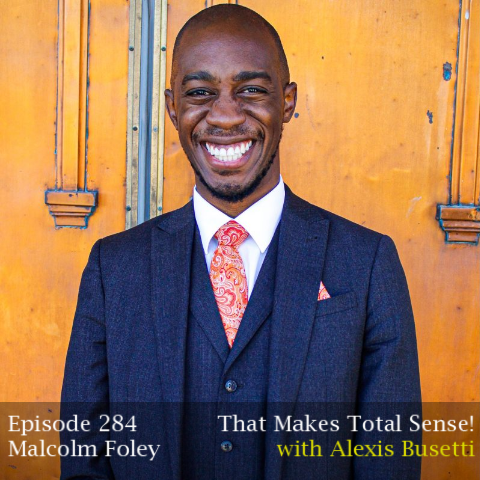
[01:11:14] Speaker A: Now. And maybe your beagle won't cheer up your copy. Okay. The Anti Greed Gospel. Why the Love of Money Is the Root of Racism and How the Church Can Create a New Way Forward by the Reverend Dr. Malcolm Foley. This has been way too much fun. Thanks for coming on.
[01:11:33] Speaker B: Love it. Happy to do it. Thanks, Alexis.
[01:11:37] Speaker A: The links for all the resources mentioned in today's episode can be found in the show Notes, music and podcast production by Seth Buscetti. Be sure to give us a review on itunes and subscribe at your favorite podcast listening app. You can also Visit us at ThatMakeStoreSENSE dot.