Episode Transcript
[00:00:10] Speaker A: Welcome to that Makes Total Sense, a podcast dedicated to exploring God's generosity and justice. I'm Alexis Busetti, a Christian, aiming to ask good questions and encouraging you to do the same.
Every one of us is wired by God to live out generosity and justice, but the how sometimes eludes us. That makes total sense is a way for us to get together, posture ourselves as learners, and challenge one another to practice generosity and justice in a tangible way every day.
Well, I am super thrilled, Christina. What I didn't mention in our pre record is there have been a few episodes where I have kind of asked my guest, what is it like in spring in your neck of the woods? And I didn't ask that this morning of you because I think both of us can say spring is pollen y right now.
[00:01:02] Speaker B: That's true.
[00:01:04] Speaker A: We are both sitting here struggling a little bit with allergies this morning. But it's beautiful because it means that things are blooming totally.
[00:01:14] Speaker B: And winter was really, I'm in the Northeast and winter was really, really long and really, really cold this year. Just cold, cold, cold day after day after day. So spring is a huge relief.
[00:01:25] Speaker A: I'm so glad to hear that. I was in, I'm, I'm in Houston, based in Houston. I was in Southern California last week.
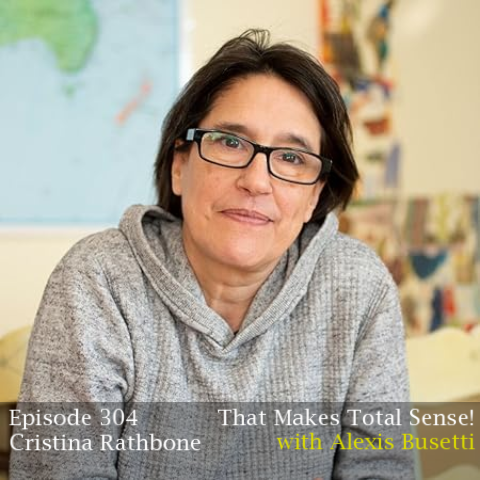
And the part of the reason I love going to Southern California, obviously, is because of the weather. My husband likes to say it's no weather. Like there's, there's no weather in SoCal. But when I was there this past week, it was really cold at the beginning of the week. I mean, for May, you know, it was really cold. And I was, I was found myself kind of mad. Was like, you're supposed to, you, you are faithful. This is the, this is the thing you do is you provide the wonderful weather for everyone no matter what time of year we go. And then it warmed up so it, it made up for it. And now I'm back in Houston. It's gorgeous right now, but I think it's also going to be hot by the end of the week. So here we are, you in the Northeast, me in, in Houston. But you spent some time in Texas pre pandemic. And that's what this book that you've written is about partially is your time in Texas, in El Paso and in and in Laredo.
It's called the Asylum Seekers A chronicle of life, death and community at the border. And I want you to introduce this book and yourself and I'll ask you for a prompt, give you a prompt for that in just a Moment. But first, I would like to read, if it's okay, just the quote that you begin the book with by Dietrich Bonhoeffer. Because I just would love. Just as it was foundational and set the stage for the reading of the book, I'm hoping it will also set the stage for our conversation today.
So, Dietrich Bonhoeffer writes, as long as there are people, Christ will walk the earth as your neighbor, as the one through whom God calls you, speaks to you, makes demands on you, and want to say this.
Your, your stories in this book, the stories that you've compiled in this book, both of yourself, I love this.
You were a journalist, now you're a priest. And so there's this beautiful marriage of observation, you know, journalistic integrity, watching the stories. But there's also this beautiful introspection that you share about your own interactions and what's happening inside of you as you encounter people who are at the border between Mexico and the US and even though the, the stories that took place in this book happened years ago, as you well know, this is a topic that is more in the public eye now than, than not maybe than it's ever been in my recent memory. But I would say the, I don't even know the, the polarization, the.
I can't find the word that I'm. That I'm looking for. But this is a topic that is not just very much in the news, but the controversies around immigration, especially at the US Mexico border, especially since Trump retook office in January.
This immigration topic has just been heartbreaking in so many ways. And so I'm hoping that even though these stories happened years ago, that the legacy of the people and the stories in this book will be applicable for our understanding of the immigration and, you know, stories in our context today.
Sorry, I'm tripping over my words this morning. Not I won't completely ban my allergies. I will bring Monday.
[00:05:47] Speaker B: Yes, I mean, I think, sadly, the book is very contemporary.
[00:05:52] Speaker A: Yes.
[00:05:54] Speaker B: To today. And why that's important for all of us, and especially for us Christians, I think is framed in that Bonhoeffer quote.
So, I mean, he says as long as there are humans walking this earth, Christ will be with us through our neighbor. And that's not a metaphor. I mean, he really means it, I think Christ in the neighbor, and he says that through that neighbor that we will have demands made on us. And I do believe that that's true often.
But I would add to that quote that it's also through that neighbor that we are fed and redeemed and healed and taught and brought joy and life abundant.
So for me, I think, as a priest, first and foremost, because I was a journalist a long time ago and have been a priest now for many, is the truth of the Incarnation. In the person of Jesus, of course, but then through Jesus, in the person of every single one who's alive on this earth, we are all carriers of the divine. And if we hold that in our center, well, then the immigration question becomes not so much a question about immigration, but a question about the individual carriers of the divine that are caught up in that system and how we can best respond to them, them both as people who have something to give and also as people who have something to receive.
There's a quote, one of my favorite quotes, which is, it takes the whole world to know the whole gospel.
And I really do believe that's true.
So we need each other, you know, to become more and more whole, more and more grounded in love, more and more able to step out in that love, reach out to others, and be reached out to by others.
So, yeah, I mean, the stories of immigrants in this book are very specific in the way that all human beings are very unique and specific. But my hope is that through their stories, we'll be able to learn more about ourselves, each other, and the world around us, especially in the light of God's love.
[00:08:15] Speaker A: There are a few times when I end up finding myself starting at the end.
And.
And so for this conversation in. In part, I want to do that because you share a couple of things in the epilogue of your book that, just like the Bonhoeffer quote at the beginning, that I think will be helpful for us to have in the back of our minds as we converse and as people listen to this and begin their own conversations, continue their own conversations.
The first thing is, is tagging on what.
What you just said specifically about immigration. But you said people on the move have a lot to teach us about what it means to be human.
I'd like for you to elaborate on that after I give the statistic that you gave at the end of the book, which was that in 2023, 110 million people were in flight from their homes worldwide.
That is staggering.
I am grateful for my. I have a professor that I took in my M. Div.
Dr. Alexia Salvatierra, and she first introduced me to the concept of push and pull.
There are reasons that people are on the move. Sometimes they are drawn or they're pulled toward some. Some other place, and sometimes they're being pushed from some Other place. And I think sometimes it's both.
But 110 million people in flight from their homes just the year before last.
And then how people on the move have a lot to teach us about what it means to be human.
You tell us more, say more about that.
[00:10:12] Speaker B: I mean, yes, two very big questions. I mean, I think to follow your lead and do the last first.
I think that people who have had to leave everything they know and love.
I mean, their homes. Think of your home.
I mean, their pets. Think of your pets, their yards, think of your beloved plants that you've, you know, nurtured their communities, their families, their friends, their work, their culture, their language and their country.
Nobody does that lightly.
Nobody.
And so to be in a position where to leave all that, basically your identity, except what you carry within and your children and, God willing, your partner, things have to be very bad.
And the people that I worked with on the border were all people who were seeking asylum. These were people who were in flight for their lives, many of them, and who were seeking the protection of the United States legally.
These were not people who were trying to get in by other ways. And people trying to get in by other ways have their stories, too. But in the name of specificity, this book is just about folks seeking asylum.
And some of them had watched parents be killed.
Some of them had watched their spouses be taken.
Some women had been taken and then abused, sort of thrown back.
Some had even watched their children be kidnapped.
One man I met had been sent photographs of the body of his dead son who was killed in reprisal for some perceived slight.
And so these were the reasons why these adults took their kids and left with nothing.
And again, what they were seeking to do was have the protection of the United States.
So what do they have to teach us? Well, I, thanks be to God, have never been in the position of having to leave everything.
But when you do, I've now learned you are thrown back on what you do have, which almost always is your faith.
Your faith in your own ability to protect your family, your faith in the rightness of your judgments.
Many people who come to this country looking for protection are the people who have stood up against corrupt systems in their own countries, the people who have said no to injustice there. So they really are the leaders of their community.
So conviction in that, and most of all, conviction and faith in God.
And because they are so stripped down, not anything any of us would ever desire and not something any of them ever desired. Of course, they learn a lot about what it is we as human beings actually need in order to make a life of peace and trust and justice together. And that's what they have to teach the rest of us what we need and what we maybe need less of.
And in general, what we need, I think, is each other to be open in respect and care for one another. And through that opening, to become more and more one in the light of God, who, if you're a Christian, as the people that I was working with were, is the thing that sustains us all right? It's our ground, it's our air, and it's what helps us to become who we're supposed to be. So people who've lost everything have a wisdom and a strength and a depth of faith that can be incredibly helpful for the rest of us. And a humility. Yeah, they have lots to teach us.
[00:14:23] Speaker A: Yeah, I'm so grateful for that. Thank you. Thank you for bringing that to the forefront.
As I mentioned this, first of all, I should say I love reading journalists.
There's something about reading journalists that just makes me really happy, especially in long, long form, like a book like this one.
But this particular book, I also loved reading because you're a clergy member.
And so the, the introspection that you brought to these stories that you were, you were living alongside folks was, was really not just touching for me, but it, it just helped in my learning process. There's one thing to be exposed through writing to the stories of other individuals, but to be also exposed to the learning of someone as it's happening was very, very helpful for me. And one of the things that I kept in mind thanks to your writing as I was reading this is this idea that there are layers of reality that are, that are happening in places like this with people. And you talked about several times not knowing what you didn't know and what you couldn't know at the time.
So for folks who haven't read the book and haven't heard, maybe even heard stories like those asylum seekers that you were working with, can you help unpack that a bit? What kind of layers are you talking about? And what, what helped you to realize that you came into the situation and it took you a long time to kind of understand those things that you, that you, that there were a lot of things you didn't know.
[00:16:21] Speaker B: I think there's an essential, again, humility that's sort of required from members of the church when they're seeking to be of help to others, especially others in really dire and long term difficulty, because we can't know what they need.
They have to teach us what they need, and then we can seek to fulfill that role.
I think of Jesus asking the blind man, what? What do you want me to do for you? And in a way, in that story, it seems so crazy because the guy is a blind beggar. And clearly what he. What we would imagine, many of us is, he would want his sight back. Jesus makes no such assumption. Instead, he says, what would you like me to do for you?
Because each person is different, each community is different, each crisis is different.
And so I think one of the things the church often stumbles on is that kind of approaching in poverty, approaching in humility, seeking to learn from. Back to the original question.
So I went to the border from Boston, very much aware that I needed to be taught by the people who were primarily affected about what was needed. And only then could I make steps in the direction of trying to provide as an individual, as an American citizen, as an ordained member of the clergy, trying to provide what was needed.
That was my approach, and that was how the work that I write about in the asylum seekers unfolded.
Very much me following the lead of others.
There's another element to that, too, and that's the element of knowing that you don't know. I think often we almost never know totally what's going on.
But knowing that you don't know then allows you to seek to learn.
And if you acknowledge your lostness, you're more likely to be found.
And there's a line in the book that only when we know that we're lost will we most likely be found by each other and also by God.
Good. Sort of standing there with blinkers over our eyes saying, I'm not lost. I know exactly what I'm doing and where I'm going. Which is something, of course, I tend to do as much as anybody else. But it's when I say, oh, and I drop my hands and say, no, actually, I am totally lost. That's when help comes, right? So trying to keep myself aware all the way through of my need, my need for others and also my need for God. And being a person of faith changes the lens with which one approaches anything, right? And so I think there's been a lot of journalism about the border, and I was a journalist for many years before I was ordained priest. But I haven't read lots about being a person of faith in that kind of traumatizing and traumatized environment.
And it's just a different thing, and it has different approaches, and it seeks different things, and it relies eyes on different things.
And I. I wanted to share that with readers. It just felt important for people who are looking for ways to follow Jesus during this time. How do we do that, not only in our churches, but also in the world, and particularly in the places of suffering in the world.
[00:19:55] Speaker A: Thank you.
You mentioned that you were. You had been in. In Boston.
And so I want to back up a little bit and give framing to this, the stories and the people, the humans that we're talking about your interaction with in this book.
So if we back up just a moment, can you tell folks where you were coming from, both geographically and maybe ministerially, where you were coming from, what drew you to the border and then where you went and maybe also the time frame that you were there, so setting the stage for the logistics of when this took place and who you were interacting with?
[00:20:54] Speaker B: Yeah. So before I went to the border, I had served for 12 years here in Boston out of the Epistle Episcopal Cathedral, working largely with unhoused and marginally housed people, building a community together with them, a faith community, and doing all kinds of wonderful things that people do in any church. Praying together, worshiping together, cooking meals together for the broader community, meditating, going on pilgrimages, all of the things.
And it was a wonderful experience. But in 29, I'm half Cuban, so my mother was Cuban. My father was English, though I was born here.
And in 2019, I felt very called to go to the border. In part, that call was biological, I think. My mother's family had come to this country as refugees, and they'd been given a chance to make new lives here, which they did.
And every single one of my cousins and aunts and uncles and this whole big thriving family now spread across the. The country exist because of that.
And in 2019, people very, very like my family may be almost exactly the same as my family were not being given that chance.
So I felt a responsibility to go as my. My mother's daughter, my grandmother's grandchild, and also as a. As an. As a priest, a person of faith, to go see what the churches could do in this place of such suffering and as an American citizen, to see what the privileges of holding an American passport require of me then and also now.
So I went to the border, again, not knowing where exactly I would go or what exact work I would do, because, again, I needed to learn from the people impacted. And I ended up settling in El Paso, Juarez, the border right there, because there was a community that grew when I was in El Paso of Mexican asylum seekers seeking to flee Mexico and seek the protection of the States.
And that community began growing when I was already there. So I was there the first day I saw this community begin. And I stayed with that community until the community was disbanded, actually, by the Mexican government. Until that time, they were living on a single block in downtown Juarez in tents, makeshift tents made out of tarps and string and rope, because they wanted to be right by the port of entry so that they could approach the Border Patrol to ask for the ability to ask for asylum as often as it took.
And so, while I was on the border for almost a year, the period of work that this book covers is just four months from the birth of this astonishing community, which was about 500 people at its largest, to the time that the last member of that community was able to ask for asylum. And what was so astonishing was the fact of the community among them, which was created by leaders of that group of people. So they had daily meetings. They established norms and rules to maintain safety and cleanliness and peace and security on the street.
They created themselves a list that governed who would approach the border and when, so that it was fair.
So the first family to arrive would approach first. The second family to arrive would approach second, all the way down to the 178th family that arrived.
They were an extraordinary, extraordinary group of people.
And I got to help them a bit with their work.
It was an incredible experience.
[00:24:57] Speaker A: Thank you for that. I want to say just a couple of things for context, but I also want to ask you to correct me, because I'm no expert on this, but I think a couple of things for context might be helpful. You mentioned earlier that this book is specifically about asylum seekers, as opposed to other kinds of migrants or immigrants, and that asylum seekers are entering the country legally. So it's also my understanding that folks who generally are seeking asylum can ask for that once they cross into the U.S.
is that correct?
[00:25:42] Speaker B: Yep, that is correct.
So what happens is at the border, at the ports of entry, there is a line on one side, obviously the states on the other side. Mexico and Border Patrol agents prevent asylum seekers from stepping even a toe into the United States because if they had a toe in the United States, they would be able to ask for asylum. But standing even 2 inches on the Mexican side of that line, they were not able to request asylum until and unless Border Patrol said they could. Now, by law, they are supposed to. Anyone is supposed to be able to ask the protection of a neighboring country, international law and US Law. But the Border Patrol never said no, you cannot ask for Asylum, that would be flatly illegal. Instead, what they said is, I'm sorry, we're full. Try again later. And that was what they said over and over and over and over and over and over again.
[00:26:41] Speaker A: Right? I, that, that line, I'm sorry, we're full. It feels like, you know, like a restaurant, like you don't have a reservation or something. Every time I, every time I read that, it just, just did something to me.
So, so that's one part that I wanted to, to clarify maybe just for listeners, that when, when someone enters the United States, it, they can ask for asylum once they're here. Asylum seekers are doing this because, and there's really five legal categories. You talk about that in the book as well.
But people who are in fear that their lives are in danger, specifically for multiple categories. So they could, I didn't, I didn't jot this down, but some of this is from memory and you can help me. But, but it's things like, because of their political affiliation, I think their religious affiliation. But there are multiple things that could make, you know, someone is seeking their lives or seeking to harm them because of these various things. And so, you know, it's not like a, you know, you have something going on with your neighbor. That's not, that's not the thing. Like, these are certain categories that you, that you can cross and seek asylum.
But the other thing that makes this very interesting to me is you mentioned that these were Mexican asylum seekers. And that is, from what I was reading and understanding, this is a whole other dimension. So again, just a little bit of context for folks. There are lots of people every year who, from different parts of the world, specifically from Latin America, South America, travel north from their home countries through, and then to Mexico and to the border between Mexico and the US to seek asylum in the US So maybe someone is coming from anywhere. Colombia, El Salvador, Haiti. This was a thing for a while. People coming through, from Haiti, through Mexico and to the US to seek asylum.
That is a different group. This group that you worked with were Mexican citizens who were seeking asylum, which means that there was something happening that made them fit into one of those categories while they were seeking asylum in the US and so many of them, and I want you to elaborate on this, if you will, many of them had been targeted, for example, by the cartel.
And the cartel, in some cases has relationships with parts of the Mexican government.
And so there are Mexican border patrol who are the ones determining whether or not someone is allowed to cross.
And they're. No, no, no. So, yeah, so correct me. Correct me. Sorry. She's waving her finger at me, so I'm Greater for sure. U.S. border, right. So they're saying we're full.
This is devastating. This is. They're saying we're full.
[00:29:39] Speaker B: And the danger of that is because these are Mexican asylum seekers. They're still in the country, they're seeking to flee.
[00:29:46] Speaker A: That's right.
[00:29:47] Speaker B: They are doubly imperiled. If you're coming from Colombia or Haiti or an African country or China, you're already quite far away from the danger.
But if you're in Mexico, as a Mexican seeking asylum, you're still in the country you're seeking to free.
And for that reason, folks from Mexico seeking asylum are doubly supposed to be allowed to ask asylum because they're right there.
[00:30:14] Speaker A: That's right.
[00:30:15] Speaker B: However, that made no difference when I was there in 2019, 2020, Mexican asylum seekers were put off and delayed by this system called metering, which is basically not now. We don't have room. Come back later, just like everybody else was.
[00:30:33] Speaker A: Thank you for clarifying that. I was. I was like. It didn't make sense to me when I was reading and I missed it. So. Yeah, so.
So they are, as you. As you say, I want to emphasize. That's the part I want to emphasize, is that these folks are inside of the country that they are fleeing still and being refused the ability to seek asylum. So different from folks who have come from their home country. They are not seeking asylum in Mexico. They're still seeking asylum in the US but at least in Mexico, they are separated. There is some separation from the country where they are fleeing and the country where they want to go. But Mexican asylum seekers are still there in danger in the country that they are seeking to flee because of one of those few reasons. One of those several reasons that they could seek asylum, including. Okay, back to that. Including. This could be cartel issues.
[00:31:32] Speaker B: Yes, and there's some question about whether cartel issues, because it's not a direct link. It's not that the cartels officially work for the government.
Of course not.
So there is some question about whether that will ultimately qualify for asylum. But that is a secondary question.
What we were trying to accomplish in the work right there on the border was to assist the asylum seekers in being able to ask. Ask for asylum, not to receive asylum, just to request asylum, which, of course, is. Is a right enshrined again in US Law and. And is still so enshrined in US Law, though today as we speak, no asylum seekers are able to request asylum in the southern border, that. The border is completely closed to that can.
[00:32:21] Speaker A: I know this is not in your book, but can you say more about that, about what's currently happening there with. I mean, because we, we've already established that asylum seeking is something that's enshrined. I mean, people. This is a. This is a human right. In a neighboring country, someone can. Can seek asylum. I don't think that that's changed.
[00:32:40] Speaker B: That's correct.
[00:32:42] Speaker A: So what's happening? It's an international human in international.
[00:32:47] Speaker B: We are not that. No, nobody is able to.
To request for asylum. Nobody is able to seek the protection of the United States on the southern border. I don't know about the border with Canada, but no one is able to. It's. It's all been shut down.
So, I mean, people can go back and forth for, you know, US people can go back and forth for pleasure, for business. People can cross in both directions for business and that type of thing. But it's not shut in that way. But to anybody seeking asylum, it is completely shut down. Yeah, that's not happening.
I mean, it's shut. There's nothing else really about it. That's what this administration is doing, in addition to the many activities that they're doing within our country, to send people to other countries, to send people to prisons in other countries.
But that's a whole other topic.
[00:33:46] Speaker A: It is, and an important one. So everyone keep up on the news.
It's hard. It's hard to keep up on the news in that. But yes. So no one, no one is currently allowed to seek asylum. But you were working with these folks is they were trying to make efforts, again, as you mentioned, just to ask for it, to have the ability to ask for it, which is an international human right.
The reason that people ask for asylum is because they are in danger, because they fear for their lives, the lives of their loved ones. As you mentioned at the beginning of this conversation, many of the people that you worked with had already had instances where it wasn't just threats of violence, but where actual acts of violence had already taken place against their family members, some against their own persons. I mean, there were people that you worked with who bore the scars of violence that had already been committed against them, and so they were seeking safety in the United States.
I also want to mention that the folks that you were working with were all ages and especially what hit me as a parent were the children.
So part, you know, you worked with them, did kind of a school, you know, helped them with Art and singing and, you know, these wonderful things. But these were children who had burdens on them.
That, frankly, is very, very difficult for me to imagine as a parent. And so I'm wondering if you can tell us some about the families who were in this situation as Mexican asylum seekers on the border.
[00:35:47] Speaker B: Yeah, thanks, Alexis. It's. I mean, that was the heart of the work, really. Almost everyone were families. They were almost all of those 500 people. They were almost all families. So I think more than two thirds of the community were children, and many of them little children. So, as you said. Yeah, we. We started classes every day. I am. I am not a teacher, that's for sure, but they needed.
They needed to learn things, of course. But more even than that, the kids needed some kind of regular normalcy every day. And that's what we really sought to provide, at least in adult hour a day where they were thinking about coloring or cutting things out, making shapes, making patterns. We called them English classes. And I'm sure they picked up a few words here and there, but mostly what they did was sat at tables and did things that kids around the world know how to do and find comfort in.
And it was really beautiful. And. And the kids had been through so much, of course they had. Not least the uprooting from their homes.
They're living out on the street. I mean, on the sidewalk. Imagine you and your kids living on the sidewalk on a block downtown.
Terrifying. Just the vulnerability just of that.
But also they were so resilient and full of life and love and laughter and hope.
And it was really from them, I think, that. Me, certainly. But.
[00:37:17] Speaker A: But.
[00:37:17] Speaker B: And the other teaching team, some of whom were volunteers from different churches across the border in El Paso and Las Cruces, and some of whom were parents of those kids, but the community as a whole, I think we all drew great energy from the kids, because kids everywhere just have ability to live in the present moment and to find joy and hope and possibility everywhere. And that was such a. Certainly the case there. I mean, yeah, there was a lot of laughing with the kids and a lot of dancing and singing and playing games and having fun. We opened a little library where the kids could take books back to their sort of makeshift tents and read and have their parents read to them, too. And then a lot of fun and a lot of gratitude and pride that these kids had that they could bring these books to their little dwellings and read with their parents into the night.
Stories about frogs or peacocks or koala bears.
So the kids really were the engine of hope and love. And of course, it was for the kids that all the adults were there. Yeah, I mean, I'm also a mother. You're also a mother. It was sometimes hard for me. For me, it was hard with parents of older kids because my kids are older. So those were the ones I really had a hard time managing.
But every single parent there was undergoing all this hardship, not for themselves so much. And just like you, they were doing it for their kids because they needed to protect themselves. They needed to ensure that they could be safe, and they needed to ensure, or at least do everything they could to try to ensure that they would be able to grow up in safety.
So, yeah, that was why they were all there. And they were amazing. And it was hard to walk up and down that street, especially when the community was at its peak, because the kids, of course, were always playing soccer and playing tag and we were forever running into each other on the street. They were beautiful.
[00:39:32] Speaker A: I love to think about that. I love to think about that joy intermingled in, in the time with that community.
One of the things that struck me about the stories that you told was about the sidewalk chalk and some this, you know, leans into some of this, like you just don't know what you. What you don't know for some of it.
And I also just want to maybe use that and ask you to use that as a segue to go into some of the physical needs of the community there, including the need for water and the need for food, just like anyone else trying to live anywhere. But when this community gathered with no formal infrastructure, it was makeshift tents on sidewalks. Like, how did people really just get by day to day? And what did the community do to help take care of itself and each other?
[00:40:39] Speaker B: Yeah, so you're right, that water was of course, the first need. And so a number of volunteers and I would started bringing little bottles of water.
But then as the numbers continued to grow, we needed, needed to bring the big, you know, five gallon jugs of water and set up a little water stand on the street and then food.
Different organizations, the Red Cross in Mexico and faith communities in the states and Mexico, provided food.
Faith communities, again, both sides of the border, provided bedding, clothes for the kids, whatever was needed. As fall, which is very, very hot, hot, their turn to winter, people needed, the kids needed woolly hats, they needed everything.
And so the broader community around the community of asylum seekers did all they could to provide what was needed. What was really amazing was the way that the community of asylum seekers themselves then arranged Everything, so that distribution would be fair. To ensure that those who needed most got most, to ensure that mothers with little babies got what they needed first before anybody else, and that the vulnerable in their community were given priority. It was really again, something extraordinary to see how people in even the most dire of circumstances, people who'd already left everything, who were living on the street, still maintained and were determined to maintain their humanity.
There was an incredible moment when a woman who was very endangered in the community, it's a long story, it'd be too complicated to get into now, but she was in clear and present danger right there on the street. And at one of the daily meetings, the community voted to allow her. She had just arrived and they voted to allow her to go to the top of the list and, and to access the border before everybody else and try to seek the protection of the States, even though that inevitably delayed their own ability to seek that same protection.
Even though some of them had been there already for three months, they still unanimously voted to let that woman go ahead. And when I said to someone I was speaking to on the street afterwards, how impressed I was was that the community had done that, this woman looked at me with just shock and said, but Christina, we have to maintain our humanity.
And, and it was that, that was just so awe inspiring that even in these circumstances, these people chose to maintain their humanity by caring for each other, by caring for the one next to them who needed more care. And that, I think is, is really a great lesson for those of us who are living in this country today, because there's a lot going on and a lot of people are anxious, a lot of people are feeling frightened, a lot of people are feeling powerless, like there's nothing we can do.
And I think we should follow the lead, or we certainly could follow the lead of, of the asylum seekers in Juarez back in 2019 and 2020 and seek to maintain our own humanity by caring for our neighbors in these difficult times, not by doing any big, huge thing, because very few of us are in a real position to do big, huge things. We're just people, you know, but we can all of us do small things that make a real difference.
And those small, real things make a difference to the person we're reaching out to, to, and they also make a difference to us.
For me, that is the medicine to the anxiety and the powerlessness that I, that I so often feel when I'm face to face with someone and doing some small thing that may, God willing, be of some assistance. And sometimes that's Just saying hello to someone who looks like they need it. Right. It could be that small, so.
[00:44:54] Speaker A: Well, I would like for you to elaborate on that a little bit.
One of the things that you said in the book that really got to me was that not and not enough is better than nothing.
And I think that there's. That it's the not enough piece that stops. Helps a lot of us sometimes because we say, I can't fix the problem. I can't. I may not even be able to fix this one person's problem or this one person, you know, this family's problem because it's so big. And so what I. What I have is not enough. But you remind us that not enough is better than nothing.
[00:45:41] Speaker B: Not enough is great.
Not enough is excellent. None of us can do enough.
None of us can. Only God can do enough.
So not enough is really an excellent thing. And it's true. So many of us, myself included, I am talking to myself, we think, oh, it's not enough. It'll never be enough. There's no point.
No, no, no. Not enough just means we're humans and we're doing something and that something counts. And if everybody does one small something, the world is going to be a very different place. But we cannot let the idea that not enough prevent us from doing anything. And we do. I do all the time, especially when I'm feeling anxious. But again, the small real things are the medicine to the anxiety produced by feeling like we can't do enough. We are finite beings, and together we are a bigger finite being. But again, we all need the help of God.
Think of the feeding of the 5,000. That was not enough either, right? A couple of loaves, few fish, really. Obviously not enough to feed 5,000 people. I mean, clearly. And yet it did end up being enough. If we make the offering, it will become enough that it has to be opposition of faith. That's how faith can really play an excellent role in our world in these days. By really believing that our small, humble offering will be made enough in the arms of God.
I believe on a good day.
[00:47:25] Speaker A: Right, right, right, right. On a good day. That's right. These small real things.
Do you have examples? You have some. Something?
[00:47:38] Speaker B: Yeah, I have just a paragraph, really, that I wrote about small real things. And again, I wrote it when I wrote it and I sort of chanted it to myself when I was on the border because I needed to remind myself of it every day because the drive is always to do these big things which are impossible.
So I'll just read Just this paragraph.
Small real things.
Small real things.
This is what I kept trying to remember and to trust.
Not big impressive things, but small, real things are the way to love with, through, and for the other.
Small, not because we can't be bothered, but because we are small ourselves.
And because every time we honor this smallness without shutting down, every time we acknowledge our lack of sufficiency and remain willing even so, to both meet and be met by the other, well, whatever follows will both come from and lead to the realm of abundance some of us call God.
And real transformation will happen only on an infinitesimal scale.
This is how small real things make a small real difference.
And this is important too, because small real things are necessarily incarnate. They cannot be faked or sold or even advertised.
They can only be sought in the moment and then welcomed.
They require nothing flashy, nothing expensive, only a mute and muscularly passive stance full of willingness and reliability and vulnerability.
It isn't that small real things don't sometimes become large real things because they do. It isn't the smallness that's the point, but the intention.
It's as if the act of desiring and then seeking something small liberates us to receive without measure, as if by not aiming for bigness or for success, we somehow become freed from the regular marketplace world in which something is always given in exchange for something else, and enter instead a realm where giving and receiving become the same thing.
Here are a couple of sentences by Sandra Cisneros which cheered me up one dark night in El Paso, because they say more or less the same thing, only more simply.
I don't know anything, she writes, but I know this.
Whatever is done with love in the name of others, without self gain, whatever is done with the heart on behalf of someone or something, whatever work we make with complete humility will always come out beautifully. And something more valuable than fame or money will come.
This I know.
[00:50:41] Speaker A: Thank you.
Thank you for sharing that.
Years ago we were in the process of adopting our youngest son and it was an international adoption and the country where he was coming from had put a halt to adoption from.
To parents from Western countries and political, you know, stunt, essentially.
And when you were reading that, I was reminded of one of my friends said to me when I was. We were unsure if he was going to be able to come home at that point.
And she said to me that my love for him, no matter what happened, that my love for him would not have been in vain.
And.
And it brought comfort not, you know, oh yes, he's going to come home or things are going to end up with a happy ending, but just the reminder of someone has fought for him in this system. Someone has loved him from a distance, someone has prayed for him by name. You know, these things that no matter what ended up happening at the end with him, those actions would not have been done in vain.
And it just reminds me of the kind of work, these small, real things that when we can participate in them, it doesn't mean things are going to have some sort of happy or storybook ending. But those things done in love, as you mentioned, for each other and with each other are not done in vain.
They matter.
You know, they. They matter. And I think that is one of the things that I gained from this book is that even those small things matter. You know, I was thinking about picking up the garbage with the kids and what. What colors are the gloves, you know, that everyone gets to wear? And even, you know, just this act, the act of doing something to care for each other together matters.
[00:53:10] Speaker B: And I mean, that's such a. Thank you for sharing that story that was so moving and beautiful and true.
[00:53:18] Speaker A: Right.
[00:53:19] Speaker B: I think your friend was very wise.
And I mean, in. In a smaller way, it's exactly the same with the picking up the garbage on the street in. In Juarez, because there was garbage, that's for sure. It needed to be picked up. And then there were kids with nothing to do. And then there were these gloves of all different colors.
And now we had colored gloves on our hands, and sometimes they had powder inside them, and that was easy, even more exciting.
And now we were playing together and the kids were having fun and they had an activity which they could do together, which was benefiting the community.
And the parents then started, if there wasn't garbage, they would find something that could pass as garbage because they wanted to make their children happy, who in turn were doing this process in order to make them happy. And you get into the. That economy where nothing is wasted and where everything is worthwhile, so everybody's giving to everybody else, and it comes out of nothing, really, except desire.
So. That's exactly right. The picking up the garbage, which is such a, you know, in the face of the suffering that was going on almost absurdly, ridiculously, almost irrelevantly small. And yet it birthed joy and love and community and laughter and mutual support.
And with that, everybody could go on.
Yeah. And that. That those kinds of stories are the stories that this book is filled with, because those are the stories that we can have a hand in. Every one of us Right. Stories of that scale and like you say, they are not in vain. They count.
They count.
[00:55:13] Speaker A: Christine, I'm wondering if you will wrap up our time together by maybe offering some kind of pastoral encouragement to folks who would be listening to this. Because I do think to bring it back to current events. You know, we talked about how this book is definitely applicable today, even though the events happened a few years ago.
But folks who are listening in the US it is, it feels very overwhelming to think about and to try to follow this current administration's immigration policies.
And if it's hard to follow the policies, it's really difficult to grasp how it is affecting individuals, families, communities, people in their everyday lives.
And that can also, it can also feel overwhelming to think again about like what can we do do? What part could we play? I feel overwhelmed by even trying to keep up with the news. How could I possibly, you know, xyz, whatever it is.
So I'm wondering if you have any, yeah, any kind of maybe pastoral encouragement for folks who are thinking this is a, this is a beautiful story and moving to the border is not real life for me. A short term border trip probably isn't either.
But you know, what can I do from, from my own community and home in Houston or in Boston or you know, any of these places or maybe even how can we even think about these things?
[00:57:09] Speaker B: Yeah, I mean I, I, so I spent one hour a day reading and listening to the news on various different sources. That's it, one hour, no more. Because beyond that again, it just births anxiety.
And I think as I said earlier, the medicine to that anxiety is small real things with others.
And so what I encourage everybody to do is find one other person or two.
For me it's people from church and then with them because alone it's not so good. You know, it's just so much better with someone else and then the third person because some, if someone can't do it, that just gives you more security.
And then find a local organization who is already doing the work. There are many of them, many of them are out of churches and many of them are out of secular organizations. But find one. I would say the only criteria is, is that it be close to you local and then see what you can do.
Almost all of these places, maybe they're serving food, maybe they're offering clothing, maybe they're offering legal clinics. Who knows what they're doing.
But in every town there is an organization that is already doing the work. And so I am encouraging people to get involved. We don't have to recreate something from scratch, get involved by doing a small, tiny thing and doing it regularly, an hour a week.
And in that way build relationship. And there are many people I work with who are my elders, who are not sort of able to jump on a bus and go across town.
There are many things you can do from your home, including prayer.
So one of the things I do is each week I cut out, I still read newspapers, old school paper, newspapers. And I cut out a photograph of someone who's been in the news, someone who's suffering.
And I put that on my prayer table and I pray for them exactly as you said, Alexis, by name, every morning and every evening when I pray.
And that is also not wasted.
And the reason that I know it's not wasted is it changes my heart and it deepens my heart and it builds relationship between me and that person and that that person may not ever know that I've been praying for them. But that's not the point. The prayer is real and the connection is real and the changes that happen in my heart are real.
So rather than read everything and keep up to date with everything, pick one person and pray with, for and through them. It's a powerful, powerful experience and it will then lead you to some local action. I know it will.
[01:00:11] Speaker A: Thank you so much for that. That's.
That's very, very helpful.
I'm also going to put in, I was thinking, as you were saying, that there's an organization that the founder has been on the podcast, it's called the Immigration Coalition. And I'm going to put the notes in the show notes, the link for that. My husband and I have been donating just a small monthly amount to that organization every month. Their mission is very, very simple, and we talked about it already. They provide clean water and essential supplies for folks who are at the border.
Very, very simple. And even, you know, when I see Rondell, who's the founder on social media, you know, one of the things that he caught, you know, over and over again is you saw I was thirsty and you gave me something to drink. I mean, these are the words of Jesus. This. It is a small, real thing. And it is not small when you're thirsty.
[01:01:14] Speaker B: Right. It is life saving. Literally life saving.
And so is so many small things.
[01:01:23] Speaker A: Yeah, I love it. Thank you so much, Christine. I'm. I'm so grateful. I'm grateful for the book. I want to say the name of it again and encourage folks to grab a copy, which I'll have a link in the show notes. It's called the Asylum Seekers, a chronicle of life, death and community at the Border written by Christina Rathbone, Episcopal priest and my guest for today's show. Thank you, thank you. Thank you again, Christina, for being on.
[01:01:49] Speaker B: Thank you, Alexis. Take good care.
[01:01:53] Speaker A: The links for all the resources mentioned in today's episode can be found in the show Notes, music and podcast production by Seth Buscetti. Be sure to give us a review on itunes and subscribe at your favorite podcast listening app. You can also visit us at. That makes Turtle center dot com.