Episode Transcript
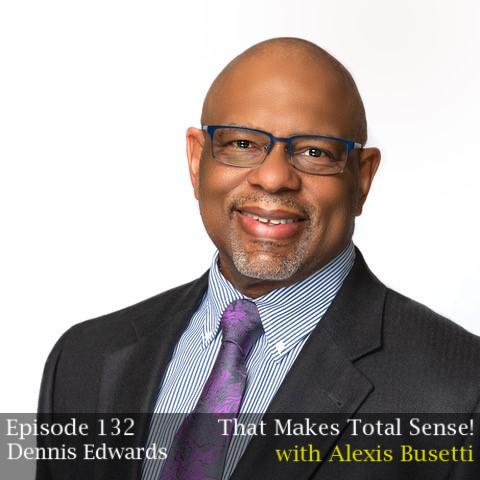
Speaker 1 00:00:07 Welcome to that. Makes total sense. A podcast dedicated to exploring God's generosity and justice. I'm Alexis. We setting the Christian aiming to ask good questions and encouraging you to do the same. Every one of us is wired by God to live out generosity and justice, but the how sometimes alludes us that makes total sense is a way for us to get together posture ourselves as learners and challenge one another to practice generosity and justice in a tangible way every day. Everyone I'm here today with Dennis Edwards, who is an associate professor of new Testament at north park university in Chicago, and has written an incredible book called Mike from the margins. The gospel's power to turn the tables on injustice. Hey Dennis, thank you so much for being here.
Speaker 2 00:01:01 Thank you so much for the invitation. It's my pleasure to join you in conversation.
Speaker 1 00:01:06 Yeah, I'm going to, I'm going to put in the notes before I forget. Um, the conversation that I mentioned to you before we started recording, because you were on a podcast that, um, Trinity divinity school, which, where you graduated from, um, they do a podcast called remind me the name. Is it forward, forward, forward? Yeah. And so that conversation was really great too. And that is actually how I came to know your work is my husband texted that to me and was like, you've got to hear this conversation. So I just want to go ahead and put that out there for people because you guys talked about things there that we end doubtedly won't get to, um, in this conversation. So, um, first, if people were to look at your academic resume, you were, I was I'm in seminary right now. We have some older pastors who've been pastoring for a long time, you know, getting their credential stuff like that. Some guys who were in their twenties, who are just coming in and saying, this is what I wanted to do. And your story doesn't necessarily look like either one of those sets. And when we look at this as a BS in chemical engineering, okay, Dennis, what's the story. Can you give us just like a brief little timeline to how you got from BS in engineering to professor of new Testament? Cause that seems that wasn't quite linear.
Speaker 2 00:02:28 No, it wasn't linear at all. I say, and many spaces, maybe even in the book that, um, our journey's always Securitas, but I'll be brief when you get old, you got a lot of stories, but I won't belabor them. I mean, I'm from New York city. I liked science and math. As a kid, I went to, uh, a math high school, you know, you had to test in for science and math. So I thought I would have a career in science and math and engineering seemed like it suited me. But as I was working in the major, I realized that I wasn't all that excited about it, but I pressed on. Um, and during my, uh, spiritual development, during my college years, I started wrestling with the notion of doing ministry. Uh full-time as a career, as a calling. Um, so I was wrestling with that even as a college student. So some years after I graduated and taught math and chemistry in high school, I finally went off to seminary after talking to a pastor and decided that, okay, it was time to, to follow up on that call. And, and then after I graduated, I, I continued on to do a doctoral studies part-time um, until I could finish my, uh, a PhD in new Testament. So that's a very short version of a crazy journey, but, but that's it.
Speaker 1 00:03:49 I love it. I love it. It's it makes me kind of want to, I want to focus on the book, but just so you know, there's like part of me, I'm going to be fighting this whole conversation to, to ask these, these new Testament questions and to ask you to, to go here or there. So I'm going to do my best to just stay on track and stay on topic because, because the book is incredible and you can get tests. My professor does come out in the text in this whole queue.
Speaker 2 00:04:15 I hope so. I mean, I'm, I'm a pastor and a new Testament professor. And, um, and while I've had my kids, my oldest particularly saying, dad, you need to write a book and name names, because there was some periods in our lives, ministry life that were really difficult. And I mentioned some of those in the book, but at the same time, I try to, um, explore, uh, passages of scripture and do some good exit Jesus. Now, um, my friend, young friend Esau McCaulley, I've mentioned his name before his book took off and it's, and he's a great writer, but in some ways I was trying to do a similar thing, which is to model some extra Jesus and address issues that I think are current and relevant for us, us, meaning Christians in the west, particularly. And, um, but anyway, I am glad that you did see that I tried to treat the biblical texts in there. It's not just a rant. It's not just a, um, you know, uh, how to book. I wouldn't even say just, it's not that at all, but I do try to, um, practice some good hermeneutics in there. Yeah.
Speaker 1 00:05:23 And you, and I felt that, I mean, as a, as a theology student, um, I felt that coming in, but I want you to tell us where the book came from, but first I'm going to give, it's not, I would say it's a spoiler, but it's not from the end of the book. It's actually from the very first page that you write in the introduction. And the opening line in this book is quote, shoot me. If I ever worked for white evangelicals again, there, there was an amen from the audience. I mean, there, you know, I have, I, I have been in this space for awhile, talked with enough pastors of color who have been on staff in places exactly like this, where that would be their exact sentiment is please shoot me. I do not want to have to work for these people any more. So given that where, tell us where this book came from.
Speaker 2 00:06:22 Yeah, thanks. You know, an interesting people who are, who would say that, I think say the same kind of phrases as me, or think the same way. Many of them are way younger than I am. So the issues that I face and talked about in the book are, are not new, but, uh, and sadly they're still with us. Um, so what came, where the book came from is, um, my wrestling with seeing well with seeing many books that address say race or racism or Christianity and race or racism in the church, those kinds of topics, many of them were either written from a sociological perspective and I'm not a sociologist, but so those were helpful books, but they want a whole lot of books written from a biblical perspective and most, and many of them that were, were written and still with white people in mind that say like, how can we get together?
Speaker 2 00:07:12 Or how do we solve this problem in a way that won't make white people upset? So how do we have these conversations and keep them in the room to have them in such. So even when we're trying to fix a problem, we still were centering white Christians for the most part of Angelicals in that discussion. So I said, I don't, I don't want to do that. I want a book that rallies the folks who've been on the margins that says, look, we can do good Bible study. We have resources. In fact, we even have power. I wanted to call the book power to the people, but of course, um, that's too common, a phrase from my era growing up. And, uh, it's the title of another book, but, uh, but that's the idea is that we already have power and we don't need to wait for white people to empower us, which is the way I would hear it.
Speaker 2 00:08:00 Um, one quick example would be oh, many times in my life, especially when I was a younger guy trying to do ministry and, and diverse settings like New York city. And I would hear white pastors say, well, my church is like the United nations. And I thought if the United nations is really one white person upfront with a couple of people from different colors inside, I didn't envision that, especially being a new Yorker where the United nations actually is. Uh, so I, um, I said, I think we have different ideas about what diversity is and what, what inclusion looks like. So I wanted to come at it from that angle and assert our voice. Okay.
Speaker 1 00:08:39 Yeah. I I'm really appreciative of that. Um, it's, it's kind of interesting. So it is a, it is a, it is a bizarre kind of scenario. So I'll tell you a quick story that my friend gave permission to sheriff showed on the podcast before, but, um, when the race relations, when things started to, to come, you know, bubbling up again in 2020 after the murder of George Florida. And for me, it was a Marbury was really kind of this, um, this moment for, for me. Um, I was talking with one of my black girlfriends. She's quite a bit younger than me and we were of course, on lockdown. So we're talking on the phone and we're just, you know, crying to each other and with each other and just, just lamenting and conversing, you know, about what was happening. And, and I would say in this kind of white evangelicalism, there was this unction in me of what can I do, right? I mean, this is not, it, this is not something. And I don't think that's entirely bad. Um, but you know, I already had the podcast going and, and, and so we're kind of just talking about just having the conversation, you know, and she said something to me that continues to haunt me. And, and she said, Alexis, there are people who will only hear this conversation from someone who looks like you.
Speaker 1 00:10:12 I hate that. She's right about that. Like that sucks, right? I mean like why, why is she right about that? Why, you know, and I'm not, I'm asking rhetorically, you know, but it's like that, that's a, that's a, that's a, that's a crummy place to be this white centerdness though that you're talking about. It's like, if you put the, both of us in a room, a black woman who knows from experience or a mixed woman who passes as white, like we go in and there are a lot of people she's right. There are a lot of people who will only engage in this conversation with someone who, um, who looks like me. So I'm throwing that out there. And I want to say, Dennis, why is that? Like, you know, because then when, when people write, like you two were talk like you do, and they de-center whiteness, then the, sometimes
Speaker 2 00:11:04 They do, they do I thank you for that story. I, it, it does speak to me. And in very real ways, I think the thing about my life in that, um, in those younger years when I was starting out and I went to seminary and I had this naive, Hey, that was, if we got, you know, showed people the biblical data and the social data, you know, if we could engage, especially since I was doing what they would want somebody to do. I mean, I went to a good college. I went to a good seminary. I'm kind of crossing the T's and dotting the I's. And it's showing that I'm worthy to be in these, in these space. If you think of it that way, worthiness. In other words, I did what they did. And in some cases did it better. I mean, I'll just be honest.
Speaker 2 00:11:47 I had really good grades at Trinity seminary, but I would come and speak at their churches and people be angry, um, or they would minimize what I have to say, or they would tell me, you know, what it really means to be black in America. And they're white people. So there's this. So there really was this sense that, why am I doing this? Why am I giving all this energy and people not listening? You mentioned you had on your podcast, a good friend of mine, David Swanson and David, you know, he has, he has this ministry of ministering to a white Christians and thinking about how they can deal with race. So I have even said, when people ask me, what did the white Christians do? And I say, talk to David
Speaker 1 00:12:29 That's right. Go get re discipled. That's what they should do.
Speaker 2 00:12:32 Right, right. But you know what you said earlier about when you, when you hear of the attentions and you say, well, what can I do? That's a good response. I think all Christians should be thinking that way. But the difficulty comes when, when white folks say, well, let me get my, these black people over here to speak into this, or to tell me what to do or to become expert. And, and I honestly, it can be exhausting to be called upon, to keep explaining things that are in front of us all. And so I think in that, in that sense, I was also getting a little tired of white evangelicalism, um, almost a bait and switch, Hey, come on over here and let's be together, let's be reconciled. And they're like, oh, but don't talk about that. Or don't, don't wear, you know, a tie or I don't cornrow your hair or don't, um, show a blackness in a way that makes me uncomfortable. So we wound up having, uh, no real, um, reconciliation or conciliation or no real justice. So yeah, I've, I've been around long enough to see a lot of that.
Speaker 1 00:13:34 It's the, it's the old, it's the same saying of like, come have a seat at the table, but it's my table. Right. And, you know, sometimes there's, you know, I use the example of, uh, in a, in another conversation about a similar thing of like, of, you know, having friends over for dinner and I have, have a good girlfriend. Who's a Mexican immigrant. And, and she eats at our table all the time and half the time she cooks. And so that's not, you know, that's not the answer, but you know, it's part of it of like, you know, saying there's, there's this mentality of like, I own the table. Right. And so if you don't say what I want you to say, you don't cook. What I want you to cook. You don't eat how I want you to eat. Then we'll just, we'll just dis-invite you from the table.
Speaker 2 00:14:21 Exactly. Exactly. Yeah. I mean, we've seen churches that want to be more white churches. I'll be more specific here that want to be more, uh, let's say diverse for lack of a better word, but that word obviously encompasses so much. So racially diverse at least. And so they think, well, let's hire a worship leader of color or something like that. Or, and so, so you see that happening and, uh, and the church thinks that they've accomplished something they've, they can check off this box. And of course, that person then has all kinds of grief, the new, the new, the new hire, the new staff person. But that pastors, that original pastor, that white pastors not thinking where could I go serve where I would, um, have to be, um, uh, under the leadership of somebody of color. It doesn't even cross their minds for the most part. So that's the kind of thing I'm talking about. Yeah. So you're right. The table metaphor is a good one.
Speaker 1 00:15:19 It's funny. I think of their conversations that we were having back in, back in 2020 and all of these books that I was thinking of recommending, you know, my, my dad was calling me, he's having this conversation with people who are in leadership and power and other places. And he's asking me, do you have any recommendations? And I, I was, I was telling him, you know, naming off these, these books and these authors, and then my husband named it, he said, well, that pastor's not gonna read that. He's never even had a woman for a boss. He's never had a person of color for a boss. And you're telling him, you know, in real life. And then you're telling, you're putting these books in front of him, or these talks in front of him and saying, go learn from her a black woman. Like, that's just, that's not even on the radar of some of these pastors. Exactly. As you said, you know, they're, they're not thinking, how can I go put myself under the leadership of someone else they're thinking, how can I bring someone in who can be undermined that's right.
Speaker 2 00:16:10 That's right. Yeah.
Speaker 1 00:16:11 That's a different,
Speaker 2 00:16:12 It's a different conversation. So, you know, coming back to why I wrote the book, I thought, my goodness, we have a lot of that. So I'm not trying to address that white pastor. I'm not trying to address that. You know, white Bible study that wants to be more diverse. I'm trying to say, you know, folks who've been pushed aside, women, ethnic minorities, immigrants, uh, recent, recent immigrants. There's this sense of we have great faith. We have great, um, um, fortitude. We have demonstrated before each other and God that we are, um, Hardy, zealous believers. And so rather than waiting for white people that recognize that, I'm just trying to say, Hey, here's some encouragement. Let's live this faith out in bold ways and let's work together. Uh, I, in fact, in some ways I could have called it the solidarity of the marginalized, because that's really what I'm pushing for in the book for us to join hands and not wait for, um, for white institutions or white leadership to say, oh, oh, there's a person we need to listen to and finally get their imprimatur. So you can, uh, so you can get your voice out there somehow. It's like, no, we have stuff we can be doing right now have been doing right now. And, and we need to lean into that. That's kind of what I'm pushing for.
Speaker 1 00:17:31 And that's how important is that, like the fact of, not that you're just saying join hands, but you're also saying let's do some work in recollection. Like, let's think about the things that we already have been doing. Right. The, the black church in the United States has a rich, rich, theological, theological, and, and activist history. Yeah. Yeah. That's true. And you know, and, and I, and I hear you calling on that, you know, as well, not just to say we don't have to wait on them, but to recognize we haven't been waiting.
Speaker 2 00:18:07 Right. Right. Well, that's right. Well said. And I think sometimes we, even many African-Americans, we sometimes miss that, I think, uh, depending on where you grew up or when you came to faith. Um, and my era, there were a lot of folks coming to faith around their college years and, or at least to a vibrancy of their faith in their college years. And often that was, um, outside of their home churches. So when they would go back home, sometimes their home church seemed too small or dated or something, or, or here's a weird one. They would find themselves sometimes more educated than the clergy. So there was this struggle, right? So for some of us, it was a matter of, um, do I fit in here anymore, but then for others of us, and I think I'm in the second camp, there was a sense that, wow, we have something really rich, the white folks who are doing this over here, and I'm coming through the seventies where we were all talking about loving each other and holding hands and drinking Coke, whatever the, you know, uh, kind of images were about coming together. So my naive T was, oh, let's join together. Let's do this stuff together. And I didn't, I wasn't conscious of the power dynamics. So, so yeah, you're right. I'm talking about seeing ourselves and what we have already done and not giving in to the way society might describe us or minimize us. Yeah.
Speaker 1 00:19:28 Yeah. So let's, let's jump on, uh, let's jump on that love piece for a minute because you've got, um, gosh, your chapters are rich and theological. I'll just say that again. They're, they're beautiful, but, um, but they're all about, they're all about power. Um, and so if we talk about love first, we're kind of starting, we're kind of starting at the end, but, um, but I think it's appropriate. So, um, talk to us about that, about that power of love, peace that you name and
Speaker 2 00:19:57 Thank you, you know, and many times it's funny. I purposely put it last because a lot of times when, um, uh, people of color are talking, uh, in these conversations, yes. Sometimes white folks are listening in and the idea is, well, you got to get to the place where, um, where you solve the problem for everybody, right. You've been saying the problem so much. And then people will even say at the end, what isn't there any hope or, or don't you have it? You know, how is this going to get better or something like that. So you got, so you're supposed to end with love and make everybody feel better. So I say, you know, I'm going to put the love chapter last, but it's not exactly what people are might be thinking. It's going to be, because a lot of what I say about love is learning to love ourselves, um, as God's creation.
Speaker 2 00:20:43 And I admit my own struggle in that, uh, coming through as well as the way society had viewed blackness in America still does, but certainly in my growing up a one, two years. So there was, there was a sense that I, I wasn't, um, I wasn't affirmed as a black person, so I want to, to assert that God loves us, right. So I wanted to say that very boldly and clearly, but I also wanted to say that if we are going to talk about getting together, I'm going to lose this language. Or I have lost this language of racial reconciliation, which during the nineties evangelicals were propagating this notion, and I'm not going to name drop or try to, uh, put shade on anybody. But I know the person I worked for, the person who was in charge of the, um, reconciliation part of promise keepers, and it was always a very light kind of a thing.
Speaker 2 00:21:37 It was hugging in the stadium. It was, um, you know, saying some recitation about how you're going to love your black. Uh, one of those cases was all men, so black brothers, but, um, but dealing with power and privilege and the way society operates that wasn't on the table. So I don't talk about racial reconciliation. I talk about racial justice. So love for me, can't be a Norman Lear. Sit-com, you know, it's not all in the family and the Jeffersons and, and all and good times. And all those shows that came up where we made love, be just, don't be so prejudice towards your neighbor. Um, we we've seen that. That's really just scratching the surface, but that was the way love was, was communicated to me as a kid, right. We, we can all just get along if we're nicer to each other. So I wanted to say, this love is not about this niceness. This love is about remembering, uh, love, rejoices in the truth. So we want the truth and we want to put things out that are right and accurate. And we want to love our neighbors as ourselves. We need to love ourselves and then be able to love well, and of course you can't love well, if you're not an advocate for justice, because if you don't really care about my situation, then, then you don't really love me. And so I try to say those things in that chapter
Speaker 1 00:22:53 And how can I care about your situation or really love you if I'm not in relationship with you?
Speaker 2 00:23:00 Uh, well, amen. I know you well, that's true. That's true. And that's going to be a different level of caring, but I even think in an abstract way when I'm presented with, um, w w and now, I mean, with, with social media and television and all kinds of stuff, I can see the problems of people. And, and just as a Christian, I should be pricked in my conscience about any injustice in the world. Right. But I certainly ought to be concerned when it's you, you know, somebody I know. Um, and I still find that to be amazing that I could talk to people that I know. And this happened to me when I was serving a church, um, many years ago on Capitol hill people. I knew people, I serve communion to people. I, I was preaching to, I would find out, you know, kind of how well subtly racist or some cases overtly racist, they were.
Speaker 2 00:23:51 And, and they merely tolerated my existence. And, and, uh, and when I was outside of that church building didn't even recognize me. I mean, I, I tell the story there, but it happened way more than one or two times that I pass people on the street. I'm their pastor. And because I'm this black man on the street in DC and they're white, they didn't even notice it. Notice me. I got into the habit of saying, hi, it's Dennis. I would say my name afterwards, because they're, you know, having some strange black man say hi to you was frightening for some people, especially the women. So I would say, hi, it's Dennis. And they would do a double-take and realize, oh my pastor. Cause otherwise I just blended in into the background. So yeah. Those kinds of things are real. And, uh, and I feel like true love would say, yeah, you know me, but even if you didn't know me, look at my neighbors in DC, look, look at this city. Right. So anyway, that sounded a little preachy, but that's, that's what I was trying to say.
Speaker 1 00:24:50 I have. And, and the reason I said, how can I know you Reno? How can I, how can I do that? If I don't know you is, you know, I'm just thinking about some of these like Nettie stats that have come out recently. Right. But are still true. And probably getting even higher, especially in the white church was just crazy, which is like, you know, something stupid, like 70 to 80% of white people don't have anybody who's not white in their immediate circles. Right. Like any of that. Right. And so that's why I'm like, ah, yeah. But how can, how can I care if I don't know if I'm not in relationship with you or, or anyone who looks like you to the point that it is a weird thing. If someone, if a black man were dig them up and say hi to me on the, you know, on the street in DC. And so that's, that's kinda where I was going with that. It's like, we're just not in relationship with one another. We're so segregated. Um, that it's hard for us to feel each other's pain. Um, because we just, we just don't know one another. Um, and I was embarrassed when I read the part about the promise keepers in your book. I'm just going to say I was, I was, I was squirming a bit in my seat at how, and I will say it in this context, use this language, do how white centered it was. Oh,
Speaker 2 00:26:03 Oh my goodness.
Speaker 1 00:26:07 Like, oh my goodness, are we kidding here? Like, this is the way, but kind of historically, we've seen, this is one of those iterations of, of white centerdness that we've seen, which is grab your black brother, even if you don't know him and hug him.
Speaker 2 00:26:23 Yeah. Oh my goodness. I there's so much, I could go. I'm sure somebody is writing books about that. Cause you've got down 20, 30 years, you know, looking back to be able to deconstruct and figure it out. But even in the moment, even at the time, I didn't feel comfortable. And um, about some of those dynamics and friends of mine, even as I mentioned in the book who were more vocal about it as I was, I think because I'm an introvert, I didn't go to too many of those events, but I went to enough that I, that I could sense that. And, but, you know, interestingly white evangelicalism, I think, um, that that's sort of a microcosm of it, right? A lot of guys, a white person, a white men upfront. And then the sense that they're being gracious, if they let the black folks be there or, or say something kind about women it's, uh, it's, that's sort of a microcosm of how evangelicalism, I think, operated in our country, which, which, um, uh, Dr. Dummy, you know, basically it was talking about and Jesus and John Wayne. So I think she says it very well. And, and, and, and she has a section there, of course, on promise keepers. So
Speaker 1 00:27:26 Just thinking about that section, actually, when you said someone's written about that, I was like, yeah.
Speaker 2 00:27:31 Yeah. It's kind of funny because I think between 2020, and now there was, there are several great, great books that came out. And, and I don't, I don't know how many people have read my from the margins, but I'm sort of happy to be in good company because I think there were a lot of prophetic books that have come out in those few years, um, that a well-researched well thought out well-written and, uh, and while they're indicting, they're also out there because they're saying, but we believe it can be better. Right. So we're not just burning the house down, we're saying, you know, it's supposed to be better. And so that, and that's what I'm trying to say.
Speaker 1 00:28:11 Yeah. Um, thank you for that. Cause I was out, I was actually thinking about that section and Jesus and John Wayne, when you said someone's written about that, I'm like, yes, she has actually cheat and not just the patriarchy of it. She talked about the white supremacy of it also. So they're all in there. Um, but, but when you say it, it can be better. I say amen to that. It's funny. You mentioned my conversation with David. It was funny because I, I need people like David in my life who are, um, who are hopeful when I just want to burn it down. Right. And so I said to him, I need you to keep me accountable because there are days when I just went, just burn, just burn it down. The whole thing is just start from scratch, you know? And, and, and, and David is very gracious and answers and says, but we can follow in, in the black American church, theological tradition of this and say, there's always hope, which was, which was a great place to go for that. Um, so since we've established that, let's talk about being angry. Yeah. Cause the note that I, that I had in that chapter was that getting angry is valid and valuable.
Speaker 2 00:29:19 Oh, I like that. I wish I had thought of that. So,
Speaker 1 00:29:23 But you wrote the chapter, the book. So how would you, how would you, uh, talk to us about being angry in this, in this conversation, in this space?
Speaker 2 00:29:33 Yeah. Thank you. I, it was important for me to articulate that and my F my young friend, he saw I'm gonna call it. I've mentioned earlier. He a chapter. I think he said something about on black rage. I think he says that way. I think the sense that we're both addressing this notion is because anger has often been minimized or even demonized. It's sort of, you can't, you can't be angry. That's just not Christian, but so then it becomes easy to dismiss any dissenting voice from women or from ethnic minorities that if we're agitated and worked up and we want to plead our case, um, uh, white folks don't have to listen to us because they don't like the way we're saying it. So you're angry. So I don't have to listen to you. Um, so we get invalidated because we're emotional about a concern.
Speaker 2 00:30:20 Um, and I can certainly say that that doesn't happen the other way around. I've certainly an awful lot of white, angry people, and they get a pass, but that's not really my point. Uh, the point of the chapter is to say our anger is legitimate and don't, you don't have to apologize for being angry. And I do some extra Jesus on a couple of paths. Well, a few passages, but two of them in the gospel of mark, where Jesus is described as angry, some translations say indignant, and, and we, and it's there. I mean, it's, we don't have to even pretend there. And Jesus is agitated when folks are upset about him, healing a man with a withered hand on the Sabbath, they're agitated when he's blessing children. And, uh, and they try to stop the children from coming to him. So there's, there's reason to be agitated, to be angry.
Speaker 2 00:31:07 And even that Ephesians passage to be angry and do not, sin is even phrased as a command. Now, some would say, it's not about justice, but it's still an emotional reaction to things that aren't right. And the way you get them, right, is he says, don't let the sun go down here in other words, deal with it. So I do think that, um, uh, anger is legitimate, but it means it's prompting us to do something it's prompting us to, to, uh, engage in some way. So I think that's what the civil rights movement did. It engaged the anger in a way that, uh, forced societal change, or at least forced people to reckon with some changes that, that needed to come and they've come at least some of them. So, yeah, I liked that chapter a lot because it made me feel it was somewhat cathartic for me because I have been stifled a lot and even criticized with church leaders and called angry because I pointed out some injustices and the way, um, power dynamics were at work in a church. And, and I got dismissed because I was angry and I, and I thought, oh my goodness, that's, you know, why is that a legitimate,
Speaker 1 00:32:18 Right? Yeah. Um, I, I want to explore that. Just, um, just a little bit more. I think I hear it a lot specifically from now, you can't speak to this because you're not a woman, but I know you have colleagues and friends, I'm sure. And you're married. Um, I hear that a lot from black women. Right. Um, of, of this, they just get dismissed because there's even kind of this, like, you're just the angry black woman. Right. Um, and, and I know it's that way for many marginalized groups. Um, but I, I feel like I hear that a lot from, from black women. And it feels like the people who are, who are labeling them are just creating a cycle. Right. Because like, who's not going to get mad. If you call them mad about something, they're supposed to be mad about
Speaker 2 00:33:12 Something
Speaker 1 00:33:12 Like, well, you're calling me angry then I'm, that makes me more angry. Right. I feel more angry about that label. And, and so then it's just kind of, you know, they, they end up kind of maybe saying, you're just proving my point.
Speaker 2 00:33:23 Well, you're exactly right. You're exactly right. But, but they, they do it with this sense though that like the, the Bible, how somehow has tacitly condemned anger. So if I come at you and call you angry, I'm basically saying, well, you're not being Christian right now, or you're not, you're not really being like Jesus. So, so it's not just that I don't have to hear you. I don't have to hear you because you're not exemplifying Jesus the way I think it should be. Or at least I think you should be. So, so for me, that's part of it to you, right. It's self perpetuating, you know, I stop you. So it was like calmly saying the interview, like I'm talking now, it's right. It's like, it's like, we want to stop people from talking because it makes them, you know, so it makes them feel bad, uh, badly. But I do think you, you hit it right on the head there. Um, so it's important. I feel for people who have been marginalized to, um, assert our voices and for us to pick up the cause and stand with each other, um, because that anger can come out destructively and we don't want that.
Speaker 1 00:34:24 So, so I want, I want you to put on, you probably never take off your professor hat, but, but I want to go down this, this road with you for a minute, as a professor of new Testament, because you've mentioned a few times, um, executing passages and things like this. And so I want to transition just a bit to some of the things that stood out to me specifically when I was reading it and, and it, and it comes on this tail end of this anger and exactly what you just said of, of, well, if we can say, you're not being Christian, you're not acting Christian. Like that's not a biblical emotion or whatever. And you name in the book that, and I think you're actually quoting a scholar directly who says, interpreting the Bible is an act of power.
Speaker 2 00:35:09 Yeah. Yes, yes. I like that.
Speaker 1 00:35:13 So take us there for just a minute. Cause that's important to this whole.
Speaker 2 00:35:17 Yeah. It's a, it's a, I'm a feminist scholar. In fact, she's the editor of the wisdom commentary series, which is, um, all, um, uh, new Testament. At least I know the new Testament ones that are, um, by women's scholars. My name is Barbara Reed. In fact, she went to the same school. I went to where I did my doctorate at Catholic university, but of course she did it before me, but she writes in the, um, as the editor of the series. So it's in every volume, she writes the preface and mentions that, that biblical interpretation act of power. And I thought, oh my goodness, it resonated with me so much because I think the way the Bible gets used, um, whether it's way back on the plantation or whether it's even now, or whether it's the way to keep women's voices, uh, silence. It's, it's, it's used, um, to say, we know how to interpret these passages. You don't. So we're going to tell you how to do this thing, but when you realize that you also have the tools, you can also read the Greek and the Hebrew and the Aramaic, and you can do the exit. Jesus, you realize, oh, I have the power. So biblical interpretation becomes this, this act of power and it's not vested in any one group. So for me, that was, that's a very liberating and freeing kind of a statement.
Speaker 1 00:36:39 Right? Cause I think that I haven't read all of Esau's book. I've read part of it and we own it. But reading while black, I think is the name of it. But that's, that's kind of his whole point, right. Is as he's interpreted, he's doing, he's doing, uh, a hermaneutic from his perspective, but you, you name in the book and I think I might be I'm might be I'm attributed to Daniel Hill often when I talk. And I don't know if he's the correct one, but this, this idea of theology with a capital T, right. There's this kind of white reformed theology is theology. Right. And everything else is you mentioned has an adjective in front of it. There's, you know, African-American theology, feminist theology, post-colonial theology, Latino theology, you know, all of these others that are treated as others, um, when it comes to theology, they can't, they're not theology with a capital T this particular lens is that and everything else. Um, and everything else kind of isn't, but maybe talk for a second about how that actually affects, you know, cause I think going back to your first page of I'm, I'm not working for white evangelicals again, like what's the cause there's a connection there between this power holding a biblical interpretation and what that actually looks like boots on the ground at church.
Speaker 2 00:37:55 Yes, for sure. And thank you for noting that I, I find that that's really, um, the way you phrase it, it's really, uh, helpful. Um, you know, um, I don't want to ever be dismissive of issues related to God and to humanity that have been, that we've been wrestling with since the beginning, you know, since, uh, since benthic, as I guess was, or sometime, um, but, but we've often framed theology in terms of old arguments that, um, maybe, you know, in the middle ages and post the light men time, people still were wrestling with or, or, or Luther and the reformation. Right? So when we think about it, it's, it's Europeans white guys wrestling with some issues that emerged around that time. Who's in, who's out, who's the heretic, who do we drown a burned at the stake and those kinds of things. And we still frame our theology around those things without paying a whole lot of attention to the people, um, who are trying to live their faith and trying to understand these things, people who didn't even get the Bible in their languages, they were just told what to believe.
Speaker 2 00:38:58 So I think what I'm trying to say by that act of power, at least what I hear when I read that sentence from Dr. Reed, is that all those folks who were, who were, um, just expected to go to church and put their money in the till, we're not learning how to see themselves in the Bible. Right. They were just being told what to believe. So I think the same thing continues to happen. So anyway, I guess my main point is if people can get the tools and we start to see ourselves doing the work, then, then theology becomes much more of a Milan of this mixture, right? It's not, it's no longer the white folks setting the tone. And then the rest of us take it being the electives, you know, it's like, we start to see that theology really is a ground up kind of thing. It's always been that way. It's been the issues on the ground and how does the Bible and God speak to those, to these things? How do we understand God with this in the reality that we're in? So anyway, that's my 2 cents. I don't teach the allergy per se at these biblical studies, but they're interconnected. And so the same kinds of things are happening. Yeah,
Speaker 1 00:40:07 Yeah, yeah, yeah. And, and, um, kind of, and studying the Bible together, right. Studying the Bible together because it, you know, just, just like a secular book club, everybody can read the same novel and come away with something else. And we can, we can talk with one another, right. About what we're hearing in, in that just even you just said it. What I hear when I read that statement is this, well, that enriches me because, and then I get to tell you what I hear when I said it and that hopefully will enrich you and we can, that's how we form each other spiritually.
Speaker 2 00:40:44 Oh, amen. I actually, I wrote another little book it's called, what is the Bible? And how do we understand it? And I wrote it with a mineral media, um, uh, Harold press, there's a whole series of books of radical faith. And, um, this, they called the Jesus way series. And, and uh, I say that in there, I talk about a congregational hermaneutic or you know, where we study the Bible in community and that community is ancient and modern, but that community is meant to be global as well. So I do think, um, you, you hit on it and that's why I actually do phrase my sentences quite deliberately to say what I heard when I read that, because I want to acknowledge that I'm a man and here's this a feminist is writing this commentary and maybe, I don't know fully what she meant, but this is what I heard her saying.
Speaker 2 00:41:31 And I want to respect that. Right. So I think that that's, that's the way I think we have to do with ancient texts. Um, we still have to do all the spade work. Right? You have to dig and say, what's this word and what's the world that's around and all that stuff that we do and exit Jesus. But we still step back and say, I think this is what is happening here because we weren't there and we can't interview Paul or Peter or anybody. So we say, I think this is what's happening here. Uh, I just feel like that's respectful of, of who we are as human beings and respectful of, of, of other human beings who live way before us.
Speaker 1 00:42:09 And, and congregationally though, um, like I said, so the, the chapters that just hit me, like a ton of bricks, just throw, we may, we're probably won't get to all of what hit me, but just so you know, as a reader, um, it was the diaspora and the discernment chapters, both of those, I, I could've, I could've asked you to turn both of those into books and just read those four for a minute longer. Um, so if you don't mind, I, I kinda want to hang out there for a second and, and dovetailing kind of off what we've talked about, of what, what you hear someone say when they're, when they're writing or speaking and what I hear someone say, and then I have, uh, a little note and I don't remember which chapter I pulled this from, but just kind of this idea that, um, there's a phenomenon that, uh, interracial places, churches, uh, particularly kind of first culturally have to be, I'm using half kind of in quotes, uh, to be a place that's comfortable for white people.
Speaker 1 00:43:15 And, and I say that because if we all start talking in a Bible study about what you hear and what I hear and what's happening around us, we're going to make one another uncomfortable. Right. Um, I, one of the, I'll just say kind of one of the things that's come up recently, I've seen, I thought it was just in my biblical interpretation class. And then before I know it, I kind of see it popping around all these places. It's like, let's talk about what actually did happen with David and Bathsheba, because the way that it's getting interpreted right now is show har not the way that I heard it preached when I was growing up. And when I was assigned for my final, after having gone through this biblical interpretation process for the, for the quarter, then I'm assigned to try to put myself inside her head and in her shoes and try and write from her perspective, just guessing. Right. But we're trying to do this. Right.
Speaker 2 00:44:15 That's hard. That's hard, but that's challenging. Right. That's what I mean. Yeah.
Speaker 1 00:44:21 So if I'm, I'm just guessing here, if I'm showed that paper to a white man in power. Yeah. Right. David was, you know, kind of majority culture in the Hebrew culture. Right. Like you, and he's a king that's right. For crying out loud. And I'm sure that to a man in power, they may feel comfortable with my, what I hear when I read best Shuba story. Right. Right. I mean, things like this, like we, like, you know, in the text, she doesn't have a voice until chapters and chapters later. Right. Solomon's grown, her son has grown before we even have a dial, a direct quote from her. Right. Like what is that? Right. Like that's, you know, so I'm just using that as an example to say, if we've got to kind of culturally, these spaces have to be created center whiteness and we have to, the white people have to be comfortable when we start talking about the Bible together that,
Speaker 2 00:45:14 Oh my, yeah. I mean, it's, it's, it is, uh, for some people to relearn
Speaker 1 00:45:19 It,
Speaker 2 00:45:20 For sure. A good thing. And for some people it's relearning and for, well, it might be relearning for a lot of people, but for the folks on the margins, it's re it's relearning to say, Hey, wait a second. I've, I've, I've heard stories that tended to make us look, look bad, or to shame us when really that's not maybe what's going on. And, and then as it needs to be some relearning on the part of the, of the power structures to say, Hey, something else is going on here too. I mean, one of the classic ones of course, is the, is the woman at the, well, the Samaritan woman in John chapter four, a similar thing is going on. We've made this woman out to be some kind of scandalous person and not even talked about the power dynamics in her world and her, um, uh, the, the fragility of her relationship with men and, uh, or her relationship in the world, depending on a man.
Speaker 2 00:46:10 So those kinds of things, um, do make people uncomfortable. I think the thing about doing, uh, hermeneutics in community and, and is there needs to be a sense of humility. I mean, I think as you were talking about that, I think for me, I, it took me a while to, um, to realize that I had just been taught just like everybody else too. Right. So I had to sort of unlearn some things and think about them and then think about how do they apply, um, uh, to this world. I actually, even, it might even been in, in my Bible book, I said something about, well, this is going way back with Jim Bakker and the PTL club. Right. And at the time people were saying he had an affair with his secretary, you know, the church secretary and I, so I, you know, I hadn't paid attention to that thing in like 30 years.
Speaker 2 00:47:01 So I commented and somebody said back to me, well, no, it's not an affair. You know, he took advantage of this woman and, and I, and I stopped for a second. I said, of course, you know, she's working for the ministry, but the way it was phrased way back in eighties was they had this affair. And so that was the word that was in my head. So, so I had to stop for a moment. Now I, what I'm happy for myself is that somebody could correct me and I didn't have to be stubborn about it. And I say, oh yeah, thank you. I mean, I see this dynamic. Um, but the thing that I saw, I want to train myself to be much more attentive, or I have been training myself to be much more attentive as time goes on to, to pay and I think to pay attention.
Speaker 2 00:47:41 And I think that that's part of what I'm saying is that even folks who are, um, uh, hell I've been in the margins, but have been conditioned by whiteness, we too need to think about what, uh, power and privilege means and what our voices can be and can do it. Doesn't exempt us from biblical commands to be like, Jesus. But I'm saying we have learned the way of Jesus from a different position from being in that humble position to be in that diaspora position. Right. So that has given us a vantage point or given us a different sense of what following Jesus means than folks in the power who was saying, oh, I got to give this up. I have to give that up. And we're saying, wait, I get something being with Jesus. I get liberated. I get freed. I get empowered. So there's, um, yeah, there's a different vantage point.
Speaker 1 00:48:31 Good night. That's good, man. That's really good, Dennis. Thank you so much. Um, yeah, I know, I know. We're, we've got to start wrapping up soon. So I want to ask you, um, I love, I love having, uh, professors on this show because I think I've learned from some of my professors that, that sometimes they're just waiting for the student to ask the question. And so, and so I want to say there's only one of me and so we're not learning in community here. Like we would if we had everyone. And so, and so I, I missed it. I'm sure I missed it. So what question are you like? Oh, if someone in the class would just ask this, I could expound on it for a moment.
Speaker 2 00:49:13 Oh goodness. Oh my goodness. I don't know. Oh, that's a tough one. I think. Um, well you, you, you alluded to something earlier and it's not, I'm probably not doing the very thing that you're saying. I wasn't really waiting for any one particular question, but I do want to connect back to something you brought up earlier, and that is the notion of the diaspora people. There's a, um, I did ride get Tony bell. All my stuff about did write a commentary in first, Peter and this notion of diaspora is big in there. And what does it mean to, um, to be the people who are pushed to the margins and in this case because of their faith, but then they've gotten to negotiate all kinds of relational dynamics and such. I think the thing that I want people to see is that, um, that there's a certain Jesus' way about the margin, right?
Speaker 2 00:50:06 There's that this is not like, like the pitiful place that is the power place. Right. So I, and so for me, it's like, I want to say that being on the side with Jesus is, is the power, right? And, and we keep thinking it's, well, if I can get close to the Capitol or what we saw that on January six last year. Right. And, uh, but I worked in Washington DC for years, and I know people who literally wanted to be near the Capitol. They wanted to be near the, you know, somebody who had a job working for the government because they thought that was pal, Hey, you could get certain things in society change. Yeah. There's a certain clout that you might be able to get in society, but that's not the real power. Right. If it is then why are we spending all this time worrying about our faith in Jesus. If the power is merely political, then, then you do a storm, the Capitol, right? I mean, that's, that's the only way to get it. But if the power is really about the holy spirit, then we've got some other way to subvert society. So I'm saying that the power is on the margin and that's the kind of thing I'm hoping people will see.
Speaker 1 00:51:15 Goodness, Dennis, that is just, that is so good. Um, this book is rich. Um, so I'm gonna, I'm gonna, I'm going to call out the title again, and then I have also, um, jotted down the names for the other books that you mentioned, um, the, the commentary on first Peter and the, the, what is the Bible book, um, because it's fun to have a biblical studies professor.
Speaker 2 00:51:38 Well, thank you. I think it's fun. I think it's fun.
Speaker 1 00:51:42 It's totally fun. It's still a bad element, but this, this particular book of Dennis's that I read is, is just phenomenal. It's called my from the margins, the gospel's power to turn the tables on injustice. And, um, Dennis, I think I follow you on Twitter. Is that, is that a good place for people to connect with you online or is there a better,
Speaker 2 00:52:05 Um, that's, that's good spot. I've been tweeting more than I do Facebook Facebook's for old people. I'm just getting, I still have my Facebook. I'm everywhere at rev, Dr. Dre, Instagram, Facebook, Twitter, and Twitter. I try to tweet much. I'm not super popular, but I try to tweet a lot. Oh. And I have a website also rev Dr. dre.com. So R E V D R D R E and a. So that's pretty much, you can find me everywhere with that, with those letters.
Speaker 1 00:52:34 Awesome. Well, I will put all of that in the show notes, as well as, um, the other, the Ted's podcast and some of the other resources that we've mentioned and a link for people to go find the book. Thank you so much, Dennis, for coming on. I really appreciate
Speaker 2 00:52:47 It. It's been my pleasure. Thank you.
Speaker 1 00:52:52 The links for all the resources mentioned in today's episode,
Speaker 3 00:52:54 It can be found in the show notes, music and podcast production by Seth B SETI. Be sure to give us a review on iTunes and subscribe at your favorite podcast listening app, you can also visit us at that. Makes total sense.com