[00:00:05] Speaker A: Welcome to that Makes Total Sense, a podcast dedicated to exploring God's generosity and justice. I'm Alexis Busetti, a Christian, aiming to ask good questions and encouraging you to do the same.
Every one of us is wired by God to live out generosity and justice, but the how sometimes eludes us. That makes Total Sense is a way for us to get together, posture ourselves as learners, and challenge one another to practice, practice generosity and justice in a tangible way every day.
So it's always a lot of fun, Ben, when I'm sitting across from someone that, though we haven't met, I'm looking at, you know, I mean, I say kind of your resume, but kind of what I know about the work that you've done, looking at the book endorsers, and I'm like, oh, we have like, you know, some mutual connections here, which is really fun.
Three of them that I've noticed have been on the podcast before. So I might put their. Their shows in the show notes here. And all of them, along with you, have a lot to say about what we're going to talk about today, which is how Christians relate to place.
So, anyway, so it's good to meet you. I feel like it's almost good to, like, finally meet you. But anyway, thanks for coming on the podcast.
[00:01:36] Speaker B: Thank you. Thank you very much. It's an honor to be here. And, yeah, before we hit record, we were identifying some people that we know and actually like a close call where we almost met each other in person a few years ago. So it's good to finally meet you today.
[00:01:55] Speaker A: Yeah, yeah, yeah, we were together. Destiny Magnet and I were together, I think, on the trip that maybe we thought that you might be on as well. But I've also traveled with May Cannon, a colleague of yours, to Israel, Palestine. I hope we'll get to talk about that some today.
And then, yeah, spent a little bit of time with Danny Zacharias just this spring, who is an indigenous theologian and endorser of the book. So, yeah, anyway, so stoked.
[00:02:22] Speaker B: It's good to meet you.
[00:02:23] Speaker A: Yeah, good to meet you, too.
I want to say the name of the book that we're going to talk about today that you co authored with Brian Miller. It's called Everywhere Somewhere Rescuing A Theology of Place in the American Imagination. And while we're also just kind of talking about other folks who talk about, I mean, they don't, some of them don't name it specifically as a theology of place. Willie James Jennings does, and he's in your acknowledgments. I had the chance to meet him as well last year.
And I'm so grateful for his. And I feel like a lot of it is foundational. I could kind of see it, you know, even if it's not in the footnotes, just kind of see a resonance, I think, with what you and Brian have put together in this book and some of his work as well.
And I want to start a little bit by saying, to talk about a theology of place in the US Feels can feel very foreign.
You at one point bring up early, you and Brian bring up this idea of rootlessness, how we kind of live everywhere and nowhere at the same time. And I'll just share, like, a little kind of anecdotal thing from my life, which is. I feel like that is so much exemplified in suburban life.
So, like, we were in Houston for 15 years, and there's a. Anyway, Houston is a very interesting place because it's so sprawling that many times people identify by their part of town, specifically, they identify on whether or not they live inside the most inner loop or if they live outside of that. We lived outside of it, and one of. We had not been there very long, and a friend of a friend came over for dinner, and he was like, man, you guys live in the burbs. And I felt like, if I'm real honest, I felt, like, offended by that. I was like, what? It's like we do not live in the burbs. I'm like, our water is Houston, our electricity, like, all of this stuff. And he's like, you guys live in the burbs. But it was because we lived not just outside the first loop, but actually slightly outside the second loop in Houston. So he's like, you live in the burbs. And. And then we recently moved, I will say, to the Austin area, and we technically live in a suburb now. It butts up against Austin. I think you guys have a name for that type of suburb that you name in the book.
But I. And I have kind of said that's partially like people like, oh, where do you live? And I'll say the name of the suburb, and I'm like, it's our first time to live in the suburbs, and it feels very odd.
But part of that is now I have said, if I'm going to live in the suburbs anywhere, it's kind of Austin, because Austin is, you know, has its own, like, personality as a city.
Yeah, it's. It's cool, I guess. Yeah. There are arguments that it's becoming less cool, but I don't know Because I'm. I'm not. I haven't been here long enough to tell, but I think it's. What I'm getting at is that the suburban life is kind of like when you, you know, we. We just took a road trip, and it's like you drive around and it's like on the highway, everything kind of looks the same. When you're going through the burbs, oh, there's your target, there's your home goods, there's your outlet steakhouse. There's your, you know, whatever. And if you just took a picture of a shopping center, let's say, or even a housing division to some degree, you might not be able to tell the difference between a suburb of Austin versus a suburb of Chicago versus a suburb of Minneapolis or whatever. Like, many of these places, places just have so many similarities, and we're kind of used to it, and we might go and we'd say, oh, I'm going to stop here, because I know there's a Burger King or whatever, and I can get this, you know, this. And so it.
That for me now, different strokes and different folks. But that for me, kind of epitomized this, like, idea of rootlessness that you guys had of like, I can live here. And it is kind of like I'm living everywhere, maybe in your store, anywhere, or. And at the same time, because of that, it's kind of like I'm living nowhere. There's nothing really special necessarily about where I am. So I just kind of want to name that for myself and say, that's something that's kind of been. It's been in my mind, especially because we just moved, you know, this idea of place. What's the same, what's different, you know, that kind of thing. But there's so much more we can. We can talk about now that I say that. I'm going to say, how is that idea before we get into the real meat of it, how did that kind of impact you and Brian and as you were writing? Because I don't think I'm alone in that. As an American Christian, that's kind of been my experience.
[00:07:30] Speaker B: Yep. Yeah, we open the book with rootlessness, and people really resonate with that. So they're like, oh, yeah, that's me. You know, I have experienced these things and have similar. Similar stories.
I have a similar story, too. You know, I grew up in the Twin Cities of Minnesota, and then I went to college in Tennessee, and then grad school in Annapolis, Maryland, and then back to. And then I got married In Minnesota and then back to Tennessee to work in rural Tennessee, like kind of outside of the city and the suburbs, in rural, small town Tennessee. And then back to Wheaton College, you know, near where I live now, brought us back up to Wheaton to Chicago, but to your point, in the suburbs. And so when I'm interacting with people from Chicago proper, I better not claim that I'm from Chicago.
[00:08:23] Speaker A: That's right.
[00:08:25] Speaker B: They'll be offended and then their response will offend me and we won't be friends anymore. So.
But yeah, it's, it, it's, you know, like if you kind of pan out nationwide and look kind of at some broad trends, there are, there are classes of people that are very mobile throughout their lives.
And it, it has such deep implications for the course of their lives. If they, if they leave their hometown for college, you know, they're probably going to meet or, I mean, odds are good, there's a good chance they're going to meet their future spouse while they're away. And that future spouse is going to be from some place, some third place, not their college town, not their hometown.
And the social ties that start being formed, the really thick ones, which used to be map onto geography, are no longer mapped onto geography. And so it has such a powerful effect on individual lives and on society broadly. But that contrasts actually with a whole other class of people who are not mobile.
You know, when I was living in Tennessee, I lived in, actually not even in Dayton, Tennessee, the small town in Ray County. I lived outside of Dayton in the country, like in a holler.
And my neighbor was born in that holler, grew up, lived in that holler, died in that holler.
And going into Dayton, Tennessee with a few thousand people was going to the big city.
And he had never been outside of Ray county before in his life. He never left the county. And, and his story is also true of a lot of people who probably, if they picked up this book, that would not feel resonant. You know, it would not, not, they wouldn't identify with that. So.
But I think these are things that Christians should think a lot about. You know, there are people who are thinking about them and you know, as followers of Jesus, I think it's really important who himself was kind of, he had a hometown, but at the same time during his ministry, he was, he was mobile, he was, you know, he was homeless. He stayed on the hospitality of others.
It's really important for us as Jesus followers and as followers of the Creator who created all of this, to be asking some of These questions.
Your comment about the suburbs is interesting. Brian Miller, my co author, he's a sociologist of the suburbs.
So he's dedicated his professional life to studying suburbs and to kind of unpacking some of these things. And now a majority of people in the US Live in suburbs. So it's, you know, it's an important, really an important kind of place to be thinking about. In addition to wild places, rural places, the suburban places and urban places.
[00:11:34] Speaker A: Yeah, I mean, it's.
We, like I said, we just took a road trip through, through my hometown, which was not, I'm gathering, not as small as Dayton. Uh, but it, it is the, the place in the area with a Walmart.
And so. Yeah, and so what, what you just shared, I'm like, that is familiar, you know, to me because many people would come to, to my hometown in Oklahoma to do their grocery shopping, you know, major, you know, major grocery shopping and things like that. And that hometown, my, when I was there, I had 25,000 people, you know, and so that was kind of like going. Going to town is what people called it. You.
And then, because I know that it's because of the name, but I'm from Oklahoma. Of course the capital is Oklahoma City, but in my hometown, we never said Oklahoma City. That's redundant. A, but also B, it really was the city, you know, that was kind of in the vicinity. And so when we were going to go to Oklahoma City, we would travel to the city. And then my husband, who's from Colorado came, and he was entirely confused when he heard people referring to Oklahoma City as the city since he, he grew up right around Denver. And he's like, I don't, I don't understand the thing. But anyway, there's, there's so much here.
The book. We were, as we were chatting, prerecord, and you said the book is about land stories.
[00:13:07] Speaker B: Yeah.
[00:13:08] Speaker A: And. And so I'm grateful that we can kind of live there today, even. I heard myself and you talking at the beginning of this conversation. And we've named ourselves as American Christians. And I was also really grateful that you guys took the time to talk about some nomenclature at the beginning of the book where you talk about some terminology.
And I will say this is one area where I am often careful when I'm naming us.
And I will sometimes, even though it's a mouthful, will say, like us Christians.
And I'm grateful because in the times that I've spent overseas, one of the things I thought was interesting, especially as a young 20 something, is people that I would meet there. Then when they would ask where we were from, they would always say the States. Oh, you sound like you're from the States. Are you from the States?
And that actually helped me kind of shift my mindset along with being friends with good, dear friends in Texas, in the States, with immigrants from South America who would get kind of irritated, honestly, that we would refer to ourselves as Americans, because, as you point out, America is a broad space that encompasses a whole lot of landmass other than just the states.
So I'm wondering if you could talk maybe about that and about some of the other nomenclature terminology that you think might be helpful as we continue this conversation, just so that we're all kind of talking the same language and kind of on the same page.
[00:14:51] Speaker B: Sure.
Thanks for that. Yeah.
The book is we're wanting to be careful with our language, so we do pause briefly at the beginning to find some terms, and we thank our readers for being patient as we do so.
[00:15:08] Speaker A: I thought it was wonderful and felt necessary to me. So thank you.
[00:15:11] Speaker B: Thank you. Yeah. Yeah.
So what you're referring to is where we wrestle just briefly with how to name ourselves. We settle on American Christians, but acknowledge that what we mean is Christians from the United States. And there would be even more granular things that we could say, like white Christians from the United States, and both Brian and I are men. So there's, you know, there's a gendered perspective that's being represented as well. All of that is, you know, is kind of acknowledged before settling on the term that we use just kind of for practical purposes throughout the book. But then there are all of these other ideas that we want to work on, you know, terminology for in that section, like what do we mean by the word place? And what do we mean by the word land? And we talk about the built world versus the natural world and try to define all of these terms.
There's a layer here, too, that these terms are used in particular ways in academic literature, which we do refer to throughout the book. And so we wanted to kind of bring some of the particulars of how it's used in academic literature, as opposed to just common, everyday language, to the floor as well, so that things are, you know, kind of crisp and clear.
And then we. We bring up, too, some terms that are.
That can be politically charged and. And don't necessarily attend to it right there. But throughout the book, we try to unpack difficult terms like settler colonialism, which is a really important concept in the book.
And there are ways to use terms like that. That kind of turn them into blunt cudgels.
Or on the other end, you can use them very responsibly and carefully and define them and kind of explain them along the way. So we try to do that as well.
[00:17:20] Speaker A: Yeah, thank you for that. Like I said, I thought it was.
It felt necessary to me, and I'm grateful that you did that, especially with some of those terms that can be charged and other terms that can be vague.
So I was really grateful for that.
When you say the book is about land stories, Ben, this covers so much.
Everything from biblical land stories to, like, right now, political land stories to historical stuff, both in the US and some global examples.
When you say the book is about land stories, what do you think it's important for people to know and kind of.
What do you mean by that term?
[00:18:18] Speaker B: Yeah, so the title of the book is a clue.
The subtitle where it uses the word imagination.
Land stories have a lot to do with what comes into our minds about places when we're talking about places or thinking about places.
And it turns out that what comes into our mind when we're doing that about these different places is actually really consequential and important.
And it affects how we relate to those places, how we behave towards those places, and how we tell stories, land stories, about those places to other people.
And so we actually see it as a kind of missing part of discipleship to be attending to our imagination about places which it turns out in the end, aren't only.
It isn't just our imagination about places. Often these land stories turn out to be about people who live there. So, for example, when people in my kind of part of the world community, upper Midwest, conservative.
I mean, like a lot of Midwestern people, when. When they talk about Appalachia, there are certain things that come to mind.
And it's a land story about Appalachia. We might not ever call it a story. It doesn't necessarily have, like, a clean plot line like you would think a novel having.
But nevertheless, there are narrative elements and there are characters that come to mind, and there are settings that come to mind, and there are value statements and evaluations that are embedded with that.
That is a land story.
And it actually speaks sometimes it tells you more about the one who is telling that story or embracing that story than it does about the place that the story is about.
Because a land story doesn't have to be true is the thing.
So much of what comes into Midwestern heads when we're thinking about Appalachia or about California or about Palestine or about, about, about, you know, there's a long list here. So much of what comes into our heads when we tell these stories doesn't actually correspond to reality.
And yet it does. It comes into our heads anyway. And so that's part of the impetus of the book is why, why, why the gap?
If these land stories and our imagination about these places isn't really or isn't always about trying to gain a clear, accurate picture of those places, what function are those stories playing instead?
And often the function that they're playing is to kind of create an other sometimes, or to dehumanize or to say, I'm not, that I'm this. And, and that's where it starts to become clearer that actually this is a discipleship issue.
The stories we tell, the stories we embrace, the stories we accept about other places and people reflects on like, it kind of like reflects on how Jesus, like we are.
So it's like really consequential, I would say to, for, you know, Christians who want to follow Jesus to start thinking about these things. We talk a little bit in the book about how it's been a temptation for much of the church. You know, I know this is part of my experience of growing up in my part of the church to collapse the story, the kind of divine story down into two dimensions, God and people, a two dimensional story that we're telling. And even like that kind of, maybe you've heard like the, the plot points of the, of the meta narrative, you know, like creation, fall, redemption, consummation or whatever. That's, it's, it's four points on that two dimensional story. Because it's about the creation maybe of the whole cosmos. Yes, but really what we're getting at is of people, because then the fall is about the break between people and God and then the redemption is about the reconciliation of that relationship. And then consummation is about, you know, life together forever between God and people.
But actually, if you read more deeply, you know, more, more three dimensionally, you can discern a triangle shape or a third dimension. And that is the physical world, land.
So God is creator.
People are as a, as a part of that creation.
But each of these plot points actually has a lot to do with what is happening in the physical world as well.
And God's relationship not just to people, but God's relationship to land and to the physical world and his intention for that world to be a home for dwelling in for God and for people and for all of creation to dwell together.
So we try to kind of open up the pages of scripture as well and ask, how does you know the kinds of stories that we tell, like the story about Appalachia? What does scripture say about that? What kind of light can we gain from that? The last thing I'll mention just is that if the story about Appalachia is a very visible, easy to kind of comprehend example of, oh, I can totally see that's a land story, then there are. There's also this really deep kind of tectonic kind of land story that we try to grapple with that is so deep, so deeply embedded that it's, It. It's harder to notice as such, as a land story that maybe doesn't tell the truth about things.
And that's the kind of story that we have in mind when we think about, for example, the settlement of North America, the conquest.
And this is where we start explaining difficult terms. The settler colonialism of North America, where Europeans were arriving on these shores with very particular land stories about the meaning of the land, about the meaning about their relationship to the land, and about the relationship of indigenous people who were already here, about their relationship to the land. And those land stories that were being told hundreds of years ago have implications.
They've been embedded and encoded in the way that stories are told in the United States about land, in ways that in the book we try to trace all the way up to today.
So that today, right now, the kind of foundational tectonic relationship that we have to land and then the resulting kinds of stories that seem reasonable to us are all predicated on assumptions that were being laid down hundreds of years ago and that continue to be reinforced today.
[00:26:23] Speaker A: Thanks for that, Ben.
Gosh, I wish this, I would say I wish this episode had footnotes. I'm going to say a couple of footnotes. I'm going to put the actual references in the show notes, but just a couple of things like kind of bullets, like I said, real quick footnotes that came to my mind while you were talking. And then I'm hoping where we can go is back to settler colonialism and then maybe we can transition from there to some of the Israel, Palestine stories that also really affect the theological imagination of American Christians. But when you were talking about land stories, and it's really stories that we tell about people and how those reflect on us.
My husband and I recently had the chance to hear author William Stell speak, and my husband just finished his. His book and, and, and said that a lot of what he talks about in the book is very similar to what he talked about in person, which in part is that within US evangelicalism, often according to Stell, and I would say anecdotally, I would, I would, I would agree this is. Lines up with my experience is that a lot of times us evangelicals, evangelicalism, it kind of needs an outsider like we, we kind of need, need, need for a group or many different groups to kind of be on the outside. And so that makes me just kind of, again, little footnote there. But thinking about how, how have we been discipled as folks who were discipled in evangelicalism or adjacent to evangelicalism? And, and how does that, a connection, possible connection, kind of affect how we think about those things?
Also, when you're talking about. Second footnote, we were talking about the meta narrative.
My friend Colin Cornell, who's been on the show a few times and most recently to talk about his book God Draws near, which I'll put here when you were talking about, well, we need a triangle or something. He actually talks about a geometric Bible.
He rejects the meta narrative just as a, just as a side note here. That's not a side note. In his book. He rejects the meta narrative, but also talks about how it is fairly new and talks really about God as a God who, yes, draws me, but a God of communion and fellowship and how that changes things, but also that communion and fellowship takes place inside of creation and with creation. And so that was another footnote that came to my mind. And then the other day, this is two more really stupid things that are not going to get in the show notes. But one of them, one of them was I went to this camp, this, one of the really big youth camps in Oklahoma, of all places, of course, because I grew up there. And we used to have this, this group. If, if you are. We're in. It's kind of in a. If you know. You know, there was a quartet, I think, way back when called Point of Grace, which was like a women's quartet
[00:29:25] Speaker B: up listening to Point of Grace.
[00:29:26] Speaker A: Hey, well, don't be jealous, but I think they're from Oklahoma.
They would come to, to the camp, you know, for several years in a row, and they used to sing this little chorus, this little acapella chorus that I'm sure didn't make it to any of their albums. But the, the words were God loves people more than anything.
And it was just this refrain of God loves people more than anything. God loves people more than anything.
I won't sing it for you, but I just thought, oh, my goodness, again, discipleship. How has that Shaped even that chorus. I'm not blaming point of grace for any of my discipleship, you know, kind of issues. But I'm like, how does that chorus. Because that chorus just reflects the theology that, you know, many of us were raised in. But how does that, you know, affect. Yes. How I think about place, how I think about creation, how I think about my relationship with creation, how I think about God's relationship with creation and place and those things about people and place. So that's one. The other one is. And hopefully, let's see if I can do it. Segue right back into settler colonialism. For some of these stories that continue to today, I'm going to use a really lighthearted example. Most of the examples are not light hearted. But growing up in Oklahoma, living in Texas now for 16 years, I'm only in my 40s, Ben, so it's not like I'm just like this really old person.
But there were people who visited, visited me, my family, or just we met, who really, really, really, really anticipated that when they got here our family would to some degree be using horses for transportation.
Like they really thought.
[00:31:07] Speaker B: Because you're from Oklahoma.
[00:31:08] Speaker A: Yes, and Texas. And I haven't been in Texas even that long. And I'm like, I don't understand what that was.
[00:31:13] Speaker B: A land story, right? It's a land didn't correspond to reality.
[00:31:17] Speaker A: Yeah, that didn't correspond to and doesn't correspond to current reality. I'm like, listen, I'm in my 40s now. I grew up with relatives who lived in rural areas who owned horses and cattle and things like that. I've been on a horse outside of a county fair maybe twice like in my whole life.
We, our family gets just as excited to see them when we're driving down the highway on the, you know, on the in pastures as any other family would.
But this is a land story about our part of the country that says, you know, the kind of, I don't know, our relationship to technology, our relationship to public transportation, our relationship to, you know, like there's so many things, you know, for me, I think I'm like, oh, I only knew people who had money, had horses. Right. You know, so, you know, even that kind of thing. But, but anyway. But there's these land stories that even now, and especially then, I think Wild Wild west was in my head the other day, that 80s or 90s song or whatever. But again, it's just kind of a thing where it's like settler colonialist mindset that still pervades many of our Thought processes today tells a story not just about parts of our country, like that kind of light hearted, comical example, but. But tells about who we are as a nation.
And even if it's not named as that.
We hear the rhetoric everywhere, and I would say now we hear it in partisan politics, but we also hear it reflected in our theological spaces as well. And I won't say that it's new. It's not new at all, but I think. Think there, many of us are becoming more attuned to it. I'm not sure if you would. If you would think that's the case, but can you. But can you talk about that some?
[00:33:21] Speaker B: Yeah, for sure.
Yeah. I think that this is. It is so consequential and it's so. It's like fish in water, you know, the. What's air? You know, it's so part of the world that that has been created that we are now entering and inheriting, that it's hard to see that it's not nature, that it's not the natural order of things, you know, that there are alternative ways of thinking about it and looking at it. And as soon as you start traveling to other parts of the world, if you're truly encountering people and exchanging perspectives with them, then you start to see, oh my gosh, they see something about me that I don't see.
And part of it is these assumptions that we bring with us about land and people and our place in the world and who should be masters of the land or just the idea of being masters of the land in the first place. All of that is coded into us in ways that it's hard for us to see.
Settler colonialism.
So we talk about a good bit about a drawing on a theorist, Lorenzo Veracini, who's. He's a. He's a theorist of settler colonialism. So he studies different settler colonial contexts around the world and histories and, you know, looks for patterns.
One of the most fascinating chapters for me in his work is a chapter where he kind of catalogs all of these discrete. He calls them tactics of transfer. So these are like moves that settler colonial forces or countries or people or entities make in order to accomplish the project and just to back up for a second. So colonialism, we're all kind of familiar with that and kind of have a flavor in our mouths when we think about colonialism. If colonialism is the domination of a place or people for the purpose of extraction, economic extraction or extraction of labor or extraction of geopolitical advantage or whatever, it's domination of that place and people for purposes of extraction, then settler colonialism is similar in some ways, fundamentally different in other ways.
It is that same kind of domination, but instead of it being about extraction, primarily, it's about removal of the people who are there in order to make room for a new group to come in and live there.
That is what happened in the United States over the course of decades and centuries.
And so it's really important for us to grapple with this. Here's the insight, here's the payoff that I want us to kind of wrestle with. In that chapter, Vera Cheney lists all of these different tactics that people that. That the United States might have used or the. The. Or the British before the US Existed, or, you know, other entities in other contexts.
A majority.
Well, let's see. So he starts that list of tactics by talking about things that you might guess, like military intervention and violence. Necro, necropolitical violence, he calls it the killing of bodies.
Those kinds of things are at the very beginning of the list. But that's. It's actually a very short part of the list. And then for the rest of the list, it's narrative interventions, it's stories, it's the. It's what we do in our imaginations in order to justify and make morally feasible settler colonialism, which if people were to look at with the naked eye, would see it for the evil that it is.
So it takes this, actually, this, this propaganda, it takes this, this narrative war as well as the physical one to.
To normalize or justify or explain what would otherwise be inexplicable.
And so things like the reclassification of indigenous communities according to more general categories. So instead of talking about the Potawatomi who are from a particular place and have particular claims and ties and moral claims on particular places, reclassifying them broadly as Native Americans or as this or that, this happens in Israel and Palestine a lot. So Palestinians might refer to themselves as Palestinians, but Israelis commonly refer to them as Arabs.
And that's a narrative tactic that loosens the claim that those particular people have to particular places by referring to them, by even saying sometimes Palestine is an invented category.
They're not real. They're just Arabs who are from some other place.
And that's just one example of the many, many different ways that really what Verrucini is talking about there is land stories.
And so fast forward now to today. This is where it becomes relevant in this moment. We haven't stopped telling those kinds of stories.
Those kinds of tactics are all throughout our political Discussions and our kitchen table discussions when we're talking about everything from the local level initiative in City hall up to national migration issues and, and foreign policy and those kinds of things.
[00:40:11] Speaker A: I want to hang out here for a minute, and I wasn't sure if we'd be able to kind of move past it, but I want to secure for a minute because when you started talking about narrative, the things that came into my mind were things like, so I have a friend, Henriette, who's, who's been on the podcast, and she is a survivor of the Rwandan genocide. And I have heard her speak at the Holocaust Museum in Houston. And one of the things that she talked about was the propaganda that was going on in their nation prior to the genocide, how she was called names like cockroach and things like that in her elementary school, the dehumanization.
And, and she, she actually said, citizens of the U.S. you need to pay attention to what's happening. And this was a few years ago that I heard her speak and I really thought, okay, this is kind of where Ben is going, this is not where you went. So I don't want to negate that. I want to say that's real. But the smaller shift that you're talking about, grouping folks together who it's like to say a member of the Potawatomi tribe is a Native American is not an untrue statement.
That is a true statement. So it's not even a dehumanization, like calling someone a cockroach, but it's a de particularization, if that's a word. Right. That takes away a part of that person's identity, a major part of that person's identity. Like referring to a Palestinian person as an Arab. This is not exactly not true, but it does take away this particular part that's important to the story.
Being Palestinian is important to the story, and not just to the story, but it's important to the place. It's important to what.
What is happening.
It also made me think about kind of maybe an in between where.
So I am mixed Hispanic. My dad's side of the family is white. My mom's side of the family is Mexican American.
It's wild to me to be seeing these political things come back up again so strongly. When I was growing up in the 90s, I often heard, you know, go home, you don't belong here. That kind of thing. I'm like, at the time, I'd never even visited Mexico. I'm like, listen, I'm fourth generation, you know, whatever.
But phenotype people knew my family, obviously, I got that a lot from white church people that I was in youth group with and things like that.
But interestingly now then, and now what's, what's interesting to me is let's talk about maybe how Trump talks about Mexican people, the dehumanizing language that he uses for Mexican folks actually from Mexico, but how that even that term Mexican kind of has come to politically.
The story is it's all brown people who come from south of the border.
So anybody who might be trying to emigrate out of a war torn South American nation, who might even be making their way north, perhaps coming through, eventually crossing the Rio Grande, they're Mexican.
It's just, and it's like, that's not actually true, but it's easy because there's like this, you know, the subset that we can name and say these, these are bad people.
All the things that he's, that he's called, called us and called, called Mexicans and Mexican Americans.
But then all of a sudden that, that comes, that's, that's everybody. And it is, as you point out, it's a land story, and it's also a people story and a story of that, of that journey across land. So I just kind of wanted to like, highlight what you just said and be like, this isn't just calling people cockroaches. It's not something that is that blatant.
It is these small shifts, as you point out in narrative that really make a difference and influence how we think and then how we talk and act, et cetera, et cetera.
[00:44:57] Speaker B: Yeah, they shape our imaginations over time. And the question we should be asking, which is a very discipleship question, is in what ways have our imaginations been misshapen morally?
Not according to, to the gospel, you know, but according to some other interest.
And then, and then how do those things, how, how does our mind then our imagination actually make it harder for us to hear the voice of Jesus?
And as, as Jesus is instructing us how to relate to the Mexicans?
And yeah, the other point I wanted to make, going back to the specific granular example I used about reclassification of people according to broader categories, the question to ask is, what is the function of the narrative change that's happening in one case?
So, you know, in the case of settler colonialism, for example, it's common to reclassify a subset group into a superordinate broader category because it loosens their particular claim to particular place.
And that's common across settler colonial contexts in Other scenarios. Sometimes it is in the interest of the powerful to actually narrow and to go the other direction. And right now I'm thinking about the difference between, when it comes in later parts of our history here in the United States of U.S. government, indigenous American relations, to narrow the definition of, of who is an indigenous American for purposes of benefits, then the, the definition gets, you know, sharper so that there are more people who are excluded.
Same with. And then you've got like the example of defining who an a black person is during slavery.
And that's a very broad category. Like if there's a black person, one black parent, or like a black grandparent, you know, then like, you see the definition, the criteria for who counts get bigger because of the economics of it.
So we've made all different kinds of narrative moves in classifying people and reclassifying people. And the question I ask is what who's. Who's. Who's. Whose interest is being served here?
And always, always, always to ask how do the people who are being narrated about identify themselves?
[00:48:01] Speaker A: That's right. So, yeah, no, I mean, that's. No, that's.
That's a question that's missed often.
But, yeah, broadening the definition for the purposes of discrimination or oppression, narrowing them when it would benefit whoever was included.
Can you talk about some of these same tactics of settler colonialism in the context of Palestine and Israel? And I'm asking for two reasons. One, because this topic interests me, because I've traveled to that part of the world several times, including right before, about a year before, October 7, I went with your colleague Mae Cannon in a group there.
But I started traveling to that region in the early 2000s. So just personally is of interest to me, but really I'm asking in the context of the book and what we've been talking about, because that part of the world, the people and the place, shape American Christian theology in major, major ways. And we have seen that come out even more since the war in Gaza. And Ben, now, literally this flash just came to me. It might have been your video I saw the other day. I didn't read the article in ct. Was it your.
[00:49:47] Speaker B: Yeah, it probably was.
[00:49:48] Speaker A: Okay. Yeah. So maybe you can.
[00:49:49] Speaker B: Maybe.
[00:49:50] Speaker A: I mean, but that's a great example. Right? So maybe you can kind of give us the Cliffs Notes of that, and if we can find her, maybe you can send me the link. I'll put it that in here as well. But. Because I was like, I seem like I was just seeing something on that, but I think it was you.
Yeah. But it shapes our American theological imagination.
And as you were talking about the tactics, I'm like, oh my goodness, I have seen some of these in our discipleship, these tactics that you're talking about.
I could categorize some of the, some of the teachings that I've heard inside of, inside of some of these tactics.
[00:50:29] Speaker B: That's great.
Yeah. So the way that American Christians as we're describing it, you know, in particular way, maybe in particular conservative American Christians from the United States, All of those qualifications in place, how we think about Israel and how we think about the United States have so many really substantive connections to each other.
So we can't really treat, you know, a United States American Christian imagination about land without talking about the, the role that our, our imagination for Israel, historical Israel, but also the, the modern nation state today.
How, how are thinking about how those land stories have also entered into and interacted with, with our own self understanding all the way back to the beginning when you know, Europeans were arriving on these shores describing themselves as a new Israel, a new chosen people coming to a promised land.
It's like the Christian version of the settler colonial land story.
So our own faith language has been co opted by the settler colonial impulse in the United States.
So from the beginning they're reading their Bible and then looking at the landscape and, and for today, you know, the modern nation state and, and in this moment there are all different kinds of ideas as well that, that have a lot of cachet among my community of US Christians that see the modern nation state of Israel as a fulfillment of, of prophecy in the Bible. Again still like reading the Bible and then looking at the land and we think about, you know, there's a tight connection in our imagination between the Jewish people and the state of Israel. There are certainly substantive connections there in reality, but they're not as tight as our imagination makes it out to be.
There are, there are large portions of the Jewish community worldwide who do not identify with Israel and who are themselves anti Zionist.
And there are a lot of Israelis who are not Jewish. So these categories don't map onto each other cleanly like our imagination would, you know, often makes it out to be.
And then I think kind of bottom line, what I see among how conservative US Christians narrate what's happening today in Israel and Palestine almost to a t it until October 7th actually, you know, this has been changing, but until October 7th the story simply leaves Palestinians out of the story, which is another one of Veracini's tactics that he describes.
When there's an inconvenient group of people, they're often just ignored, plain and simple.
And when our own narrating about that is in the background of mass dispossession, mass ethnic cleansing, like what happened in 1948, that's a problem. I mean, it starts to look like the way that we tell the story, like we're implicated in what's actually happening to Palestinians, in the injustice that they're suffering.
You know, in 1948, 750,000 Palestinians were ethnically cleansed from their.
From about 500 villages in what became Israel.
But that's not part of the narrative, of the narrative that we have been handed.
And that gets kind of reinforced in places like, in really, like, flagship evangelical institutions like Christianity Today.
Connecticut's coverage of Israel and Palestine has been deeply problematic and basically has adopted this stance of ignoring the Palestinians.
And even the stories that. Since October 7th, that's been harder to do.
So there are now stories that C T publishes about Palestinians and where they interview Palestinians and that sort of thing.
But even there, and it gets even more nuanced, you can see all different sorts of tactics being employed in order for the.
The moral critique of Israel to be left out.
So that C T. Can say, look at these articles. We're interviewing Palestinians.
Why are you upset with us?
But the way it's framed, the particular selection of who's interviewed, and, you know, there's. There's a really studied approach to storytelling that allows them to avoid the. The moral implications of what's happening on the ground.
[00:56:32] Speaker A: So this is an area that I like completely just say, I don't have any expertise, but I have the tiniest bit of experience.
And when you said Palestinians get left out of the narrative, one of the. So I mentioned.
So my first trip to Israel proper was in 2003, and I've taken about 10 trips kind of over. Over the years.
My husband has traveled. We've traveled together for most of those. And I've. I've taken one without him, and he's taken one or two without me for. For various events.
And when I was there in 22.
I am grateful and also embarrassed to say that this was the first time I had entered any really any Palestinian territory, except for in Jerusalem. And so I was in the West Bank. We were headed. Maybe we were headed to the west bank, and then we got to the west bank, and I was shocked. And I know that you will be able to imagine this with me. And so I'm just going to kind of set it up for our listeners I called my husband and I said, you know, when you're driving, you know, when you're driving, like, you know, from Tel Aviv to Jerusalem or whatever, because we've, I mean, we've rented cars in the country, you know, gone everywhere. And the.
The. The walls on the side of the freeway are so tall in. In certain parts of Israel. And this isn't unfamiliar to us because we live in Texas. And if you've ever driven in Texas, I mean, the walls are high. The kind of. The spaghetti of the highway systems are just, like, ridiculously tall. And so it doesn't really feel out of place necessarily, you know, being there, especially to someone who's driving off of these freeways.
It was when I got off the freeway and I was in the west bank, and then I was like, oh, my gosh.
And I tell my husband, those walls are there so we won't see what's on the other side. We won't see what's under the highway. Like, they're there so that we cannot see that Palestinian territory.
And now I'm saying this to say I don't have any insight into the, you know, civil engineering of the roads in Israel, but it felt real obvious to me that there couldn't have been just a ton of other reasons why these freeway, you know, barriers were so tall, except for to shield the eyes of travelers down those roads, to not be able to see what was literally just on the other side of those highways. Like, there's no, like, safety issue. It's not like a big cliff or something. You know, it's none of that.
And I was shocked. I was mortified.
You know, thankfully, I got to spend some time with Palestinian Christians and Muslims and, you know, spent a decent amount of time in Bethlehem and, you know, on the other side of the wall there.
And I.
It was a lot to take in because this was not the narrative that I had been told, both about current political concerns, but also ancient biblical, you know, kind of. I almost want to put theology in quotes, you know, but it's like the ancient biblical story, you know, these. These narratives that you, you know, that you talked about, that kind of line up, that leave out a people group. The last thing I'll say on that, just, you know, personally is my kids. I met a mom at a playdate a long time ago, and there was a lot of hesitation. We were just. We were getting to know each other, you know, kind of these, you know, where you're from, you know, kind of questions.
And she hesitated. And then kind of the Further that we got.
She actually admitted later that she ended up feeling safe enough to tell me that she was from Ramallah.
[01:01:21] Speaker B: Yeah.
[01:01:22] Speaker A: But her story. And you know, like many Palestinians, she was. She was born in Jerusalem at a hospital in Jerusalem, but her family was from Ramallah. She had lived in Ramallah, her parents, grandparents, you know, all the way back all these centuries. She was a Palestinian Christian, but because she was.
Her community was a lot of evangelical Christians in the, In Texas.
She didn't feel safe to even really say where she and her family were from.
And that should tell us something as.
[01:01:57] Speaker B: It should tell us something about ourselves.
[01:01:59] Speaker A: Yes.
[01:01:59] Speaker B: More than about her.
[01:02:00] Speaker A: Yeah, absolutely. Going back to the beginning of the conversation. Right. Yes, that should. That's what I mean. It should absolutely tell us something. Ourselves about ourselves as American Christians. Who are we, that we are unsafe
[01:02:12] Speaker B: people for people to tell us where
[01:02:16] Speaker A: they're from, where they're from and where their family currently lives.
[01:02:20] Speaker B: Yeah. And here's the thing. What comes into a U.S. american's imagination is. Is consequential beyond their own opinion.
[01:02:33] Speaker A: Yes.
[01:02:34] Speaker B: Because of the country that we're, you know, that wields so much economic and military power around the world. It often translates into.
Into economic and physical harm to. And social harm to people.
[01:02:51] Speaker A: Yeah. So it's happening.
[01:02:54] Speaker B: Let me. Let me just say we didn't really talk about this at all because the book is mostly about land stories that we tell about land.
But the other side of that or the other dimension is that, as you know, we are shaping the world. Right.
The world is built by people who decide where the bridges are going to go and put walls in places and decide what zone, like how this area is going to be districted. Is that residential or commercial or this or that.
And where are the military infrastructures, all of that? We're building a world. Right.
And we've built a particular world.
I'm talking now about humanity in general. Like the topography of the world right now has been built by past exercises of power, decisions that people with power have made.
And that's kind of the other aspect of this analysis. We don't just tell stories about the world. The world has been built in certain ways to tell stories itself or to limit certain kinds of stories. So what you're describing in Palestine, when this maybe isn't your experience, but when visitors go to Israel for a Holy Land tour or for tourism, they get a certain picture of what life is like there.
It's presented to them and that the walls are there to give them the.
The limits of that story and to hide other whole other parts of that story from their eyes and from their imaginations.
And so the land is actually also being enlisted as a storyteller in order to tell very clear, carefully crafted stories.
And that happens in lots of different places. Like, I think about what a city does in the lead up to hosting a major sporting event.
They clean it up, right? They put up walls in certain places so that the tens of thousands of visitors from around the world don't see the. The dark side of that city.
And so that's also like a lens that I think is important for us to think about not just what people say about places, but also about the. The stories that places have been made to tell and what. What other story is being hidden by that?
[01:05:42] Speaker A: Absolutely.
Ben. I just looked at the clock and I'm like, oh, my gosh, I have half of a note page. So here's what I'd like to do. Sometimes I do this.
Could you think about. Because you already did it partially, and maybe that's all you want to do, but think about what's the question? I didn't ask. And I would like for you to end us with that while you're thinking.
I'm going to give a bullet point list for listeners of things that were on my notes that we didn't get to say. Like, this book is so big and so broad, but well written, easy to read, you know, that kind of thing. And just to say there's so much here, like, there's so much here that we didn't cover. So grab a copy. So you think about. If you want to answer a question that I didn't ask. And then I'm going to say this and then come right back to you.
Okay, so here's a few of the things we didn't get to for folks listening. Oh, my gosh, we didn't really talk about ownership of land, which was like, high on my list.
How God relates to place and creation. And then how have we been taught or discipled to relate to those things?
You know, what lines up, kind of what doesn't line up.
You have this list of half truths that you guys pull on early in the book about humanity and land and, and God.
Let's see.
Oh, it's this little one. But it says so much about assumptions that we have societally about like, renters versus owners of land and then kind of how that, you know, oh my gosh, you go into class and race and, you know, all sorts of stuff surrounding that and that that's adjacent to another little, small nugget. The invention and utilization of barbed wire. When we talk about American settler colonialism,
[01:07:36] Speaker B: strangely fascinated by barbed wire.
[01:07:39] Speaker A: So fascinating to me. And it was just this little. Anyway, this little piece.
And then also.
Excuse me. And then also Land as Kin, which I just was. Just thought that was really. That just really warmed my heart. So anyway, that's not Cliff's notes. Those are just, like, little things that we did. Not little things. Things that we didn't get to that were on mine. That the book is, like, bigger and broader than that. Okay, so that's a little, hopefully, appetite wedding list for folks. And then back to you to wrap us up.
[01:08:15] Speaker B: Amazing.
[01:08:15] Speaker A: What's the question you didn't ask that you're, like, kind of hoping we would get to?
[01:08:19] Speaker B: Yeah. Well, let me just say before I answer that it is a big book. And some people have said, oh, my gosh, it's so readable. Other people have said, wow, I'm kind of getting bogged down in some things. It's. It's really thick, I guess, you know, and, like, textured. And there's a lot to think about, too.
I hope that you pick up a copy.
This is not just like an academic exercise for us. It really is like an expression of our heart for the church that we. That we take stock of what we've done and. And start to walk with Jesus towards telling better stories about places and people.
And, you know, if you're interested in reading more about what I'm up to, I work for the Bethlehem Institute for Peace and justice now. I work for Palestinian Christians and work with them to. To bring a voice of. For peace and justice that, you know, that the Palestinian Christians have.
And their theologians have been formulating under contexts that are very different than a lot of our, you know, our lives, you know, the listeners listening in.
But actually because of that, because these are Christians who've been faithfully walking with Jesus for 2000 years in the place in the land of Jesus, but under conditions of settler colonialism.
But at the receiving end, it's. Their theology is actually medicine for us.
We deeply need it in ways that actually we don't need as much of, like the. In ways that the theology of our. Like our favorite North American theologians can't ever be medicine in that way for us.
And so I just encourage you to start listening to the Christians who are bringing wisdom from within alternative land stories, because we really desperately need it.
And the Bethlehem Institute for Peace and justice is one of those places where that's happening.
The question that I'm thinking about right now is about, okay, so we, we haven't told good land stories. We've been, we've grown up in bad land stories, in morally deformed land stories. So what should we do? And there's a chapter towards the end of the book about pounding our swords into plowshares. And we use that image to talk about, you know, our, our land stories have been weapons.
And we just want to raise this question, what would it look like for us to pound our land stories into plowshares and to change the function of the land stories from dividing and from othering and violence so that they become actually a tool that connects people and that brings life.
And so I just want to leave that there for us to think about. And in the spirit of your podcast, you like questions? I'll leave it as a question.
How can we pound our swords into plowshares when it comes to land stories?
[01:12:01] Speaker A: Oh my gosh, Ben, thank you so much.
Wow, this conversation has been really rich. I'm going to say the name of the book again and of course it'll be linked where folks can grab a copy. It'll be linked in the show Notes.
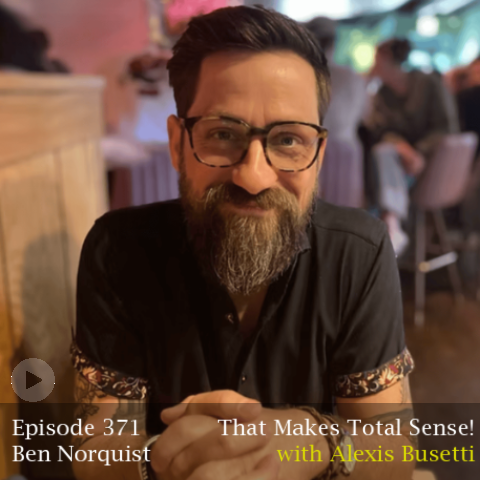
The book is called Every Somewhere Rescuing A Theology of Place in the American Imagination, co authored by my guest today, Ben Norquist and his co author Brian Miller.
Thank you, thank you, thank you, thank you for your work, thank you for this book and thank you for spending time with me today.
[01:12:36] Speaker B: Thanks, Alexis. It's been fun.
[01:12:40] Speaker A: The links for all the resources mentioned in today's episode can be found in the Show Notes Music and podcast production by Seth Busetti. Be sure to give us a review on itunes and subscribe at your favorite podcast listening app. You can also Visit
[email protected].
Sam.