Episode Transcript
[00:00:07] Speaker A: Welcome to that Makes Total Sense, a podcast dedicated to exploring God's generosity and justice. I'm Alexis Busetti, a Christian aiming to ask good questions and encouraging you to do the same.
Every one of us is wired by God to live out generosity and justice. But the how sometimes Elusa that Makes Total Sense is a way for us to get together, posture ourselves as learners, and challenge one another to practice generosity and justice in a tangible way every day.
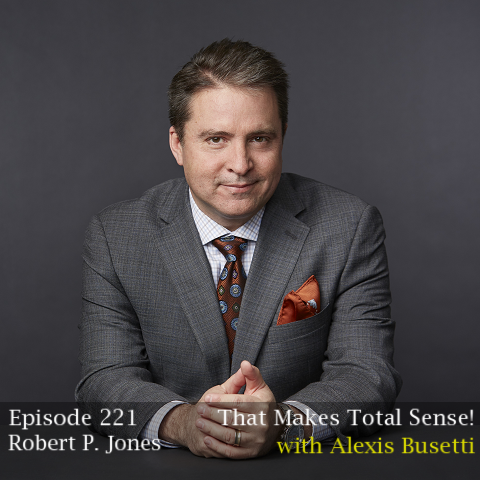
Okay, so I'm kind of beside myself, excited this afternoon to speak with Robert P. Jones. I didn't ask you ahead of time, but I noticed in the book, like, you gave a little dialogue where you introduced yourself as Robbie, and I'm kicking myself because I'm like, I'm going to ask him. Can I call him Robbie? Because I think you signed your email back to me. So anyway, we'll say Robert P. Jones. Very official.
[00:01:11] Speaker B: There you go. And now you can go to Robbie.
[00:01:13] Speaker A: And we'll go to Robbie. Great. So Robbie's here. I'm super excited, Robbie. The new book is the Hidden Roots of White Supremacy and the Path to a Shared American Future that I just finished yesterday. I just want to say for the record, a, I thought it was really great. B, I thought it was really hard.
Yeah, this is a really tough book to read.
So just for folks who haven't maybe heard you on a podcast yet or haven't grabbed a copy of it yet, the reason that it's hard is because you share. I mean, my mind went to I categorized it in a certain way and just kind of said you had kind of six paired case studies with violence and displacement and genocide, really, of indigenous people and then also lynchings of African Americans that have all taken place in the US.
Since and then we'll say since we've been the US. Which is kind of how you intro the book, which is debatable, where we kind of start that timeline. But each one of those stories, there's connections, even though they may not be completely obvious on the surface, and there are stories of violence, and so they're really tough to read and tough to reimagine and tough to come to terms with.
That feels really heavy, but I just want to kind of say that up front. That's where I was when I left the last page yesterday.
[00:02:58] Speaker B: Yeah. Well, it's certainly a challenging history, but I think it's one that we really have to be able to face because it is our history now. It's not the one that most of us learned from school or the textbooks we got handed.
I've got a PhD in religion, right? So I'm over educated, took a lot of religious history courses, history of the church, et cetera, and I just never got these stories anywhere. And they're not just stories of, I think, what's important for me and know a person like me. So I'm white, Christian, grew up in the south, grew up evangelical, that these stories aren't just about right. They're not about African Americans. They're not about Indigenous people. Of course they are about those, but they're also about us. And I think we often think that somehow that history, that African American history isn't our history or that Indigenous history isn't our history. But the thing that I'm coming so clear about is that we can't really understand who we are if we don't understand our interactions with African peoples and with Indigenous peoples. And it's just something I think tellingly that we don't get from know whether it's public school or private school. I mean, I went to public school, then to a private college, private Baptist college. But neither am I public school in Mississippi nor in my private Baptist college did I get really any of this history.
[00:04:37] Speaker A: Yeah. So thanks for sharing that. That made me think of two things. The first is I was mindlessly scrolling through Instagram last night, and Jamar Tisby in his stories was referencing comments. I didn't see the comments, but he had shared something with his class that his know, kind of became they had a strong response to because they hadn't learned it in their history. Right. And Jamar's a historian, and so his response was, look, I'm a historian. I do this for a living, and there's lots more stuff that we don't know than we do know, and we're all still learning. And so I just think I love that from Jamar. And I just kind of want to name that to say for those of us who because there's a lot of things in this book I didn't know, and some of it I did. But to just kind of say even in this conversation, there's not shame in not knowing. We're all still learning. And so if we haven't heard this, let's open our eyes to it, right?
[00:05:34] Speaker B: No, absolutely.
I try to be pretty honest about this in the book that, again, I make my living kind of my professional role is like understanding the role of religion in America. And even five years ago, before I started doing the research on this book, if you had quizzed me about many of the kind of Indigenous interactions, I would have known very little about it. So, I mean, this book has actually been a project of kind of self reeducation in many ways and trying to kind of teach myself the history that I didn't get taught.
[00:06:13] Speaker A: Yeah.
The other thing that came to my mind as I was reading this is that not only have we missed Indigenous history and African American history, which is a huge part of who we are as a nation, but I had the thought several times this book could be in some ways, there could be different versions of this for different people groups. Right? Who have immigrated at different times or who have been present. I'm mixed Hispanic. My mom's side is Mexican American, and one of the things that was asked of me several years ago was my great grandmother, who was the first to be in the States. And the question I got was, did she cross the border or did the border cross?
Know as I continue to think about things that I have learned from my own Latin history is there could be a book written with a shared history here, too. There could be with Asian American people groups.
I was even reminded my husband's family is Italian. They weren't always white in quotes and face discrimination and these kinds of things. And so that so many people groups could have their own version of this book in some ways and how their treatment mistreatment could be tied to the roots of white supremacy.
[00:07:51] Speaker B: Yeah, I think that's right. One thing is, I hope even though I mostly focus in this book on the kind of, like, European, African, European indigenous interactions, those aren't separate from the story you just told, right? If you look at so why is Spanish spoken all up and down the Americas, right? Well, there's a colonial story behind that. It didn't just pop up. Right. It came over from Spain. And part of that kind of know, I write three chapters on Mississippi, and I begin that history with hernando DeSoto from Spain, right. Coming over in 1451 and say, look, that's really if we really want to understand how we got to Emmett Till and the murder of a young black teenage boy for allegedly whistling at a white woman and why that? Was an offense punishable by torture and death and then the killers acquitted.
If you want to understand that society, you've got to go back to understanding this kind of first European contact.
Really? Not too far away from where Emmett Till was killed is where Hernandez Soto discovers, quote unquote, the great Mississippi River and lays claim to that land for.
[00:09:12] Speaker A: So let's so I realize I'm getting ahead of myself, so let's lay out a little bit what you've done. I think that'll be helpful for listeners, folks who haven't read it yet. So I mentioned earlier kind of six case studies, kind of paired case studies, and the way that you line that out after you've got some wonderful intro chapters and then a couple of really great conclusion chapters, which, spoiler alert, that's where I wanted to start was with some of the things that you bring up in the conclusions. But in the meat of the take, one of the things that's fascinating to me is you take kind of three different regions. And I want to point that out because this is a conversation that I've had with people who really have in their minds, especially if they didn't grow up in the south. You grew up in Mississippi. I grew up in Oklahoma, by the way. So you get three chapters in this book I get three chapters in this book, our homelands do. But even for people who have not grown up in that area of the United States, there is sometimes still this mentality of, oh, racism is a Southern know. And so I just want to point out you have three chapters on Mississippi, three chapters on Minnesota, and three chapters on Oklahoma. And so we've got I mean, we don't have the east and West Coast covered, though they are mentioned to different degrees in the book, and they're definitely not excluded from our history in this way.
But the point is to say that this isn't like something confined to region. It's also not something confined to time, and it's not something that has gone away. It's not entirely in our history. And so what you do is connect some of the really brutal history of the European and indigenous history to the also brutal treatment of African Americans. And so you have some really displacement, massacre, genocide connected with lynchings and a race massacre in Oklahoma. And so one of the things that you point out in the conclusion is that it's easy for us to compartmentalize these histories and say, okay, we have a Native American history here. We have an African American history here. But one of the things that you're really trying to put forth in this book is that these are not siloed and we can't compartmentalize them, that they are connected. So can you talk about those connections and kind of how you sought to do?
[00:11:47] Speaker B: Well, you know, I start actually the book with a scene that's actually not from the south or from Oklahoma. It's from Know, but it connects. So just briefly, the opening scene of the book is I'm telling the story of a man named Robert Hickman who set out to free himself. He heard that the Emancipation Proclamation had been freed, had been issued, but because he lived in Missouri, which it didn't apply to, I think we often forget that the Emancipation Proclamation only applied to states that were in rebellion against the Union, missouri at that time did not qualify. So it didn't free anybody in Missouri, but he was literate in a local pastor, and he took it upon himself. He was like, well, whether or not it officially applies to us or not, we're going to take this opportunity and go. And he and his family and friends.
It was kind of a mass escape. I mean, there were 76 of them that just pushed themselves out into the river on a raft as a way of escaping Boone County, Missouri, hoping to get picked up by a steamboat heading north. And they actually did get picked up. They got taken all the way to and, you know, just a couple little scenes here, like in St. Paul, they tried to disembark at the city and were threatened by Irish dock workers who thought they'd be competition for jobs and would have been beaten. The police actually sided with the dock workers and prevented them from disembarking. They actually pushed up river further and got taken off or disembarked at Fort Snelling, which is a federal fort there. But what they encountered there was the clashing of these two narratives right as they were disembarking to freedom.
They encountered really the same day the federal troops were loading up the remnants of the Dakota people onto the same steamboat to deport them from the state of Minnesota.
And so the way I put it in the book is what we have right here in one scene is the beginnings of emancipation for one group and the end of sovereignty and exile that had already followed genocide of another group.
You could tell that story in most states in the country. Right? I mean, I could have had 50 chapters. Instead, I kind of chose to have three. But this story of first forced indigenous removal and genocide connected to enslavement of Africans, it in many ways is the American story that we don't want to tell ourselves. Right. And what's behind that, I think, is even more importantly, who's driving that? What's driving it? It is white European, Christian people that are justifying it and driving it.
[00:14:52] Speaker A: Yeah.
One of the ways that that's being justified and driven is that I would say it won't be familiar to many if we use the term doctrine of discovery, though we can talk about that.
But I would say the ideal that America is a promised land is something that is very familiar to people. Maybe they haven't verbalized that we might.
[00:15:19] Speaker B: Even hear that, certainly.
[00:15:25] Speaker A: But I want to go back to even this central region of the US. Because one of the things that I learned from your book that connected some dots for me and is not now, granted, I get it. I'm thinking about fourth grade history. How are we teaching that? There are some things that just aren't very nuanced right. When we're in elementary school? I didn't end up becoming a history major by any stretch of the imagination. But at the same time, I think that we obviously can do a better job. So I'm talking about the Louisiana Purchase.
What I learned about the Louisiana Purchase from your book was fascinating for me because I think in the way that it was taught to me was familiar indeed to you, which is this was a great deal.
[00:16:14] Speaker B: Greatest real estate deal in history.
[00:16:16] Speaker A: Greatest real estate deal in history.
But talk about what the fine print, what the actual meat of that contract actually meant.
[00:16:31] Speaker B: Yeah.
This is basically the European powers in a room making decisions over land that none of them actually controlled, that were inhabited mostly by indigenous people who were completely unaware of this backroom deal making going on between the European powers. And so it was a time where France was ready to relinquish its control of these lands. But that control was only on paper. I mean there were a few forts scattered here and there, but by no means was there like control of this land or even fully settlement or occupation of any of these lands in the Louisiana Purchase. So what was really purchased was not real estate in the way that we think about it, but in the technical terms of the day. It was the right of preemption that was purchased. And so what Jefferson purchased from France was the right of preemption, which means the right of European powers and by extension the US. As a European colonial power, newly independent, but yet kind of still drawing on this European legal concept that they had purchased from France the right to be the preemptive power and to be the ones who had the legal claim from a European perspective to all those lands. Now again, all the indigenous people that were inhabiting those lands up and down the Mississippi River from Minnesota to New Orleans, like no clue that over here these white people know kind of wheeling and dealing away supposedly the rights to their lands. But that's the way I mean, it's stunning. Frankly, I didn't know this either until I really started reading up on it. I was like, oh wait a minute. So whatever the great purchase price was, it didn't give them free title to it. You just gave them the rights to claim those lands over and against indigenous people.
[00:18:32] Speaker A: Right? Which is anyway, it just blows my mind.
I want to stay there for just a second because many Americans I will say we are coming back. There are these people have worked to do land acknowledgements, right? And things like this, there is work being done at the same time.
I'll just share a tiny bit since I'm from Oklahoma. I lived there until I was almost 30.
So went to school there, public school, same grew up, I grew up using the language of five civilized tribes.
It was only several years ago that I called my dad. I'm like, I'm sorry, what do we say? Because it was just the language. I didn't even think about it as a kid, of course, and I was a grown woman in my 30s. I'm like, dad, I'm sorry, what do we say now? What do we actually say? Anyway, he said five tribes. But I grew up with that language. And I also worked for the state government when I was in my twenty s. And part of what my job required was that I would go to county court for various things and I was aware that indigenous peoples were in the judicial system. There was a difference, right?
This was something for me because of the sovereignty of each nation that is represented in Oklahoma. Now, what always blew my mind and especially with some of the more recent rulings is wait a mean we know that the US. Didn't honor basically any treaty that they had with any of the indigenous peoples much after the ink was dry.
But with some of these things, I kept thinking, well, wait a minute. If they're sovereign in this way and we're required to go back in this way, what about the land?
What about the land? And, Robbie, you talk about that a I mean, it's pretty convoluted. Can you just say more about how convoluted this is? Because I feel like this is things that we're still living out after the Louisiana quote, Purchase.
These things are still being played out in ways that are still unjust and unfair.
[00:21:20] Speaker B: Well, it's pretty clear.
Ned Blackhawk has a great new book out where he kind of talks about the Louisiana Purchase here. I'm thinking about that now. And he makes the point that one of the motivations for Jefferson also wanting that control over that big plot of land and having France relinquish it was that he wanted space to push westward, right, to push European colonization westward across the Appalachian Mountains into the interior. But he couldn't do that because it was all under control of France.
And he also saw that those lands for the Louisiana Purchase could be used to displace indigenous people who were in the original 13 colonies and particularly in the Southeast along the Gulf Coast. And it's exactly what the US. Government did in very short order.
So by 1830, we have the Indian Removal Act, which is forcibly removing people creek, Chickasaw, Cherokee and we end up with that term Five Civilized Tribes because they were the principal tribes that were moved from the Southeast by force.
Came to be called the Trail of Tears. Surely called the Trails of Tears plural, because there were many waves of know. Tens of thousands of people die on this kind of force march, sometimes taken the dead of winter with very few supplies.
And they're essentially herded mostly to Oklahoma. I mean, Oklahoma was, quote unquote Indian Territory before it was a know. And the reason why Oklahoma looks so strange in terms of its borders is because other newly formed states just kept taking bites out of Indian Territory to become new states. And eventually what's left is that funky looking state sitting on the top of Texas, this little panhandle. So it's got a real convoluted story there. But even then, I mean, that's the thing is that even when you have all of these Native American tribes have ceded all of this land in the Southeast, they're herded in this one little place that's called Indian Territory that then gets called Oklahoma. Even that's not enough for European settler colonialism. So even that is not sufficient deprivation. So then there's a whole other process of even after all of those tribes who are resettled there get promised we will never encroach on your borders, these are yours forever in return for seeding all this other stuff in the Southeast. It's very shortly again, I think it's worth pausing over what you said about it really is true. And these trees, when you read them, they have words like, as long as the grass grows green and the rivers run this agreement, these lands will be yours. They were very lofty and permanent promises that got made as a way of kind of leveraging them off of lands that they were on. But it's worth kind of remembering like, that's us, right? That's our government that made those promises and then very quickly broke them. And they broke them because really there's no other way. It's just greed.
And the word that I think it may be a vocabulary word that wasn't really in my arsenal is the word rapacious.
And so I've used it a couple of times in the book. I actually got it from, or I came across it first in this context from Alexei De Tocqueville, who wrote Democracy in America. And so in the English version, it gets translated rapacious, but it just means like, insatiable, greed, aggressive, insatiable, greed. And I think that's really the story. It's pretty simple. But then all of these other principles get evoked. That word civilized is not also accidental. All right? So there's a way of what it means is that we're going to recognize these five tribes, but that means these other hundreds of tribes we're not even going to recognize because we consider them uncivilized.
Our Declaration of Independence, for example, has the words merciless savages in it. That refers to indigenous people in the Declaration of Independence. So that was the default way. So in a way, civilized tribes was supposed to be a kind of recognition that these five tribes the US. Could deal with. And we helped organize them. But even then, the reservations were pretty quickly broken up. There was this whole thing called allotment, which basically was a total unethical scheme to deprive Native Americans even of the lands they had been promised on the reservations.
And it just ends up being this kind of winnowing down of sovereignty and land until there's very not much left. And just one quick I know I'm rambling here, but one quick example. I can't resist this. Killers of the flower moon. The movie is coming out.
[00:26:29] Speaker A: Hey, ramble. Because that is exactly where I was going to ask.
[00:26:33] Speaker B: And it gives this story, right, because the Osage who had been actually in Oklahoma, moved out of Oklahoma, moved back into Oklahoma. Like ping ponged around by force, they finally get pushed on to what the white settlers in Oklahoma think is a worthless kind of scrubby lands you can't farm. They think they're worthless, and lo and behold, they're sitting on massive oil reserves even after getting pushed onto these worthless lands. And what happens, of course, is all of a sudden white people are now interested in even those lands, right?
The movie tells this awful story of the links to which white European, again, mostly Christian people are willing to go that even reaches into intentionally marrying into indigenous families with the plan to kill off spouses and children, to inherit Native American head rights to those oil reserves. I mean, that actually happened, and not just by one rogue person. This was kind of a pattern of behavior there. And it's just beyond words, really, to comprehend that kind of know. Again, all the other disenfranchisement is not enough. But when oil is there and you could tell the same story of Cherokee and gold being discovered in the Northern Georgia mountains or California gold rush, same kinds of stories that lands that indigenous people were promised when they were discovered, anything valuable was on them. They found all kinds of excuses and in many cases didn't even find an excuse, just used sheer violence and force to push them out.
[00:28:22] Speaker A: Yeah, I'm really glad you went there because like I said, that was the place I was going to ask you to go next, and it was on that insatiable, so so, full disclosure. My plan coming into this was to really focus on the stories that happened in Minnesota, in part because they were the ones I was least familiar with. I read a book by I can never remember the author's name. Journalist Washington Post wrote a great book on Emmett's Hill that I read several years ago. And so I was pretty familiar with his became I would say I became familiar, more familiar with Greenwood and Black Wall Street and things like that, but I was less familiar with Minnesota. But I'm shifting and saying we got to talk about Oklahoma because this greed piece is so evident in these two stories. So Killers of the Flower Moon, the book came out, I don't even know, 15 years ago, probably.
[00:29:23] Speaker B: Yeah, it's been out for quite a while.
[00:29:24] Speaker A: It's been out for a while.
I didn't read it. And so reading about it in your book was like reading it for the first time for me. And I was, of course, shocked and appalled. Not surprised because of the greed that not just our government, but that European Americans have shown this pattern, as you said. There was one of the stories, I think that you mentioned in there of even, again, violent but slow poisonings. Right. I mean, it's like really sick situations because of this greed.
And like you said, on a land that they thought was worthless when it ended up not being worthless, I think there's a greed. But to me, when I read the stories of the Osage people and of Greenwood District and Tulsa, what also comes to mind is there's no way for me to get inside the heads of the people who are committing these atrocious crimes. But it's like there's also an envy. Like we can't handle seeing a people group that doesn't look like us actually succeeding or becoming wealthy or it's a really tough thing to kind of say out loud, but it's like it wasn't enough to be greedy for it.
But we also are saying with these actions, you can't have that osage people. You cannot have the wealth that comes with that oil. And for the African American community, that was arguably one of the wealthiest communities at the time, wealthiest African American communities at the time in the country, it wasn't enough to say we want that, but it was also, you can't have that.
[00:31:29] Speaker B: Yeah, I think that's right. And I think we this is where we haven't mentioned the words white supremacy yet. I think this is maybe a good place to talk about it.
I think many times when I use the word white supremacy, particularly if I'm talking in white circles, people envision the KKK or the image that comes to their mind is like a grainy black and white image of the KKK burning across in the 1920s, something like that.
And I think that that's honestly like a kind of self protective way to think about white supremacy because it means it's way far away from us in time. It's way far away from anything we can imagine being a part of, for most of us anyway.
But it really is this sense that, as you said, some of the language that we have is not far off of that. This idea of the US. As a promised land for European Christians. Right. If we had that view of the country, then if anybody is above white European Christians, then the world is literally upside down.
There was a phrase that Ken Burns used in his Civil War series.
I think he named, actually, the entire thing, and it was a Confederate soldier writing back after the loss of the war. And the way he describes the world is he says the bottom rail is on top.
And it's a metaphor about a fence, about those split rail fences, right? And so there's a top rail and a bottom rail. And in that worldview, of course, white Christian people are on the top of that, and they're supposed to be on top. And so this sense that the world is inverted and that there's a hierarchy, that's the thing. There is a hierarchy, and it's not random in this worldview. It's God ordained, right? And so it means that if indigenous people are getting ahead, if African American people are getting ahead, whether it's power or money, either way, that's why there was such efforts to keep both indigenous people and African Americans from voting, right? Because that would lead to power, influence, and structural change.
And that was not the way the world was supposed to be from that point of view. And that idea is not that far away from us.
We want to think it is, but it's really not that far away from us. And as you said, it's not a Southern thing. There were plenty of stories from Minnesota, right, that you can't get much further north. And stay in the US. Than Minnesota. And there's plenty of racial challenges and problems in Minnesota. I mean, that account of the lynching in Duluth, which is also far north, even in Minnesota, it's up on the lake, on the tip of Lake Superior. And that account of the lynching of three African American circus workers in 1920, I mean, it sounds just like it's out of Alabama, right? 10,000 people turned up in this small it's a 10th of the population of the town at the time in this Minnesota nice, good Catholic Lutheran town.
[00:34:52] Speaker A: Yeah.
Thank you for bringing that up and bringing it back to white supremacy. And when you say it's not far from where we are now. I live in Texas, so there's lots of voting issues here now.
And also you mentioned it in the closing chapters of the book, a couple of places that I'm thinking of right now. One is I read a lot. I'm going to be embarrassed if this is not in your book, but I think it is. Talking about the two churches, I might.
[00:35:30] Speaker B: Just claim it if it's good.
[00:35:32] Speaker A: Two churches who were interacting. And one of the churches says, let's watch Hidden Figures. Is this yeah, okay. Let's watch Hidden Figures. Actually. Right. And the pastor of the black church is like, going, I don't think this is going to be a great place for us to start. Right. Because of what you said, one church is looking at this as a historical thing, oh, we've triumphed, we've come out, but we can still talk about the pain of the past. And the other community is recognizing, no, this is the pain of now. And the other thing I thought of, and I'll let you kind of choose your own adventure, is when we're talking about voting rights, white supremacy, the great replacement theory that is driving a lot of politicians and public even now. Right. What would happen if and then name your group if this people were given the opportunity, equal opportunities for voting, holding office sharing power, even existing in this space?
[00:36:40] Speaker B: Yeah, I'll start there, actually, because I think that's really important when you think about the kind of tropes that are kind of rolling around our politics like that, like the great replacement theory, which shows up on Fox News Newsmax, other kind of far right things, and it's just such a hateful rhetoric. Right. It's kind of demonizing other people.
We've actually asked about this in public opinion surveys at PRI, and it's remarkable what a foothold it's gotten. So the way we phrased it in a survey question is, do you agree or disagree with the statement? And the statement is immigrants are invading our country and replacing our cultural and ethnic background.
Right. Turns out that 38% of the country agrees with that statement. But there's this huge partisan divide and divide by kind of media outlets. But it's two thirds of Republicans who agree with that. Statement. It's 15% of Democrats. So it's like one of their biggest partisan divides is on a question like that about and it does come down to, again, the kind of things we're talking about. Who is this country for, right? Who are real Americans? These are the big dividing points, and they are so connected to this long, long history.
And again, back to this kind of key point. We've also asked in today public opinion surveys, how is this with us today? We've asked a question, really about this doctrine of discovery, this idea that the US. Is a and we ask again, do you agree or disagree that the US. Is ordained by God to be a promised land for European Christians. So we've got whiteness Christianity, God, all in the question. And it's, again, three in ten Americans who say yes, that means two thirds of the country disagrees with that assessment of who the country is. But there's still three in ten Americans that are affirming. That old idea that drove the entire colonial project, right? It drove the transatlantic Slave trade project. That idea.
[00:38:58] Speaker A: Can we stay on that one for a second? Because that graph is in the book. And when I looked through it, one of the things that drew my attention, it was kind of interesting to see the partisan breakdown I anticipated and the religious breakdown I largely anticipated. But I did circle the Jewish bar on that because for me, that felt like a marker because we could go into a whole lot of religious things on that. But to use the language of a new Promised Land, and to note that religiously Jewish folks are like jewish respondents are not on board with that statement right. Almost whatsoever. Right.
They're the lowest bar next to religiously unaffiliated who were the same. And so I don't need to necessarily elaborate on that, but it did kind of make me chuckle and sigh at the same time because of, again, of replacement stuff and borrowed language and all sorts of religious stuff that you could get into. White evangelical Protestants have the highest bar on that, and it is broken down because Hispanic Protestants are lower, black Protestants are lower in the bar. But white evangelical Protestants, higher than mainline, have the highest bar of agreement for that statement at 56%.
[00:40:39] Speaker B: Yeah, that's right. And so it lives on. Right. This 500 year old idea is still with us today, and it's still roiling our politics. It's not like it's off in a corner on the fringes somewhere. But I mean, our key debates and even the way the parties are identifying, I think, to my mind, unfortunately, only have two political parties, right? So we've got this binary lens that everybody's forced into particularly every four years, and we're about to have another one of those four years coming up.
But it has become part of the package on the Republican side of politics today. You can just measure it.
And it is this kind of old, old claim about who the country is for who we are as Americans, who's a real American.
And I think it's obvious, but to say it plainly, it's a fundamentally antidemocratic view, right? We can't both be a pluralistic democracy where everybody stands on equal footing before the law and be a divinely ordained Promised Land for European Christians. Like, those two things are mutually incompatible.
[00:41:49] Speaker A: Well, I want you to say more about that, if you would, please. And I'm going to kind of shout out my dad and hopefully not embarrass him at the same time. But my dad studied in graduate school, studied political science. And I have said of my dad before, I don't think that my dad is necessarily prophetic, but what I think is he's very perceptive. And so things that, for example, conversations that I would have with my dad and things that he would say, let's say five years ago, I'm like, you are nuts. Like, there is no way. Right? And then you fast forward about three years and you start to hear some really perceptive political commentators saying the same things that my dad had been saying. And people are saying to them, maybe you're far off or maybe you're exaggerating a bit, right? Fast forward a couple of more years and the time frame is ambiguous, arbitrary, depending upon the topic. But this saying, this is an antidemocratic ideal.
This is a conversation I was having with my dad several years ago right, that I'm like, I don't know. And fast forward to now. You're going, yes, absolutely.
This is an antidemocratic ideal because you can't be both things like you said. And so I've just repeated what you've just said, but I want you to share more of that because you've studied it and you've asked the questions of people, not just us, kind of looking at what are the leadership saying, because that's important. But you're also asking voters what they are perceiving and how they feel about these things and what's driving their politics.
[00:43:51] Speaker B: Yeah, I'm quite worried. All right, so I'll just say I was born in 1968, so I'm 55, and I have been I've got more than 25 years of my adult life of really observing American politics and this intersection of religion and politics.
I have never been more concerned than I am today about what you know. And I think it's because we have know, particularly over the last five to seven years, and I think with the advent of kind of Trumpism and the Make America Great Again takeover of the Republican Party, what's essentially happened is a number of guardrails have been breached, right. Things that it used to not be okay to say now are okay to say out loud, and there's not political repercussions for it. And I think that those things matter at the leadership level. Right. I remember George W. Bush. Just to kind of make sure I'm not just picking on Republicans here, but one of the most important things that George W. Bush ever did was after 911, he stood up at a mosque and made sure one, he did an appearance at a mosque and he made a point of saying, we are in a battle against terrorists. We are not in a battle against Muslims. And he made that distinction and he made it over and over. He was the first president to use the word mosque in a speech in describing the American religious landscape, like we usually say, churches and synagogues. And he added mosque to that list. Churches, synagogues, and mosque.
And so he played a really important role in kind of tamping down.
Now, we still had outbreaks of violence, but I have to think he actually saved lives by doing that, right? And then we've had, on the other Know, these awful white supremacist events in Charlotesville, Virginia, marching around a statue of Robert E. Lee and literally chanting, jews will not replace know while they're marching around the statue of Robert E. Lee and a president who is saying, there's fine people on both sides, right?
In an event like that? And so I think there's been this unleashing and permission given that we're still reaping today. And even the stuff with Israel and Palestine is spilling over into US. Politics. And we had a six year old boy stabbed to death outside of Chicago by a person shouting, by their landlord, stabbed his mother, killed the son shouting, Muslims shouldn't be here. Right? That's spilling into our politics. So, I don't know. I'm really worried about where we are. And the other piece that I highlight in the book is that among people who believe that America is divinely ordained, promised land for European Christians, they're far more likely to support political violence than other Americans are. Which makes sense, right? If you think you've got a divine mandate to hold on to this no matter what and by any means necessary, it would stand a reason that you'd be willing to support political violence. Exactly what we see.
It's a third of Republicans today who say that true American patriots may have to resort to violence.
Those who believe the election was stolen, it's nearly half who say we might have to support political violence. But in these know, if we think back of other expressions last thing I'll say on this is about you mentioned the but. You know, one of the early letters that George Washington had answered was actually from a synagogue, from the leaders of the synagogue who said, hey, in this newly formed nation where we are an extreme religious minority, are we going to be second class citizens because we're not Christian? And he answered them very straightforwardly and said, Absolutely not. Right. The only thing required is to affirm the laws of the republic. Like, that's what it's required to be an American.
And so from the very beginning, we've had forces saying that, and we've also had the other forces with us laying claim to this kind of European chosenness as well. And I think that's one of the challenges is that we have just been wrestling with these two ideas for our entire history. They predate the Republic, they came into being with the Republic and they've just been with us.
And so part of what's going on, I think, is that the country has changed demographically enough that we're at a kind of moment of reckoning forever. White Christian people could sort of pay lip service to democracy knowing that they had enough a lock on power. Right? But the country is only 42% white and Christian today, right. Even as recently as 2006, or, sorry, 2008, it was 54% white and Christian. So just in the last 20 years, we have crossed this threshold and I think that has brought out this reckoning. And quite frankly, the panic among many particularly conservative white Christians who see this as their country and kind of feel like their ownership of the country is slipping away.
[00:49:22] Speaker A: Yes, I can't remember the context, but I was having a conversation not too long ago with a friend talking about power, and even as you said those statistics, I thought, yes, but I don't know the statistics. But this isn't what is represented in power holding political positions.
[00:49:50] Speaker B: Right.
[00:49:50] Speaker A: It's not 42% white and Christian. It's way more than that. That's my technical statistic there is it's way more than that. Right.
And men, I will add that as well, and even looking that we've had one president who wasn't white, no presidents who have been female, and I don't think we've had any who haven't confessed to be a Christian in all of our nation's history. And so you do see the panic because the public is changing. And yet at the same time, I think that's part of the fear is that the public is changing right now. The power still exists in those places with those people. But what right, what if people who are representative of the public vote in people who look like them?
[00:50:52] Speaker B: Yeah, well, I'll give you one for Tech. You're in Texas, right? Texas is only one third white and Christian, right? One third. But if you go down to the Austin thank you. Look at the legislature, that's not what it looks like.
[00:51:06] Speaker A: That's exactly.
[00:51:09] Speaker B: And in Texas, for example, there are more religiously unaffiliated people than there are white evangelical Protestants in the state of Texas. But you would not know that from looking at the power.
[00:51:21] Speaker A: Right? That's right. You wouldn't know that from looking at the power structures. And you wouldn't know that by how the lines are drawn for districts. And frankly, this is one of the things that this is a different subject for a different day, probably. But one of the things I said to Andrew Whitehead, we were talking about white Christian nationalism and I asked him one of these very complicated questions, right. But my response was yes, but people who hold the ideals of white Christian nationalism are just so loud.
So you may not know that in Texas, just walking down the street with the signs for the politicians that you see or the petitions that people are asking you to sign or the T shirts that people wear or whatever, it feels very loud.
[00:52:17] Speaker B: Yeah. Well, I think one of the reason why it's loud is because it's taken over one of our two political parties. And so, I mean, you don't get much of a bigger megaphone than especially again in a country that only has two that's a big pulpit and a big megaphone. Right.
This is something that's kind of alarming to me just in terms of democracy, is the parties are sorting themselves, I think, because of these concerns we've been talking about along lines of race and religion, right. So the Republican Party today is 70% white and Christian in a country that is 42% white and Christian. The Democratic Party is about a quarter white and Christian. Right. So, I mean, just in that kind of racial, ethnic, religious identity, you've got the divides writ large before you know anything about their platforms, right. That's going to tell you. And those divides have gotten bigger over the last few decades in terms of race and ethnicity. And because of that, a third of the Republicans are just white evangelicals because they all load into that one side of the party platform. So their voices get amplified because they are such a big part of one party. Right. They just kind of have this partisan megaphone. And then you mentioned the problems with gerrymandering are serious because they not only ensure that a Republican or a Democrat is always elected in a particular district because the way it's drawn the other party and many of them don't even have a fighting chance. So if you win the primary, you win the election right, on so many of our districts today. But that also means that it incentivizes people to go to the extremes in those districts, right? Like if you're a Republican running in an all Republican district, you're not looking over your left shoulder, you're always just looking over your right shoulder. Who's going to be more conservative than you and really more extreme than you. But that means they're more and more out of step with the whole state, right. So we've got a real challenge, I think structural challenge that means these voices do get to be louder than they in fact are, but it also means they've got more power than they should in fact have.
[00:54:34] Speaker A: Yeah.
I want to bring us around to one of the other things that you mentioned in the closing of the book, because the second half of this title is the Hidden Roots of White Supremacy and the Path to a Shared American Future. And the last couple of chapters. We've hit on a few things in this part of the conversation that you mentioned, your concluding chapters. But one of the things I'd like for you to talk about as we kind of start to wrap up is this the way that I don't remember the way you phrase it. It's much better than this, but it kind of ebbs and flows or it's kind of like two steps forward, three steps back sometimes in the movement forward. So again, to go back to the way we're saying, kind of three chapters on each region in the book, one is on the indigenous history and then a kind of case study. There is the language I'm using, and then one on the African American case study, and then one on how has that region moved forward since those events and what does that look like? And one of the things that struck me, I think I'm remembering this correctly from the Oklahoma chapter, that third Oklahoma chapter, there was a committee formed for the centennial of the Tulsa Race Massacre that happened in the Greenwood District, and you used Governor Stitt as an example of kind of what you're talking about with this progress. So he's on the committee, and yet.
[00:56:17] Speaker B: What yeah, so he's on the committee, and while he's on the committee, sponsors one of these so called critical race theory bills, right. That's going to prevent the very teaching of the things that the committee is trying to unearth.
And the committee ultimately kicks him off.
[00:56:39] Speaker A: The committee over here because of how inconsistent this is.
[00:56:47] Speaker B: It's really troubling and inconsistent. And the similar thing happens in Mississippi, right, where Governor Tate so Mississippi, I am proud to say, is my home state and has the only civil rights museum that has been funded by an official state that exists.
Now, I went there fairly skeptical because of that the first time I visited, because it's like, okay, what kind of civil rights stories is Mississippi going to tell about itself? But it turns out that it's actually quite honest and frank and good. I would say true confession. I really came armed to write a hit piece about how terrible it was, and I walked away really moved by the story that they had told there.
But very similar thing happened, right? So the state of Mississippi is standing up this laudable, no holds bar, tell the truth story about its very troubling history. And at the same time, Governor Reeves is sponsoring a bill to suppress the teaching of African American history in the state of Mississippi.
But here I think these things are actually not unrelated. I think that part of what we're seeing. When I last looked, there's only twelve states in the country that have not had legislation introduced to suppress the teaching of our history.
Some variety of critical race theory bills, many of them name the 1619 project as something explicitly that cannot be taught they're all cut and paste bills right from the same source.
But it's a national movement. But I think if you ask yourself, well, why in the world in 2022, 2023 is this happening? Why do people feel like it's worth spending their capital on? I think it's a question worth asking. And I think it's because there is a reckoning happening.
And I think that wind is actually quite powerful and blowing and is changing things. And I think these are responses to change. So yes, in some cases they're successful, some cases they just make a mess of things. But it's important if we step back from the kind of day to day stuff that we see that oh, actually the country is changing, the story it's telling about itself is actually changing. It's becoming more honest, trying to wrestle with these difficult truths, trying to honor histories we've tried to suppress.
And that's really important.
I actually take some, even though I get really frustrated sometimes. But I take some, I guess solace in the fact that those are reactions to progress and change.
[00:59:34] Speaker A: The last question.
Someone picks up your book and they are in a similar place that maybe you've seen friends be in or maybe you were in five years or seven years ago or ten years ago and meaning they're not required to go to a high school history class anymore and they've done their college studies and they're just curious.
But the things in this book may come as a surprise to them.
What words of encouragement do you have to them? What do you say that you say, Please just keep reading.
[01:00:23] Speaker B: Don't put it that's a great question.
I'll just say the person I have in mind as you ask that question is someone who looks like me, right? Yeah.
Probably from a weight, some kind of Christian background.
I do end the book, although I wrote the book for a general audience. I just felt like I did need at the end of the book to kind of turn to that audience, to kind of people who look like me, share my background. I even have like I think I call it a benediction and call at the end of the book right, to kind of bring us along. But that comes at the end. So at the beginning I would say this use the word curious boy to wish for more curiosity, more humility, more curiosity.
I think that is what we need more than anything else. Right.
I'm thinking of James Baldwin, who's really shaped my thought a lot. African American writer from the kind of middle of the 20th century. He was so insightful and eloquent and kind of unflinching with his addressing kind of white people.
In one interview he gave I cite this in the book, but in one interview it stays with me.
He was asked about white people and kind of what African American people thought about white people and particularly their approach to history. And he said, look, we certainly know white people. Well, we know them, one might say, in the way that a mother knows her children.
And then he said this. He said, we have come to see them, are many of them, as the slightly mad victims of their own brainwashing.
So if we take that seriously, and I think it's fairly accurate, the history we have gotten is so impossibly naive and so impossibly innocent like, that in itself ought to give us pause, right? We know enough about ourselves and our immediate ancestors to know or just about ourselves, to know that that kind of history is likely to be a fairy tale. And yet it's what we so desperately want to believe.
But I think it's time for us to kind of grow up, really. And for me, it's motivated by I don't like to be lied to.
And I've been really angry, frankly. When I think back at teachers I loved, pastors I loved, who just wouldn't tell me the truth. And in many cases, maybe they didn't know it either, right? I'm kind of willing to kind of go there, but I think many of them knew more than they were willing to tell. I think they're not all off the hook.
And so what I'm hoping is that people who look like me, of my background will just come to a more mature kind of place.
I always veer into Christian terms when I get in this space, but a more mature walk, right? Discipleship, those kinds of things we talk about. And by the way, none of that stuff ever promised to be comfortable, right? I mean, I think all this stuff about making white people uncomfortable.
When I hear Christian people saying that, I just kind of throw up my hands, like, what are you talking about?
Where did you possibly get the idea that discipleship was supposed to be comfortable? Right? It's not.
It's about facing difficult things, but not just for the sake of that. And this is the thing I think I'll end on this, but I think the thing that white Christian people have missed is that we have something at stake in getting this right.
We have something at stake in telling the truth about ourselves and about how we got here and our truth about our relationships with African Americans, indigenous people, Latino people, immigrants, Muslims, Jews. We have a responsibility to understand.
If we look around and we think, well, how could this be? I think the one thing that all this history has helped me do is to kind of have more empathy about, like, oh, well, okay, I understand why things are such a mess, and I've got a responsibility to try to do my part in kind of repairing that damage. And there's a line that I think many white people, too, is like, oh, it's too complicated, and we wouldn't know who to compensate. And anytime any kind of repair conversation gets off the ground. But I wrote this line in the book. It's something like this.
The evidence is that greed spawned a million schemes.
We were infinitely creative when it came to defrauding people of what was theirs. But when it comes to repentance, we just throw up our hands, right, and say it's too complicated. But if we applied, I don't know, half of the effort that we applied and the creativity that we applied to defrauding people, we'd come up with some real solutions that would make a real difference.
And we'd find that it not only heals other kind of our relationship with other people, but I think this is the thing that I heard from the activists on the ground in all three of those states, particularly the white activists in those states. But it was healing for them. Right at the end of the day.
[01:06:07] Speaker A: That creativity line about the greed and versus the repair was one of the many places that I underlined and starred and dog eared in the book. It was incredible. So thank you so much for that word, Robbie. Thank you for this.
It's it's hard, but it also feels hopeful.
And I think that that's part of what at least it seems like you wanted to bring in this book and, of course, in your work. And so I'm really grateful.
The book, again, is The Hidden Roots of White Supremacy and the Path to a Shared American Future by Robert P. Jones. And I will put the link to where people can grab this in the Show Notes. Thank you so much for coming on.
[01:06:51] Speaker B: No, thank you. It was a great conversation. Thank you.
[01:06:54] Speaker A: The links for all the resources mentioned in today's episode can be found in the Show Notes, music and podcast production by Seth Bussetti. Be sure to give us a review on itunes and subscribe at your favorite podcast listening app. You can also visit us at that makes Total sense.