[00:00:05] Speaker A: Welcome to that Makes Total Sense, a podcast dedicated to exploring God's generosity and justice. I'm Alexis Busetti, a Christian, aiming to ask good questions and encouraging you to do the same.
Every one of us is wired by God to live out generosity and justice, but the how sometimes eludes us. That makes total sense is a way for us to get together, posture ourselves as learners, and challenge one another to practice generosity and justice in a tangible way every day.
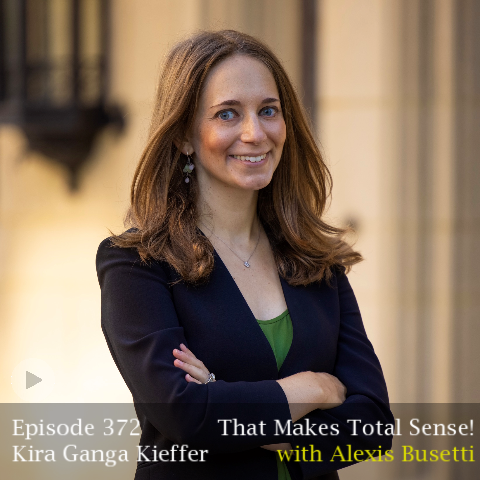
Kira, I am really glad to have you here today and we talked about it a little bit pre record we'll get into it because especially because the information that you cover in this book is not just historical account, it is really prevalent today. This information that you give, the narration that you provide is still in the news every day, including today, and that is on vaccines and vaccines in the U.S. vaccine hesitancy. And the name of your new book is called Under Religion and Vaccine Hesitancy in Modern America by Kira Kiefer, who's my guest today. So thanks so much for coming on. Kira, welcome.
[00:01:27] Speaker B: Thank you so much for having me. I'm excited to chat.
[00:01:31] Speaker A: Oh my gosh, me too. And I want to start off by asking you to provide some of your context and as we would say in my crew, kind of your social location. And start off by saying that you are coming at this as a scholar of religion.
So not like a doctor or a scientist or even a sociologist, but coming at this from the perspective of a scholar of religion. So first I want to kind of ask where in the world did that come from?
This is not, I mean, I'm, I am thinking, oh my gosh, is this kind of, this, this is similar to my space in theology and ministry and culture. And I'm like, this is not exactly, you know, something that's, that's terribly commonplace. And also I'm curious what that lens, and we'll get into this of course, in the bulk of the conversation, but what that lens of religion, that insight that gave you when you were studying this phenomenon of vaccine hesitancy.
[00:02:41] Speaker B: Great, great place to start. So, yes, I'm a scholar of religious studies. I got my PhD from Boston University.
And so in the study of religion, it's a little different or a lot different really from the study of theology because it's coming from a purely academic position with historical and sociological methods. Could be other types of methods as well. Where I'm really trying to study how does religion work, how does religion operate, affect people, what is their lived religious experience, how do. Especially my area of focus is the Modern United States, you could study religious studies, you know, about anything. But I am really fascinated with American culture and especially health culture, although that really followed after my religion in American culture interests. So the health. I kind of added on as I was studying American religious culture through this, like, lens of religious studies, of looking at, like, how did religion really, like, help?
Or how does religion affect how people live their lives and affect popular culture, politics, all of the things. And I saw that there was a lot of interaction with health culture and with how people think about their bodies. How do people trust authorities? What is the role of alternative medicine? And alternative medicine is an area that I had a lot of personal experience with from growing up and also from chronic illness issues. And so I had that as a firsthand experience.
And I'm not actually religious myself, but I had seen that there was a lot of religious influences in alternative medicine, both obvious and kind of not obvious.
And as I started studying religion, I was like, oh, I want to bring these two things together.
And vaccine hesitancy became one of the things that I was really fascinated with, mostly because I hadn't seen anybody write about it from that perspective. All the ways that people talked about it were from public health or from, you know, epidemiology, you know, very, like, scientific and, you know, doctors, medical doctors.
And I was interested because there was a lot of measles outbreaks during the time that I was doing my. My graduate work. And so I got interested in, like, what's going on there, and that's how I started studying it.
[00:05:11] Speaker A: Yeah, I am. I'm really.
This.
This book. The more I got into it, the more fascinated I was by it. So I could see kind of how that.
How that would take you there. But also because the years that this book covers is, like, almost my lifespan. And so it was really interesting for me going, okay, it's you, you. You cover 82 to 22. And I'm like, okay, I'm in my mid-40s. I was born in 81. And so I'm like, okay. So my parents would have been, no doubt seeing some of these same news articles, these primetime specials, these documentaries, kind of at least hearing the buzz, for example, with the DPT vaccine, where you start and then I could kind of fast forward and go, okay, then I'm seeing the HPV chapter, and I'm like, yes, this is where I have, you know, I'm becoming a mother, and I have daughters first. And so I'm projecting into the future. And I'm at the time in some conservative Christian communities where some of these exact conversations that you talk about are happening. I'm seeing these measles outbreaks and hearing buzz from people adjacent to my community's questions about the MMR vaccine. And then of course, Covid, which was just yesterday practically, and some of the bringing back some of the emotions and questions that I had as someone who really hasn't had any significant vaccine hesitancy in my past, but still with the culture just kind of maybe having those moments of second guessing where I hadn't before.
And so that was really fascinating to me that it kind of again, just kind of almost covered my lifespan. So it's hard for me to say this is a historical account because it's my age, even though it is.
But I loved the threads that you brought and I'll bring up maybe two right now and ask you to talk about them. And the first one is maybe we'll take them one at a time. The first one is something I really appreciated about your narration of these very difficult and sensitive topics is that you say you don't want to oversimplify this topic. These debates, the people and cultures and communities that are involved in, in these debates and the lifestyle choices that people are making. Can you tell me why was that part so important to you and what do you think that brings to the greater conversation about vaccine hesitancy?
[00:08:23] Speaker B: Great question. So I'm going to back up just a tad there, which is to say that so my book is a history and it does cover basically my lifetime as well, is a history and a historical account.
But taking this religious studies view of vaccine hesitancy is really to not oversimplify. So is to say that when we think about religion, we have to think about, I think about it from at least a scholarly perspective. I know there's lots of components. I know that there's, you know, beliefs, there's faith, there's ritual, there are, you know, obligations to community, there are obligations to tradition. There are the ways that we conceive of what's sacred. There are ways of what we conceive of what's pure and what's polluted, what we do with our bodies when they're sick, when they're healthy, when they die. I mean, this are so. I think of religion as being so multifaceted. And so as I started to consider vaccine hesitancy, I saw so many stories that were, you know, from the hesitant perspective that were about illness and that were about children and were about motherhood and taking care of children and worrying about, you know, what could happen to their child. And I thought those were just so, such raw stories, so per, you know, such personal stories, and could not be simplified to a statistic or to, you know, a medical fact or a probability, because those are precisely the types of those kinds of, like, narrowing perspectives that alienate people who have a little concern and that can make them have a lot of concern when they feel like they're not seen.
And so the idea here is to not take a position. So I don't take a position. I don't come into this book. And I try not to throughout to say, so this is what they thought, but this is what was really happening.
I think that's a very common perspective and not a wrong perspective, depending on what discipline you're coming from and what your goal is. But my goal was to explain.
My goal was to historically situate where were people coming from at different points in time when they felt vaccine hesitant and when there were those movements that you were talking about in the 80s and then the 90s and then Gardasil and then measles.
And so, yeah, that's where I wanted to not take a position. I didn't want to fact check anybody. I realized that the way that people live for real is they have lots of different ways of knowing what's right and what's true.
And those don't always align with what's scientifically accurate and, but doesn't mean they're not just as real. And so I didn't want to pit those two things against each other.
[00:11:24] Speaker A: One of the things in that, that I appreciated is the use of the term vaccine hesitant and vaccine hesitancy. And I found myself, when I was, I was chatting about this book with my husband as I was reading it, and I found myself utilizing that same term.
The reason I chose to do that was because I realized that even in my own language, that mirroring terms like anti vax or anti vaccine, even if I, even if it wasn't intentional, really did do something for me mentally to oversimplify the situation.
And I paid attention. So this morning I'll put a link in the show notes. It will be old, old news by the time this airs. But this morning I was listening to an NPR podcast that I listened to every day just to kind of get my, get my dose of news so that I feel slightly informed at least before I, before I head out.
And they were talking about a new flu vaccine that was coming out with the MRNA technology.
And I looked it up because I was like, I think I heard it and I did and one of the hosts said they were getting ready to give a clip from, from someone and they were introducing him and then they were saying where, what group he was from. And then he described it as this, this is the group that's an anti vaccine group.
And it caught my attention because I had just read your book and I thought even public media, whom I generally trust and respect and you know, all of these things are using this terminology, anti vaccine, that probably is accurate in some ways. But after reading, I became convinced that, at least for me, that language does the job of oversimplifying the circumstances, the situation, the debate, that all of that in a way that a different term maybe like vaccine hesitancy as you use, gives more nuance to the discussion.
So I just found that to be interesting and want to say that I appreciate that and I'm curious if, if why that term and what made the difference for you in saying that? Was that a technical decision? I guess is kind of what I'm trying to say.
[00:14:05] Speaker B: Yes, it was absolutely a technical decision. So when I started looking into, you know, vaccine hesitancy, I was looking into anti vax because that was the term that I knew and that people used.
And I realized, I saw that there was already some scholarship from scholars who were, you know, in the human, not medical, not hard sciences, who had been studying vaccine hesitancy and using that terminology and saying we need some more specificity here because we are, you know, it's just way too oversimplified to your point to use anti vax because anti is just, that's cut and dry. It's like I'm opposed, I'm, I don't do it. And that's not the case for most people who have concerns or fears or anxieties about vaccines because for the most part they are required. And so for the most part, people, whatever their feelings, they do go ahead and vaccinate their children. That's, you know, that's the law. It's the majority for most people throughout this history that I'm telling. And so they're not actually anti or against or refusing. Those are all words that I think are good. They're oppositional, but they are skeptical or hesitant and concerned. And so I was really using that terminology because I saw other scholars using it effectively. And it really opened up for me a way of thinking about this set of opinions or set of, not even opinions, I would say set of affects or feelings that people have had about vaccines that I could then really dig in and study. Like through my religious studies lens, I
[00:15:54] Speaker A: think that it humanizes people.
And to your point about oppositional, I remember there was a professor in my M. Div. And I was early in my degree and I came to him and I was struggling with a writing assignment. And part of the reason I was struggling and is because I can have some Debbie Downer tendencies if I'm just real, real honest. And I was realizing that for this assignment, my, my bent was to kind of write it from a, an anti perspective, you know, like, this is what I'm against in this, in this paper.
But I knew I didn't want to do that. And so I was kind of coming to him for counsel and like, can you, can you help me with this? And one of the things, he was very blunt and, and some of his bluntness served a real great purpose in my MD but he said writing about what you're against is not really as interesting as writing about what you're for.
And I would say in a similar way, it humanizes the people, the discussions, the debate, and the nuance that you bring into it makes for a much more interesting, compelling, but I think also accurate description of what's happening. As you say, it's not a blanket opposition, it's concern.
These things that you bring up, it's skepticism, there's difficulty there, there's a push and a pull, and I think that that's important.
One thing that you bring out in the beginning, that was a thread throughout the book.
And I would say as a religious person and as a student of theology, this actually spoke to me big time. And so I'd love to hear what you found in this. And that could be the rest of the conversation, I'm certain. But I'll ask you to bring out what you felt was important and then I'm sure we'll revisit it.
But that is, that oftentimes it's not as much about some of these things that we see, like at the beginning you bring out. It's not really as much about the science. Especially, you know, for some of these earlier folks in the earlier history, it's not really as much about the science as it is about authority or power or some of these other structures that are happening. And so that thread of relationship to authority that kind of goes throughout this history was so fascinating to me, especially as you bring it through a religious lens. So what did you mean, what do you mean when you talk about that relationship to authority in the context of religion and vaccine hesitancy?
[00:19:03] Speaker B: Right.
[00:19:03] Speaker A: So
[00:19:06] Speaker B: as I was starting my research. And then as I continued and was putting it all together in the book, I did see that authority was probably the most important theme, like this questioning of authority. Okay, so what authority, medical authority, public health authority, the kind of rules that we live by and that we have been living by from, in terms of how do we, what do we do to our bodies to make them safe enough for being in public, for being part of the public square, for being part of public schools, for being part of schools, being part of the community.
And so that was the kind of authority that doctors and the medical establishment had when they, when those laws were passed in states to mandate public, to mandate, sorry, vaccine requirements for school attendance was really high. People really, really, you know, for the most part believed that like the science was there, that these doctors and the, the government knew what was best. So that was a high point in authority for those structures.
But, and we see this all the time now to your point about the news that you just listened to and you know, we see it constantly that, you know, over time there's been a chipping away at that those authority structures where people are feeling more empowered to go to alternative sources of authority when it comes to medicine, health in their bodies or to say, well, you know, I don't, I feel concerned that I don't necessarily trust that I maybe I trust, quote, the science, but I don't trust just who told me the science. We saw that a ton during COVID obviously.
And but also I'm showing that we're seeing it earlier and so it becomes a, like an interrogation of like, where is the information coming from and do those people who are presenting it have my best interests at heart and versus those other people's interests or the corporate, corporations interests or that, you know, the government's interests? And this kind of like seeing this. I think the individual becoming more and more empowered throughout that period of time, like through the 80s till now, is, is a really big player in this story because the individual, you know, starts to, you know, think, oh, I might maybe I know better than those doctors. Maybe they've got something, you know, that maybe they've got all that training. But they don't realize that I've seen and I've heard and I know, you know, all these other things and those things affect me more than what they know.
So I'm kind of like just giving you a little bit of paraphrasing of like the types of thought processes and emotions that I think people have had about questioning medical authority and, and then Taking we see in the vaccine hesitancy history, which is people who take that questioning and feel then usually empowered for those at least the people who feel like they're disempowered by the authority and then they take it, they turn it, they say, I've now become the authority, or this person that I trust more has become the authority on health and I will follow my, my new authority, Whether it's what I found on the Internet or what I heard from my friend, or what I heard from this, you know, anti vaccine or vaccine hesitancy group that really spoke to me and kind of shifting and pulling away that authority or at least like really questioning, you know, what's true and what's. What's true. Not only what's true, but what affects me. You know, like there can be true and then there can also be what affects me more. And that's where people start doing their own risk assessments. And scientists would say, well, individuals can't do their own risk assessments. Like when it comes to these things, like that's like literally the point.
And that's true. Literally we know that's true and yet doesn't mean that people don't do them. And so that's why it's so important to really think about and look at what people do and what affects them rather than just what the authorities say is the truth, I guess.
[00:23:30] Speaker A: So it was really interesting to me that again, kind of the timeline here, because when you start in the first chapter with the DPT vaccine, which is not the same vaccine today, it protects against the same diseases, but it's not the same vaccine today, which is part of the complication here, I would say when I'm reading through this.
But what I see is I'm wondering if you can give us that at least the data point there, that kind of pivot point between.
Yeah, like everybody's kind of gung ho. Generally in the US we don't really have a problem with vaccines. We say, your kids gotta go to school, you gotta have them. Okay, great. Then you get the vaccines and you just kind of move on. It's part of your appointments, you know, take your babies to the pediatricians.
And then the early 80s come. And what was interesting to me was also the shift that you record in the parenting culture of that time period as well. And how, and then you kind of continue to see that how are children viewed, how is the parenting relationship viewed, you know, all of that, because obviously a baby can't do their own risk assessment. And so this is happening at the parental level.
And then we see parents who say, again, to your point, I understand what you're telling me. And I saw my baby have seizures or get a very high fever or become very ill or have a long term disability or die.
And there's a different narrative here than what they heard from their pediatrician. Can you get into that a little bit? Be as specific as you want, but, but because you started there, that to me unlocks like the rest of the book and how that cultural moment really shapes what we see moving forward even to today.
[00:25:43] Speaker B: Yes, absolutely. So in 1982, there is a documentary that comes out on NBC and it's called DPT Vaccine Roulette. And it, you know, air, you know, obviously back in the early 80s, there was not a ton of channels and
[00:26:04] Speaker A: I was streaming Netflix. You're watching what's on NBC.
[00:26:07] Speaker B: So that's it. You don't have a lot of choices. And so a lot of people saw it. First it ran in the D.C. area and then it had so much hype that NBC was like, well, let's run it nationally. And so it was called DPT Vaccine Roulette, referring to the diphtheria pertussis tetanus combination vaccine that was prevalent. It was not only prevalent, it was required. And it was just like baseline pediatric care at this time.
And the fact that the documentary basically asserts new facts, new stories, not necessarily facts, but let's call them stories, facts that they, that they happened to someone of these families who had been, you know, otherwise fine, their child was fine, their baby was healthy. And then they got this vaccine on their normally, normally scheduled appointments and you know, within a few hours or days, they saw that their baby had become sick. To the, you know, with some of the examples that you said lots of times with, with seizures, lots of times with those high fevers and, and then also, but like lasting longer, oftentimes like some sort of disabling component occurs and they go to their doctors, they go to other doctors, they go to the er. And these parents, these are the ones that are being interviewed in the documentary, say, no one could tell us what happened. No one could tell us what happened. They said, no, it couldn't have been that shot. No, it couldn't have been that. You know, no, they don't have those infections, blah, blah, blah. And that didn't answer my question. And now my life is ruined.
I am distraught. And so this documentary brings together all of these families who are from disparate areas of the country. They're all very, it's a diverse group racially, socioeconomically. And we see that same story like this, like, before, my child was fine, then they had the shot, and then after, they're not fine. And then I was dismissed by medical authorities and I was lost.
And it's the same narrative. You see it over and over again.
It's really a horribly affecting documentary to watch.
And right away, as soon as it airs, parents from all over the country start like, flooding the NBC general call number saying, oh, I saw that documentary, and I think that happened to my kid. I think that the DPT shot is toxic or is way worse. And that was the culprit. And they knew it. And everybody told me it wasn't. And now I know it's true.
And right away, doctors are saying this documentary has just some kind of crazy expose. It's like, this is not right.
But on the other hand, parents are quickly forming these grassroots activist circles and communities, including one called Dissatisfied Parents Together, which actually still exists. They just changed the name and became much larger.
And they started lobbying Congress saying, we need a safer vaccine.
We all got together, we shared our facts. They're different than your facts. We're going to go and do some research on our own.
And they uncover what they see as studies about this vaccine or components of this vaccine that could have been safer.
And they point to, and this is a common, like, vaccine hesitancy kind of move overall is to look at other countries and say, well, what are their regulations? What do they do? And they saw that other countries, similar countries to the U.S. i guess, had changed their formulation to, you know, a less.
They call it, like, reactogenic, less reactive version of the vaccine. Not to get too technical, because again, that's not my area either.
So I read it and I think about it from, like, how do people understand this? And. And so they go really, really hardcore on this vaccine safety movement. That's what they call it, the vaccine safety movement. I then kind of talk about it as a vaccine injury narrative or a conversion story, because evangelical Christianity is booming in the 1980s, and people are talking a lot about conversion. They're talking a lot about changing their understanding of the world, world and becoming new people because of new information and, like, new ways of seeing. And I see that really coming through in the narratives from the parents that see that documentary. And then who become part of this movement. They publish more books, it becomes a movement.
And they talk about it in Congress. They testify in Congress that this is what happened to their child. And they had pretty quick results with that movement, because it was coming out of the blue.
And so there wasn't that kind of skepticism from the government or from the establishment to say, oh, no, this might be some kind of crazy town group.
They're saying, oh, we got to look into this. We should look into it. And so they do all these hearings and they decide they're going to create this thing called Vaccine Court. They're going to be able to give payment back to some parents if they, if their children are deemed to have.
If their. Their children are deemed to have had an, you know, a risky effect or like a damaging effect from the vaccine. And this really, like, makes the movement grow, and it really brings a lot of kind of credibility to this movement, even though it's still kind of a fringy thing, it's getting out there because there's like, national changes happening, and they do change the composition of the vaccine to that other one that was already. Had already been changed in other countries.
Now, this is where history is very tricky, Alexis, because in my research back, you know, just a few years ago, or, you know, trying to put these events in order, it's been studied over and over and over again by scientists and epidemiologists and such. And they did change the vaccine. They did institute the court.
And yet you also have scientists saying, but there was no proof that that vaccine was dangerous or more dangerous than anything else. It's. But we did change the vaccine. So you kind of have to. So. And this happens over and over again. And I don't mean to laugh, because this, it's. It's more my discomfort as a historian with saying, like, I can't tell you that, you know, there's no capital T truth here. I don't think that we do have it. I don't think it's knowable, but we do. The things that we do know are that the vaccine that we now use for these diseases changed in the late 80s or the early 90s, that they instituted these new laws and that it really kicked off a vaccine safety movement.
[00:33:28] Speaker A: So that was one of the things that really got me was, oh, my gosh. But they changed it. You see that again with the mmr, which I don't know how much time we'll spend there necessarily. I think I feel like that's probably, besides Covid, one of the most familiar to my listeners especially, but just kind of in general in the US that movement. But I want to talk about the religious components again for a minute, because these, again, go throughout the narration of these movements with different vaccines Kind of featured, but then also just kind of in general with this.
Even as today on the NPR podcast when they said that was an anti vaccine organization, it was just kind of a blanket, not specific to a certain vaccine.
And you mentioned conversion as one of those religious themes that you see, if I got my notes correct, a couple of other religious themes that came up in that first chapter that we see in different ways throughout the rest of the book that struck me was that the parents, this DPT group, but also just, I think probably the broader parents, maybe they weren't officially members of this group, but they were some of the ones calling you say that they, that they became a moral community.
And I thought, wow, what a great way to describe that. Because what they are seeing in their heart of hearts is it's, it's something immoral is happening and they are coming up and saying this. I mean, in, in, in my context I would, I might say, I might quote a psalm or something and say this ought not to be so.
[00:35:15] Speaker B: Right.
[00:35:15] Speaker A: This isn't the way that it should be. This isn't right.
This isn't just.
And we are coming out to say so and, and forming a community who is saying we, we want something better for our children, for our community, for the citizens of this country.
You mentioned conversion.
And. But also I think in that chapter it was, there was a, there were moments where parents were calling on the concept of sacrifice and saying my child should not be a sacrifice, any person's child should not be sacrificed kind of on this altar of public health or whatever it is. That one child having these kinds of effects is too much. That's not a holy thing to do. That's not a sacred or right or just thing to do, is to insist medical establishment that well, we understand that your child had these effects, but there are risks and it's really greater for the whole, for everyone to be vaccinated.
So I'm wondering, you know, A, correct me anything you heard, but also B, just talk about those other themes as you see them as a religious scholar and you know, kind of how they manifested not just with that beginning of the movement, but how you kind of see them maybe more generalized.
[00:37:01] Speaker B: Yeah. So I think that the concept of this theme of I would say like a moral injury, which is this idea or this like this feeling that something unjust occurred when or, or occurs when a child is hurt potentially by a mandatory. I have to put in there like this idea of. Because it's really, you can't say it'.
Yeah, like there's Some wiggle room there. But like the idea that the vaccines are mandated by the government, so there's no parental choice, they're not making their own risk assessment.
And then if they are hurt, kind of quote in the line of duty. And that's like the language that in the 80s some people use, which is this kind of more like military type analogy, which I thought was extremely moving and effective. And also interesting that vaccine hesitancy and organizations don't tend to use that language anymore. And I actually think it's. I'm surprised that they don't, but they say like this was some sort of a moral injury, that we weren't, we didn't know that we were signing up for this risk. The way that when you do sign up for the army, you do know what risks you're getting into for the most part. And we didn't know that. And so that's taking.
And then that then when people feel that they have been harmed by these policies, then they form a moral community, a community that relates to each other based on a shared experience and a shared understanding of this was a wrong done to me and a wrong done to my child and wrong done to my family. And I'm not the only one.
We're not the only ones. And that gives power to that. That, that kind of collectivism actually is hugely important there because it gives credibility to the individual who maybe feels that they, they have this hunch, but they don't know. And then the, the like ability to see their own stories kind of reflected back at them gives them a sense of indignation, a moral indignation and a sense of justice, a sense of like, justice needs to be served. We're not the only ones. There's a reason, there's a whole narrative, this whole thing makes sense now. That's part of the conversion too, that I would say in kind of like the, you know, non Christian sense, but it's, it's in the Christian sense, but not in the like technical sense.
And, and I should note that the, you brought up too this idea that this runs counter to the morality that underpins public health. And morality absolutely is the framework of public health, which is we protect the many and we protect the many so that even those who are not able to be vaccinated can also be protected so that we can prevent mass death and all of mass suffering.
And I think what's been maybe lost a little bit is the fact and that these, these parents in the 80s were saying is that there, there are, there are casualties There are, you know, these. These risks, these effects that, you know, we don't really know what the numbers are, but we know that they're low.
But how low and how high is too much. And, like, that just gets you. Once you start wondering that you're in this whole new kind of moral vacuum of like. Or not vacuum, but like, moral trajectory of thinking about, like, how do we know what we know and what is it, you know, what does it mean to question the people who know better? Right. And so this sense that there could be risks and they didn't realize them or they weren't allowed to really, like, weigh them becomes the, I would say, the moral underpinning of the whole vaccine hesitancy movement going forward as it relates to vaccines that are mandatory for children. So the MMR becomes even way bigger than this one, this example, because of the concerns with autism that, again, scientifically have been debunked over and over and over again. There are these anecdotal examples and these groups that form around them that say that they're true and say that they know it and say that it's. For some reason people aren't. People who are on top just won't acknowledge it. They won't see it, they won't say it. And so there's this sense of moral indignation that people have that says, like, I know something different and I don't have power here.
And that's where that's the kind of quintessential, like, issues of justice, right? Like, when you think something wrong has occurred and you don't have the power to change it.
So all of that is to say that these are the themes of this movement.
And there are many ways that we can evaluate the claims of this movement. And it's, you know, there are. And there are many true ways to evaluate the claims of this movement. And so I don't mean to necessarily say, like, oh, every single person who, you know, has these experiences, you know, that we know the cause of their. Their children's disease. No, of course we don't.
But together they are very there. It becomes this very powerful movement that I think is, oh, I know it's still very much active. It gets reactivated at different points in time. And this goes back to your. The other part of your question, which has to do with parenting styles and parenting trends about what's the ideal parent and really specifically, what's the ideal mother at a given time.
And, you know, during the.
I would say, bulk of our probably or my childhoods through our you know, early parenting days, the ideal has been this intensive mothering movement where women are told that they've got to be in charge of every single thing that happens and goes into their kid to be able to protect them, to make them safe and to make them the best they can be, and to, you know, reflect positively from them that they are the reflection of the children, are the reflection of the mothers in and are a huge part of their mother's, like, self worth and, like, moral worth.
And that puts a lot of pressure on moms then to say, oh, my God, like, I feel like a huge burden here and I don't know what to think, right? Because it's like, I know there's, like, lots of people telling me stuff, and I don't know how to decide. And that becomes, like, really the kind of crux of the kind of 2000s, like, the early 2000s. It's like, I don't know how to decide.
But the law helps me decide. The law makes me decide for the most part.
Later, we start seeing these. These, you know, attempts to change laws, and that is. That becomes our whole political situation now where, you know, in the last.
Since COVID since before COVID and now certainly since COVID we have so many laws changing. And that feels. That feels kind of rash to. To be honest, that feels kind of rash. But we see that this has been simmering for a long time. So the book really gives you that sense of historical underpinning for how heated and morally indignant this movement is. And I kind of wish. I know I've been going on here, but I wish that.
I think that my conclusion from the whole book is that I wish that public health and kind of medicine in general could be a little bit more transparent, maybe, and maybe trust the people a little bit more than they have in the past to know that there are risks. And yet these are the reasons, and we know those risks, and we still think this, right?
[00:45:27] Speaker A: We.
That makes sense to me.
We can talk about those different types of risk assessments that we do every single day, from taking our kids to the neighborhood pools to driving them to school to all of these other things.
What you mentioned about the motherhood really hit me because I felt that when I became a mother, I would like to, possibly with that in mind, use a little bit of the MMR story as a jumping point to the Gardasil story, because for me, that was those. It filled in a lot of blanks for me, because that's where we really see conservative Christianity marrying, or at least at least getting into bed with some of this. Some parts of conservative Christianity and some parts of this vaccine hesitancy movement. And I will say I have this memory.
I don't know how accurate it is, but I have this memory of being over at someone else's house and the TV is just kind of on. I don't even remember what time Frame this is.
2000s, I think.
And there was something on. I don't remember if it was a documentary or just a news story or something about this MMR vaccine hesitant movement. And in my head, I didn't know much about it.
I must not have had kids yet, and I was already vaccinated, so it didn't really affect my immediate life necessarily.
But when I was hearing kind of the dialogue, my assumption was that conservative Christianity was at the heart of that, and it was not.
It was Jenny McCarthy. Like, I turned around and I saw Jenny McCarthy, and I was like, Jenny McCarthy is not a part of the Graham family. You know, And I was like. So I was a little bit confused because in my head, it would make sense, like, that conservative Christianity might be having some of these same viewpoints as what I was hearing from this.
From this broadcast. But again, when I turned around, I realized, oh, it wasn't. And then I learned a bit more about it. And then I'm reading your book and I'm like, yeah, they weren't really.
They weren't really joined in on this.
But what was happening, as you said, is there is this talk of children's purity and innocence.
And we have to, as parents, but as mothers, especially, as you said, protect our kids, be the gatekeepers for what goes into their bodies.
And we see.
I gathered from your book and even from my memories, we see those components joining in with conservative Christian values to move on to this HPV vaccine that came on the scene.
And the purity culture, the parenting culture, the vaccine hesitancy movement, conservative Christianity, all kind of meld together.
And their.
And we've got another vaccine. And the hesitancy is there.
And what you point out, and I'm gonna stop here and let you take it, but what you point out is interesting, is that more folks were hesitant than maybe spoke up, including some who would have named themselves to be liberal or more on the political left. But some of them didn't feel like they could speak up as much because the folks who were most vocal about it were the ones who I just named kind of on the other side.
And so I will say I remember this.
And again, my kids weren't my Daughters weren't at that age yet. But I remember, I guess, kind of like, I remember kind of being privy to the debate, I guess, and kind of going, yeah, like, from what I was hearing, like, yeah, that feels problematic.
So anyway, so I'm curious what you feel is real pressing about that moment in this vaccine hesitancy movement and maybe how that marriage, I mean, obviously we see that continue to today.
[00:50:21] Speaker B: Oh, yeah. And actually now I've got a great anecdote that I'm going to use at the end as I kind of get into this, of something that I saw on my feed yesterday.
I'll get there.
So, yes, so in the late 90s and through the early 2000s is when the kind of the foundations of what we call the MMR autism controversy, or, you know, debate begin because of the publishing of a, you know, debunked article. But it was out there for 10 years. I will, I always note that because 10 years is a long time to be out there without being debunked. And the article that asserts that there's this, like, connection link between the MMR vaccine or component of it and autism. And so that is one thing that seems this, like, article seems to validate this whole new crop of parents, or moms, especially moms at this point becomes much more gendered of a movement, I will say, much more feminized as a maternal movement. And I think that's also very important. And I think, you know, that too, in terms of who's being seen as responsible and also who's being seen as crazy.
But anyway, I think we're on the same point anyways. So we see this happen where Jenny McCarthy starts talking about her son who has autism and how no one's known, none of the doctors are taking her seriously. And she says that it was because of the vaccine, or at least it's related to it. She doesn't know. She starts doing her own research. She becomes the face and the voice of this MMR measles, mumps, rubella vaccine is connected to autism. Let's call it the MMR is connected to autism controversy that ensues and it still remains a huge fact, like part of the vaccine hesitancy movement now.
So she's out there, she's talking a lot and writing a lot. And I really looked at her books, her very, her popular books that were targeted to mothers, young mothers at the time.
I think they came in 1988 or something like, no, probably 2000 louder than words and. And Mother Warriors. I really looked at those almost as, like, sacred texts in my research, because the ways that she wrote were so effective at bringing Pete moms in on this movement. She spoke directly to them. She said, I see all of your insecurities.
I see all of the kind of, like, she doesn't use this word, the misogyny that comes at you through, you know, the. The burden of, like, the public burdens of motherhood. I see you being shot down by doctors and the establishment. And I want to say that I know that you're right, and I want to say that you have a community in me. And she's selling a lot of books. She's on Oprah. She's on Larry King. She's all over the place. And so people feel like they now know Jenny. Like, Jenny, she is like, forget my past. I'm just a mom. Like, I'm a mom who is screwed up. Like, my life's terrible, and I got to talk to you about it. And so it brings in all these moms. And then as people start to get into that movement, they're not necessarily people who had the same experience as Jenny. And this is where it's getting bigger, is that they just get afraid that they could have the experience that Jenny has.
So this is now where we're talking about not necessarily just anecdotal, like, people's anecdotal stories, but their fears about those stories and how they could affect them.
[00:54:12] Speaker A: That's so important to note. Can I stop you there? That's so important to note because that was in the agent stage where I was a young adult.
So my friends and I are graduating college and starting to get married and, you know, these kinds of things. And so I'm remembering that. And I just want to say that because it's like, even if your kids are 10 years in the future, you.
[00:54:39] Speaker B: You probably.
[00:54:42] Speaker A: If you may have latched on to what Jenny said, what the movement says. And just like when you're, you know, dating and you're daydreaming about your future house or your future kids or things like that, people may start to make commitments to themselves and their future children and say, I will not let this happen to my child. Therefore, you know, they may be making decisions about a vaccine schedule when they don't even have kids, because they want to ensure safety for not just their unborn, but kind of their uncle unknown unthought of really their future life. Children.
[00:55:25] Speaker B: Right.
[00:55:25] Speaker A: Their future life. So I just. Like when you. When you said that, something just clicked for me to say, this isn't any Longer parents who have had a child affected. This is just people who are, have latched onto this and saying, I understand.
I am also. I also share these concerns or fears or whatever it is and want to make sure that I'm in the community where I can understand these things moving forward so I can make these decisions, the best decisions moving forward.
[00:55:57] Speaker B: And just as like a way to even like, broaden that out. I think that was, that's such an insightful point. Like, that people really do start, like women do. They're inundated with this kind of information about, like, they see their, their own mother, they see their, you know, their aunts and like, whoever are, you know, raising kids around them. They kind, they have, they, they hear that stuff and they see it in magazines and all this. And so the same way that, you know, a woman who has not even, like, decided. She's not even married, she's not even deciding to have a kid yet, but she kind of has an opinion on breastfeeding or she kind of has an opinion on, on childbirth. And you're like, you have no idea what you're thinking about right now.
But yeah, listeners probably realize, like, oh, yeah, like, you know what? We do come into these things with these preconceived notions. And when you get to.
Gets blasted open and you realize, like, oh, I didn't really know what I was thinking, but, like, because I didn't know, but you think you do.
And so to that point, like, regardless of where you stand, you're just like, oh, this is way more complicated than I really had thought. But I have a moral judgment around what kind of mom pays attention to these things, what kind of mom I want to be or, you know, on the other side, what kind of mom I don't want to be.
And that could be a whole range of other things. So we, we know that we have those, those preconceived notions that are coming to us through media now. Just think about it with social media and you just, you know, melt down with the, the fact all of those inputs and you just freak out if you're, you know, like in our age. But yeah, so you've got all these moms and you've got the natural health movement really growing hugely. It's becoming mainstream to start to scrutinize every ingredient that is in your foods, including in your, you know, box of corn flakes and all of the, you know, now we're getting rid of trans fats, now we're getting rid of this, we're getting rid of that this is bad, this is good.
And so there's like that very heightened, I think that seems almost trite now, but it wasn't then.
And it felt like, whoa, we are just hitting, getting revelation after revelation here about things that are dangerous for us or that can pollute our bodies. We have to decide are we someone that goes along with that or someone that, you know, wants to, you know, just kind of do what we want and like no judgment on this, but just, just how people react to that information and it changes based on your context. But so we start to see that and we start to see like people like Jenny and others in that, in that space talking about the purity of their child's body and that like when they got the vaccine, it, it corrupted their body. You know, they use these terms like corrupted or poisoned or you know, it made their body toxic. It took their soul away.
I mean literally that term of soul loss from a vaccine is, I'll give it a pause. Like that is truly shocking language and it's very real language in these, in these texts.
So as a religious studies scholar, I'm like all over that because like, whoa, you're not even like, I really see what you're talking about. Like it's very clear. And so then when Gardasil comes out in 2006, it's the first vaccine ever that is for a sexually. Well, no, it's not the first vaccine for a sexually transmitted disease but because there's the hepatitis B, but there's, it's the first one that's marketed directly to consumers who are 11 year old girls.
That's the age for the original HPV vaccine cohort.
And it is the first one that says it is for preventing cancer.
So they don't say it's for hpv, they say it's like a cancer vaccine or for cervical cancer primarily. So they say the ads are all like, you need to be one less woman who's going to die from cervical cancer. That's why you, 11 year old girl, 11 year old Alexis, you need to get this vaccine. That's what the ads saying to kids.
And so this is like kind of wild, honestly, like from that perspective, from a lot of different perspectives. And this is an award winning advertising campaign for this, for Merck who creates the vaccine.
And that's also notable too. Like this, it's really bringing vaccines into a consumer mindset and a consumer space is saying, go ask your doctor to help them help you not get cervical cancer when you're 40.
That's pretty wild. So anyway, I just wanted to put a note, a note on that because that all of these factors take these, these controversies up so many notches. And it's not about science. That's where I want to, I want to know. It's not about like, what is the risk of like me actually getting cervical cancer, how would I even get it? It's about like these emotions.
So at that point, as soon as that vaccine comes out, we see conservative Christians, both evangelicals and Catholics, who are abstinent, only educators and people who are very deeply involved in purity culture say purity.
I just heard purity from those people over there.
And now I hear about sex and a vaccine and an 11 year old girl and that now I've got a whole other different way of thinking about purity. But my purity, like the purity that they're thinking about has to do with, you know, sex before marriage and, you know, losing virginity and like the holiness of the female body. And that this vaccine could somehow be a hall pass or a green light to have sex. And that would be the impurity here. It's not the vaccine itself. So they're not actually afraid of the vaccine itself the way that the MMR people are afraid of the actual physical, like what is in that syringe and the quote, toxins in there. But the conservative Christian cohort takes the Gardasil shot in particular because of what it actually prevents against and says, oh, it's actually not the thing in the vial. It's the behaviors that could be, could ensue if a child thinks that they are protected from the, the negative effects of premarital sex. Right. And losing their virginity. And we as parents need to protect them from all of this very sinful culture and including this very sinful medical establishment that might be trying to push this and kind of revolt against it. And so it's like a hot moment, let's say in this whole vaccine hesitancy story. It doesn't last super long, but it's very notable because conservative Christians really had not been involved in this movement, at least not in that identification sort of way.
And this became like an internal struggle in like the conservative Christian wing of the Republican Party. It causes like political fallout for Rick Perry as the governor of Texas because he's like all in on the vaccine. And then all of his constituents are like, what now? And he was like, oh, no, I just thought it was fine. And like, it's almost humorous when you look back on it, when you see the, in like the ways that like politicians start trying to get involved and to see, to make the vaccines part of their identity as a politician and to appeal to their constituents. And that is something that really does presage where we get to much, you know, later, towards the 20, the end of the 2000 and tens, into the 2000s, but really had not been a part of this movement prior.
[01:04:11] Speaker A: So it's interesting because I do remember those ads actually, as soon as I, as soon as I read that one less, I was like, oh, gosh, I can picture it in my head right now.
Yes, being marketed directly to tween girls is so wild. Like, I just, I just can't even. It's so wild.
But the things surrounding it are particularly interesting to me. One of the things I will say is this as a parent, because the ad, good, bad or indifferent, most ads like that are just so wild for prescription medications and all this stuff, but they kind of end with the ask your doctor about.
And that's what I would say is it feels to me culturally that the conversations with the doctors were oftentimes generally sidelined and that a lot of, I don't necessarily want to say the controversy, but maybe a lot of the concern or a lot of the public controversy could have been decreased if, you know, generally those conversations were happening because it's hard to say what a vaccine does in a 15 second ad or a 30 second ad. And I would say, just as a parent, this got me to thinking about some of the conversations I'd had with our kids, pediatricians over the years. And I would say I often asked questions about vaccines, particularly ones that weren't available to me when I was a kid.
So I would say one of those examples was the chickenpox vaccine.
I remember when I was chatting with a relative before I had kids and her little boy had just gotten the chickenpox vaccine and I did not have kids yet. And I just kind of laughed. I was like, what, are you kidding me? The chickenpox vaccine? Are you joking? I'm like, we all had the chickenpox, right? And she says, yes, but don't, you know that, you know, it stays in your body and it's what causes shingles later? And you know, and she, and my, this relative is kind of telling me this, just a real short spiel. And she's like, it's not just chickenpox, Alexis. Like, this is, you know, something we think it's just like this innocent little childhood disease and most of us, yes, catch it and get over it, but there can be complications anyway, so she was telling me none of the things I say. You're medical advice people. I'm not, I'm not a, I'm not a doctor. But it's just to say, oh, those. But those conversations with your doctor. So then, you know, my kids. Didn't I make. My kids all got the chickenpox vaccine, but I didn't as a kid. And so I did. I was just like, hey, can you tell me about this? Because this isn't one. I'm familiar with. The rest of them I was. Because I got it. The HPV vaccine was one of those where it wasn't available when I was that age. And so I just asked questions about it. And my pediatrician, in her expertise and great bedside manner was able to just help me understand it in a way that made a lot of sense to me. And I didn't feel the hesitancy after we had the conversation. Now I trust my doctor. Of course, everyone makes their own decisions. I feel like I have to do all these disclaimers now. But my point is to say that. But culturally, I could see very easily how it could just be something where you just go, oh, there's no way, you know, if I hold these certain values, you say, there's absolutely no way I'm doing this.
And yet maybe some of those more personal one on one conversations can be helpful.
And in those, in those things. And I think I say that to say, not to give advice, but just to say sometimes the cultural moment, the movement is bigger and has a bigger effect than maybe it would if we were just kind of making these decisions with our family, with our doctor, not necessarily just one on one, but even in these, you know, smaller parental communities or, or, or whatever it might be. I don't know what you see when you, when you, when you think of that.
[01:08:30] Speaker B: No, I think that's absolutely true. And so that re. That was a ding. I wanted to remember the Instagram post that I saw yesterday.
[01:08:38] Speaker A: Yes.
[01:08:38] Speaker B: With I. So I, because of my research, I follow a whole, whole host of different types of people. And so I get, you know, it's a way of getting information about what people are talking about online. And so there's this woman that I follow and she is very Maha and very conservative. Very. She would say she's very like Bible loving, Christian conservative and Maha. And so she, and she does also a lot of Instagram y, like, kind of fun posts with like the, the thing of the day. So I think the thing of the day might have been like, it's chic too.
And so then you fill in the blanks. So she had a whole range. And one of her. It's chic to wash a picture of a. Like a newborn in the mom's arms. And then it said it's chic to not give your child a vaccine for an STD on their first day of life.
And I just was like, oh, Lord, you know, when I saw it, because I knew she was talking about the hepatitis B vaccine.
And so that is exactly. Like, that's purity. That's the purity culture coming in there, talking now about the hepatitis B vaccine. And so you have kind of a mix of those two arguments, which is about the toxins quote in the vaccine and also about the behaviors and saying, like, well, my infant who is not going to grow up into a person or a young adult who will do risky behaviors like have sex or do drugs.
I can say that now, right? As the mother. I can't imagine it, right? I couldn't imagine it about my one year old. Of course. No one can, right? Like, that's. It's a silly argument and it's a silly thing to write, but it hits, right? And those. That's what social media is all about, is just those affects, those feelings and the moral component right there, which was, you're going to be a better mom than to have a kid that will turn out to have needed the Hep B vaccine.
But yikes, right? Like, that's a yikes. That's a yike. I think we'd agree that's a yikes thing to say and to put out there. But that is the type of, you know, like, quick, one second, hold on. The imagination that if you see that many, many times, that's going to have now become part of a new, you know, generation of young moms or people who haven't even become moms. Like, something that's in their mind and that will have precluded them talking to their doctors or, you know, thinking about talking to their pediatric, you know, the pediatrician or even the pediatrician at the doc at the hospital.
It will have already been there. Like, to your point about having this kind of cultural awareness versus, like, having a medical conversation.
[01:11:40] Speaker A: Kira, I am.
I. I don't know where to go right now because I just looked at the clock and I was like, oh, my goodness, we need to wrap up. And I'm like, there's so much more. So I'm gonna say, everyone just grab the book because there's just so much more. It's well written, it's it's just, It's a great story. I mean, it's a. It's a great set of stories, especially for folks like Kieran Me who are like, this is all happening in our lifetime and we can. And we can see it, but we get more insight, more historical context, all of those kinds of things.
I think, gosh, okay. I think I'll give you the choice. This will be A, choose your own adventure, and it'll be a B, or really choose your own and you. And you can do whatever you want.
I'm wondering about measles as the example of. And this is. This is my little take on the narrative here of it's okay if we don't vaccine, if we don't vaccinate, especially against something like measles, because when was the last time someone saw a measles case?
So this kind of herd immunity, what do we do? The, you know, that kind of conceptual thing that's happening there with measles.
So that's maybe choice A, choice B is maybe a little bit more of what we see in the movement that we're just talking about, the Maga, the Maha, but also as it relates to individuality and Covid and, and. And that's. That's a really interesting one for me, I'd say, as a Christian, because of the, the individualism, nature that, that part of it there. And then the other one I would say is I usually try to. To end with this, but I realize we may not have time for everything. So this is.
What topic did we not touch that you really want to bring up? So what question did I not ask?
You know, is there something that you might want to leave us with, that kind of thing? I'll still let you have the last word, no matter what, for what you want, you know, your real ending note there. But if you want to bring up a completely different topic, I want you to have the freedom to do that. So we're. I'm gathering we're both of the age of really choose your own adventure books. So, you know, flip, flip, flip to page this for a. This one Covid or, or. Or pick something entirely different.
[01:14:12] Speaker B: I think we should talk about the. The choice B because it kind of brings in a different, you know, and a more current even not. Not to say that it's measles actually Extremely current. All the things we're talking about are extremely current. And I think choices A and B actually do relate.
But if we think about COVID and the individualism, I'm interested to know, like from your Christian perspective, like how did you, how did that chapter hit for you? Or like what is your question for me on that?
[01:14:41] Speaker A: Yeah, I think, gosh, I have so many questions for that.
To answer your question as a Christian, that chapter hit for me as A, accurate and also B, so disheartening.
You know, even just today I'm prepping a sermon right now and I went kind of off on a rabbit trail of, you know, the Shema in Deuteronomy and the greatest commandment to love God and to love our neighbors as ourselves. And as you said, you know, the whole point of the public health is to protect.
And so that chapter really reminded me of how I feel like so many Christians in their response to Covid both with anti mask, you know, being.
And I would coming at this, I would say a lot of people weren't mask hesitant, they were anti mask. But you know, I would agree with that.
Anti mask but also then vaccine hesitant or anti, anti COVID vaccine particularly I would say I feel a sadness, a deep sadness because I feel like I watched so many Christians betray our kind of, you know, the, the heart of our religion and the, the heart of our God's, you know, most important commandment to us.
I also have questions that have been simmering with me since COVID which, you know, kind of your book speaks to some of them. But I will say in.
I've just. This is just one of those things that I've just chatted about in my house. So I haven't ever had any occasion to say any of them out loud. But some of my curiosities were.
I wonder if some of the folks who refused vaccines didn't mask, you know, that kind of thing would have changed their tune if for example, Covid would have been a disease that disproportionately affected young children as opposed to maybe elderly or other vulnerable populations with comorbidities. For example, you know, if it was kind of like, wow, this is like this, this disease rages through, you know, people under the age of 16 or 18 and it is, you know, causes a lot of fatalities or disabilities or long term suffering with that age group, particularly given I didn't have the context that you're book gave me. But even given the context of the protection of children and how important that was to many of those parts of the movements, we see that not necessarily the case with measles, but you know, so it kind of brought some of those questions out for me again. So I think with you as being a scholar of religion, I Would say, what did you see that struck you, knowing what you know about Christianity and conservative Christianity in modern U.S.
what struck you? Were there things that surprised you about the response or things that felt on brand for the response? But then also how was the response otherly religious in some of the ways that we talked about from the previous parts of the movement? What about that part of the movement itself felt religious, not necessarily Christian.
Does that. Okay.
[01:18:21] Speaker B: Yeah. So I think for me that what really got me was the anti masking and so, and that really set up the chapter on Covid, but also just my whole understanding of it and, and I mentioned at the very beginning of the book that that was something that was really hit me hard as a. Just an individual person living in Massachusetts at the time of the COVID pandemic was seeing anti maskers who were just out protesting masks.
And, and I just was, I was really stunned.
And you know, of course later we can always, you know, be like a Monday morning quarterback and say like, well, masks aren't that effective and blah, blah, blah. But like I don't. Sure, but not at the time. At the time that was a, like I'm not going to do what the people in charge are telling me to do or the people in charge that I don't like, I've decided I don't like.
And even if it means I could have just done a really simple thing like put a piece of cloth over my face or just not go out.
And that really struck me as a very, like, as a what to me felt as a very selfish, self oriented, self aggrandizing like place to start with that, with that, in that pandemic and in that like what I saw as a, you know, an apocalyptic time. I mean honestly like a very terrifying time.
And, and so I think from like my understanding and my, my, you know, my education and my, my knowing of conservative, especially conservative, like evangelicals and, and the ways that conservative evangelicals had coalesced around Trump. Because we can't say that there's really like that was so much this one and the same there I saw something that, that seemed to me to be so based in individualism and in this kind of like sort of like shared individualism where it was like our, the thing that we care about is our ability to be individuals and that tracked, but also it tracked for this, for the larger movement of like say like the religious right. But also it really kind of diverged, diverged from like a sense of like maybe Christian morality.
And I, I really hesitate to honestly characterize any religious tradition by any like, because I know that they're so diverse and historically contingent.
But in that moment, it did seem to me that it was about something else.
And it wasn't about necessarily, like, it wasn't about doctrine, let's say that it was not about doctrine. It wasn't about a. Like a faith history. It was about what kind of people do we want to be right now? And what kind of people don't we want to be right now?
And that was, I think, just super emblematic, honestly, of where this. The country had gotten to in terms of its political divisions and the ways that, like, Christian identity and claims of it had become so enmeshed with MAGA ism and the Republican Party. We can't separate them.
[01:22:01] Speaker A: Yeah, yeah, yeah.
What about that movement of the vaccine hesitancy for the COVID vaccine because, say, there were more than just conservative Christians who were refusing the vaccine at the time.
What did you see about that part of the vaccine movement that felt.
Did it have any of those religious components that you had named earlier when we talked about, you know, conversion or martyrdom or. Because we haven't mentioned martyrdom. You did in other parts of the book. But, you know, did it have any of those components? And then maybe briefly, how do you see that still affecting kind of where you see we are right now with vaccine hesitancy movement and maybe where you think we're headed?
[01:23:03] Speaker B: Yeah, so I think that the, you know, the big answer here is in the individualism and is in the kind of sanctifying of the individual to make their own decisions about their own bodies and their own, you know, children, as I would say, as being kind of like a part of the. The individual adult or parent, and having this sense that if.
If we, you know, like, from that internal perspective, like, if I give up any of my autonomy, then I will lose everything.
And so it becomes like it's become a zero sum game sort of at this point where there's this sense of like, such high tension that if I give just the littlest bit of my trust to this, you know, any of these other people or these institutions that I've kind of learned to distrust, then I will never be able to reclaim it.
And I think that's different. I do. I think there's that, you know, individualism is definitely a part of all of the. The stories that we've been talking about in the book because we are talking about individual bodies here and also collective bodies, but the individual body has become so, so much the.
I don't want to say the trump card, but like it's become the, the kind of the end all, be all I think of this exact moment and where are we going is that we're we the coalition of people who, let's say, are new to this movement. And I'd say the bulk of those people are conservative Christians because, like, if we leave the Gardasila sample example kind of on the side because it was kind of a historical anomaly.
So the relatively like new people to this movement who came on board, like circa Covid and they joined up with people who had been already in the movement, working the movement, like RFK Jr. But also many others, including the original dissatisfied Parents Together leader who now has a different organization.
We see that there's a coalition of like, how do we use both, like the importance like that, like moral community power of the vaccine hesitancy movement with the kind of down and dirty tactics of politics because that group didn't have political acumen.
And then they joined up with people who did have political acumen. So Republican, you know, were the ones that brought them in and they found RFK Jr. Who was, you know, going to be an independent Democrat, then it was going to be an independent. And he just kind of like worked his way and made friends with Trump and like, he was just powerful brokering and got them together so that they had, they had numbers and then they had strategy. And what we see in that strategy and where is this going? And the ultimate thing to, to say is that the end of the day vaccinations and vaccination policies are about the numbers.
And because it does come down to herd immunity, foremost things.
And we are seeing that states are being pushed and pushed and pushed to roll back or kind of take, you know, make it easier to get an exemption from a mandatory vaccine. What does that show? What, what happens? Measles cases, whooping cough, chicken, all of the things, all of those diseases will, will pop up more and more as they have been. And I think there will be more of a, you know, there have to be a larger reckoning about what is the who do, who do we value and what is public health about?
And I'm hoping, I would say I'm hoping that public health will, to my point earlier, be able to talk a little bit more about the, I don't know what I'm talking about. Be more transparent, so to speak, is the language I used earlier. I think that's a better way of putting it about like, what is, you know, what is public health? How does it work? And why do we, you know, all everything you put in your body has a risk, including all the good things like that we put in our bodies that we don't even think about.
And so what does that really mean? But we're going to be honest with you because you thought we weren't being honest with you even if we were. But. Or we're not going to say we weren't or were. But we, we want to be honest with you going forward. We want you to see us as trustworthy partners.
And that's my hope would be like that there could be more of like if we get to a place of, you know, people feeling like this is really encroached on their life with more disease burden, then there can be a reason to come back together.
But that's just my hope at the moment.
[01:28:13] Speaker A: Kira, thank you so much.
I am so grateful for this work. It's important, but it's also just super interesting and, and enjoyable to, to read about all of these, all of these different facets of the movement. So thank you for being with me. Thank you for hanging out for the extra time. And I want to say the name of your book again. Of course a link will be in the Show Notes where people can grab a copy, but it's called Unvaccinated Under God, Religion and Vaccine Hesitancy in Modern America by Kira Kiefer, my guest today. Thank you, thank you. Thank you for being with me.
[01:28:51] Speaker B: Thank you for having me. This was wonderful.
[01:28:54] Speaker A: The links for all the resources mentioned in today's episode can be found in the Show Notes music and podcast production by Seth Buscetti. Be sure to give us a review on itunes and subscribe at your favorite podcast listening app. You can also also Visit
[email protected].