Speaker 0 00:00:07 Welcome to that makes total sense. A podcast dedicated to exploring God's generosity and justice. I'm Alexis resetting the Christian, aiming to ask good questions and encouraging you to do the same. Every one of us is wired by God to live out generosity and justice, but the house sometimes alludes us. That makes total sense is a way for us to get together, posture ourselves as learners and challenge one another to practice generosity and justice in a tangible way every day. Hey everybody, I'm so thrilled to be sitting in front of may. Elise cannon. Today. I made a note that we're recording this in mid November, and we're both wearing these cute little, almost matching Cal next sweaters. And mine is because it was down to 50, overnight low here in Houston. And may, that's not really what it looks like, where you live.
Speaker 1 00:01:04 No, it's closer to, it was thirties last night I said,
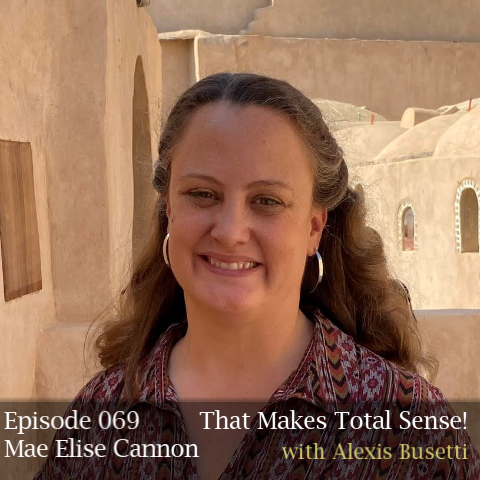
Speaker 0 00:01:09 And a beautiful fire behind her. And I'm so thrilled. And we have prayed that the dogs that are in the room will just be calm and quiet while we're trying to record. Um, may at least Canon has written this wonderful book that I just finished this morning called beyond hashtag activism, comprehensive justice in a complicated age, and MEI is a pastor and she helps with an organization called churches for middle East peace. And her resume is just so impressive. And so long that I said, make it, you do me the favor. And please just kind of introduce yourself to our listeners. So we know who we're talking to and who we're listening to today.
Speaker 1 00:01:56 Thank you. Um, well I wear a few hats. I'm the executive director of churches for middle East peace. So my professional world right now focuses on peace building in the middle East and religious diplomacy, working with 30 different denominations that are a part of that, um, member communion. Um, and you know, on the other side, I'm an academic and a pastor. So I'm more deemed in the evangelical covenant church. My first call was into ministry at a time when I didn't even have a theology that allowed for women to be ministers. So I didn't know what that meant. Um, since then I've become more deigned in the evangelical covenant. Uh, and then the academic hat I have chronic insomnia. And so what do I do when I can't sleep? I read and I write. And so my husband used to tease me. Um, I had several master's degrees and he used to tease me instead of Jack of all trades master of none. You say, master of all trades and doctorate of none. So I went and got a couple of those too.
Speaker 0 00:02:54 Yes. I'm like looking and I'm like, Oh my goodness, that the initials behind your name are so, but I would say that while it is obvious that you, yes, you read and you write and you read and you're right, but you read and you write not just for your own edification, but for us. And so I want to say thank you because after reading your most recent book, I just thought this is, this is a great tool. This is something that it gave me an overview of a lot of different areas. I mean, you cover so much in this book. You cover issues of, of race and gender and poverty and sexuality and middle East and religious freedom and politics and justice kind of mixed in all of that, of course, through the framework, a biblical framework through the gospel, which these topics can be.
Speaker 0 00:03:50 So, I mean, number one, they're definitely complicated, they're complex, but they can also be very confusing for Christians. Um, because I think partially because the term justice or social justice has gotten, um, mixed reviews, kind of a bad rap from people inside the church and outside of the church. And so it was so refreshing to get this, um, it's more than an overview, but to get an overview from a really biblical perspective. So I kind of want to start by, like, why did you write this? Um, what, what was the Genesis of this project for you?
Speaker 1 00:04:33 Well, thank you. And my hope and prayer is that this would be a piece of bringing the good news of the gospel with context, where we can learn what that means in our world today. And so, um, my hope and prayer is that it would serve others. I don't often have a lot of confidence, you know, in its efficacy in that regard. So that encourages me, um, to hear your words. So thank you. Um, I wrote this book, um, I often say this book was the cry of my soul, particularly for our country at this moment in history. And my first book was, um, social justice handbook, and I love the subtitle of it. It was called small steps for a better world. Um, that was really what I wish. I was a young pastor working in justice ministry, um, working with people who are homeless and people who are suffering in poverty.
Speaker 1 00:05:24 And that book was what I wished people had given me at that moment at the beginning of my ministry. And this book was actually a lot of issues that I'd never really studied theologically. And I mean, I didn't want to touch sexuality with the a hundred foot pole and I want to love people and love Jesus. And, you know, just felt like some of the, um, challenges of, you know, what it means to study the scripture and also to love people when people have such strong ideas about what's right and wrong, it gets really, really. And so this book is kind of the manifestation of all of that mess of trying to dig deeply into a lot of those hard issues.
Speaker 0 00:06:05 And this book is, is I had mentioned earlier that when we were chatting, I had the opportunity to talk with Brenda Salter McNeil last week. And she wrote one of the endorsements for your book. But one of the things that she and I chatted about is a conversation that, um, I keep having with authors this year. I keep having with authors in 2020, which is, I know a smidge about the publishing world. And that is that you did not start this book. This wasn't your project after, after the pandemic started, right. This was something that obviously was started in the years prior to its release, but its release is so incredibly timely. I mean, it's, it's released is so incredibly timely. So I mean like, what do you make of this? I feel like, I feel like, especially as we've been home during this pandemic, I, I'm probably not alone on this.
Speaker 0 00:07:03 I've spent more time on my phone than like ever before in my life. We can't keep up with the hashtags. Right. Of, of not, I mean, in America, there is that we are grief stricken about the people's names who have become hashtags. And in addition to that, there are the movements that are our hashtags and, and it feels overwhelming. Like we can't keep up and it doesn't matter how much time I spend on my phone. I feel like I'll never be caught up on, on what is happening. Um, and so how, how does your book speak to that? And, and now that it's come out in 2020, how would you help people wrestle with that phenomenon that's happening?
Speaker 1 00:07:56 Um, so the thought, uh, and the impetus for this book happened for me in December of 2018. And then I wrote this book within a few short weeks. So, I mean, it was kind of written by early 2019. And then as you mentioned, it, you know, it wasn't published until May, 2020. So it took, you know, all of that time, but some of what was happening that compelled me to write the book, um, were things that have been going on in our country, not only for decades, but for centuries, and they've had different manifestations at different periods of time. So I would point to the story of the young man named Trayvon Martin, who, you know, I think it was 2014 in terms of the year that he was killed in Florida. He was not killed by a police officer, but he was killed by a gentlemen who carried a gun.
Speaker 1 00:08:44 And, and, um, he was brutally murdered after, you know, going to seven 11. And, you know, he, I think had a, a bag of candy, you know, and a pop on him kind of thing. Um, and the story of Trayvon Martin really rocked the country in terms of racial injustice and the permissiveness of young black boys being able to lose their lives. So one of the chapters I write about, as I tell a lot of the stories of the names that you're talking about, um, and this was before George Floyd. So this year in 2020 with the death of George Floyd and then Brianna Taylor, and, you know, the young man who was killed when he was out on her run, um, Amman Arbery right. You know, those names are not mentioned in this book. And then the, but what I do feel like each of these chapters looks at is what are the systemic issues that allow for more and more names. And so part of why we can't keep up as you were talking about that is because of the systemic nature of racial injustice and the systemic nature of a lot of the concerns that this book is trying to address.
Speaker 0 00:09:54 What was it that struck you? Was there something particular, I guess that struck you in December of 2018, when you just said, I've got, I've got to figure this out. I've got to write this down and, and talk about this.
Speaker 1 00:10:08 It seems to me in terms of the politics of the United States, you know, there's always been in large part this two party system, but certainly in my lifetime, our country has never been more divided on politics than I've witnessed, um, you know, today. And, and then, you know, in particularly under the Trump presidency. And I think for me, what broke my heart was how differently people from different perspectives, um, not only see things but really seem to miss each other, you know, and I would put myself in that category. I, uh, believe in the word of the Bible, the Holy scriptures, you know, I'm an evangelical now I'm a woman. So a lot of conservative evangelicals would say she can't really be evangelical because she's the pastor. Right. But I consider myself in terms of a lot of political issues, like, um, you know, fiscal conservativism, which I'm not using the term.
Speaker 1 00:11:05 I literally mean that I don't think, you know, a lot of money being put in the government is the best, uh, stewardship, but I think that the poor should have access to food. So, so I believe all of these things. Whereas when I'm with a lot of my justice oriented friends, you know, they are much more left than I from political perspectives. Whereas when you are with people who are Republican, which is my family background, I mean, I grew up in a very conservative Republican home. It's almost like liberals, you know, are, are evil. And when you're with people who have more left perspectives, it's almost like when you're with conservatives, they're evil and that's just not how I find people to be. And it's not how I view the world. And so that division where more people are getting married across religious divides than political divides is part of why I wrote this book to say, let's really look at what's, you know, and forgive me, I'm, I'm doing air quotes that no one can see, but you know, let's really look at what a conservative perspective this issue is. Let's look at what a more progressive perspective of this issue is, and let's sort it out. What's the Bible have to say about it. What's the history of it. And more than that, it's a problem. So how can we come together across these divides to try to address it?
Speaker 0 00:12:24 I actually read that part aloud to my husband from your book that this, this stat, this idea that more people will marry within their political persuasion, right? Like then than necessarily their religion. And I'm like, wait, wait, wait, what? Like you said, well, Mo most people will cross the religious divide more often than they will cross the political divide to marry. And I was just like, this is crazy. Um, but it, you know, I, I was equally shocked. I think when I was, uh, I was reading in, um, David Swanson's book, the, um, um, recycling the white church. And he kind of has a similar perspective right. Of saying that white people have more in common with other white people than they do with Christian, like white Christians have more in common with other white people than they do Christians of color. Right. And it's just like all of these things where we're going, Whoa, Whoa, Whoa.
Speaker 0 00:13:20 Like we're supposed to be the family of God. This is, this is what is supposed to unite us above all things more than race, more than political persuasion, more than our perspectives on all of these other things are supposed to be, um, our relationship with Jesus and our relationship with each other. And, and, um, we don't have to go there. Right. But Jesus talks about that, right? This is how everyone else in the whole entire world is going to know what this whole thing is about is because you guys are going to do such a great job of building each other. My paraphrase, obviously. Um, but I think that, so I think that you're right, it's just like this, um, these different perspectives. I'm wondering if we can shift, if you, if, if you were gonna say something else go there. Um, but if not, I'm wondering if you can take us to some of the work that churches for middle East peace does specifically this multi narrative tour that you guys do in the middle East and in Israel. Because I feel like that is almost that experience or what I feel like could be benefited from that experience is kind of a microcosm for what could happen. If we started looking at our neighbors in, in similar ways, the neighbors who we don't see eye to eye with. So, um, tell us about that work and how does that relate to how we can interact with one another?
Speaker 1 00:14:42 Sure. Well, and I think part of what we were just talking about the problem is that we don't have proximity with people with whom we, and so which speaks to, you know, your very question about the middle East. Let's talk about Israel and let's talk about the Israeli Palestinian conflict. The Israeli Palestinian conflict is a significant example where most American Christians have access to one narrative and not the other. And I would say it's also not monolithic. It's not really a dual narrative situation. There's multiple narratives. You know, most people don't know for example, that the state of Israel has about 8 million people. Most of whom are Jewish, but 20% of Israeli citizens are Palestinian citizens of Israel. So when you say Israeli, it doesn't necessarily mean, and it's really ju it could be an Israeli Palestinian, right? I mean, that's just one example of the multi-time narrative approach.
Speaker 1 00:15:38 And so my work at churches for middle East peace, um, focuses on peacebuilding in the broader middle East. But one of the core issues we focus on is the Israeli Palestinian conflict. And our approach is that if you truly care for any side of the conflict, you can never work constructively towards peace until you understand the other, if you really love the nation state of Israel, Israel has a nation state and the Jewish people of Israel that 80% I was just talking about. They will not have a prosperous future unless injustices towards Palestinians are addressed. And unless the Palestinian narrative is understood. And if you truly love the Palestinians and went for them to have freedom, Palestinians will never have freedom and never have Liberty, unless you understand the legitimate needs of their Jewish neighbors. You know, and I think that's really a very, very different way than most Americans look at the Israeli Palestinian conflict.
Speaker 0 00:16:36 Yeah, for sure. Because I feel like now we could, we could go a whole lot of other places with this, I think, but I think because of, um, the influence of Christian evangelicalism in the United States, at least from my perspective and what I've seen, I grew up in the Bible belt. I live in Texas now. Um, I think that it is, it is one, it is one sided in that we see the Jewish state of Israel as being right. Like it, you know, you, you have a little segment in your, in your book where you talk about Mike Pence visiting and, and having this, you know, giving this speech inside of Israel. And I think it's because it is not, it's not only that we view it as kind of a binary of, you know, good and evil or right and wrong, but it is that the, the negative sides of that aren't personified for us at all.
Speaker 0 00:17:43 Um, and we don't see the humanity of, of anything else. I mean, I don't remember. It's not quite, I was today years old, but it's been the last couple of years when I'm like, Oh dear the land wasn't. I mean, I'm just, I'm just throwing this out there. It was like, Oh dear, the land wasn't empty when Israel came, wait, what? This is not a narrative that now granted, I didn't do my own research to know that. Right. But in kind of the, the broader narrative that I think is the common narrative, I might say we're a common narrative inside of the United States, um, is the Mark Twain narrative. It was a wasteland. It was nothing. It was, it was no man's Ville. And it's, it's, it's, uh, it's, it's a shame that the Schwab brought immigrant Israeli Jewish immigrants to this land, but, um, now they're here and they farmed it and they've made it beautiful and God has made it beautiful. And that was it. And it was kind of like, wow, this was so, um, you can see how, um, predestined this was, or you can see how miraculous this was, and I'm not discounting those things in whole, but at the same time, I say there were people there. And what do we do about that fact, all of these decades later,
Speaker 1 00:19:12 It was actually a motto of the Jewish Zionist people, the Jewish Zionist movement, the motto was a land without a people, for a people without a land. And, you know, I think one of the things that most people don't understand about the establishment of the state of Israel is that Israel was in the process of being established long before world war II. Most people think that Israel was established as a refuge for the Jewish people after world war II. And of course it didn't become an official state until 1948, but the process of the state of Israel being established, you know, it was during the British mandate period from 1917 and really the nationalist movement to have it be established, started in the late 19th century. So the history is, is much more comprehensive. And I think it's really important also, as we look at the history, one of the things I love to do for churches as to come in and do, you know, I can do it in as short as an hour, but I love to take, you know, half a day and just look at the history from a multi narrative perspective.
Speaker 1 00:20:13 What's the narrative of the Palestinians, what's the narrative of the Jewish people in the establishment of the state of Israel. And, um, I think it's really, really helpful to look at that. And then also to understand that when Israel was established, the rest of the world didn't want the Jews, you know, it wasn't that America supported the establishment of the state of Israel in 1948 because we believed in Israel. It was because we were antisemitic. Let's just be clear, you know? And I think in that regard, um, it's not a single narrative. We have to understand all these different nuances and realities that were happening, you know, more than a hundred
Speaker 0 00:20:53 Years ago. Right. Because we turned Jewish people who were fleeing their homelands away that's right at our borders. Yeah, we did. And, and, and that is also part of the you're exactly right. That is also part of the history that, um, it's been it's. I don't know. I mean, I feel like a lot of times that the history because of our proximity and time to, it becomes sanitizer romanticized or simplified, um, and, and depending upon your narrative, it becomes those things in different ways. Um, and so that's, that's definitely part of it. Um, but thank you for, for doing that because as we shared before I started, um, before we started recording my family, my husband and I have been to Israel multiple times. I mean, probably half a dozen, I guess, maybe six or seven times for me, but it's been nine years since I've been.
Speaker 0 00:21:45 Um, but I will say in all of the times that I've been in, I had wonderful experiences and I had great leadership taking me. Um, but I have never been physically to, um, a lot of the places that you talk about in your book, I've never physically been to, um, anywhere where, um, our, you know, inside the occupied territories, I've never been anywhere inside of any of those places. And so it's not that I haven't been necessarily taught about that. It's just a, we know it's a very different experience. You can be taught about something. And then when you go where you experienced your, you speak with someone for whom this is their life, um, it makes a big difference in how you view and how you view that. Um, so in what ways, since we're kind of using that as a bit of a, as a stepping stool, I want you to, I don't know, maybe pick one of the areas from your book that, um, that you feel like this relates to, and maybe just kind of talk about that really valuing a multi narrative approach when we're looking at justice and how we can be advocates.
Speaker 1 00:23:01 Well, I love what you said a few minutes ago when we were talking about Israel, you know, and you said, it's not just about perspectives of good and evil, but it's actually about people. And I think in that regard, I was thinking, as we've been talking, why is it a liability that I love the Palestinian people? And, and it is, I mean, you know, I often say like, you don't want to know all of the names I've been called and I'm not just talking about in conversation. I'm talking about like articles. And, you know, I think in that regard for those of us who choose to follow Jesus, or, you know, come from a Christian perspective when Jesus says, you know, love your neighbor, um, that I think actually for us to view people who are different as our neighbor and not even our enemy, like as Jesus says, not only should you love your neighbor, you should love your enemy.
Speaker 1 00:23:55 And I think a lot of people would look at Israel Palestine and say, well, the Palestinians are the enemy. You know, and what's interesting is when you meet a high school student in Palestine, the number one thing that they say is I'm not a terrorist. Like they want you to know. And when you meet these little not little, I don't mean sorry to be, um, that that's the wrong term, but when you meet kids, you know, when you meet students in high school, you know, they hate math, just the way our high school kids hate math. I mean, they like the same music. I mean, they're kids, right? Like they're, they're these incredible young people, you know, and yet there's this global perception of othering, you know, where, where they are identified in a certain way. And yet when you meet, um, so many people, you know, Palestinian, Muslim, you know, Palestinian Christian, you know, and, and I would say the same thing about the Jewish people too, you know, that when you meet people, most people have something in common where mothers want to raise their kids in peace.
Speaker 1 00:24:53 And, you know, I know that's a real issue in the U S right now, in terms of COVID, there's a lot of parenting going on with our schools being closed. And so you said, how does this kind of translate, you know, to other issues? And I think one of the things that breaks my heart about our political divides in our country right now is how we, um, we make it about ideology instead of making it about people. And, you know, I live on a little Island off of the coast of the Pacific Northwest. And, um, Washington state is, you know, hesitancy to be very Democrat. Um, but there's a number of people in the community who are ardent supporters of, um, you know, are Republican. And my Island, like one of the, our favorite things to do every week is to read the local paper because it's things like, you know, did the chicken die when the chicken cross the road?
Speaker 1 00:25:44 I mean, I, you know, and I'm really not exaggerating. I was playing tennis a couple of weeks ago. And, you know, the big news was the woman I was playing tennis with, had a chicken egg, you know, in her pocket. And it broke. And it was like, really, you know, I mean, like, I love living on this Island because it's just so incredible. The people are so incredible, but the divisions around politics, you know, when you read in the newspaper, um, people are stealing political signs. You know, there's actually been conflict around, you know, these political divisions in our country. And I think that they're very symbolic of what's happening across the nation and what breaks my heart is the way the different sides talk about each other. They talk about them. Like, they're not people. I mean, and I work, you know, in an organization that is, um, non-partisan churches for middle East peace. And we work with whoever's in the white house. And I can tell you, there are some incredible people in this administration who loved Jesus and who believe they're doing the best thing for our country. So let's not vilify whatever side you're on, you know, the people that are on the other side. And I think that's true in Israel and Palestine, and that's true in the United States.
Speaker 0 00:26:50 Yeah. It's interesting that you bring that up. So, um, my husband and I take, um, try to take an evening walk in, in the evenings now after dinner. And so we're, our kids are kind of at that age where it's like, okay, you have access to us. We're, we're going to go around the block, you know? Um, and it's, it's been really, it's been really nice. And so of course we do like many other married couples do probably in good friends is we solve the problems of the world on our evening walks and it's, it's fine. It's, that's just what we do. And, um, we were on a walk not long ago and I told my husband, so I don't, I don't have, I don't have the, the letters behind my name, but I joke, you know, I have one master's that happens to be, um, with a concentration in social justice.
Speaker 0 00:27:37 And then I'm getting, getting my M div right now. So I, I told my husband, I'm like, okay. So as this beginning seminary student who has no authority to say anything like this, if someone asked me in one sentence, sum up what's happening right now, specifically with this Christian political divide. And I said, almost exactly what you said. So it kind of makes me feel good actually. But I said, I think that what we're seeing is what happens when people put their doctrine above their neighbor. And, and I, I think it's kind of as simple as that. And I think that's what we're seeing. And I, I think you're right. I think you're a hundred percent right. And I think it's, it's difficult because when I look at it and I've been reading the gospels a lot lately, and when I look at it, I think gee whiz, wow, we're Pharisees.
Speaker 0 00:28:39 You know, I just think this is exactly what they did. You know, this is exactly the kind of thing. When the Bible is very clear that Jesus knew what they were doing, because he could read their thoughts and their emotions and their hearts behind it. And they would say, in order to trick him, they did this. They were, they just wanted to see what he would say. So they brought so-and-so to him and, and he surprised them every time that I can tell he surprised them because he put the people over their doctrine, seemingly no matter what their doctrine was, he ended up to surprise them almost every time by putting the people first. And I just think what, what if we could actually do that? Like put the people first and, and not say even with the woman who was caught in the act of adultery, and we all say with loud resound, but where's the man. And we say, you know, but we, we, we're not going to discount the complicated nature of sin or anything like that, but he put her first and then instructed her in righteousness. Um, and I just think what would happen, you know, if we were, if we were able to, to do that in this way,
Speaker 1 00:30:04 Love, love, love how concisely, you know, I can use a lot of words and you in one sentence said, you know, here's the core of the issue, which I think is, um, I think there's a lot of truth to that, you know, putting doctrine over people. And one of the, the threats, I guess, in that regard is the big concern from a lot of justice oriented movements is that if we set aside our ideology, we'll be compromising on issues of justice. And I actually think the exact opposite is the truth. If we put people first, we'll become more aware of systemic injustice and then be able to address them. So one of the things we talk about with the middle East, which directly applies here is not only having a multi narrative approach, but at the same time holding intention, what's it mean to have a multi narrative approach without compromising on addressing issues of justice.
Speaker 1 00:30:58 And so we talk about human rights and access to, you know, economic and humanitarian resources. And, and a lot of times people say, well, that's contradict, you're contradicting yourself, right? You're focusing on, you know, human rights, but you're saying you're multi narrative. And just because we're multi narrative doesn't mean we're not addressing real issues. And so I think that whole idea of doctrine and people is that being people focused or people centric, um, and not allowing, you know, focus on the doctrine while ignoring the humanity of people. That doesn't mean that we're not addressing real issues that affect people. And, you know, I think that's actually really critical. And I think it's something that church really needs to be able to hold intention is that, um, both can be true. We can address real issues and, you know, love our neighbor, which my husband and I are studying the book of acts together.
Speaker 1 00:31:53 And one of the things we've been talking about is how revolutionary the church was in terms of sharing what they had in common. They didn't just share what they had in common with people who looked like them. You know, I mean, just the revolutionary nature of Jesus in proclaiming himself, um, you know, to the woman at the well, uh, you know, as a Samaritan woman like this, you know, what have we just even had Republicans and Democrats who love Jesus, sit down and have meals together and have real conversation. I mean, that's actually, you know, something that's not happening very much right now. And so, um, thank you for that. I think that that's a really good articulation of some of our core issues.
Speaker 0 00:32:33 Yeah, no, I'm, I'm curious, thank you for, for kind of helping me shape that, um, and give some more, some more language to it and kind of affirming what I, what I'd kind of been feeling in my heart, um, might be true. And let's, let's just talk about dinner, you know, let's talk about that, you know, kind of that idea of just sitting down and having dinner, because I think that that is something that also gets lost inside of this conversation. So I think that there are maybe kind of a couple of things, so there's might be some people in a camp who would say, well, I do, I, I, I am cordial with my neighbor and she doesn't look like me. And so maybe it's too brash, but for the simplicity sake, I'm not really part of the problem because I can live and breathe and be next to this person and be cordial with my neighbor.
Speaker 0 00:33:31 And so that's really what it's about is we have to do this and then maybe there's some people who might say, well, the neighboring really isn't the issue. It's the system, it's the systems that are the issue. And if we don't address anything on a systemic level, then you know, nothing is ever going to happen. But again, I think it's one of those it's like, yeah, but doesn't, it have to be both like, doesn't, it have to be sitting down for dinner, having the conversations with our neighbors and doing things on a personal level and addressing the systemic issues. And then, and then I feel like, okay, that feels really overwhelming. How do we do that? Yeah.
Speaker 1 00:34:11 Yeah. I think that you're right. That it is both end and is, as we're talking, you know, there was that classic book. It came out more than a decade ago, maybe even 20 years ago. Um, the book, uh, divided by faith. You familiar with that book?
Speaker 0 00:34:30 Yeah. I actually was almost going to fill that in. I'm like, I wonder if he's talking about divided by faith. Yes. It's on my list, but I haven't read it. I'm going to write it down again.
Speaker 1 00:34:38 The divided by faith is still incredibly relevant because it actually looks at the church, the white church and the black church, the historic African-American church, and the way that both kind of look at what's the gospel. And what's the answer to this question. And part of it was written by sociologists. And so it's scientifically, you know, it's, uh, has a lot of evidence in substantiating their claims, but one of the things that they found was many white Christians look at addressing problems on an individual level, not only personal piety and personal righteousness, but really about individual relationships, whereas in the African-American community, it's much more community centric, uh, but also addressing systemic issues. And, you know, as we've been talking, you know, I could hear people in my mind saying, Oh, they're just so idealistic or, Oh, you know, we haven't said some hard words. Like we haven't talked about white supremacy and we haven't talked about white privilege and we haven't talked about power. And I think the power differential and power dynamics has to also be another ingredient we put in the pie. Um, because
Speaker 2 00:35:49 You know, having relationships
Speaker 1 00:35:51 Where there's such significant power differentials also really shapes the nature
Speaker 2 00:35:56 Of, you know, how constructive
Speaker 1 00:35:59 Those relationships can be. And so I don't want people to hear me say, it's just
Speaker 2 00:36:05 About having a meal,
Speaker 1 00:36:07 But I think that if we're really going to dismantle systems of injustice, you know, we talk about this in terms of the Israeli Palestinian conflict. We've been very, very close to having political agreements at various points in history. And the Israeli-Palestinian conflict is the most studied conflict of our day. Like, you know, there's been the most books written about it. It's been going on for decades. You know, this, this conflict. It's not that people don't know what the answer could be, but what happens if we get a political agreement to this conflict and the people don't know one another and the people have been living on two different sides, literally have a wall and children today in Palestine only meet a couple of types of Jewish people. They meet soldiers who are Jewish or settlers who are Jewish. So, so the relational aspect can't be ignored because we can have a systemic piece. That's a political piece with two people that still hate one another because they haven't known one another for decades. And so I think that's a really good example of how sitting around the table, particularly with people who are different from us is a critical part of developing relationships, understanding people who are different from us. And it has to be done in this larger context of understanding power differentials and where there's privilege.
Speaker 2 00:37:24 Can you talk about the power more?
Speaker 1 00:37:27 Well, I think, you know, the word white supremacy, um, it's a word that's really loaded and yet I think is an inherent in our society and I'm a white woman, you know, and if, if I didn't articulate that I would be missing, you know, I would be lacking integrity in this conversation. And you know what I mean by that is not some of what we're seeing in the news in terms of white extremists, you know, because I think that there is certainly a manifestation of white militias and you know, this physical manifestation, but white supremacy has been an inherent principle in the history of our country where whiteness has been esteemed both in terms of the investment of money, but also in terms of opportunity. So, you know, many people don't know in the 1930s in the United States, the United States had fittest family contests where families would go to County fairs and the family that was the most white would win awards because of the esteeming of whiteness.
Speaker 1 00:38:26 And I just, there's a new book out right now, actually about Nazi Germany, where a lot of Hitler's programs, uh, you know, initially were after eugenics programs that we had here in the United States. And this is a history that's insidious. I mean, Lord have mercy and forgive us, you know, that this is something that even if here we are decades later and we could say, well, you know, my family didn't own slaves, or I'm not an inhaler. I'm not guilty of that. And yet we've inherited it. Um, you know, because it's a part of the history of the establishment of our country.
Speaker 0 00:39:04 Yeah. So, um, thank you because I I'm, I'm not, I will say I'm not afraid to talk about white supremacy earlier this summer. My dad and I were having a conversation and he said, Alexis, you keep saying racism. I think what you mean to say is white supremacy. And, and, um, and he kind of called me out and I'll admit, I mean, my, my dad is white. My mom is Mexican American. I'm married a white man and all of this made me feel very uncomfortable. And, um, and I think it should, I'll just say that, I think, I think it should. Um, but I also think we should get over it and talk about it and talk about and learn the history. I don't mean just like, you know, we'll build a bridge and get over it. I mean, like, let's, let's learn the history, let's have this conversation. And so if you don't mind, I'll say two, two things from my experience that were recent, where I just thought, um, Oh, go ahead. Were you going to say something else?
Speaker 1 00:39:59 Well, just as you said, history, I'm sorry. I didn't mean to no, go for it. Go for it. One of the books I had the privilege of co-writing is a book called forgive us confessions of a compromised faith. And I have my PhD in history. One of the other authors had a PhD in history. We wrote it with Lisa Sharon Harper, student genre. The other historian is Troy Jackson and myself. And we looked at the history of these different issues. And then the second part of each chapter is a culture repentance for what we've inherited from the history. And so I just, I just an echoing, when you say we have to understand the history, I fundamentally believe that to be true. Let's look at the past, there's an African word called Sankofa. That means look at the past in order to be able to heal and move forward constructively into the future. And so if that's a resource, um, you know, I think that that's a really helpful project to understand the history in order to be able to repent of what we've inherited today.
Speaker 0 00:40:55 Oh, no, I'm going to, I'm going to put that link in here as well, because those, I mean, even those names that you were able to, to coauthor with them, like, yes, these, these, um, those people that you listed specifically, they're speaking this language right. Of, of understanding and lamenting and, and, and asking forgiveness. Right. And, and going through this because it isn't just, you know, I say, well, and we need to get over it. It's not just get over it. We have to do these things though. We have to understand, we have to seek to understand, and we have to, um, and we have to go through that process. I, I completely agree with you. And so thank you for, thank you for that. Um, no, I was just going to mention, just give it an example from my, from my own experience. So I grew up in Oklahoma and, um, the year, it, I guess the time just escapes me right now.
Speaker 0 00:41:46 I don't even know what year it came out, but Latasha Morrison's book, um, B, B the bridge. I think I bought that, like when it came out and she has a lot of wonderful examples and, and talks about history in that book quite a bit. And she talked about the Tulsa massacre and I'm like, Whoa, Whoa, Tulsa, wait a minute. And so I'm like, you know, at the time I'm reading this book in my late thirties, sitting on my couch, wondering how on earth. I went through 12 years of Oklahoma state history and was never taught about something so completely horrendous. I mean, never and something so important to our history. I was dumped. I found it just completely dumbfounded. And, um, and the other one was, it was slightly, slightly less, uh, dramatic for me, but equally as traumatic, I feel, I feel like, but I was, um, actually getting ready.
Speaker 0 00:42:59 I was prepping for an interview I had with, uh, Mark Charles and I, again, kind of reflecting on, on growing up in Oklahoma. And, and of course he's of Navajo heritage, but I was thinking the, the language that I had grown up with was the five civilized tribes. That was the language I was taught in Oklahoma. And I stopped again, like this was this year, right? And I'm like five civilized tribes. And, and I, I had to go take a walk. I was like, this, this is blowing my mind. Like, this is the language, I'm this, isn't the language that was there a hundred years ago. Right. This is the language that I, as a 30 something year old person grew up with in my history classes in Oklahoma. And, and, and it's probably not just Oklahoma, right. Probably kids, us history, you know, when they, when they do their unit on native American studies or, or whatever it might look like might even have used similar language.
Speaker 0 00:43:58 But just that idea and how steeped in white supremacy, that idea is that these particular groups of people were civilized. Well, what made them civilized? Hmm. Do you really want me to tell you what they deemed civilized at that point? Right. Um, and just how very, very steeped that language is in white supremacy, how very steeped our history is in white supremacy, that I could go through that many years and not have heard about the Tulsa race massacre. Um, this is real, and it's something that we have to with that's. Right. So that's all, that's all. Um,
Speaker 1 00:44:42 May what,
Speaker 0 00:44:44 What would you tell us as we, as we start to wrap up here, what would you tell us right now? I mean, we're at the end of 2020. Um, but when, when this airs and people listen to it, it's not as if COVID will have gone away. It's not as if all of us will be feeling all of a sudden refreshed from the wake of 2020 that we're living in. And so w what would you tell us of, of kind of this idea of, I hear you, and I see the hashtags, but I'm, I'm worn out. I can't think about it.
Speaker 1 00:45:27 I love, um, I told you this before we started recording as well. I love the language you use related to your podcast about generosity, um, and particularly generosity and justice. And I think, you know, at this moment for all of us, we need to be generous with ourselves. I mean, the cost of, you know, being isolated from family, not being able to travel, you know, many people losing their jobs, you know, the financial stress, the stress of, you know, loved ones, being sick and not being able to see them. Um, I had a tragedy in my family, uh, this year, um, that was just devastating. Um, my brother who's, uh, was only was almost 13 years younger than I died, uh, in may. And I had to fly home and bury him. And the people that buried him, you know, we're neighbors who are isolating with my mother. It wasn't even the people that love him. Most my husband, wasn't by my side and the toll of that on our souls. I think we can't, we can't measure. And so when I hear you talk about generosity, I do think we need to not give up the fight being advocates for justice, but may we also be gracious with ourselves and gracious with one another?
Speaker 0 00:46:50 Thank you. I'm so sorry, mate. I didn't, I didn't know, but thank you. I'm so sorry. And, um, I, um, appreciate you comforting others with the comfort with which you have been comforted by the Holy spirit. That's, um, that's really meaningful and it's, um, a Testament to the community that we're talking about and, um, and the kind of thing that we're trying to encourage each other. So thank you for, um, for sharing that and thank you for continuing and, um, and for more than just reminder that we are, we do need to be generous with ourselves. Um, it gets, Jesus is generous with us that he is. I often think about the scripture, I think from Hebrews where the writer says he is not ashamed to be called our God. And I think, well, this is part of what makes him other, because there are definitely times in almost every day of mine.
Speaker 0 00:48:00 When I think I might be ashamed to be called her God, but he, um, he doesn't view us that way and he is generous with us. And I think you're exactly right, that we can, um, be generous with ourselves in that way, um, in generous with each other too. So thank you for that. Um, is there anything that you just say, Ugh, if she had only asked this, it would have given me the opportunity to say something else. Is there anything that you want to, to say to us as we wrap up that you feel like maybe we missed,
Speaker 1 00:48:40 You know, as we're closing, talking a bit about grief and some of the challenges personally, but also challenges that we're going through, you know, as a nation and as the world, um, the thought that comes to mind is just, and, and I'm not saying this in any way, tritely, you know, we pray regularly, the Lord's prayer and we prayed thy kingdom come. And one of the things that's just been comforting to my soul this year is that Christ's kingdom is not yet here. And yet one day it will fully come. And so this comfort in people say to me all the time, they'll ask about different aspects of my family life. And my response will be that we'll not be redeemed on this side of heaven. It will not be made, right. It is a brokenness. You know, my brother's death has just one example. It is a complete tragedy, and yet God is good. And, you know, the verse that you just quoted that God is proud to be called our father, and yet God's kingdom will completely one day rain. And so the reminder that this is not the end of the story, while we're on this journey, at least for me sometimes, you know, helps me, um, stay in the game and, and to continue to be present and to continue to engage.
Speaker 0 00:50:02 Thank you so much for that name. Um, we want to, outlink all of this, but we want to connect with you and your, um, the organizations that you help with and read your book. Where can we find all of that?
Speaker 1 00:50:18 Great. Yes. Thank you for asking. So my hashtags are not hashtags. My Twitter handles and all of that are all the same. It's just my full name, Ilise, uh, Canon and is Mae. And my website is may canon.com. Um, so it's all kind of at that place in the organization is churches for middle East peace, and that's just www.cmep.work.
Speaker 0 00:50:43 Awesome. Well, I will put that no one has to like pull over and write that down. I'll put it in the show notes and make it links, um, for everyone to, uh, to click on those and connect with Mae. Thank you so much. This has been a real encouragement to me and your book was incredibly helpful. I just want to throw it out there and say this really. I kept wanting to call this the handbook, but you have a handbook, but this felt a lot like a handbook. This it really did because at the end of every chapter may has additional resources. If, if you're like her and you suffer from insomnia and just have to read something, she's got books at the end of every chapter that you can read and, um, organizational websites and places where you really can get connected. If something just pricks your mind or your heart, and you think I really want to be active in that space, um, particularly may has resources for you inside of this book. So it's beyond hashtag activism, comprehensive justice in a complicated age, and I will link it. Thank you so much. May
Speaker 1 00:51:46 Thank you for having me
Speaker 0 00:51:48 The links for all the resources mentioned in today's episode can be found in the show notes, music, and podcast production by Seth B city. Be sure to give us a review on iTunes and subscribe at your favorite podcast listening app, you can also visit
[email protected].