Episode Transcript
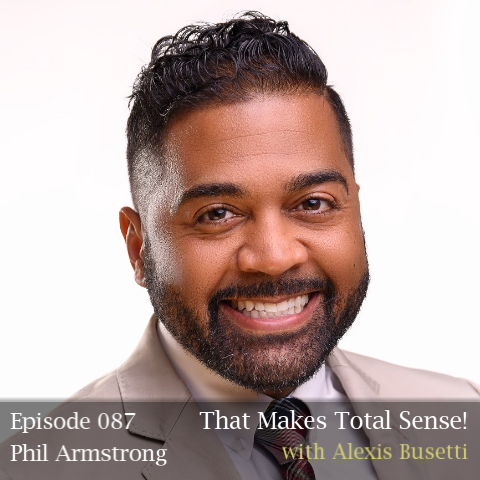
Speaker 0 00:00:07 Welcome to that makes total sense. A podcast dedicated to exploring God's generosity and justice. I'm Alexis resetting the Christian, aiming to ask good questions and encouraging you to do the same. Every one of us is wired by God to live out generosity and justice, but the house sometimes alludes us. That makes total sense is a way for us to get together, posture ourselves as learners and challenge one another to practice generosity and justice in a tangible way every day. Hey everybody. I am sitting across today from Phil Armstrong, who I was thinking about it yesterday. And I think this is the first time that I'm recording with someone who is in my home state of Oklahoma. Hey Phil. Oh, we're going to be with you. Thank you so much. Now I know you're not a native Oklahoman, but I am a native Oklahoman, but you have been in Tulsa for quite some time and you're doing some amazing work there. So can you tell us what brought you to Tulsa and then we'll get to the commission?
Speaker 1 00:01:10 So, um, I was born and raised in a small farm, rural, very Appalachian rural town in Southeastern Ohio called Bidwell Ohio. One of those back in the days for we had the onslaught of GPS, you had maps, it was literally one of those places that depending on the map that you purchased, you might not see it on the map, uh, that type of small country farm town. Um, and so I, uh, w within Ohio, um, on the Western edge, Southwestern Ohio, there are two historically black colleges and universities, uh, to HBC use and Wilberforce, Ohio. Um, Wilberforce Ohio was a home to central state university where I attended and graduated and also Wilberforce university. Um, it's interesting to note historically, Wilberforce university in Ohio is the oldest established AC CU in the nation was established in 1855. Um, so let you know the rich tradition of history and educating black Americans back in the times before even, uh, slavery was abolished in 1865.
Speaker 1 00:02:23 So it gives you the, the understanding there. So I attended that university and that, that lineage, that history. Um, and because of that, I, uh, my sophomore year had no connection to Oklahoma. Um, and our college professor for an entire semester taught us and we discussed and researched Oklahoma and the turn of the century of Oklahoma. And so we studied the historic black towns of Oklahoma. We studied about Greenwood and how it came to be and how prosperous it was studied 1921 Tulsa race riot, as it was referred to. And then, uh, we talked about some of the, uh, exceptional towns like Boley Oklahoma. It was the home of the all black rodeo that was very prosperous and, and went for many, many years. So we spent a semester learning more about Oklahoma than you can imagine. And as it relates to black history, um, phenomenal history.
Speaker 1 00:03:21 Um, my best friend that I met on the campus was from Tulsa. His name was Michael mcquarters, and we became instant, instant, best friends still to this day, 31, 32 years of a friendship that we still connect almost on a daily basis. But, um, he brought me here our sophomore year and spending a Memorial day weekend road trip college road trip like you do when you're in college. And you have like 50 bucks between you and you jump in a car and go across the country, you know, cause we're fearless and stupid at the same time. Uh, but, uh, God's, grace kept us, uh, safe and kept us, uh, got us here so we could, uh, eat with his family and meet his family and his church family. And I just fell in love with Tulsa and, um, fast forward to finishing graduate school, the university of Akron and Akron, Ohio got a master's degree in public administration.
Speaker 1 00:04:14 And I worked for about two years in Columbus, in the banking industry. And he challenged me kind of dared me, uh, get out of alcohol, uh, Ohio moved to Oklahoma and, and wanted me to send me his resume, my resume. And it was one of those things where I'm tired of you asking me here. It was like, leave me alone. Here's my resume. And I got a call from a recruiter, um, to, uh, to move to Oklahoma and accept the fast track banking manager position. And, um, I accepted it and was looking at Oklahoma simply as a resume stop. You know, let me go do this and would get me faster in my bank career to, you know, I can cut a check the box so I can do this for about two years and then move on to the next bigger and bigger thing that was 1997. And, uh, here I am 24 years later, uh, fully embedded and a Tulsan by every measure of the word, um, raised family here and married here, and I'm fully invested. So this Ohio country, Ohio boy became, uh, a country, Oklahoma and boy, uh, but, uh, that's, that's my story. That's my story. And it's what brought me to Tulsa. And I've now lived here in Oklahoma longer than he lived here and he was born and raised here. So it's kind of funny. We kind of tease each other.
Speaker 2 00:05:28 I love it. Now is your wife an Oklahoman?
Speaker 1 00:05:31 Yes. Born and raised right here in North. Tulsa went to North Tulsa schools went to, um, for, for your listeners. Carver middle school was a very instill, is a very progressive, uh, uh, in terms of educational achievement, progressive, uh, for African-Americans historically, uh, given the name Carver, um, uh, middle school. And then she attended Booker T Washington high school, significant knit, um, impact in terms of the education of black, black Americans. It is now a magnet school, but, uh, it's still rent. I think in the top 20 to this day is the top one of the top 20 academic high schools in the country's still Booker T Washington. So she graduated from there and went to Langston university and went to Howard university and got a master's in Howard. And she moved back home here. So, uh, but she's born and raised North Halston and still living there.
Speaker 0 00:06:25 See, now you probably already know this, but I'll let you in on a secret. If you don't men who think they're stopping in Oklahoma for a resume stop or for graduate school, meet Oklahoma women and they stay, this is, I mean, so we were at OU my husband and I met, he came from Colorado from the same type of town that was not a dot on the map, barely just outside of the airport, outside of Denver. And he came for graduate school, met me and stayed. Now, now we're in Texas now, but we stayed. And we were in Oklahoma. We lived in Oklahoma after we were married for almost 10 years, I guess. And then I have all sorts of girlfriends who we were all Oklahomans. We went to OU and all of these guys coming in, you know, from the Pacific Northwest and from Midwest where you're from and all of this. And they come and they meet Oklahoma women and they just end up staying. So, so your story is familiar to me,
Speaker 1 00:07:25 Made your story. And I, and I also saw for those that this reputation I will admit is now changing because Oklahoma now is becoming Texas, Oklahoma, this whole region in the area of quote unquote flower country is now the place where people are from the coast are moving to because they see how fabulous, um, lifestyle and living here can be and the cost of living. But for many, many, many years, I I've always said to people here in Tulsa, you know, contrary to what you may think, no one wakes up and says, I think I'll move to Oklahoma. Uh, never, ever on anybody's list. The only reason you come here is a job where you meet someone, but it's never, I think I'd like to move to Oklahoma, but it is the reputation for that is changing. People are now saying, you know what? I think I'd like to move to Oklahoma and for good reason, a lot of great things happen the last 10 years.
Speaker 0 00:08:19 I love it. No, but that is true. I completely agree. It's like, I feel like it, when I wasn't in Texas, we actually moved to the Midwest for a little bit for my dad to go to graduate school. And it was like, they're the people that I went to school with in middle school, still thought of Oklahoma. This was in the early nineties thought of Oklahoma in the way that they read about it in their history books. Like, so you guys have buggies and wagons and you write we're like, this is like 1991. Like my mom drives a Ford, you know, but it was, yeah, it was kind of that way. But yeah, it's not one of those like, Hey, yeah, I think I'll just move to Oklahoma today. Um, but the, the work that you are doing in, in Oklahoma now and in Tulsa now is with the, um, Tulsa race massacre, Centennial commission.
Speaker 0 00:09:08 And I do want to talk about the name change at some point. Um, but I would say this is the work that you guys are doing. I'm thrilled is, is a place where Oklahoma is on the map. The massacre is a devastating reason for Oklahoma history to be on the map and for people to, to have an association with our state. Um, and, and I want to mention that you spent a semester. I just I'm like that's flabbergasting to me that you would spend a semester in undergraduate learning about black history, learning about history in Oklahoma, um, from, from someone who's across the country, halfway across the country. Um, and I, when I wrote to you asking if you would come on and thank you for saying yes. Um, I mentioned to you that my story, and I think you've heard it a lot of times is one where I grew up in Oklahoma.
Speaker 0 00:10:10 I was born and raised in Ardmore, Oklahoma, and I went to college in Oklahoma, went to got my master's degree, um, in Oklahoma, in a field to social justice, by the way. And I was, I was, I was almost today years old when I heard about this, right. I was, it was like two years ago. I was reading a book that I'll put in the notes, um, by Latasha Morrison called beat the bridge. It's a book on, uh, racial reconciliation. And she has a section on, uh, the Tulsa race massacre and black wall street. And I was dumb founded. I thought, I, I, I, I called my dad. I went told my husband, I'm like, I grew up in Oklahoma, like 12 years of public school, Oklahoma history. I thought I knew Oklahoma. And I was, you know, what, 36 or 37 or whatever, when I heard about this.
Speaker 0 00:11:17 And I just can't even describe to you the emotions that right. That I went through going, what, how, why do I have to read about this in a book, in, you know, the 20 or whatever, you know, in 2019, whenever this book came out, when this is something that we should have been taught every year, we should have gone over this, right? Like in case someone misses it so that we can go over, but this is such an important part of our history. So I'm going to ask you to tell us about what happened, but I would also love for you to give me your perspective on why you think that is. Why, why did you, why, why did you get to learn about it in college? And, and we've got all of these Oklahoma children growing up and, and, and adults turning an adults who have never heard this in our, in our history and it's a hundred years old.
Speaker 1 00:12:13 Yep. Um, so let me start out by using our sharing with you. What has become our North star in a sense that's keeps us centered. We've been doing the Centennial commission in doing this work since 2015, and the surge, if you will, of mass, um, individuals finding out about this and what we've been doing, you know, doing this for quite some time and planning for us and old commemoration of this history, um, you know, really hit when HBO Watchman, uh, that, that show that was produced by Damon Lindelof as ex executive producer and Regina King and Tim Blake Nelson, uh, when that launched on a Sunday night, August the 20th, 2019, and the first three minutes and 39 seconds or so that sequence gave people a visual, the first visual reality of what it must have been like in the middle of Tulsa race riot in 1921.
Speaker 1 00:13:21 And it exploded the, it really went through the stratosphere because it was anybody who had an HBO subscription around the country and around the world were awakened to the fact that, um, what is this that I'm watching on TV? What, what is an to watch the latest, uh, rendition of what DC and Marvel comics going to do with, with, you know, my comic book character that I'm following, what in the world am I watching? Um, and when it, when it flashed up Tulsa in 1921 and went through that, you know, it was two to three weeks afterwards that debut of just phone call after phone call, after phone call, after phone call and request for interviews from everywhere, every major new source from the BBC to MSNBC, CNN, Fox news wall street journal, New York times, everyone just lining up and they would ask the same questions.
Speaker 1 00:14:16 It would be XPO Watchman. The first few minutes was any of that real, um, how much of that planes flying over and like shooting and dropping bombs and people being just murdered and looted right there on the street. How much of that was Hollywood hype? And just trying to tell a story and how much it was real. We, you know, we're trying to get the parse out the facts and reality. So then it goes through this, I go through this long, a 15, 20 minute dialogue of everything that you saw was the most closely depiction, close, closest depiction of what happened that has ever been displayed. Everything you saw were based upon witness, eye witness accounts and the history that has actually helped in this day by the Oklahoma historical society of what, what, what took place. Um, and so it was not a Hollywood hype though.
Speaker 1 00:15:10 The things that you saw was what they took from history and just made a quick visual of it. So then it was okay if all of that happened and that happened like that, how come nobody knows about it? And these are all different news agencies, and they'd say the exact same thing didn't happen. Okay. So it really happened how come nobody knows about it. And that's then would say, that's why the Centennial commission literally was formed, uh, to make this come to light. And so our North star is a quote by James Baldwin, um, that we will feature as a part of one of our, uh, brick and mortar projects, the building of our history center. Um, but it simply says not everything that is faced can be changed, but nothing can be changed until it is faced James Baldwin. That is why the kind of the crux of what we do.
Speaker 1 00:16:08 We're going to have to face this in order for us to get beyond and truly start a healing moment. This story must be acknowledged. It must be a tone for, it must be embraced. In other words, let's face it, it happened, let's stop hiding it, the stop sweeping it under the rug. Um, and we can't move forward in terms of where we are with race relations in this country, without saying, this was a moment in time that was absolutely horrific. Um, it was the low point of race relations in our country, and it occurred right here in Tulsa in 1921. And, um, until we face that until we embrace it, acknowledge it, we're really going to keep going around this circle of, of not discussing where this came from, where the roots of, of, of our country, because it impacted so many things from that moment on and those moments on.
Speaker 1 00:17:07 Um, and so it's an embracing and syncing acknowledgement. It's an education awareness. And so after that, the, you know, again, our work and all the work, we had been doing educational curriculum to, um, make sure that the state, uh, education and the superintendent of the Tulsa, um, it talks about the schools and Oklahoma, uh, school, public school districts actually worked with us to redesign. And re-scope the education of this, so that there could be actual curriculum that teachers could use to actually teach this in a very formative way. Um, the pedagogy that goes with how you teach this to certain age groups, all that was put together and work with our commission and released. So that was one of the first things we did. And then it grew into this point of, you know, what we're, we're, we're going to be acknowledging 100 years, that's gone by and what will we as a city, as a state, as a community, be able to show is any different.
Speaker 1 00:18:06 Uh, uh, w w what can we say has happened a hundred years later? Um, and that really began the work of fundraising and donor ship so that we could build a history center. Um, but to this day, I still on a weekly basis. It's, it's, it's been phenomenal on a weekly basis. I'll have black citizens, white citizens here in Tulsa, mainly in their thirties, usually early forties. That will still email me. If they see me in a grocery store, recognize me, they'll just come up and say, Hey, aren't you the guy working on the commission project. Yes. And then they'll just go right in. They'll just say, do you know the farmer? First time I heard this, I was in college and I was outside of the state of Oklahoma. Again, the, the, the interesting nature of different people, black and white, that say the same thing.
Speaker 1 00:18:56 They'll say the first time I heard this, I was in college. And they'll say, first, I was shocked because I'm sitting in a, I'm taking a history class because it's an elective that I got to take. And let me take history. And the professor starts showing these images in these pictures and these visuals of this horrible master that took place in 1921 and two. Awesome. And I'm from there. And I'm looking like, what in the world am I looking at? What, what are you talking about? And they say they were shocked. The second thing they'll say is I was embarrassed because people in the classroom are looking at me and say, Hey, aren't you from Oklahoma? Tell us more about it. And they have to sit there and say, I have no idea what this is. Um, embarrassment. And then the third is they get the, and then I got mad.
Speaker 1 00:19:42 I got angry. They're calling them home to their mom and dad, their grandparents, you know, that this took place in Oklahoma. You know what, in the world, so white citizens and black citizen like, share that same. Why was I not told this? Um, I compare it to make it more personal. I usually compare it to a child who grows up and becomes an adult. And then finally someone either through, you know, a friend or through happenstance, they find out that their parents are not their parents. And it doesn't, it didn't change their love. It doesn't change. It's just, why am I an adult now and who I've been calling mom and dad all these years are really not biologically. My mom and dad, I'm in a love them, but they're not who I thought they were. And it blows your mind, like, well, who is my mom and who is my dad?
Speaker 1 00:20:31 And I need to find them. And what happened to them and why, why was I adopted? But all these emotions stirrup, it is the exact same thing that happens when people who are born here, raised here. And they're like, how, um, nobody ever taught us this. This is incredible history. And it's not just the massacre. It's the fact that they find out, you mean, there were these black towns where black people prospered after the civil war and all black tea, every the land, the property, the businesses, the banks that have a dash dashers as they called them were black owned towns. And not just some shanties, somewhere like very prospering towns that were doing extremely well. Vis-a-vis Langston, Oklahoma, a college LinkedIn university is established there. Um, and this is long before Greenwood even comes about. Greenland was established in 1906. These black towns were operating in prospering 30 and 40 50 years before we even get to quote unquote black wall street.
Speaker 1 00:21:40 So people are just blown away, black and white. Like, why wouldn't anybody tell me this? You, why would I grow up in Oklahoma and not know that in 1883, there were so many prospering black towns in Oklahoma that they actually began having discussions and legislation considerations. Maybe Oklahoma should be in all black, stinky, 1883, Edwin P McCabe, actually having discussions legislatively, um, that it's such a Mecca of just black entrepreneurship all over the Oklahoma territory. Maybe we should to make us a black state. Um, and when I tell that you can, when I say this in, in groups and in, in group meetings and group sessions, um, you can see the eyebrows of every person like go up like, Whoa, what are you talking about? You know, it's was when you actually delve into history. And so that's mine. It's unfortunate that the talking points that some people have as regards is in regards to looking back at the, the not so proud moments of our history, that it, for some reason, there is this criticism that, you know, um, you're teaching people to hate America, or you're, you're, you're, you're brainwashing kids to say, America really wizard what, where we've said, no, there there's actually a greater embrace to what we have when you realize, Hey, everything, wasn't all bad and roses.
Speaker 1 00:23:12 And, you know, people dressed up in, in, in wonderful suits and holding the American flag. And, you know, when, when they were writing the words, my country, TIS of these sweet land of Liberty, you come to realization that there were a lot, a lot of groups in the United States that could not sing that, that could not experience that. Um, and when you tell the truth, when you're just honest, you know, I love, I would not want to live in any other place than the United States of America. It is a God blessed country without a doubt, but this God blessed country had some devilish things that took place and its history that we can no longer just say, Oh, let's not talk about that. Or, um, yeah, that did happen, but let's just move on and let's just move on. Because when you do that, the wound continues to be unhealed.
Speaker 1 00:24:07 It's just an open gash that a segment of our society says, wait a minute, don't just skip over them. That's a part of who we are. And it's acknowledging that these things good, bad, and ugly is a part of what it took to get to where we are as the United States of America. And when you, for me, it gives me a greater appreciation when I stand in it. And I say, I live in a free country. I take in all the good, the bad of that, the experiences, and can still say through all the harsh, harsh histories of African-Americans in this country that has taken place, I'm still 10 stand and say, even with knowing this hard hitting truth, I still can say, it makes me appreciate more what I have as a free black American living in this country and the sacrifices that so many people before me, my ancestors had to make so that I can live in this society and achieve the things that I've been able to achieve and get the education that they could only dream of and live in a house that they could never even fathom.
Speaker 1 00:25:16 They live in an equal and most, in most respects, a fair society that they could only probably can't even imagine. And I am living that now. Um, and, and I can appreciate a greater looking back and knowing what people had to go through for me to enjoy what I'm enjoying now. So it's, it's, it's, it's, it's such a terrible way to look at history and say, don't talk about the bad parts. Don't tell people about the things that America has is, is actually did. And the American system did that is so it's so backwards thinking, uh, because it really frees people's hearts and minds to want to know more about the history, want to know more about what happened in Greenwood, want to know more than this happened in any other places that's what's happening. You know, what was Greenwood, the only prospering committee? No, there were many communities of color because of Jim Crow and segregation.
Speaker 1 00:26:12 These communities had, they became insular economies. They depended on each other. They lent money to each other. They helped each other own businesses because they could not have access to the overwhelming market because of segregation and Jim Crow. So they had to learn to depend on each other. And that's what made them be strong economies, because they were constantly saying, Hey, I'll borrow from you. You borrow from me, I'll open up a business. You come here because we can't go to the white side of town. So ironically segregation in Jim Crow forced these economies to actually do very, very well. And, um, it's just a Greenwood, uh, because of oil and gas discovery. And because of property ownership, no other community of color were able to basically produce millionaires in such a small geographic area. Then what happened here in Oklahoma, but, uh, make no, you know, make, make no doubt about it. There were communities like Greenwood all over the country, uh, after, after the civil bathrooms, uh, slavery and the advancements from 18, eight, 1860, all the way to the early 19 hundreds.
Speaker 0 00:27:17 Thanks for that, Phil. Um, I realize that there are still, um, no doubt people listening to this going well, wait a minute. I didn't see the HBO special. I didn't read that book and I have no idea what they're, what they're talking about. So I realize I probably let us get, let us get ahead a little bit, but, but now we have, um, you know, some of that background and we've been naming it, we've been naming it and saying the Tulsa race massacre, um, as you were introduced to it, the riot, but tell us, and, and I'm going to, I'm going to link the site to the commission so people can, this is a, Oh my goodness. It's such a treasure of, of information, um, that people can dig and go as deeply as they want to go. But I want to invite you to tell us what, what you want us to know about what happened in Tulsa, in Greenwood, for the people who may be like me, you know, my, my classmates, you know, tuning in who, who haven't read or who still don't know. I think there are some people who still don't know. Um, I just want to invite you to tell us, um, what happened, what happened in Greenwood?
Speaker 1 00:28:33 So May 30th, 1921 was just a typical day in Greenwood. Um, this imagined an entire 33 to 36 city blocks. And I, and I pause there purposefully because I want you to visualize what does 33 to 36 city box, what that would look like of all African-American own homes and businesses. That is just phenomenal. When you think about that and Greenwood, the main street of Greenwood Greenwood Avenue was home to some of the most prosperous African-Americans that have ever even lived. And they all were, um, collected together in one specific area, one specific geographic area. Um, and so 1906 O w Gurley was the first black man to buy some property and open up a business. When you came to Tulsa, the Frisco railway, a bus downtown Tulsa, everything to the South was white Tulsa, everything to the North was black toasts and irritated them to the North of downtown. Was this area known as green?
Speaker 0 00:30:00 Can I interrupt you there for just a moment? This was something I learned in, in, uh, I think it was graduate school, actually, because I, can you just say how many, no me not how many, but that was so common for towns in Oklahoma, correct? A rail.
Speaker 1 00:30:18 Yeah, not just towns in Oklahoma, but in black history, black communities in the United States, especially in the deep South, when you want across the railroad tracks, you run the black side of town. Yeah. Is just a main staple of history. Um, many communities of color were separated from the whites by the railroad. It was a, it was, it was a physical and cultural dividing line. And the same thing here in Oklahoma,
Speaker 0 00:30:47 My hometown was that way. My hometown is that way. I'll say that my hometown is that way. We're in 2021. And my hometown is that way. And that was just, that was something that, um, yeah, that you just culturally learned about growing up, my husband, wasn't familiar with that. He was from a farming community in other parts of the country and he didn't, he didn't know, but that, that to me, when you say that, that makes my heart sink. So,
Speaker 1 00:31:13 So no keep, keep eye. I try to say this to the two different groups I'm talking to keep in mind. The, um, there's a, there's a band and a band leader that is known for their folk songs, and I love their music, but Bruce Hornsby in the range and I wrote a song called that's just the way it is. Um, and that's the way it was. It's just, it, it's not, we're not justifying it. We're not giving it any credence. We're just saying, you know, that's the way, the times worthy black people knew their place. White people had a, um, a passed down, um, sense of superiority. Some took it to an extreme level and some benefited from understanding because of my whiteness. You know, I get afforded different things that the other half of society, doesn't some acknowledged that psychologically and others just grew up with it that you didn't think I'm better than black people.
Speaker 1 00:32:21 You just knew that life was better for you when you're white, same thing for black children, the number of black children that grow up just wishing and more would admit this in a room by ourselves. But there were, I just think of the hundreds of thousands of children that would grow up and say, I wish I were white. The calls of, you know, you're better when you're white. I mean, and it's not just Phil Armstrong. Look at the, the actual documented research cases they've done over the years where they take the boys and girls put them in a room, have a black doll, have a white doll. And they did this in the early sixties and which one is prettier and the black children and the white children, you know, picked up the white dog. You know, which one would you like to be? You know, pick up the, what, which one is more Caitlin, I'm just missing.
Speaker 1 00:33:17 One is, is, is, do you think is dirty or, or bad, or have a more tendency to be bad when they grow up and they pick up the black dog. You know, these, when we talk about systemic and I know this is, these are things that people kind of push away from, but when you get past the talking points and the bubbles that some of us live in, that's what we mean by the system of a racist mentality that I'm in it. And I don't even know it I'm in it. And I grew up in it and didn't realize how much it affected my perspective on life. That's what the system is. And so in 1900 black citizens knew where they could prosper. They knew where they couldn't go. Because if I go over there, I'm going to get in trouble. Someone's going to try to, you know, challenge me.
Speaker 1 00:34:06 So this is our area. And you know, you guys stay over there, we'll stay over here and we'll live our lives separate from you. That's just the way life was. It's just an ingrained wood. Because again, land ownership and oil and gas discovery, black citizens were able to achieve an economic freedom that had never been seen before. And it rivals, I say, again, have rivaled many of their white counterparts in Tulsa. So this growing animosity is growing racial. If you have a mindset and you're raised with is, I am better than I'm taught that I am better than a certain group of people. Um, and I should live better. I am better. I am superior to them. When you see that group driving nice colors, living in better homes, and you live in enjoying life to its fullest extent. And you're looking at the fact that I don't live in a house as good as they do.
Speaker 1 00:35:05 I don't know what is going on. So some of the mentality would be those black. My grandfather was born and raised in Hazlehurst Mississippi. He would have this, the same course from that time period and say, um, you're getting uppity when black citizens start getting uppity. And what that meant is you think you are as good as a white person, don't you? That's what that was. The animosity that was building is that these people in, uh, it was called little Africa. They re they refer to as Africa, town look, Africa, they really think they're as good as white people don't think so. Oh, that animosity just kept building and kept building and kept building. Um, 1921. And the incident was not on an unto itself. It started 1907. Remember green was founded in 1906. Oklahoma becomes December 8th, 1907. The first think about this 40 years of prospering black towns doing just fine living among themselves, open home a territory, becomes a state.
Speaker 1 00:36:10 I see the what's the first law that we should come up with. The first thing that declares, we are a state December 8th, 1907. Jim Crow is the first law that is established in Oklahoma. That begins that demarcation of let's make sure these folks in these towns know where they are that, that, you know, you're not better than the us. In fact, that's the first law we're going to establish the Chrome move on to 1911, the lynching, nor LLC, nor LLC, uh, Laura Nelson and her son. It's a very, very, um, well-known black and white photograph of the citizens of Hakim, Oklahoma, uh, standing across a bridge with children there. And in fact, um, Roy Rogers, his father, Roy Rogers, is, is as a child is on that bridge. Um, and it's, it shows a mother and her son, a black mother and her son lynched and home from that bridge in a picture where they're standing back, that was 1911, moved to 1916, Tulsa, Oklahoma, the, uh, city creates a law, an ordinance making it illegal for black citizens and white citizens that live in the same community.
Speaker 1 00:37:20 That was an ordinance, uh, lost after 1916. Again, these things are just building up. You get to 1919, and you have the red summer of 1919, where, um, from the summer to the winter, over 15, no incidents of racial outbreak where white mob citizens would just go into black communities and destroy them happened in Philadelphia, in Washington, DC in Houston and Elaine, right consult a six month period over 15 incidents where white citizens would just go in and the animosity and anger of these towns doing so much better than them, they would just go in and destroy them. Um, it's called again, the red summer of 19, 19 red because of the blood that was spilled that summer. Um, and, uh, psychologists refer to that time period as the Nadir of race relations in America, the absolute low point in American race relations summer 1919.
Speaker 1 00:38:19 So of all these towns, the most prosperous of all beans was Greenwood. So they began kind of looking at, and the fact that this might happen here. So let's be on our guard and let's protect ourselves, uh, that they establish a J Smitherman was a black man who owned the Tulsa star, which was the black newspaper in Greenwood. And he began to put out publications, you know, we need to be careful. We need to protect ourselves. You know, there are things happening all over America of, uh, violence erupting against black citizens in their own towns. And so they began to get on guard. So this is the backdrop to May 30th. Again, I'll get back to where I started May 30th, 1921 typical day in Greenwood Booker T Washington high school is about to celebrate their homecoming. The next day, May 31st. So May 30th, a young black man named Dick Rolan.
Speaker 1 00:39:12 He's a 19 year old shoe shine boy that works downtown. Tulsa has to use the restroom. He goes to the Drexler building. That's the building that the only place that had, um, colored restrooms, restrooms for colored and, uh, in downtown Tulsa was a Drexel building on the third floor. He goes to use the restroom, gets back on the elevator, go back down. The elevator operator is a 17 year old white girl by the name of Sarah Page. He gets on the elevator. As the elevator is going down. Something happens with the elevator, uh, shifting, uh, it, it, it caused him to lose his balance and almost fall. He reaches out and grabs her arm to keep from falling. She screamed, she, it started her. She screens the elevator rest in the first floor, the elevator doors open it's broad daylight. You know, the middle of downtown Tulsa.
Speaker 1 00:40:05 He takes off running the merchant, ran Burt's grocery store across the street, hurting the screen. He comes over to the dresser building to come to the young ladies aid and the what happened. He saw this black man running off what is reported in the paper, the Tulsa Tribune, which is truly the one that, that basically historians credit for sparking and setting the, the, the, the, the atmosphere for the master to take place. They print in their front page, paper, NAB Negro for attacking girl on an elevator. And that article, if you are a member of the KU Klux Klan, and you see this, uh, little Africa that, that is boasting in your face, how great they're living in Gran they're living, this is the final straw. What, you know, basically what it's saying as a black man, tried to rape a white woman in broad daylight, downtown Tulsan.
Speaker 1 00:41:05 And it did exactly what it was intended to do. Strike up anger, strike up a fear and emotions that article went on. It was very salacious. It began to say that, uh, it actually printed in the paper. Uh, he scratched her face, tore away her clothes and physically harmed her. None of that was true. The last paragraph said, Sarah, Paige is an orphan trying pay her way through business school. That was not true. She lived with her parents. She was not going to business school. The Tulsa Tribune made up all of these stories to paint the picture. They had the attention. We want to create what we want people to see out of this. Um, in fact days after the massacre, when they went to press charges against Dick Ronin and actually take him to court, and Sarah Paige would not agree to anything that was printed in the paper, because it didn't happen.
Speaker 1 00:42:02 You know, he scared me. He grabbed my arm, I screamed, but the, the damage was done. What they printed in the paper calls to citizens, white citizens. At that time to gather he was arrested and brought to the courthouse, put in jail on May 31st. Um, by, around that evening, a mob of about 800 to a thousand white citizens gathered around the courthouse. And there are rumors of a lynching that is about to take place, black citizens and Tulsa here that, you know, they're going to have a lynching and Dick Roland, maybe lynched about three dozen black men who had served in war war in 1919 would come back home, disciplined, not scared, got their guns and said, we're going to March down and we're going to keep this from happening. They went downtown, they surrounded the courthouse with their guns. Um, so that Dick rota can have his due process in court.
Speaker 1 00:42:54 He's not going to be lynched today, not on our watch, that continued on the mob grows. Um, it gets late into the evening and the repaper reports about 10:30 PM. A white man by the last name of McQueen goes up to one of the black soldiers with the gun black soldier, that the, his name was Johnny Cole. He tries to take his gun away from him. They wrestle over the gun and the gun discharges that occurred at 10:30 PM. And more than one eye witness account said, quote, all hell broke loose. Unquote, the fighting began. The shooting began, uh, the black citizens retreated back to Greenwood. From that point, the mob grew to about numbers of 1500, the Tulsa police department on record actually deputizes many of the members of the mob. They're given guns. They're given ammunition. Some of them break into, uh, ammunition stores and steal guns at about one 30 in the morning.
Speaker 1 00:43:57 As the papers report, they started marching. They made their way into Greenwood at the corner of Archer and Elgin, and they make their way into green. What about one 30 in the morning? And they begin 16 to 18 hours of looting of shooting of mayhem, uh, burning homes and businesses continually until the following morning when the, um, Oklahoma guard arrives and, uh, martial law was declared by 11:38 AM 11:29 AM to be exact the next day. But by that time, um, about 80 to 90% of Greenwood was completely burned to the ground and destroyed. And 100 to 300 people were murdered and killed the feud in the next few days after that, um, bodies are stacked and pile on wagons and taken to the outskirts of town and buried in mass grains. No, uh, no coroner's report, no death certificates, no services just don't unmask rains. Uh, it was a horrific, um, uh, massacre, which leads me to why the name change in 2018.
Speaker 1 00:45:17 Um, you have to imagine this has been a touchy subject in Oklahoma for a number of years and white citizens modern day here, um, have been, uh, when this first began a bit apprehensive the calls, you know, what is this about? Is this about making white people feel guilty for what happened a hundred years ago that none of us were around for? And why are we doing this? It's an understandable emotion, black citizens, um, who never not one person was brought to justice, white citizens who own businesses in Greenwood who came forward and said, I am an eyewitness. I saw I can name you. Some of the police officers that did this. I can name you. Some of the citizens that I saw looting and destroying want it to come forward and give their eyewitness accounts. All of the cases were dismissed. Not one person was brought to justice and because it was labeled a right it's actually was referred to by the paper as a Negro uprising, there was a right, all of the insurance claims that the black citizens spiraling for their businesses in their home world, none of them were honored to this day.
Speaker 1 00:46:30 Not one person, not one city official department, no one has been held accountable. So when you talk about a hundred years later, and people who look at their family lineage, their businesses that could have been passed down to them from their grandfather, from their great-grandfather, their family wealth was destroyed and no one to this day has ever been held accountable for. And no one has received any numeration from their insurance claims from any, um, it is pending horrific open wound for a hundred years, and it's been kept quiet so well in 2018, when the Centennial commission really started getting their work, moving and building relationships and saying, you know, this is the time that we got to come together and address what happened and educate enlightened, but more so create an opportunity to heal from this to really start that path towards racial reconciliation, the harmony.
Speaker 1 00:47:31 But we got to address what happened and, and come together with this black and white Republican Democrat rich poor. We've got to bring everybody to the table to finally knowledge of this as we're approaching the Centennial black citizens of North hall, when we're very, very apprehensive, like, you know what? We've heard this all before, you know, there's been commissions before and nothing ever came out of it. There was a commission in 1997 to study the race ride five recommendations of reparations that could go to the community, you know, 21 years later, none of them have still been acted upon every time this, this happens. It's just an echo chamber. And so black citizens are aware, right. You know, like, okay, here's another commission that just wants to say they're doing something and really nothing's being done. So basically the community said, if you really want to grain our trust, take on the fact that this was labeled arrive and what destructive nature that labeling did for the citizens of Greenwood, that they never were able to get any of their insurance and bonding claims label it, what it was.
Speaker 1 00:48:35 And so we actually took some time and did some research, talked about it, talking about the community members. And we actually had in 2018, 2018, a press conference where we officially said, we no longer are going to accept the label that this was given. We're going to declare this, what it was, was a massacre. Um, there are a number of guests leave descriptors that could have been used for what happened because of the fire and the destruction through fire bombs and kerosene bombs that burned out Ringwood. You could actually call this a Holocaust because of the fact that they were intentionally trying to get rid of the Negro out of Tulsa postcards that they printed days after that said, running the Negro out of Tulsa, you could have called this an ethnic cleansing. You could have called this a disaster. You could have called this a pogrom.
Speaker 1 00:49:27 That is actually the definition of what took place it's called a pogrom. Um, or you can call it a massacre. The last thing that it should have been called was a riot. The, the aftermath of 2020, the summer of 2020 after George Ford incident, a riot we saw is when individuals within their own community raise up and destroy and do destruction to their own property in their own community. This was not a riot individuals from another community, invaded a different community and destroyed it. How can we ever have a peace with ourselves? If we continue to use that language, that this was a right. And so we may, may the name change. And on our logo, we even actually have intentionality there. We have Tulsa race riot, and the word right is slashed the rim. And we had the word massacre underneath so that when people see that they can see, this was no accident, we knew what we were doing.
Speaker 1 00:50:29 Would you like to know why it gives you an opportunity to educate people? Because they'll say, you know, I see you've got the word right. Cross the massacre. Why did you do that? I'm glad you asked. Let me explain. So people who sit back and we've had, we've had many people, especially conservatives here in Oklahoma said, you know, they're they go trying to change history, you know, always, you know, trying to just redo something. And, and when I explain the reasoning behind it, I have yet to have one person disagree with what we need. They then say, you know, I didn't know. And thank you for explaining that. And that makes all the sense in the world. I see why you call it. I see why you don't call it a right. It can be called a number of things, but I see why you don't want to call it ride anymore.
Speaker 1 00:51:17 Um, and it's, it's, it ends up being an educational tool that enlightens and gets people to say, okay, let me see what else you're working on. You know, what else are you guys are doing? Because that's a really intriguing way to handle this. Um, a lot of the things that we have done have been things to bring people to the table that otherwise would not sit down with us. Um, I've been invited to actually give this presentation to some of the largest conservative white churches in Oklahoma that have, after we have 35 40 minutes, and I give them the history and share all this, and then talk about now, this is what we're doing. We're building a history center. This is what it will do. And this is, you know, this, this is what the intention of it is to be, is to bring people together and begin that process for healing and lot, watch that permeate from Greenwood ground zero for race relations.
Speaker 1 00:52:13 United States starts right here. We get it right here. And then people can come here, experience this, be changed from it, go back to their communities and want to say, you know, what, what they did at Tulsa is having some major impact in how blacks and whites and people get along. Let's see if we can do some of that here. That's the intention that it actually flows out from Greenwood and starts to permeate throughout the country. Um, that's so that's the intent when people hear that. I mean, there's, I can't imagine anyone who says, Oh, I don't want that. Or that shouldn't be, they approach it as I did not know, you know, um, it's amazing to see what you're doing and I can be a part of that. And that's where a lot of the last probably year or so. Um, the number of companies, corporations, foundations, individuals that are just coalescing around this, like, cause they see, this can be an incredible healing moment that starts right here in Greenwood. This tragic, horrific backdrop can become a place that actually leads to healing in our country and race relations. That's really where this is going.
Speaker 1 00:53:25 You know,
Speaker 0 00:53:26 I, I've heard you talk about the, the naming of it in the riot and the effect that it had on the insurance claims. And I, and I have to admit the first time I heard it, I think it just went over my head. Like there was so much, so many other things to absorb, um, in, in what I was hearing that, that I think it, it kind of went over my head, but as I've, I've been able to sit with it a little bit. Yeah. Um, and I'm just going to go ahead and be like captain obvious here, but I kind of want to say it out loud and in case there's anyone else who was, who was kind of like I was, but hearing you talk about the prosperous, uh, town and the community that Greenwood was, but also these other communities in the United States who were prospering black communities, you were prospering. And I think would you whiz this?
Speaker 0 00:54:21 I, you know, there's part of me that wants to focus on the event of the night, because it was so horrific and, and to think about insurance claims, what does that have to do with anything? Well, it has everything to do. It has everything to do with it. You know, thinking about we, we live in, we live in Houston and we've had a few, um, natural disasters, you know, come up and, and we've seen our own neighborhood flooded, right. People in kayaks. And we've got, you know, the hurricane and, and, and, and things like this happening, we just had the freeze, right, where people's pipes are bursting and, and things like this and going through our neighborhood and then going, well, that's what insurance is for. Right? It's it's to help people rebuild after a catastrophe. And when people are able to rebuild after their catastrophe, it's not that there aren't emotional implications and things like that that happened in devastation, but, and, and their wealth is preserved through that process.
Speaker 0 00:55:20 And that's what it's for. Um, so again, continuing on my captain obvious scene here, I'm going, Oh, but gee whiz, if, if they weren't able to, to use it, the insurance claims that they would have been able to, if it had been any, if it had not been deemed a riot, right. That's like the, the people who, who did this, did exactly what they wanted to do, which was destroy the wealth and property ownership and the upward mobility of this entire community that now a hundred years later, exactly. As you said, there are children and grandchildren who have not been able to benefit from the inheritance that would have been brought from their ancestors, from their parents and grandparents who worked hard and prospered and, and, and kind of, I mean, to be that girl to say, and did what the people in America say, you're supposed to do, pull yourself up by your bootstraps and work, and it, and they did it and had created this life and this wealth for themselves.
Speaker 0 00:56:29 And then due to the devastation that was brought on them by another community, um, and the labeling of this systemic stuff that you're talking about to, to label it, something that it wasn't robbed them twice. Right. And, and, and not just robbing them twice, but robbed their, um, their lineage. You know, it, wasn't just a one-time thing that, that people have to grieve and get over and rebuild. And how do you even come back from that? But it was ended up being a, a, a twice situation. I'm going to destroy your house and make it where you can't rebuild it, but then it ends up looking like a perpetual robbery, because how, how do you come back from that, right? How, how do you come back from that? Which means now that my kids don't have what they would have had yesterday and their kids don't have what they would have had if, if this wouldn't have happened.
Speaker 0 00:57:29 And, and we know about the disparity of, of the racial wealth gap in America, and when you see things like this, and I had to sit with that for a little while to think about the implications of, um, of what you said about the, about the insurance claims and the labeling and all of that. I've really had to sit with that. And, and the weightiness of that came after. I think after, um, the first time I heard you say it, because, um, that is part of this whole story. It's not, it wasn't a one night incident, this, and not just a one night incident in that the memory and the loss of life are horrific and something that the community is having to deal with over generations, but it is also the loss of inheritance that the community is having to deal with over the generations. So I just, I just kind of wanted to, to say that, because that was, um, really heavy for me.
Speaker 1 00:58:35 Thank you,
Speaker 0 00:58:37 Man. All right, Phil, I just, there's so many places. I feel like I won so many places. I'd be like, I'm going to go. Um, but I guess here here's, here's what I'll ask in the time we have left. What, what do you feel is,
Speaker 0 00:59:03 I don't know what you want to leave people with, what you wish I would have asked. What is, what is the thing that you guys are seeing, um, as you are, as you are doing the work in Tulsa, um, because, and, and we're going to link to the commission because I mean, even seeing the, the, the sketches and the building and things like that, that you guys are doing is incredible. Um, but what, what are you guys hearing now in 2021 as we come up on the Centennial? Um, what are you hearing now and what do you feel like is the most, just one of the most important things for people to know about this
Speaker 1 00:59:42 Most important thing is that people will come here and unless they're just have a, as the, uh, as Jeremiah says a Stony heart, um, they will be changed, um, after getting this history and going through the Greenwood rising black wall street history center, a museum grade, uh, history center that tells the story of what I'm talking about from the rich vibrancy of Greenwood, to the events of the massacre, to the rebuilding, how they rebuilt their entire community. And then what happened the second downfall, what happened when the urban renewal programs of the sixties that destroyed Greenwood again, and that it's still here and, and, and rising again, um, they will come into a space called the journey to reconciliation, and it will be a amphitheater style space where docents will then be able to lead the people through and sit down with other people and have programmatic discussions about this difficult subject called race that we still are dealing with in our country, in our communities, having a safe space where, um, whites, blacks, and, um, people of other different backgrounds and faiths can sit and just have some open, real honest discussions.
Speaker 1 01:01:05 Why do you think the way you think about people who are different than you let's put on my set of glasses and they put on your glasses and get me life through your eyes, and let me see how you were raised. What are some of the things that you heard grandpa and dad say at the dinner table, um, about other people continually that rested in your psyche. Uh, and as you became an adult, you may not have said those words, but given the right pressure, given the right person that may say something to you in the wrong way, those things come out of you. And you're like, Oh my gosh, I didn't know. I could say that to somebody, um, and, and talk about those issues. And when you leave that space, we have this conversations again, to help get people to a place of understanding where we are and how we make changes.
Speaker 1 01:01:53 Personally, you're invited to make a commitment, a personal commitment before you leave. I commit to you filling the space, 30 words of list, a things that you will do personally. Now I'm going to start. I commit to looking at the personal biases and prejudices that I didn't even know that I had to address things in my own life. I commit to having dinner or having lunch once a week with somebody who's different from me. I can get to know them and hear their story. Instead of just taking everything I hear on MSNBC or Fox news, but getting to know people beyond talking points, I commit to changing the spheres of influence that I have so that people can start embracing people more that are different from them and break down these barriers. You know, you fill in the space, so you literally want to come and get this history, but you're going to leave changed.
Speaker 1 01:02:44 You're going to leave with a different perspective about how we can become better as citizens when it deals with race and differences and leave here saying, I want to do something about it in my own mind. That is a healing moment. You know, in Corinthians, it tells us that we are to be ambassadors. And some of those ambassadors are standing in a pulpit and declaring the word on Sunday mornings. Some of those ambassadors are ambassadors to sit in a boardroom and making influence and positive change for equity and inclusion and diversity, uh, income companies and communities. And there's nothing wrong with that. It's acknowledging, you know, when's the last time we looked at the fact that there's, you know, cut one set of people in this room, and we've never really created an atmosphere so that women and minorities can be a part of this.
Speaker 1 01:03:34 Those are positive things that come from a place. I believe that God has placed in each and every one of us. Um, and so we may not have a Bible and bumped people over top of the head with, with scriptures, but when they come out of here, I truly believe they will have an interaction with the compassion, with the love that comes from people of faith, like myself and many others that they'll go away, change that if it just plants a seed as, um, um, as, again, as Corinthians tells us some plant some water, but only God gives the increase. I don't know when somebody makes a commitment to make a change, whether they do it or not. But I know I planted a seed. I know I planted the seed then that someone else can water. And then I know that at some point in time, God can make increase upon that and make a person who thought a certain way who grew up in Ardmore, Oklahoma, or grew up in, in Montgomery, Alabama that thought this way about people because of what they saw, they were taught may break and change and say, you know what?
Speaker 1 01:04:35 I thought the wrong thing about these people were so many years in it's time for me to make a change. That's what I think will come out of this as we move forward.
Speaker 0 01:04:44 Wow. Wow. I'm blown away by that. Thank you so much. I just think the power of that and the power of writing it down too, you know, um, the power of making that commitment. Wow. I'm so thankful. I'm thankful for this time we've had today. I'm thankful for the Centennial commission and, um, the beautiful spaces that you guys are creating for healing, for racial reconciliation. Um, that's what it's about. Uh, Phil, where can we, um, learn more?
Speaker 1 01:05:18 Our website is Tulsa 2021 dot O R G Tulsa 2021, that org. And it is a vibrant website. Oh my goodness. It's amazing thousands upon thousands of hits and now are increasing every week and it lists gives you the history of the commission gives you all the projects that we're working on, gives you all the fundraising that we've done and, and different things that it will impact and gives you the Centennial commemorative events that will take place between may and June of this year to commemorate the anniversary. It is a, it's just an amazing, the wipes that we're just so proud of it. And so that's where you can get all the information Tulsa 2020 one.org.
Speaker 0 01:05:58 The links for all the resources mentioned in today's episode can be found in the show notes, music, and podcast production by Seth B SETI. Be sure to give us a review on iTunes and subscribe at your favorite podcast listening app, you can also visit us at that. Makes total sense.com.