Episode Transcript
Speaker 0 00:00:07 Welcome to that makes total sense. A podcast dedicated to exploring God's generosity and justice. I'm Alexis besetting the Christian, aiming to ask good questions and encouraging you to do the same. Every one of us is wired by God to live out generosity and justice, but the how sometimes alludes us that makes total sense is a way for us to get together, posture ourselves as learners and challenge one another to practice generosity and justice in a tangible way every day.
Speaker 1 00:00:39 All right, well, I'm here with my guest and I was going to greet you saying good morning. Would that be correct? Even though it's almost three. O'clock my time. It's quarter
Speaker 2 00:00:49 To six in the morning for me, and I guess I'm coming to you from the future. So Tuesday morning looks okay. So I was going to ask, how is Tuesday already? Yeah,
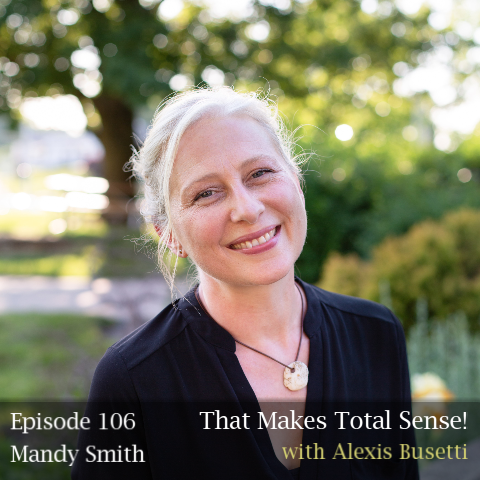
Speaker 1 00:01:00 That's fantastic. So I'm sitting here with Mandy Smith and I just finished Manny's book this morning. It is called unfettered, imagining a childlike faith beyond the baggage of Western culture. And it is gorgeous. It's just a gorgeous book, Mandy. Thank you so much for hiding it and for sharing your story,
Speaker 2 00:01:25 It's a blessing for me to hear that it's meaningful to anybody.
Speaker 1 00:01:30 It is. I mean, it was super meaningful to me and I'll have to say, I feel like I want to start with this subtitle because this subtitle is really intriguing and it feels, um, this baggage of Western culture term here, it just feels a little provocative, I will say, in the, in the states right now. And this is, you know, where you've been for so many years of your life as well. You just went back to Australia, feels a little provocative for Christians in the states. So can you like unpack that, uh, no pun intended. Can you unpack that baggage term like that?
Speaker 2 00:02:10 Yeah. Well, as a pasta, especially of a church for young adults, uh, there was, it just seemed like so much of what I was talking about with people was not just like, here's what the Bible says. Here's what the gospel is. Here's, who's who God is. You know, um, I had to do so much work to just undo some of the damage of previous theologies and experiences in the church. So some of it is, um, relational stuff or interpersonal stuff from how churches, how churches can be. And I know I experienced that too. Not that my church was totally void of that. Um, but the church really unintentionally kind of became a place of healing for people of all ages, who just had a lot of church baggage. And so we had to become a place where there were no wrong questions and where it was okay to doubt and it was okay to wrestle.
Speaker 2 00:03:06 And, um, so I, the more I talked about that, the more I with others outside of my congregation, the more I realized this is happening kind of across the board. And it's, they're really good questions. I think it's painful and it's, but it's calling us to account. And really, I think it comes down to Christianity and the church make all these claims about themselves and we need to hold them to account. Like, I'm not, it doesn't feel like good news guys. So, um, so I just wanted to respond to that in some way. Um, but I don't think the book actually began there. I think I discovered the connection between what I was experiencing and that baggage kind of somewhere down the line and it was a beautiful gift.
Speaker 1 00:03:51 Yeah. So I do want to go, um, I do want to go where the book began because I will tell you about one of these kind of, it felt like a holy spirit moment for me today. Um, on Monday morning in Texas, I was driving my youngest, uh, somewhere this morning and we were stuck in a lot of traffic, um, kind of like unusual traffic even for Houston. And so there, we were just sitting in the car for a while and he looks over and he said, mom, look at those birds are flying and it looks like a V Hmm. Oh, wow. I interviewing Mandy Smith this afternoon. And this is where your story kind of started was a bunch of birds that were flying and it looked like a V. So can you share, um, that story and then, and then whatever else you want to about kind of the birth of this project for you?
Speaker 2 00:04:46 Yeah. So I was at the beginning of my sabbatical and thought I didn't have an agenda for it, but of course I did. And there were things I just needed to figure out in my own mind before I could be present with God. And I was kind of praying and wrestling with God and saying, like resolve these issues. So I can just finally, you know, this is the last two things on my to-do list before I can actually relax. And, um, right at that moment, I just caught something out of the corner of my eye. And it was a flock of geese flying in a V formation, which I always, it just always is beautiful to me, but this moment, it just kind of took my breath away. And I suddenly felt this huge comparison between what was going on in me and what was going on in them.
Speaker 2 00:05:28 And suddenly realized those birds are not planning to form a V. Like they don't sit around and have a meeting and measure it all out. Like I would, um, each bird is just sensing this kind of slip, slipstream spot. You know, I think I call it in the book of slipstream sweet spot, which is really hunters. Um, it's a bit of a tongue twister, um, where, where the wind is kind and they trust that instinct. And somehow it actually makes them more efficient flyers, you know, and it, and it also makes them really beautiful. And, um, and so I just had this sudden feeling of like, I want to fly like that. I have no idea how to do that. Um, but what would it take for me to, to trust instincts that I can't explain? And that means relying on the spirit in new or different ways and actually like trusting that it's not, I think there's this fear that if you just listen to the spirit or you just trust instincts, um, or you do things that don't necessarily make sense to your rational mind, but, but somehow make sense to your body or to your emotions that it's just gonna, you know, you're gonna lose your job and you're going to get nothing done and you're just gonna become useless to anybody.
Speaker 2 00:06:47 And, um, and so these bows represented actually the better way to fly the better way to get somewhere and to do so together. And they were beautiful and they were also just listening to that instinct in them. And so that began a kind of a exploration and I'm so thankful that I had some time to explore it during my sabbatical, but the book shares the story of how the things that I was exploring on the sabbatical then took on a new depth when I returned to work. I don't think the book would be that much help to anybody if it was like, so the first thing you have to do is take eight weeks off. Right. Um, because when I came back to work, I think I, you know, I had been exploring child likeness through the whole eight weeks, which is surprisingly hard and painful and brings up a lot of baggage. And especially for people who are trying to be very grown up and productive. Um, and so when I went back to work this practice of, of listening to childlike instincts and longings for eight weeks meant that now I was, um, I couldn't tell any more the difference between the Spirit's prompting and my own childlike self. And so it took on new depths in my, in my ministry as well.
Speaker 1 00:08:05 Yeah. I, I love it that you, you kind of share that throughout the book that there's kind of this gray, this kind of this gray fuzzy line, once you, once you practiced the child likeness, um, between that and the holy Spirit's prompting. And I'm wondering if you'll share, um, a few of those things that you just alluded to, because I do think that sometimes we will say things and if we just went, maybe that step further, we would, we would be able to honestly say this is leaning into some sort of childlike ness, but we'll, but maybe we'll say I went against my gut on something, or I just felt this, or like you share often I had the desire to do this, but for some reason I just didn't. So I loved you shared, um, about the stick. And so it's kind of one of those early ones for you, but can you talk about, can you talk about that because I think we have language for it, but I think that we're kind of missing it at the same time.
Speaker 2 00:09:08 Yeah. Yeah. So one of the first, so I just kind of made this decision. I'm just, I'm going to be like a child and that sounded kind of romantic and sweet in the beginning. And one of the first days that I was wrestling with this and I want to CLI or interestingly, whatever, um, another flock of geese flew overhead while I was doing this. So it was a little bit like, okay, God, I get the point. Um, I was at a park and I was walking alongside a really long fence. And I suddenly realized halfway along this fence the whole time, um, there was something to me that was just, that was just like in communication with the fence. And, and it was like drastic, drastic, drastic, you know? And I hadn't even been aware of that. And I suddenly, when I became aware of it, um, I was like, well, that's dumb.
Speaker 2 00:09:56 Like I don't see any sticks around here. I'm halfway along this huge long fence already. And, and then I was like, no, I am going to do this. Like, it was so funny how much determination and kind of grown up tenacity. It took to like mush myself back to the beginning of events. And then of course, like there were no six insights suddenly it took me ages to even find a stink and stick. And, um, so it was funny how it was like a discipline to listen to that. And the whole time I'm walking along the, you know, a couple of grownups walk past me and, and I was just like, I'm gonna do this if it kills me. Um, but it was, I think that maybe it was the beginning of me realizing like, wow, this childlike thing is actually kind of hard and it makes you worry.
Speaker 2 00:10:39 Like what will people think of me? And will I be disappointed? And what if God doesn't show up in the way I hopes, I hope he will. And, um, so I, you know, I laughed at myself at the end of that and there was a way finally that I was like, okay, that was kind of fun. I'm glad I did it. And who cares? You know? Um, so, so yeah, I think that's where I started realizing that, uh, whether we call it being childlike or listening to the spirit or listening to our instincts or our bodies, um, it does bring up this baggage in us because there's something in our culture and in our upbringing and in our very selves that tells us keep in control and that's a problem. Um, and so I kind of use language. I had to create language just like we have childish and childlike.
Speaker 2 00:11:30 I had to then create language of adultish and adult-like because, um, in the beginning, in order to be, I define childlike as unafraid to be powerless. And there's this adultish instinct that is afraid to be powerless. And, um, and something happens when we, when we choose to step into that, that makes us available to the spirit setting aside our own power and actually gives more room for the Spirit's power. I think that's why we don't feel this spirit most of the time is because we're too busy, controlling everything. And then, um, there's something that, that happens where we're prompted to obey and respond. That leads us into what would, what I would call adult likeness, which is, um, unafraid to be powerful to say, yes, I have agency and I am called to respond. And in that case, it was just dragging a stick against a fence. But, you know, sometimes it's really serious things as we see with the calling of the prophets throughout all of scripture and they wrestle with, oh, who am I? I have nothing to say, I can't do this, which seems very humble, but I think it's a child told this child childishness of being afraid to be powerful
Speaker 1 00:12:43 As well. I want to come back to the child's child-like and childish and adult-like, and adult-ish because I've, uh, my best friend is Mandy as well. And so when you went through and named your, um, you know, your adultish self, um, I loved that, but I want to come back to that.
Speaker 3 00:13:02 Um, but
Speaker 1 00:13:04 Part of this Western baggage, when you said, you know, you, you disciplined to drag that stick along the fence, it's fun, you know, and, and who cares, you know, what, what people thought about about you. And I, I thought a lot of this, like Western baggage and Christianity it's very thought driven, right? Like I have to be able to define it and I have to be able to, to say it and I have to be able to research it or put my finger on it on age. Um, and the theology behind it is very important that we name that, you know, and, and I think for a lot of years, um, kind of my personality type lens really well to that, I enjoy that. I enjoy kind of the black and whiteness of things, you know, that's kind of my natural bent. And, and I was, I was, you know, I had a season where I was just really trying to meditate on joy, you know, what is joy and really just kind of investigating my own life.
Speaker 1 00:13:59 Am I, am I letting the joy of the Lord, you know, just really be a part of who I am every day. And, and I wanted to go back to all these, you know, where are the scriptures and where are the biblical things? And then one day it was the silliest thing. I was, I was laying on the couch, we have an English Mastiff and she shacks and may walk in the store at any time. So just to be warned. Um, but she's so silly looking, right? Like Mastiffs are just weird looking dog, right? They've got these giant lips and wrinkles and their ears are floppy and she's all like stripey. And she slobbers and you know, all of this, but I was sitting there with her and I was brought to tears because I just felt so much joy sitting with my Mastiff. And I thought to myself, I'm tearing up right now. I thought to myself,
Speaker 3 00:14:47 Lord, what kind of a God
Speaker 1 00:14:51 Bakes, I'm massive. This is just the most ridiculous thing on the planet. Like, yeah. Like why, you know, like, what is this, what would, what would prompt you to create this ridiculous? You know? And, and I felt like that moment was just such a gift with the Lord, you know, and not unlike I think the things that you described because I kind of wanted to study my way into joy, if that makes sense. Absolutely. It makes sense. Western culture, my way into joy and really what I needed was about 10 minutes on the couch with my master chef. It's great. But
Speaker 2 00:15:29 Do we trust that? Is that also a theological moment, right? Or an important moment with God? Is it as important as the things we can study? Yeah. And not to create a false dichotomy. Like, I didn't want to say emotions and embodied experience versus thoughts. I wanted to say partial experience versus whole person experience. And this is where I came to see that, um, some of that childish, childlike adult-ish adult-like stuff, um, I started to read about true self and false self, which has a, you know, a deep tradition, especially in, uh, the contemplative Catholic tradition and realized a lot of the adult like, and sorry, adultish and childish stuff, his full self kind of stuff. And strangely enough, there's something in our Western culture, which actually encourages that false self to worry so much about what other people think of us and putting on a certain face and losing integrity.
Speaker 2 00:16:30 And I don't mean integrity in the sense of like I'm telling lies, but like my behavior is not consistent with what I claim. And that's true. I think of, of Christian faith in the Western culture too, that, um, our own scripture says so many things about how human beings experienced God in their bodies and in their emotions, as well as in their minds. And yet we don't know how to actually live that. And I think it is kind of a bit of a retaining of control on our behalf, on our own parts, um, which makes me really sad. And so it, it shows me, you know, I started then reading some cultural critique that was talking about just the, the damage that is done, the violence that is done within the human self that's compartmentalizing, our experience and, and pitting thinking versus feeling. And I know it's so sad and also like, um, I think I'm really sensitive to just lived theology and the, and the things that we, that we say by what we do.
Speaker 2 00:17:35 Um, so for example, I was this, this was a moment of real clarity for me and I had these moments of, and, um, I was at an event where we were planning a big gathering that was called, that was about what it means to be human, which is a wonderful conversation for us to be having right now. And I think theology could, could use some more anthropology. And so I was so excited to be an honor to be part of planning this event. And we had had a full day of talking about it all, and we were all a bit overwhelmed because to talk about what it means to be human means talking about some hard stuff. And so emotionally and physically, we would just a little rung out and it was time to take a break. We had the agenda and there was break time built-in but somebody said like, okay, I know we're due for a break.
Speaker 2 00:18:21 We're just, we're just going to have to push through. Cause, cause we got a lot still to cover and I was like, excuse me, I'm, we're talking about what it means to be human and human beings need to have a bathroom break. You know? So like those little things speak volumes and, um, you know, if we really believe that we are whole beings and that God has shaped us in this beautiful way to experience the world through senses and emotions and ideas and relationships and, and embodied experience and such a beautiful diversity. Um, what if, what does it look like to really trust that God communicates to us in all of those ways and that, that he is one. And even though we don't understand it at first, there is a way in which those things are all one, even though they seem to be in conflict sometimes, or they're just uncomfortable or icky, or we don't know what to do with the things that don't come in and in an English sentence. Um, and I, I actually have found that there's something deeply transformative about trusting that, that the parts of me are one and that God is one and that he is at work in this world and that we as his brother, as his children are one. And that somehow, even though none of those things seem to be true, that as we live trusting that they are true, it actually shapes us and transforms us even in the discomfort of that.
Speaker 1 00:19:53 Wow. Yeah. There's a lot there.
Speaker 2 00:19:59 Yeah. I had to write a whole book about it and I feel like I just scratched the surface.
Speaker 1 00:20:04 Yeah. I mean, there, there is a lot there. Yeah. I'm wondering if you'll, um, feel, take us when you were talking about the, the child child, like, and childish and adult, um, like an adult-ish, um, your definitions, uh, were surrounding power. Um, you, you mentioned that earlier and early on in one of the first sections, one of the things that really struck me was you talked about imagining the possibility of power without abuse. Um, and I feel like for many people and then subset Christians in Western culture, that is a, that, is it a difficult imagination to have? Um, it's, it's, it's very difficult. I took, uh, I took a politics class a couple of terms ago. Actually, we started it, um, the week of the capital insurrection. Wow. So this was a political theology class. We started the week of the insurrection and being, and, and the conversation was there too in a similar way. And I have to be honest, I couldn't do it. I couldn't imagine, um, power without abuse. Yeah. Isn't that sad in that moment. So when you have such a rich tradition throughout some
Speaker 2 00:21:36 Of examples of power with the peace.
Speaker 1 00:21:38 Yeah. Yeah. Can you talk about that and like how it plays into this too, this whole child likeness and, um, yeah. Receiving. Yeah.
Speaker 2 00:21:48 And it's something that I'm not just thinking about. It's something that I'm constantly trying to explore as somebody who is a leader and wanting to own that and, um, Stuart that well, which is really hard work, you know, and especially when there's not many positive models of it and not many models of how to do it as a woman as well. So, um, yeah. I remember having a moment in an elders meeting where we were making a huge decision and we felt the weight of it. We had, we had had some experts on this particular topic come and made themselves available to the whole congregation. We'd had all kinds of conversations throughout the several months. Um, and, and it was time to just make a decision about, uh, how the congregation was going to move forward. And so we were having the elders meeting after several months of doing everything that we could to make sure that everybody was heard.
Speaker 2 00:22:49 And it was just finally time to do it. And somebody in the elders meeting said, um, you know, I know we're all in agreement about how to move ahead on this, but we need to put it in the bulletin one more time and say, we're going to do this unless you, unless somebody has a problem with it. And I was surprised how frustrated I got with that. And I stopped and I just kinda checked my heart and thought what what's this about? And I think I preached a little impromptu sermon there, um, because I really appreciated that this was a man who is raising this question. And, and thankfully, um, I'm surrounded by a lot of men who are aware of the abuses of privilege and power. And, um, I think there's so much healing for them to step into because it then sometimes leads to a total relegation of power and, uh, and avoidance of power.
Speaker 2 00:23:43 And I think there was a place where like collided between me and him there, because I, in the meantime, was coming from a place of passivity and trying to avoid responsibility of power. And, um, it's a, it's a strange moment right now in the church because I hear so many people saying don't seek the limelight, don't make a platform for yourself. Don't, you know, have an ego or whatever, which I think is a really great conversation for us to be having right now because of the abuses. I think for me, and for many people like me, my temptation is to not seek the limelight. My temptation is to be quiet. And I'm more like some of those profits who are like, oh no, you know, ask somebody else. And so interestingly, the conversation that's happening right now about power and authority in the church is actually, is actually speaking right into my temptation and inclu and, and encouraging me to, to name it as a spiritual thing for me to be disobedient to the call that God has on my life to stand up and speak sometimes.
Speaker 2 00:24:50 And of course, to do that well is harder than to say nothing. And so I think in that moment in that meeting, uh, I was actually feeling really prompted to stop, stop, obeying that temptation, to be quiet and to speak the things that God has placed in my heart. And I realized, especially as a mom, you know, it's a strange thing to think, who am I to tell this little person what to do? But then I realized, you know, I have a right to speak into my children's lives. Not because I'm always right, or I know everything, but I've lost sleep for these kids. You know, I've given my whole body and my whole self for their, um, education and nourishment and flourishing. And, um, I've read books and I've cried and I've prayed. And for goodness sakes, if anybody has the right to say anything into their lives, I do.
Speaker 2 00:25:41 And, and I re remembered, you know, Jesus was, people were astounded by the authority that Jesus had and he had authority because of how much he emptied himself. So he wasn't stomping around demanding, you know, I think we have to rethink what leadership and power even is. He wasn't, he wasn't demanding, you know, pointing as a, you do this, you do that. Um, he, he began by emptying and, and so whatever then he received from the father came with authority of the father and whatever he, you know, he stuck to his guns, you know, there's, there's a couple of passages there before it comes to the crucifixion where he's just being re um, dismissed. He's being, uh, accused, he's being betrayed and denied and, um, threatened. And he just keeps pressing on, you know, like at any moment he could have been like, oh, you know what? This is just too hard. No, sorry. I'm not the Messiah. I'm not really good son. You know, he could have, he could avoided
Speaker 3 00:26:45 Any of that, but there was something
Speaker 2 00:26:47 Burning in him that he just couldn't keep to himself. And he just, for the joy set before him, you know, he just kept saying these things. And so, um, I think it, I think it takes some figuring out, but I think it's a really important thing for us to figure out that the response to the abuse of power is not to give up power and authority, but to redeem it or to ask God to redeem it. And I do think it begins with a lot of emptying on our part of our own desire to do it in our own way. And then we are available to the power of the spirit that is already in us. It doesn't come and go our desire or our willingness to let it do its thing comes and goes. Um, and then I think we'll, we'll have access to the thing we've been trying so hard to, to find.
Speaker 1 00:27:34 Yeah, I'm reminded when you, when you were telling that story and kind of using, you know, the metaphor of motherhood there, that the power, I think, um, the way God intended it, or the way we see Jesus use his power and authority actually can't be separated from his service, um, to us. Right? So, um, we had some friends over this week that we hadn't seen since they had had their baby and this baby is, you know, four months old or something like that. And, and, you know, they, they're not in the position where we are yet with older kids, right. Where their kid is taking instruction from them. Um, but they're still in that position of authority. Um, and, but what we saw in these parents and these young parents with this young baby was just a continual act of service all night to this child, right.
Speaker 1 00:28:32 This child was being held and rocked and diaper changed and breastfed. And, you know, continually served by his parents who have earthly as we're concerned, ultimate authority over him. And I almost said it's two sides of the same coin, but I don't think that's the right picture. I think they actually can't be separated. Um, when the power is, um, is godly. Like you talk about it, not with abuse. Um, and, and it, and it also reminded me of some, you, you kind of have a few, I feel like if I'm remembering correctly, they're kind of few pictures throughout the book where you do talk about God and Jesus, even in their, uh, maternal instincts with us, um, with, you know, Jesus, as it calling himself a hin, right? Like a mother hen, um, because, and, and how that relates to our child likeness, you know, um, his maternal instincts and our response to that. So it's not really a question, but maybe, you know, I don't know, just maybe a response to that kind of in that realm. Yeah.
Speaker 2 00:29:48 I, um, I have really wrestled to write about that. And to be honest with you, it's still hard for me to wrap my head around the fact that scripture talks about God in that way. Um, and I think we have so much baggage about gender stuff that, um, you know, now we think like, oh, Mandy's a goddess worshiper, or she's just saying that because she's some kind of flame link flaming feminist, or, you know, whatever. Um, but the fact is that God, I was going to say God himself, but, you know, God is the one who, um, has been inviting me. What if I'm like this? And I was watching a movie recently and there was a woman who was having a really bad day and her mom just gave her a hug and said, you're, you're so brave. And, um, and, and I just felt suddenly the Lord say like, what if I'm like that? You know, and for some reason God's hugs in that maternal sense, like this is not, instead of also all the good things about how God is a father too. Cause that is also very scriptural. But I always imagine that God, that kind of hug from God, like smells like essential oils,
Speaker 1 00:31:05 That kind
Speaker 2 00:31:05 Of mom, you know, I think that's the kind of my mind maybe. And, um, I actually had an experience recently where, um, I was, I'd had a really hard morning and I was headed home and there was, uh, a Russian Orthodox church on the side of the road and my, my grandmother's Russian and, um, had w and was kind of an embodiment for me of, of that kind of motherliness and, um, just so warm and so receptive. And, um, and I just felt the spirit in me say like, I want to love you, come and meet your grandmother by going into this, into this Russian Orthodox church. And it was open. Um, and I could just go right in and inside. I think I was expecting it to be really dark and kind of serious in there, but it was so light and so beautiful.
Speaker 2 00:32:03 And actually the, the icons, there was a femininity and a lightness in a loveliness about the whole place. And, you know, I don't, I don't have, uh, the I'm not from that veneration of Mary kind of tradition, but there was, there was a way in which, um, the images of Mary, which is so beautiful to, to see how she nurtured Jesus. And, and it was just a strange thing for me. Like I w I'm not the one who's like, I need to think about God, like a mother, it's the spirit that keeps saying it's okay. It's not crazy. It's scriptural and whatever is beautiful and good about being a mother is a reflection of who I am. And, um, and what if, what if the same warmth you feel for your kids? It's just a tiny glimpse of what I feel for you. And yeah, I'm still getting my head around it or getting my heart around it, you know? Yeah.
Speaker 1 00:33:02 I, thanks for telling that story because I'm like, that's like, you're practicing still.
Speaker 2 00:33:08 Yeah. It takes, it takes time and exploration.
Speaker 3 00:33:13 Yeah. Um, can you talk for a minute about
Speaker 1 00:33:21 Recognizing adultish ness in ourselves when we're, when we're seeking to kind of play out and do some of those childlike things, or just have that mentality or that openness, um, and then we kind of feel for you, she, but when we kind of feel her start to speak up.
Speaker 2 00:33:45 Yeah, yeah. And sadly, I think our culture and our upbringing kind of affirms our adult-ish weakness. And so, um, you know, what, I, I wanted to unpack what child likenesses, um, because we often think it's just whimsy and wonder, and I instead say, it's, it's just paying attention and it's being available. And it might be paying attention to a really hard emotion in us, or it might be paying attention to a caterpillar, or it might be paying attention to another person or something, you know, it's being available as whole beings. Um, and, and trusting that our instincts and our emotions in our bodies are as important as our thoughts. And, um, so if we really do that to, to sense something, that's, that's coming up in us, I've actually just come out of quarantine. And so I've been home for two weeks, like within my premises.
Speaker 2 00:34:45 And, um, uh, that's just how they do things in Australia when there's an outbreak. And so, um, I really, you know, there's one of the early fathers of the church says something about be in your cell in your cell will teach you many things or something like that. And we, we put that on the wall because of warranty. Um, and, but, but being alone and staying at home for two weeks, that's going to teach you some things that you'd rather not think about. And for me, it was bringing up all kinds of emotion related to grief. And, um, I'd rather not pay attention to that, you know, but, um, so there's, there's something that comes up. This adultish instinct that that is just wanting to stay in control. And whether like something prompted me to stop and look at this caterpillar, but that's a waste of time and people are gonna think I'm dumb.
Speaker 2 00:35:45 If I, if they see me, you know, kneeling over a caterpillar on the sidewalk. And, and what if I hope that it would be meaningful and it just doesn't feel like anything and God doesn't show up. And I waste my, and it's a waste of time. Like, those are all like my goodness. It's just like 30 seconds to stop and look at a caterpillar for goodness sakes. Um, and so it's only when you stop to do it, that you, that you actually start to notice the adultish newness of, of wanting to look good, wanting to stay in control, wanting to be productive, wanting to avoid disappointment or any, any painful emotion. Um, and, and so it was only when you, for me, it was only when I started saying yes to those, uh, instinctive or emotional or embodied, um, kinds of prompts that I started realizing, wow, this is serious.
Speaker 2 00:36:40 And I actually started to wonder, like, how much of this is culture and how much of this is spiritual warfare that God has put messages about himself in so many ways in this world through sounds and through experiences and through sunsets and through like, and, and he's given us, uh, senses and emotions and bodies and thoughts and ways that we are just like, we have all these receptors that are on all the time. And meanwhile, he's bombarding us with beauty and goodness, and, and even the hard things have truth in them. And we're like, I'm turning this one off. I'm not trusting this one. I'm only trusting anything that comes in through, through written words or through spoken intelligible sentences. And, and so then, like, we even say like, God, I'm, um, I'm looking for insight from you, God. And we're expecting it always to be in the form of a sentence to pop into our head or to be spoken to us by someone.
Speaker 2 00:37:44 And what if like, meanwhile, there's a bird sitting right beside us. Who's singing, God's love to us. Well, there's a song from last Sunday service. It's just bubbling up in us. And we're trying to be like, stop thinking about that song. I'm trying to wait for a message from God. Um, so what a sad thing. And so, even as we're going through this kind of deconstruction process, um, as everybody's calling it, which I think is healthy in many ways, but we're still doing it primarily being, I actually don't like the language of I'm deconstructing my faith because it still puts me in control. And I don't. And I think the method that we use is going to affect the outcome. And if it's mostly, uh, intellectual wrestling, then we're going, we're going to miss out on some things. And I would like to propose that it's primarily actually an emotional thing that we have pain from our experience of the log and the church.
Speaker 2 00:38:44 And that's real. And if we try to resolve that pain by having arguments or reading theology, um, it's not, it's not actually going to resolve any of the problems. Um, and I think probably thinking about theology is a really important part of the deconstruction, but that for me, seems to be the main thing that people are doing. And, um, what if we just confess our pain and what if we cry out, um, from aliment and, and what if we need to confess our own control. And, you know, there's, there's so much that this there's many more levels of that, that I think would be more, more holistic and healing for us to explore. Uh,
Speaker 1 00:39:30 As, as you were talking, I was thinking, um, about my kids, we have four kids and, um, and one of the things about their child likeness, um, that I love, but that I recognize isn't necessarily in me when, when my adult illness, you know, takes control is man, when they're happy, like it's ridiculously happy, right? Like a birthday party or, you know, something, something comes up or their favorite dessert or something it's like, it's like stupid dancing in the kitchen happy, right? Like it's, it's really, they feel it like everywhere. Um, and when they're sad, um, it's the same way, right? Like they're not trying to stop tears. They're not, you know, none of that. It's just like really deep experience, really deep feeling. Um, you know, of that. And, and I thought of the Psalmus, you know, um, of all of these Psalms that we have, and it's just like, man, those are the same way, right?
Speaker 1 00:40:30 Like high highs and low lows. Um, but we just think that it's, you know, our, our, our culture and our adulting selves, um, really tries to mute, um, you know, those things. And, and when I think about that, um, you know, the, the deconstruction process that you're, that you're talking about, which I am, do I to indeed think is, is healthy and needed. Um, but when you were talking about the pain, um, you know, I'm like, I think a lot of it, just the, the phrase that just kept coming, coming to my mind is just this, this lack of recognition. Um, you know, like we're, we don't recognize. And I don't mean by that. We don't feel it. I mean that we don't recognize it. And I will say this, we, we were taking this, uh, parent class at a church. Um, and we have, uh, one of our children is, uh, is adopted.
Speaker 1 00:41:25 And so it was kind of a class, especially for, um, for kiddos who come from, um, who are adopted and come from those different spaces. And, and, um, one of the exercises we did every night of this class was when we would pick the kids up, you know, they were just across the hall. We would, um, give each other band-aids, you know, show me where it hurts. And then we would put a band-aid and we would put a bandaid on them and they would put a band-aid on us. And even if we didn't have any physical alleys, we would just name this something, right. Just to give the other person relationally the opportunity to recognize our hurt and to do something about it, something, the goal in that case, which was putting a bandaid on it. Um, and I think, you know, with this kind of <inaudible>, as, you know, as a differentiation from the child likeness, it's, you know, like just get up and move on, you know, like that we may feel, it's not that we don't feel it. Um, but there's not a real recognition. There's no pause to say this is happening. There's no pause for lament or the joy or a lot of these other kind of in-betweens, you know? Yeah.
Speaker 2 00:42:42 Yeah. I sometimes feel like we're kind of doggy paddling at the top of a waterfall just desperately trying to avoid losing control and, um, it's exhausting, you know? And, uh, and what if there's a new space at the bottom of the waterfall that yes, it will be really disorienting and it will be really painful to go over a waterfall. That's a, that's a metaphor that doesn't sound like fun, but, um, you know, uh, Richard Rohr says every kind of transformation goes, order disorder reorder, and we really just want to go order reorder. Um, and I think we're in the middle of this right now. Like pandemic is pretty disordered, but, um, I do believe that reorder comes from all of this disorientation and that's the way God has always worked. And, um, I think it's actually a three-step that, that references the, the way of Jesus, life of life, death, and resurrection, and the world would tell us there's just life and death.
Speaker 2 00:43:51 And so if you stop paddling at the top of that waterfall, you're going to go over. And that is the end one to two steps, but, um, it's good to acknowledge the many deaths that we are called to die. And I see this in Jesus' story too, that if we only think that this life death resurrection thing is for when we physically die, then we miss the ways that the gospel works on a daily basis for us, that we're called to die to our comfort and our convenience and our control. And we're called to die, social deaths and emotional deaths since, you know, all kinds of deaths, Jesus, Jesus had existential deaths that he died. It gets Semini before he ever got to the cross. He died to his desire for people to get him that's serious social deaths, you know, and there's a reason why people say they'd rather die physically than speak publicly because social stuff is real too. That is a part of our identity and our existence. So I think it's really good for us to, um, to understand the many deaths that we die throughout our lives and the ways that life, death and resurrection is, is at work in those spaces too.
Speaker 1 00:45:06 Wow. All of that is just like, this is going to give me so much more food for thought. So I'm so thankful for this conversation. In addition to being able to read the book, um, the world thinks there's just two steps. That's just, wow.
Speaker 3 00:45:24 Um,
Speaker 1 00:45:26 Mandy, even though I feel like that's kind of a beautiful place to wrap up. I do want to ask you one last question is what did I not ask? What did I miss? This, this book is so rich and full. And as I mentioned, I finished it this morning. So I'm still processing, um, so much of the, of the nuance of this concept, but maybe what did I miss, or what would you want to, to leave us with as we go forward in our, in our own journeys in this?
Speaker 2 00:46:01 Wow, I guess I would just invite your listeners to consider the possibility that the spirit of God, which spoke all of creation into existence and which rose Jesus from the dead is actually in us and available to us and is the source of all life and whole flourishing and all ideas and all energies and creativity and all the things that we desperately need. And that we are not far from God. Our salvation is not some magic button that we get to push at the end of this life that opens the door to heaven, even though we don't deserve it. Our salvation is that we are one with God right now that Jesus said, when I leave, I give you my spirit and you'll be able to do things I couldn't do because the spirit that walked around in my one body now is walking around in a body of believers in a community.
Speaker 2 00:47:07 And you are the body of Christ for that reason, that the same spirit is, is in you and how beautiful it is that it's not just one person, but, but a whole community across time and space and across different countries and cultures and languages. And that we can enjoy that individually. And also there's a way in which we come to know it as a community that's even more beautiful and rich and multifaceted. Um, and I think the only thing that we we need to do, which is simpler than what we usually do, but in some ways also hotter, especially with some of our cultural baggage. The only thing that we need to do is daily empty of our desperate efforts to be enough, and to be strong and to be creative and to have ideas and all the things, and it's really uncomfortable, but it, that emptiness will not leave us empty because we already are filled with the spirit.
Speaker 2 00:48:12 And we've just got out of the way to let the spirit have more space. And that kind of partnership with the creator of all things is really good news on a daily basis that we are one with God. Now this is not just wishing we could have walked around with Jesus 2000 years ago, or looking forward to being with God on a cloud and heaven at some future point. But, but being one with him being made one right now that he is in our very human bodies and wants to commune with us and wants to connect with us and wants to, you know, I'm kind of imagining, there's like this like little control panel in there that he's like, okay, I'm this emotion right now, this song push this button and this song is going to come into your head now. And, and okay, now, like this bird cute, you know, sing, sing right now on the windows. So, um, if we're just, if we're just available to the ways that God is constantly, um, working in us and around us, that's really good news, but we, we are the ones that need to be transformed in order to be available to it.
Speaker 2 00:49:24 Thank you. And I should just say this, and that's what I think Jesus means when he says you can't enter the kingdom, unless you become like a child. It's not just playing in mud puddles and whimsy and wonder all the time it's just being available and present to all the ways that the spirit works in us and around us all the time. Oh,
Speaker 1 00:49:47 I just, yeah. I just want to, I just want to internalize that. Um, but now I'm going to, I'm going to practice what you preach now, and while you were talking and giving us that final word, I just really felt a prompting to ask you, um, as a pastor, um, if you would just pray for us, would you, would you just pray, um, for us to receive and rest and respond, um, to the Lord in those childlike ways? Yeah. I'd love to. Thank you
Speaker 2 00:50:26 All. Good. We thank you that you want to be with us, that you have gone out of your way to be one with us, to pursue us and to make yourself available in a way that does not abuse power or force yourself upon us, but gently inviting us and father. We confess that there are so many ways that we want to remain in control. It's really scary to give ourselves over to you. And so father, we, we just want to empty of anything that is holding us back and we need to help even to name it any ways that we want to fix and control and understand. And we've been affirmed in these habits Lord, by our culture and our upbringing. And so we really need your help Lord, and, um, maybe even need to pray against forces of darkness, which would keep us stuck in those habits of control. What a strange thing that our culture affirms, things that are actually, uh, twisted and used by the enemy. And so we pray in Jesus' name against the temptations that rise up in us to keep that control.
Speaker 2 00:52:03 We pray in Jesus' name against the things that are inviting us to always want to fix and control and understand in our own strength. We need help to even release those habits. Or, and so father, we, we need your help, show us what we need to release. Uh, we just confess to you father, how we're trying to control our work, our home life, our families, and relationships, our image of ourselves, or do you know, and thank you that you kindly can show to us what you want us to release. So show to our sword and we need your help even to do it, help us to give it over to you all the ways that we want to control outcomes and how people think of us.
Speaker 2 00:53:01 We just spray thought loosen and muscles and release, which is really scary. And we want to trust Lord that your spirit is already in us. It doesn't come and go based on how we feel, but that your spirit is already available to us. If we will just stop so hard, trying to be the Lord of all things and trust that your spirit as you've promised is already in us. It's just been kind of cramped in one little corner because of all of our own personal striving. And we release now to that power. We, it's hard to get our heads around Lord. This possibility that, that, that forest, which spoke creation into existence, that spirit, which walked around in Jesus' body, which rose Jesus from the dead has now been given to us. But this is so central to our story Lord. And so we just want to choose it to trust that that same living flourishing force, that, that center of all creativity, of all energy and courage and comfort is, is already in our bodies already available to us right now. And this is good news that we don't have to wait to be one with you in heaven, but that you are already one with us. If we will just stop so much trying to be God and receive the God that is already in us. So father, we need your help to even do that. And we say yes to your spirit. However, your spirit wants to comfort or guide, or even just invite us into silence and rest we say yes to it.
Speaker 2 00:54:48 And I know that there is a fear that we will become consumers, a fear that will just sit in the goodness and love of God so much that we will just, um, become spoiled and self, um, consuming. And so father, we trust that your spirit will do its thing in us and through us. We thank you, Lord, that you have a spirit that that wants to fill us that wants to heal us, that wants to comfort us and guide us, and also cannot sit still help us to not be afraid to receive it first, trusting that whatever thing you want to do through us, however you want us to serve and give will grow from however we have received the goodness first. So father let us receive it, let us trust it. Even if it's coming in ways that are hard to understand. And father, may we be so transformed by your spirit, that it becomes a story of ongoing good news in us, a story of life that lights up our faces that others can see. This is not just some formula or some dry idea, but a living, breathing relationship with you that is, that is healing us on a daily basis and that draws others in. So we pray may your kingdom come in us. Mayo will be done on earth as it is in heaven in Jesus' name. We pray. Amen.
Speaker 3 00:56:31 Amen. Thank you. Thank you. Thank you.
Speaker 2 00:56:34 Yeah, no worries. It's really rich to chat with you, Alexis and I really enjoyed this time too.
Speaker 1 00:56:43 Thank you. Thank you for being here. And we've been with Mandy Smith today and I hope you've been as blessed as I have been by our time together. The book that we've been talking about, and I didn't do it justice. I bounced around to kind of my favorite parts, but, but it's incredible called unfettered. Imagine piled like faith beyond the baggage of Western culture. And I'll put the link to where you can find that in the show notes. I really appreciate you being up so early to talk to me this morning, Mandy, it's
Speaker 2 00:57:13 A great way to start the day. So it's fun for me.
Speaker 0 00:57:17 The links for all the resources mentioned in today's episode can be found in the show notes, music and podcast production by Seth B city. Be sure to give us a review on iTunes and subscribe at your favorite podcast listening app, you can also visit us at that. Makes total sense.com.