[00:00:10] Speaker A: Welcome to that Makes Total Sense, a podcast dedicated to exploring God's generosity and justice. I'm Alexis Busetti, a Christian, aiming to ask good questions and encouraging you to do the same.
Every one of us is wired by God to live out generosity and justice, but the how sometimes eludes us. That makes total sense is a way for us to get together, posture ourselves as learners, and challenge one another to practice generosity and justice in a tangible way every day.
Janai, I almost pushed the end button because it's red.
That's so. Every time.
[00:00:52] Speaker B: That is so funny. That's the episode.
[00:00:54] Speaker A: That's the episode.
[00:00:55] Speaker B: It's like, janai, mic drop.
[00:00:57] Speaker A: Just mic drop, we're done. I'm like, I've been recording on Zoom. I've been recording on Zoom since before the pandemic. So, like, before a lot of people even know what Zoom was. And still, I think, because maybe Seth, my husband, who, you know, also is like, you know, he does, like, amateur recording and guitar stuff. And I'm like, red means record. Red doesn't mean end. I don't want to end this conversation before we even get started.
[00:01:25] Speaker B: Yeah, no, I agree. Let's have the conversation.
[00:01:30] Speaker A: Let's do it. I'm also really tired and exhausted.
Yeah. So anyway, I think, like, a lot of us are. This is like we were just talking about prerecord. This is. This is like, a lot to keep up with life and the world and the news.
And now I'm looking at my friend who has a focus in spiritual formation. I feel like I should center myself, Janai, when I'm looking at you, take a deep breath before we get into everything.
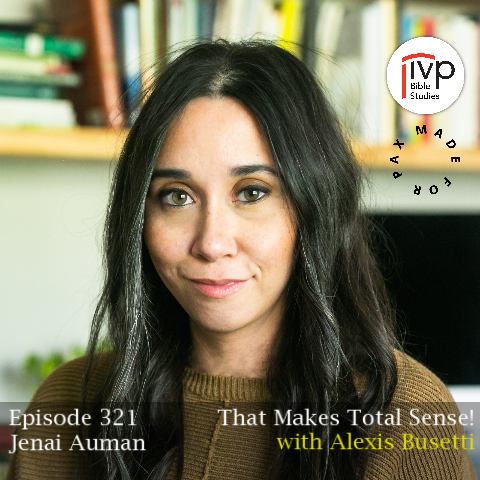
Yeah. So I'm sitting here having coffee with my friend Janai Amin, who I'm so thrilled to welcome back to the show.
You wrote othered, which we'll link to. Which we'll link to our conversation on that. It was one of my favorite conversations. It was really personal conversation for me, and I'm so grateful for you to a write about these things vulnerably be. To be present, to chat about them and to see, just to bear witness to what a lot of us are experiencing in our faith lives in church, in Christian communities, and elsewhere. So anyway, I'm grateful for you and for your work and for your willingness to come on today and chat about the IVP made for pacs Bible study series. So welcome back, Janai.
[00:02:49] Speaker B: I'm glad to be here and I'm glad to chat. This is the sort of thing that I love talking about. So I'm glad. I'm glad. You are never a burden. You are one of the people that you have the freedom to text me anytime or email me in this case, anytime.
[00:03:05] Speaker A: Thanks, Janai. I really appreciate it. There's part of me that wishes that, I mean, I'm glad we're recording and I'm glad this is going out there. There's also part of me that wishes that I was back in Houston and we were just sitting and having breakfast. But yeah, that's not today.
[00:03:19] Speaker B: You're not in Houston. Oh, you're in Austin.
[00:03:21] Speaker A: That's right. Like, as of like last week.
So that's part of the reason I'm tired. It's not just the news, it was also the move. So anyway, so we're here now, but we'll be back and forth a little bit.
So anyway, so we can do that again.
You were the reason I asked you on is because you were one of the endorsers for these four Bible studies that are coming out as a collaboration between IVP and Made for Packs, which I was so thrilled to see your name on that and so thrilled to read your endorsement. So thank you for that, by the way.
[00:03:53] Speaker B: You're welcome.
[00:03:54] Speaker A: But I'm also grateful for your connection to Made for pacs as an organization, so I kind of want to start there.
We've chatted a little bit in this series, especially the opener with Tiffany Blume, about Made for Packs as an organization, but they do quite a bit of stuff and they've gone through some evolution since they started. So I'm curious if you can talk about your connection to the organization.
What about the work?
What kind of work do you do with them? And then also kind of what drew you to them as an organization? Because I think that that will help frame kind of how these studies are written, what their intention is, and really maybe even a little bit of the pedagogy behind how these studies are put together.
[00:04:44] Speaker B: Yeah. Well, let me I'm going to answer those things in reverse. Like what drew me to them and like how I got connected to them, because I think to frame it. And this is how this is like some of the in the spiritual direction, spiritual formation stuff that I do. I always tell I speak kind of at length about a rule of life. If people don't like the word rule. And I know many of us don't like that word rule. It's just St. Benedict, for whatever reason, use the word rule.
Your whole philosophy of life. Like what is I remember I did a I don't usually do These like planner journal prompts whenever I just use the journal.
But I was using one journal one time. I think it was the monk manual. And it had like the, like this like year long planner, like kind of idea sheet. And I remember one of the questions on it.
And I was already kind of in contemplative spaces at this time. But this was a great way to frame this question. The question said, what's your life's end goal?
And in a planner, you know what I mean? Wow. And I thought, good grief, that feels.
[00:05:46] Speaker A: Real stressful right now.
[00:05:47] Speaker B: Yeah, you didn't have to come at me so hard, like I'm sweating.
But I. And this is years ago. And so I remember thinking, I don't know how to put to words, that I have some words, but I don't know how to.
If someone were to ask me that in for instance, a podcast interview, I don't know how I would answer that. So I did some work. I'd already done some rule of life stuff at that point.
And over time I did kind of. And I write a rule of life for myself every year. I edit it every year so that it's more. It's always in. I change, I evolve as a person. And so every year I rewrite it, tweak the language so that I stay in alignment with myself.
But what is your life's end goal? Has helped frame like, it's helped me describe what a rule of life is to people.
Instead of kind of getting into the nitty gritty of what St. Benedict is speaking to and different spiritual practices. I thought that was a really great way to put it. So ultimately, my whole thing, my whole hope in the world and how I exist and show up in the world is that one I want to cultivate. I want to be a person of shalom.
But in order to bring shalom to the world, I have to have some sort of inner sense of shalom. And by the word shalom, I don't know if folks are familiar with that. I think it's kind of falsely equivocated with like peace or sometimes peacemaking or peacekeeping, which are not the same. But shalom, the Hebrew idea, is more of a wholeness, like an integrity.
Am I who I say I am? And do I exist as that person everywhere?
But not only do I exist, am I the same in private and in public, but do I foster flourishing?
Do I generate life? Do I help breathe life into the world that was a part of and spoil? I guess this is kind of a spoiler, but it's not that big of a spoiler. In othered, I mentioned, like, you know, you can replicate the patterns of the world and exploit, hurt, harm other people, or if you are, to borrow Wendell Berry's phrase, practicing resurrection, you're breathing life into the world. And that's what I want to do. I want to breathe life into the world, and I want to do that by fostering flourishing. That helps foster shalom. And so that's my life's end goal.
And it took. I know that I say that with such clarity now. It took some time to get there.
So that's like, what I do. So any sort of opportunity or ask.
And as an author, I'm asked to endorse books. As an author, I'm asked to go on podcasts. When I'm not, like, publicizing a book, for instance, or other work, I'm asked to join a nonprofit to help X, Y and Z with formulating.
I get certain opportunities just in the spaces that I inhabit. And one of the ways in which I determine how I whether or not I participate, whether or not I say yes or no, is whether it aligns with who I am as a person.
Does this actually help foster an inner sense of shalom for me? And are these people in this organization?
One of my aspects of the rule of life is like, navigating relationships and boundaries. And so one of my kind of relational statements is that the people who I invite to influence me are people who want shalom for me.
And so I think about that in terms of, like, are these people.
These people can see my gifting for sure, but so could narcissistic and abusive people, which is my background. And narcissistic and abusive people exploit your gifts. They don't necessarily want shalom for you. And so this is just spiritual direction for everyone for free, by the way, right now.
And so I kind of navigate these things for myself, personally.
Do these folks who are giving me this invitation, is it an invitation?
Are they overly flattering me? Are they, you know, or do they truly want shalom for me? Do they want shalom in the world?
And. And separately, do I have the time to commit? Will contributing to this create disorder in my personal life, with my family, friendships, etc. So I kind of do like a internal check in. Do I participate in this thing? And so I was asked eventually to come to partake in the PAX fellowship.
And whenever I received that ask, I received two different asks, which I'll get to.
Every time I received those asks, I kind of brought them through this Particular filter. Does that help or is that convoluted at all?
[00:10:42] Speaker A: No, that totally helps. Yeah, yeah, yeah. No, and I'm glad that you. Yeah, I'm glad that you took the time to do that. It made me think of two things that I want to. That I want to put out for folks listening. One, when you were talking about shalom, I thought of Lisa, Sharon Harper's book, the Very Good Gospel. And she talks a lot about shalom in that holistic sense. And so I'm going to link that and then my conversation I had with Lisa about the book for folks. And then when you're talking about the rule of life and that, gosh, like, come at you hard with, like, what is your end, you know, the end goal of your life? Like, in seminary, during my M. Div. There were several classes. And so we just kind of had these checkpoints throughout the program where we were asked to do something similar. At Fuller, we called it the central integrative question, which is basically like, at this point in my life, how do I see my giftings? I remember exactly how it's phrased, but interacting with God's work in the world.
And so we would do exactly what you're saying, like, every so often, whether it was every year or a couple of times a year, kind of go through that and then write a rule of life or edit a rule of life that will help guide that.
Rule is a hard word for some folks. For me, it's a word that I am. I like it less now, but I have always loved it. And so I have actually had to shift in kind of the other way of like, okay, this doesn't. This isn't something that's very rigid necessarily. It's kind of like you're saying like a guide, like an internal checklist in some ways.
And, you know, and it does change where we are in the seasons, where we are in our lives. But that.
But when we can go back, like, you're saying to this shalom, Am I bringing shalom? Is this bringing shalom? Do the people who are asking me to do this, do they want shalom for me? Like, that is really helpful, Like a really helpful guide. Because I think, as you said, sometimes two asks can look very similar.
But maybe, you know, maybe the story behind the ask is different or the people's motivations are different, which they may not always share, may not always be transparent about.
And so, yeah, so it's really good to have kind of a guide to help with that discernment process as we're kind of going along and figuring out what our interactions are going to be.
So, no, not completed at all. Totally appreciate that.
And when you were asked to participate in some of the stuff that PAX did, what were some of the things that you're like, yeah, I think this could be really fun or a win or whatever it was for you.
[00:13:26] Speaker B: Well, I'll start off by saying that the PAX Fellowship made for PAX is an organization. They do all sorts of different things. They've had writers and a blog and articles and stuff like that. But one thing they've done recently is the PAX Fellowship, which is essentially an invitation to Christians who identify as black, indigenous, or a person of color in some way, shape or form. And they invite them into specific cohorts where they are further equipped and resourced to do the sort of work that they want to do. So there's sort of like a community leadership kind of policy change cohort, or there was, and then there are writing cohorts.
And so the first year of the PAX Fellowship, I was not a facilitator. And I think at that time they only had a couple. And I think the central cohorts might have been the writing cohorts. I might be totally wrong there, but I do know about the writing cohorts because I was invited in. One of the facilitators of the writing cohort, or it might have been one facilitator of the writing cohort, asked me to be a mentor to some of the fellows. And that was just a part of the process for that particular cohort and that iteration of the fellowship. And so I said yes. And then it was a friend of mine who was actually a close writer friend of mine who I trust. And so I thought about it for a while. I asked her kind of a lot of mindful questions about how much time I needed to commit stuff like that just to ensure I wasn't saying yes to something that would again cause chaos within me or be chaotic. I didn't want to be chaotic to the people I was mentoring either.
And so received more information. And I decided to take on two mentees. And it was beautiful and I loved. We had like, good, challenging conversations. I remember with one of them specifically, it was a writing mentorship. So talking about the writing and creative process.
And what was cool was that I ended up speaking about the rule of life in one of the, with one of my mentees. And she, she, I remember her kind of balking at the idea a little bit and telling her, like, what to what end do you want to create? Was essentially what I was asking. And then I kind of told her about the rule of life and philosophy of life. And it's so funny because she was like, I don't like, don't want to do that. It seems like really big. And then she kept talking and like processing and talking about what sort of creative work she wanted to do in the world and how she wanted it impact folks. And I was like, that's your rule of life. Like, I know that answering the question is really hard when I ask you explicitly what the question, but you just like, through processing outwardly, that's. That sounds like maybe not the totality of your rule of life or your philosophy of life, but that's certainly language. And I want you to like, take a moment, journal that down so that you don't forget. Because we always forget, even though we think we'll remember forever.
And so I had such a great experience with that, those writing mentorships, that I thought, if I'm asked again to become a writing mentor for the next year, I would 100% do it. Pax shifted at that time. There was a different executive director. I think the next year. Tiffany Bloom, who we know became the executive director for the pax made for PAX and the PAX Fellowship. And she came at me with an ask to participate as a facilitator last year and this year to facilitate the Contemplative Activism and Spiritual Formation cohort, which I know. Like, again, when she said those words, I said, that's what I do, like bring shalom to the world. And I do that by way of like, activism, advocacy, social justice, but also spiritual formation is finding that sense of oneness or unity with God such that I think it was, oh, I can't remember who called it this apatheia.
It's what his name starts with an e. And I am forgetting this contemplative's name.
But he said that this apatheia is this imperturbable calm. How do you foster and cultivate a piece that truly surpasses all understanding? And a lot of the things that I've been learning from contemplatives. Another one is Amos and Eclectica. She talks about, you know, you can go to the mountains by yourself and waste your time completely because you bring the turmoil of the city with you.
But then there are some people who can exist in a crowd and be at total peace and oneness with themselves in God. And I was like, all right, go on, girl.
I love that Quote, if someone's looking for it, it's Amos and Eclectica.
So I am all about contemplative activism and spiritual formation. They are two different terms, but I think they are one and the same. When I talk about spiritual formation, there's inevitably going to be an activism element. You've got to do stuff in the world.
You cannot simply withdraw from the world.
I think that makes you complicit with the systems of the world if you do that.
But then also I speak a lot to contemplative activism, meaning. And I add that contemplative part and PAX integrates that in as well. Because it takes a certain, like, self mindfulness of I am not being an advocate. And a phrase that I started using is, you know, people have talked about moralistic therapeutic deism in terms of, like, being religious for the sake of feeling better about yourself.
A phrase that I'm. That I'm using and I've borrowed from that idea, but I am writing on currently is moralistic therapeutic advocacy in terms of being an advocate in the world. But you're really doing it to feel better about yourself.
You're using the language, kind of like how people use the language of religion to feel more secure with themselves. It's almost like praying in public so that people know me as someone, as a person of prayer. There are people who are advocates in public who just want to be known as people who are advocates doing the right thing in the world. But really there's chaos under the surface and they don't know quite what to do with themselves. And so there is a contemplative component in that. Have you withdrawn enough, not totally from the world, but enough from the systems of the world so that you can still accurately name the system, but also name the aspects of that system that have kind of sunk their teeth into you? And are you continually doing the work of contemplation, mindfulness, to extract those teeth from your flesh?
I feel like I got super poetic just there, but like. And super dramatic, but like. But that's kind of the idea of contemplative activism and spiritual formation are kind of one in the same. They're two different terms, but they are kind of merged, a swirled, if you will, into one particular ice cream.
[00:20:36] Speaker A: So I love that you just got super poetic there because. And I'll bring us down. Don't worry about it. Like, we'll teeter totter here.
Because that made me think of two things. Number one, this doesn't bring us down. But number one, I'm always So amazed when it happens, because I.
I'm like, there's. There are moments when sometimes God feels far.
And then there are moments like this where I'm like, God feels really near. The stuff that you were just talking about, about having the peace, you know, you can bring your chaos up to the mountain, or you can. Or you can be in this inside of this chaos and turmoil and have peace. And I was showering this morning, and one of my good girlfriends, we have talked about how sometimes when you just need, like, a cathartic good cry, sometimes a good place to do that is in the shower. Now, I cheated, and I had mine before I got in the shower, while I was making my bed. But when I got in the shower, I was praying still, and I was thinking about it, and it was just like one of those, like, oh, it's like the calm inside of the storm. Like, I had never heard that story before, you know, but it was just like, it felt very real to me. And so, anyway, so when you talk about this, I'm like, oh, my goodness, that feels like. You know, it feels like God's presence is here and, like, oh, like, affirming for me. So I'll just. I'll just take that personal moment, be like. It's like, okay, Alexis, this is. This is good.
[00:21:57] Speaker B: You're here.
[00:21:58] Speaker A: But it also made me think, this is total side note. And then we'll get to what we're really supposed to be talking about. But when you were talking about that, I just love that idea. I can't wait to read whatever you write on it.
But it made me think of this friend, the Friends episode. And you will probably know the one I'm thinking about. But it's when Phoebe decides that she's gonna be a surrogate.
But there is this whole episode about how they're. They're having this discussion of, like, true altruism, basically. Like, does it even exist? You know, like, can you do something purely for the good of someone else? Or is even the good feeling that you have by doing something, like, a selfish act, essentially. Anyway, so I'm just saying, like, these are really good questions, you know, and things that I think is important, especially as Christians who are wanting to and claiming that we are doing the things that we're called to do, like to examine those things in our own lives and saying, what. What.
What am I.
Yeah, what am I actually doing here? So anyway, I'm pumped and excited about that part.
I also enjoy that the work with PACS invites specifically invites bipoc. Folks to participate in these ways.
We have been sidelined and voices of BIPOC folks and young folks not really heard in some of these spaces. When we have a lot to say, that's helpful, I think.
And also. But not just voices heard, but it's kind of the discussion. I think you and I could relate to it as women, especially like in kind of traditional white ministry circles. It's like it's not just that there are some folks who are not heard, it's also that some folks are not mentored and there aren't resources being poured into them so that they can develop their leadership skills, develop their voices more, those kinds of things. And so I'm grateful for the work that you're doing in those spaces. There's also things, and I think this, these studies get to them, which is there are some ways in which topics affect us differently.
[00:24:28] Speaker B: Yeah.
[00:24:30] Speaker A: When I'm doing some writing right now, and when we're talking about bipoc folks, I'm using the term racially and ethnically minoritized and specifically using that term because we're at the cusp where we are not actually the minorities anymore, but like numbers wise.
But we're still minoritized. You know, that treated power wise. Right, Power wise exactly. Like, you know, we can see, for example, government leadership doesn't reflect the actual population. And this is on purpose. We live in Texas, you and I both do, and we can talk about the things that have been done to ensure that the power remains with the people that it remains with.
But we have been historically and currently are minoritized.
And so there are certain topics or certain areas or certain subjects. There are certain phenomenon that affect us differently as minoritized folks.
And some of the. The ways that we touched that in these studies were Dorcas wrote on. Of course, all of these were just collaborations to the nth degree. I mean, there were so many people whose hands were all over this and we're so grateful for. But Dorcas wrote on mental health, this is something that we talk about mental health in the church. We talk about mental health. And bipoc folks, we talk about mental health in young folks. We talk about all three of those combined migration. That feels like something we.
I mean, this is like we just saw the Supreme Court pass laws for that now make racial profiling when it comes to immigration legal. You know, I mean, this is affecting BIPOC folks more minoritized folks more than it is affecting other folks.
Drew wrote on peace.
Yes, Included in Shalom Peace. Christel wrote about liberation and what this means to kind of live in a cruciform upside down kingdom. And I think not only do bipoc and minoritized folks have something to say about this, our experiences speak to each one of these topics. So I think as an endorser, like what were some of the things that you saw in any of the studies or at the studies as a whole as a series that you thought this, this feels. I don't want to put words in your mouth, but for me I'm like, this fills a gap in some of these ways. So what were some of the g that you saw that maybe this study fills?
[00:27:38] Speaker B: Well, if I can, let me read this really quickly. And this is my endorsement for the Bible studies in general. Resources made by and for people of color who are looking to grow in Contemplative Christian practices are few and far between, but made for packs is an oasis in a spiritual desert. And so one thing so I'll speak to that, but I'll also share a quote that I've learned from a friend of mine who works in the not even the faith based space. She works in the mental health space. But she says anything that is about us, without us is not for us.
The truth is, and I remember being at a conference that spoke on religious trauma, spiritual abuse, and one of the talking point keynotes was on power and power dynamics.
And I'm looking out at the folks who are attending this conference and most of them are actually women. This is a faith based it was mostly women.
It was also mostly white. However, there were some racial and ethnic minorities in the audience as well.
The entire speaking lineup, except for maybe one person, were all a part of the cultural majority. So white presenting passing people.
And this person who was discussing power dynamics was a white man.
And it was a white man telling a crowd.
And listen, I also want to say, I'm sure he is credentialed, he's educated, he's a licensed professional in mental health. So I don't want to, I don't want to dismiss him in the ways that ethnic and racial minorities have been dismissed. I don't want to do that. And also it was just a funny irony that I noted and I noticed that I was noticing it and I was like, does anyone else, you know, like looking around, does anyone else see this? It was a white man telling a bunch of women and racial and ethnic minorities about power dynamics.
And I thought, oh my guy, yes. And a lot of what he said was right. And also I think it could have been communicated in way different ways, in more perhaps culturally sensitive ways if it was from another voice. And so I learned that that is just kind of a universal truth within the church in the United States of America, for the most part. And I would even say still now, like resources. Whenever I, as a Filipina American woman, am going and looking for contemplative resources or spiritual formation resources, I'm thinking of a few names. I actually like these names. I like. And I'm not going to say these names. I will talk personally, I do love the men who have written these resources.
There's also a few women coming to the top of my head. All of them are white.
100% of them are white.
They published with Harper One Convergent, you know, like certain names, heavy hitters in the spiritual formation space.
And I thought, why is that?
And I actually, because I'm in seminary, I took a class.
I can't even remember what class it was for. Maybe it was for. I think it was a mission missiology class, which I. My hackles were raised before I took this class. Actually taking the class was incredible. But I read a book by. I think I have it, Albert J. Rabitow. So he is a black man. This book was published, I believe, in the 90s. And he's kind of giving a primer on African American religious history and the United States and just the formation of the black church, the AME movement, why it emerged.
I think he's also aware of it, but he also. He's aware of kind of like the paternalistic nature of even the black church. But in this book, and what made me aware of the fact of, like, why contemplative resources and spiritual formation resources might be rare coming from racial and ethnic minorities is that they were barred from that space.
So he talks about how black contemplativism, or just contemplative aspects of the Christian stream of spirituality were born within the Catholic Church. I'm not calling them overtly Catholic, but the Catholic Church was the only church that existed for at least a thousand years. And so a lot of our contemplative and desert monastic resources are from the Catholic Church. Those folks are saints in the Catholic Church.
But due to colonization, all sorts of things. Obviously the Catholic Church was twisted.
It ordained the doctrine of discovery, you know, go with God sort of situation.
But I learned from Rabato that a minority within a minority of the black community are black Catholics.
And he speaks generally throughout the book about how blacks were prohibited from spaces in general, how hard it was for the ame church to even start.
But that's the African Methodist Episcopal. Yes, but he also speaks to how difficult it was for black folks. And he's from Louisiana. Louisiana.
We live in Houston near the Louisiana. I grew up actually like a stone's throw from the Louisiana border. I would say I was closer to Louisiana and more Cajun than I was closer like to Houston where I live today.
So I'm very familiar with like kind of the Cajun Catholic culture. And black folks were still live in Louisiana. Many of them wanted to be a part or were a part of the Catholic Church, but many of them weren't allowed to become priests because the to be sent off. They weren't welcomed into those schools. And so that's how education was done through the Catholic Church was through ordination through these schools. And they were precluded from that space. And so ethnic and racial minorities in contemplative spaces, ethnic and racial minorities who have written contemplative resources aren't like. It's not as present. They're not as. And so even in my fellowship, I quote folks that are well known who are white men. And I also tell them like my fellows in my cohort, I'm quoting these white men because this is still a growing kind of resourcing area that we need to fill in the gap for.
And so that's why I'm grateful for PACs and that's why I think these Bible studies fill a gap because they actually are folks quoting white men maybe potentially, I don't remember specifically, but they are also empowering themselves to say this is our tradition as well and we can share this with.
With our people who are black, who are brown, who are Asian.
This is for us also it's not limited to a particular cultural majority. And so I think the fact that when you go to look for contemplative resources, I don't know if made for PACs shows up, but I hope and I think it would.
And now when people ask for contemplative resources or just a Bible study made for contemplate or people who are trying to become more mindful, I can actually recommend the made for packs Bible studies. Now I will also say racial and ethnic minorities we are, we can't be over generalized.
One thing I like to tell people is I am an Asian woman. That doesn't mean I automatically see all every single other Asian person in the world as my best friend. You know what I mean? We don't all like each other.
So.
But what's so often is I think my Point is, we need a variety of resources. Some of these made for pacs resources, they are kind of in my niche. I love it.
They exist in the waters that I love to swim in. And I acknowledge that there are other resources that people are potentially making that aren't contemplative.
But the point is having a growing base of resources that are varied and wide. And I think the Made for Pact Bible studies does fill a particular gap in the spiritually formative contemplative space, and they are well worth people's time. If not, you don't have to be ride or die for them, but at least to take a look and see. Is this something that I could recommend to people if not for myself?
[00:36:31] Speaker A: Yeah. The whole time you were talking, I was thinking about like, I'm like, probably the most famous black contemplative in the US is. Was Howard Thurman, right?
He's my devotional. Every morning is Howard Thurman.
One of my dearest friends is a black woman who. I joke with her all the time. I'm like you. I'm so glad you're a contemplative, because I am not. And you, you help me, like center and, you know, calm and, you know, all these things. I. She's my. She's my go to text in many ways, when I know someone is just going to kind of like give me some sort of like, you know, calming sense there. But it's something that, even if we don't consider ourselves to be like a contemplative or something, I think it's something that we can all benefit from the guidance of contemplatives in these studies.
I'm wondering if you can talk about, because I feel like this is where I get sometimes. So I'm a seminary student talking to a seminary student. And there can be a tendency, especially in Western education, for everything to be about intellectual, for it to be.
[00:37:49] Speaker B: We're.
[00:37:50] Speaker A: We're reading this and then we're writing to reflect on it, you know, or whatever it is. We're reading this and then we're going to speak it out to reflect on it.
And one of the things that drew me to some of the resources that made for PACs had that turned into these studies, especially the. The migration and mental health ones in particular, they're formatted very similarly.
Is there. Is that for sure. There is that reading and writing and asking for reflection and all of that. And there is opportunity to listen.
You know, there's spoken word, there's music, there's poetry, There is Art and like, I don't even know. I think Made for packs years ago might have been the place where I was introduced to Vizio Divina. You know, like, I had. I had participated in Lectio Divina before. I had never participated in Vizio Divina.
And the artwork is so beautiful. And I think for people like me, who.
It's kind of my bent anyway, I think that's one of the reasons I like seminary and I like higher education is because I'm kind of built that way anyway of like reading and writing and reflection and all that.
But there was something so refreshing, not just in the spiritual sense. I think it started there, but it's caused me to expand that part of myself in a lot of other areas, which is like noticing and participating in, like the presence of God in these other areas that are not intellectual, kind of rote, you know, reading, writing, arithmetic, kind of, you know, like I'm used to.
And there's something about that that was inviting, it was challenging.
And now I'm finding it to be like, beautiful and comforting. And so I'm wondering as someone who. That's like kind of your jam, like spiritual formation, contemplation, like, like, can you talk to about some of those other aspects that these studies offer? Like, how are those things beneficial? Like, why are those things important for us as we're, you know, as we would go through a Bible study? I mean, I think it looks, you know, it looks different. Like I've been doing Bible studies, probably both of us have, for decades. And usually it's like words, Scripture, fill in the blank word Scripture, fill in the blank word. Scripture, fill in the blank. Nothing wrong with that. But these are very different studies.
[00:40:28] Speaker B: Well, it's kind of a return to Impacts is Latin for peace.
And so.
But it's. The Pax Romana is not what we are after. The peace of the Empire is not what we're after. It's the true peace of God.
And so returning to the idea of shalom, wholeness, integrity, kind of an all encompassing piece there, I think what PAX speaks to is there's an embodiment. I mean, yes, it is a book. This is a book Bible study. You buy a book and there are questions and there is reading.
But one thing that the Western cultural imagination, or lack thereof, has created within our society is the idea, like reason is of preeminent importance.
And so we are very in our heads. We are very.
We're thinking through things, churning through things.
Sometimes when we, Even when we think about community, community, sometimes it's talking about the things in our head, but not necessarily living it out, which is a regular problem within the Western Christian imagination. And so we are very disembodied. And so while these Bible studies are in book paper form, I think the idea of lectio divina, or the idea of vizio divina, or listening to music or hearing things, it's engaging all these other bodily senses that we don't typically or normally engage. And that's kind of like a thing of the contemplative stream of Christianity, which again was born out of the Catholic Church. And I am not a defender of all that is wrong within the Catholic Church. However, there are aspects of early Christianity like it was very rhythmic, it was embodied. There were like it repeatedly said, like the tenant, a creed of the faith is that Jesus came down in a body to be among us. And how we, the early church, I think, had that.
The sense of withness.
I think a lot of Western Christianity, I don't want to say all of Christianity. I do want to specifically talk about the Christianity of the United States has lost that sense of withness, incarnation and being in our bodies because I wasn't in the thick of purity culture. So many people in recent gener, recent generations have been taught that our bodies are bad. Oh yeah. And so it's kind of what I see the PAC Bible studies doing is getting us back into our bodies in healthy ways. What can I hear?
What can I look at?
What can I do? What can I participate in?
Even the spoken word. And Albert J. Rabito, who wrote A Fire in the Bones, he talks about how the spoken word, the rhythm of the spoken word, is like an embodied practice in the African American church. And how I feel like the PAX Bible studies bring. Bring a bit of that in.
Yes, the Bible has poetry and psalms, but the beat, the cadence of the rhythm, the things that just make you want to move like those exists in the PAX Bible studies.
And so there are so many of these bodily elements in them. And I think another thing is it just makes it more exciting, accessible to people. Like, I love. I love Howard Thurman. Have you ever read like Howard Thurman's stuff though, as like a. I mean, you have. But if anyone tries to read Howard Thurman's stuff today, it is kind of heady. He was like very, very smart. And it was so profound, so profound and so condensed, like you could just chew on it forever.
And also, I know that would be very hard. He was well educated. And so it Would be very hard for certain people to be able to kind of ingest that or kind of attempt. It might feel overwhelming because many of them might feel like, I'm not a good student, so I don't do reading well. And so I feel like we bring kind of these habits and inclinations, these ideas that the contemplatives before us had, and we make them accessible to folks. I say we. I didn't participate in the Bible studies and I'm not even a staff member at pacs. But I so can see myself as just a member of the organization because I love it so much. But I think. I do truly think that the PACS Bible studies brings accessibility to racial and ethnic minorities who are looking for contemplative resources because many of them aren't accessible or many of them we don't know exist, or we don't know how to process it, or we can't find a community of folks with whom we can process this information, or the people in our communities might not have as much education. So we just can't come at them and say, everyone read chapter one of Howard Thurman's book, you know, Jesus, or, you know.
And so it's like bringing these. It's a compilation of just the wisdom of those who've gone before us, which is also what the Bible is.
And so I feel like it is just a different way.
Does it serve primarily racial and ethnic minorities as a primary reader? Yes. But also I see these. It's not like white people can't enter. It's like you are a secondary audience. This is how we've crafted resources as the made for PACs kind of organization for flourishing of a particular group community that has been under resourced and undervalued without greater access to privileges. So I just think it's really cool. I mean, I don't. I think. I hope people can see or hear how cool I think it is even as I talk about it, because I do think it's very important.
It might not be.
Also, it's just pretty. I don't. I'm holding the book up. It's really pretty. Like, it's visually appealing.
It's colorful.
And it does. It does speak to even the essays for those that do still want to be kind of intellectually entertained. There's information. I was just looking through the migration Bible study that you helped co author.
There's information about the Chinese Exclusion Act.
So there's aspects of history that our nation's history that people can learn that is often not taught in certain school programs. And so I just think they're really cool resources. Are they everything? No, but they are something really cool that we can offer people now. And I think that there is an evergreen nature to them as well.
[00:47:28] Speaker A: Yeah, thanks for that, Janai. I. I really do, too. And.
And for those reasons, I am super excited about them.
I.
I'm just. I'm. I'm the rando today. I'm. I'm. Like, when we were talking. You're talking about Thurman again. Yesterday, the.
The entry I read in devotional that I'm doing, he was talking about food, and he was talking about just how, like, amazing it is that everything that we eat comes from God. Like, everything that we eat, we don't just eat it. It had to be grown and it had to be cultivated and it had to be harvested and it had to be prepared.
And just how incredible that is in and of itself. And then how amazing it is that we taste things that we actually like when we're ingesting food for our health and our nourishment and our growth and our lives, that it has flavor and that it tastes good and that we get to participate in that. And just. It just reminded me, as you were talking about that, like, the contemplative, bringing some of that back, as these studies do, and introducing that to folks who haven't participated in that way or like me, who were in the thick of purity culture and were taught that our bodies were bad.
It's like, no, like, God created all of these senses and all these.
The way our body functions for good, and that we can utilize all of these senses to participate in and to worship God and to learn about God and to participate in God's presence. And anyway, all of those things. And I think it's. Yeah, I think it's really beautiful. And I'm wondering. We should have. I should have thought to ask you ahead of time if you wanted to do, like, a spiritual practice with this to wrap it up. But what I might ask instead is if you have, as kind of a facilitator of some of these things and as a student of some of these things, if you have suggestions for people, because we've been talking a lot about contemplative spirituality, contemplative Christianity and practices, if you have any practices that you could just name, that might be a good starting place for people. Like, I imagine there might be some folks listening who are like, yeah, I was kind of raised with, like, you read it or you listen to it being preached and then, you know, you respond or you internalize it. But there's not a lot of maybe just sitting, you know, or, you know, for folks, even some folks, you know, like Joe Divine or something like that might be brand new. But I'm wondering if there's any suggestions you have for resources or like practices or anything that might work as kind of an onboarding for folks who might want to learn more or less practice some of those contemplative practices that we've talked about today.
[00:50:36] Speaker B: Yeah, well, I'm. I'm a weird contemplative. So I and a lot of the folks that I resource are also folks who have experienced some sort of religious trauma. So a lot of my work has kind of been researching and rethinking, retooling what how we consider spiritual practices in general.
So one of my spiritual practice, the first one that the moment you said spiritual practice is the first one that came to mind is the spiritual practice of laughter.
Oh my goodness. I don't think it is very valued in the Christian circles that I came out of.
But laughter is in the Bible.
If you go and do. Let's just do a Google. What are all the verses in the Bible that talk about laughter? It's there, you know what I mean? Like this kind of rumble of laughter is prevalent throughout the Bible and how devalued that is. And also there are some elements in the Bible where they're not necessarily talking about laughter. But the situation is so ridiculous that I as the reader am laughing like this is bananas. And one other thing, I am a lover of standup comedy and I watch a lot of standup specials. And so, but. And so I make it a habit to watch things that make me laugh. Yes, I would say for this spiritual practice, maybe you times are hard and there's not like in our world. Currently right now, you and I are recording this on September 11th. If people Google the news that's happened September around September 11th, they will see. I mean honestly, just pick any day, Any day.
[00:52:18] Speaker A: Any day.
[00:52:18] Speaker B: 2025, there's hard. Like it's life is heavy and hard.
Laughter is often not a value and sometimes it's not appropriate in a group setting, depending on what is being discussed, to laugh.
And so I would say find moments. Maybe you don't like the word laughter what delights you.
Laughter is actually, I think it was my therapist who told me that laughter is a way that you can discharge stress and so like that nervous energy in your body.
For me, sometimes I go for a run to and I actually think I do consider running embodiment a spiritual practice. Maybe you're not a runner, but if you like being in your body through crochet, through knitting, through needlepoint, like what is something where the works of your hands, which is, you know, live a quiet life and work with your hands, like the works of your hands, like using your hands as a spiritual practice, if you can find a way to find life breathed into you. And laughter is just one of those ways. But my therapist told me that laughter discharges stress. And I think she spoke about how I had kids. And so you know how when you have kids and you hear laughter, like insane laughter from the kids who are young, who have a harder time regulating their own emotions when you hear them laughing?
I don't know how everyone else feels as a parent. Mine are now teenagers, but back in the day when they were younger, I could hear them laughing and they're 19 months apart, so very close in age, but also close in age to the point where they both had, I know how they had a hard time regulating their emotions. I know that in any second that laughter, someone's going to upset someone and they're gonna start fighting. Yes. Because there's this energy that in laughter you're kind of, you are kind of dysregulated and you're kind of working off the stress or I mean, it's a good dysregulation, the laughter, but it's a life giving sense. And so I learned from my therapist that laughter actually helps discharge stress. That's why some people laugh in like uncomfortable moments or some people laugh in inappropriate moments because there might be some stress and they don't know how to discharge it.
So in the privacy of your own homes and in the safety of certain relationships, how can you cultivate the practice of laughter?
Maybe that's not stand up comedy. Maybe you don't have a stomach for that. Maybe you find stand up comedians too crass.
What about board games or playing games with your family?
Or what's that phone game where you like have to act out something? You know, like there's all sorts of apps and stuff that you can use to cultivate laughter. Find a practice of laughter.
Another spiritual practice.
Again, embodiment. Anywhere you can get in your body and do something.
Walking. I know people, for those who are able, they can walk. You don't have to run a marathon to the end goal. It doesn't have to be, I need to be like physically fit enough to run a marathon. It can be just anything you do with your hands. For some people, embodiment means cooking. I can't, I have to tell you, I have no stomach for cooking. Like I could not care less. But some people love that.
There's a contemplative Kathleen Norris. So she is a white woman who has this speech, but it's been turned into a book called the Quotidian Mysteries. And she talks about the rhythm of just chores, of housework. There are some people who just love to clean their bathroom. I'm not one of them. I do do it, but like, but you know what I mean. There's almost something. There's an itch in your brain that like gets scratched whenever you see a dirty bathroom or a dirty floor and you're able to clean it. Like, consider why you have that itch. There's something inside of you that enjoys that aspect, that enjoys cooking, that enjoys running, that enjoys. So where is something that you enjoy being in your body? And consider that an embodiment. Practice breath prayer. I feel like, you know, there's all sorts of resources with breath prayer, but one, and I'll, I'll kind of end with this, the practice of self reflection, creating some sort of rule of life. If answering the question what is my life's end goal? Is too heavy for you, then I want you to ask yourself, who do I want to become?
Not necessarily a five year plan or a ten year plan or a financial plan of how much, how many in assets you want to have by 2030, but actually kind of tapping into that childlike part of you. You know, as kids most of our dreams are like astronaut, teacher, whatever, baseball player.
And obviously we've grown up a bit, but that dreamer is still inside of us. So I want you to give yourself the spiritual practice of dreaming.
Dreams are also all throughout the Bible. Who do you dream about becoming? Who do you dream about God helping you to become?
Whatever shape or form or creature that you will be in the future. How is God shaping you? How?
And not only that asking yourself who do you want to become? But ask yourself, who are the people in my life who are helping me become that person?
We all often talk about boundaries and being more boundaried with people. How do you know discern even what people or which people to bring in? Because they are actually helping you become that person. And they, they are the sort of people who are willing and enjoy accepting that invitation into your own becoming.
What influences in your life do you need to keep more at distance? Because they don't want you to become that person? They actually have Expectations of you to become a separate person. And so asking these questions, I consider like a practice. Practice of dreaming and thinking and not necessarily separate from God, but in light of who God is, who does God want you to become?
Maybe shalom. Shalom is my word. Maybe there's another word out there that you really jive with. Let yourself dream about that you don't have to have a hard answer. Culture tells you that you need to have hard answers and you need to have an account before someone to make a defense of your faith. Just dream and be. Let yourself. Let that kid part of you. You know, I'm 37. Sometimes I still feel 12.
Like, let that kid part of you take the reins for a second and play.
Play is also a spiritual practice. But I won't go there.
Does that kind of get to the me? I don't want people to feel like they have to integrate something wholly new, but instead think about the things that you already enjoy that maybe you secretly enjoy, or maybe you deprive yourself of. Of even because spaces have told you you shouldn't be doing that thing and actually give yourself permission to rethink of the things that you already kind of enjoy. But reposture. And like, how can this be a practice?
And yeah, have fun with it.
[00:59:43] Speaker A: That is. That's 100% what I needed. Janai, I was surprised when you said laughter, but I was completely on board.
And I'm so grateful for.
Yeah, for all of those things that you mentioned. I am trying to be a good podcaster, and so I laughed a whole lot while you were talking in that last part because I was feeling delighted and some of the things that you were saying were funny, but I had to.
I have.
My husband tells me not to laugh while people are talking because then it makes it difficult for people to hear me. So anyway, so I kind of laugh silently in the back. But yeah, I'm one of those who. I have tried to embrace that very thing. And even stupid sitcoms are kind of my thing. Standup comedians are yours. Stupid sitcoms are mine.
[01:00:27] Speaker B: Only murders in the building.
[01:00:29] Speaker A: Only murders. New season is out.
[01:00:30] Speaker B: Yeah, I know.
[01:00:31] Speaker A: Wait, I'm so.
[01:00:32] Speaker B: This is not. We are not paid to advertise for them. I just love them.
[01:00:37] Speaker A: I do, too. But I'm.
[01:00:38] Speaker B: It doesn't have to be overtly Christian.
[01:00:41] Speaker A: No, it doesn't. And my kids mock me because they're like, mom, your laugh is so loud. And I'm like, you know what? Good. Because as you said, it's a release and it's and it's wonderful and it's. And it's joy and it's something that God created in our bodies for us to do. So anyway, Janai, I had no idea we were going to cover so much today, from monastics to laughter to ame to these studies. But I'm so grateful.
I'm so grateful for you and for your time and for your effort and for everything you brought to this conversation. So thank you so much for coming on.
[01:01:15] Speaker B: Well, thank you for having me. It was great.
[01:01:17] Speaker A: Yeah. So I'm going to link the place on IVP where people can get all four of these studies. I'll also link othered because it was just so impactful and a wonderful book for me and our conversation that we had on that book as well, so that people who maybe haven't checked it out can. Can check it out because I think that it's also a wonderful resource in this space and. Yeah, and I'll put up stuff on PACs and the fellowships as well. So anyway, thank you again for taking the time. I'm just so grateful.
[01:01:49] Speaker B: It was fun.
[01:01:51] Speaker A: The links for all the resources mentioned in today's episode can be found in the show notes, music and podcast product by Seth Buscetti. Be sure to give us a review on itunes and subscribe at your favorite podcast listening app. You can also Visit
[email protected].
[01:02:23] Speaker B: Sam.