[00:00:07] Speaker A: Welcome to that Makes Total Sense, a podcast dedicated to exploring God's generosity and justice. I'm Alexis Buscetti, a Christian, aiming to ask good questions and encouraging you to do the same.
Every one of us is wired by God to live out generosity and justice, but the how sometimes eludes us. That makes total sense is a way for us to get together, posture ourselves as Lear, and challenge one another to practice generosity and justice in a tangible way every day.
Okay, so as it sometimes happens when I feel like, LaRonda, you and I don't know each other, but I feel like your book, your spirit, invites it. And I just came in almost harried and spiritual, build my guts to you for the last 10 minutes, and now we're pressing record.
But I feel like probably as a pastor, a. You're probably used to that as a pastor, but also when you are attuned to the kinds of things that you write about in this book. Embodiment, interconnectedness, how our spirituality relates to everything in life.
My guess is when people do what I did, you don't feel that surprised. Can you at least say that? That you don't feel that surprised?
[00:01:32] Speaker B: I can absolutely say that.
But actually, you know, behind this book, that happening, I'm not surprised. In fact, it's been my hope that Lessons from the Garden would evoke an inward response beyond this work.
Sometimes I am surprised, and I think that's the appropriate way to be.
I never want to get to a place where. Where I cannot hold, wonder, or surprise, if that makes sense.
[00:02:27] Speaker A: Yeah. Yeah. Thanks for being with me.
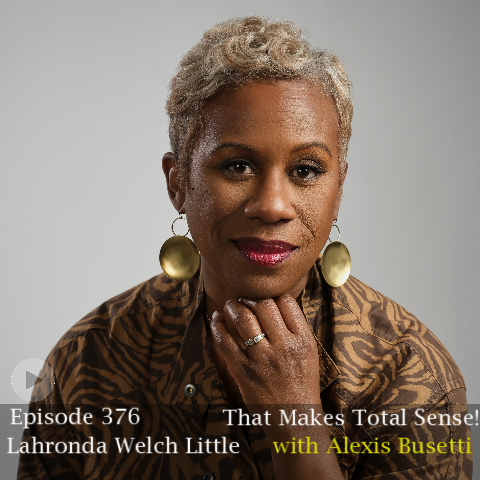
This is laronda Welch Little. She's written an incredibly gorgeous book called Lessons from the Garden, African Spirituality, Health, and Holistic Practice. And when I say I devoured this book, I mean I was traveling and came back and knew that I still had so many things on my to do list when I returned, as it always is when we, you know, we travel for work and then we come home to more work. And I was trying to decide what can I do that will accomplish, you know, some of these things that actually need to be accomplished and checked off my list, but also will feel maybe not quite so burdensome for where I was in the moment. I was feeling just, like, exhausted, you know, just worn out. And I thought, I can't really compose or edit the things I need to do for school at this point. You know, I can't really. There are some things I just thought, I can't. I can't do this. Logistical things that you have to go and do. These administrative, you know, kind of, I'm like, I just can't. And so I grabbed this book because I knew our conversation was coming up and I just, I was like, this was the right decision. I just kind of stuck, sank into the couch with my coffee and my dogs and I just let these words, this, this content just, yeah, just kind of soak into me.
And so one of what I admitted to you before we started recording was I don't have this fantastic list of really intellectually based questions. I really kind of have more feelings after reading this of like, yes, like, like I felt like I just kind of absorbed your, your wisdom like a sponge. And so I wanna, I wanna maybe start after my confession here by asking you, because I, because I look at, look at the back and I look at your, you know, we can look at your CV and you go, okay, like, you have all the things. Like you're a pastor, you have an MDIV, you have a PhD. It's all of this stuff. And there's something very embodied about the way that you approach, at least the way that you approached this work. It is theological and it is spiritual and it is embodied. And, and so I've been in these spaces, similar spaces as you, and I can say it doesn't always look like that. And so I think my questions for you at least to start off is where were those and things birthed in you?
[00:05:50] Speaker B: Oh, that's such a great question.
I love the way you articulated that.
And I think the first and space I can remember.
It, it literally does have to do with, and, and I mentioned this in the book with my, my grandparents and I in the, in the garden, bringing whatever we harvested from that garden onto the porch and then later asking my grandfather to read to me from the Bible.
Even as a young child, that just felt like a natural progression for me. It, it felt very connected. I always saw my grandfather reading his Bible on the porch, surrounded by flowers, whatever he was growing that season.
You know, this little bitty house in this large plot of land full of corn, potatoes, collard greens, and then him talking about the Psalms or Isaiah or, you know, and then my, my dad, he is a pastor as well.
And growing up as a child, he was, he took his physical health very seriously.
So the, and is very comfortable to me.
[00:07:53] Speaker A: Yeah, I, I, I name it because, and I would say I could see that in, in my grandparents as well. I think there's something generational about that, that we can see that.
But I think, I know I am not alone in saying some of the religious spaces that I grew up in, the formal religious spaces kind of preached a disembodiment.
The, the and wasn't there or it was different or it was different, it connected different things perhaps. And, and I grew up in one of those religious space.
There was a lot of dualism, there were a lot of binaries and our physicality wasn't connected. Wasn't, wasn't, wasn't articulated as being connected to our spiritual, our spirituality.
Not only that, some of the other things that you bring up in the book, the communal nature of spirituality, those kinds of things, individualism reigned in some of those spaces. And the, and the communal was not emphasized.
And so that having a culture, a religious culture where disembodiment is the norm or where embodiment isn't specifically emphasized matters. There are consequences to that. And I will speak for myself and say for many, many, many years the consequences in my life, I would say I didn't realize how far reaching those consequences are until I was introduced to people and works text who challenged that disembodiment.
And so I guess maybe I'll ask you to, to kind of pastor us for a second and say what a, Is that a familiar place to you, you know, people maybe for whom that disembodiment is, is more, is a more common paradigm. And then why does it matter to challenge that
[00:10:44] Speaker B: to your first question?
Yes, I know people. I myself grew up in.
Environments where things tended to be over. Spiritualized or we, we or disembodied.
You know, so. Absolutely. And, and that's particularly true in Western Christianity.
But here's the thing.
We have very embodied practices.
Those of us who, you know and in the, and I'll talk about, you know, in the Christian tradition, what is more embodied than receiving communion or being baptized.
So we have these experiences, we have these rituals, these practices.
And so it's important to call those forward because when we realize that we have been living in a very disembodied way, when we recall, you know, these memories, that's where our healing lies.
We have healing memory. We, it's, it's in us.
We have to reconnect to it.
And that's true for everybody.
There are practices that, that, that we have, even if we have to go back to our great great grandparents.
And there are ways to do that.
But this is why this, this book is so, so important.
Yeah.
We're not living our whole lives, we're not living our whole selves to the detriment of communities.
[00:13:26] Speaker A: I, I want to talk about the format of the book just a little bit.
There are. There are movements which we'll get to, but that's not where I want to go first.
Where I want to go first is we. You talked about these embodied practices, and you have in.
At the end of each movement, pictures, like photographs of you in demonstrating, like, poses, like ways that we can sit, ways that we can, you know, positions that we can be in to breathe.
Um, these. These are fantastic, by the way, when I did the first one, my dog looked at me a little funny. I was moving up and down, my hands in the air, and I. I kind of got one of those looks, but I. But again, this is one of those places where it.
I think it's good because I can see that in, I think, broader American culture in general, some of this disembodiment that we've been living is being challenged in a whole bunch of different sectors, including in the church, which makes me really happy.
You know, but we can see in.
You know, like, our therapist is probably going to encourage us to breathe. You know, teachers are.
[00:15:11] Speaker B: Are.
[00:15:12] Speaker A: Are getting to the places where, you know, in their classrooms, they're helping kids pay attention to their bodies, you know, things. Things like this.
I remember I hadn't thought of this till just now when my kids were taught. My kids are teenagers, almost all of them now, but when they were toddlers and they were potty training, we used to watch a Sesame street video, like on repeat about potty training. And I think it was Grover or maybe Elmo who would encourage the kids who are watching to listen to their bodies. You know, that was how. That was the language that the Sesame street characters used to help them understand the signals, you know, for when they needed to go to. Into the restroom was to listen to their bodies. And if I'm telling you as a, you know, in my 30s at the time, how I latched on to that phrase from Sesame street, because it was one of the first places where I really grasped that concept to listen to my own body.
[00:16:22] Speaker B: Yeah.
[00:16:23] Speaker A: And when I was reading your book, that connection of spirituality and health as an example of listening to your body, but also, I don't know if I would say you didn't say this exactly, but also speaking to your body, you know, how. How important that is and how connected those things really are. And so I think maybe, because that's one of the. The first places that you go in the book wondering if you can help explicitly connect those dots for us who. Especially some of us who still may be struggling between.
In that embodiment between spirituality and so in this case, spirituality and, and health and how that, you know, that Sesame street, listening to our body, but also speaking to our body and how all of that is involved.
[00:17:25] Speaker B: That, that question is such a full question.
[00:17:30] Speaker A: Take it wherever you want to go or nix it and talk about something else.
[00:17:34] Speaker B: The first thing that, that comes to mind when you said, when you talked about grasping that idea.
I wonder. Yeah, but we also remember that idea. Our children are so into their bodies.
[00:17:54] Speaker A: Yes, yes they are.
[00:17:56] Speaker B: And then what do we do?
We, you know, we disconnect them from their bodies.
So we have to relearn, you know, or remember what it means to be in our bodies, what it means to dance wildly, what it means to jump and skip and play hopscotch and you know, and, and enjoy it.
You know, children just do that freely and you know, unabashedly, they, they, they go for it.
So it's a remembering of what that's like, you know, and then, you know, we, we go through life. Of course, all of the, the, the traumas, the, you know, all the things that we experience in life robs us of our connection with our God created bodies.
And so then we spend, you know, even, you know, when you mentioned those, those, these pictures in the book, I, I have to fight back embarrassment, but it was a real process for me to do that.
So when I was thinking about the book, the, the gentleman Bishop Emmanuel Larte, he wrote the foreword in, in the book and he said, you know, you have this wonderful practice. Why don't you show us in the book?
[00:19:47] Speaker A: Yes.
[00:19:48] Speaker B: And I was like, put my body on display in a, in a book.
So that was a remembering for me.
And so the spirituality, the, the spirituality, the spirit. The spirit in that, in that work. I was, I was having this conversation with myself on my way to, to church this morning.
There was a time before I went to seminary. I worked for almost 20 years in the corporate sector.
And when my time began to, to wind up in, in, in that season of my life, I felt it in my body and I, it felt like agitation.
It felt like a rock in, in my chest.
I became despondent and dissatisfied.
And so, you know, on my way home from work, I would call my mom and explain to her what I was feeling.
And then in the morning when I would get to work, I would sit in the parking lot for as long as I could because it just. That rock was so heavy in my chest.
Today I don't feel that anymore.
Then it was my norm. Now I don't feel it anymore. But when I am presented an idea, when I'm presented with something, that feeling may come back as information.
And it tells me, no, you don't have to do that.
You can do that.
But if you do, just realize what it's doing to you in your body, and you don't have to go that way.
So it's embodiment.
But. But it's also such a gift of grace to have that experience and to connect it to our sense of agency.
[00:22:28] Speaker A: In the book, you.
The theme of the garden is all the way through it, and it's very profound and uncomfortable at times.
These lessons from the garden, and I want to ask you to talk about a few of them because the analogy is very rich. This metaphor is very rich.
And, and, and like I said, it's uncomfortable.
One of the first places where I was like, really, do we have to go there is darkness in the garden.
And you. When you talked about not enjoying the darkness when you were a kid.
Oh, I could not have related to that more fully. I don't know how old I was before I could sleep without, like, the door cracked and seeing the light in the next room.
Darkness was very uncomfortable for me.
But I reminded again and again. And in your book was one of those places of how necessary the darkness is.
Yeah.
Can you talk about that?
[00:23:59] Speaker B: You know, darkness.
And me too.
My room needs to be pitch black.
But our. Our devices, some of the charge, the. There are blue lights everywhere, you know, and. And it's amazing to me that in our childhood we were uncomfortable with darkness, and now we're chasing darkness, but everything we own, everything we interact with is activated. And there. And there's a blue light or red light.
And so now I find myself consciously unplugging everything.
We just moved.
And I was gonna put a television in our bedroom, and then I thought, no, I'm not, I'm not. I don't. I don't even charge my phone in my bedroom anymore.
Darkness is necessary for growth and rest.
We have to have it, you know, and, and that growth piece at, you know, like planting the seed in the ground, the seed has to be covered to grow, to germinate and to. And to grow, But. But also in darkness and rest. That's. That's how we heal.
Our. Our bodies do the most miraculous things in darkness.
We. We just have to have it. In the beginning, God, that was primal darkness.
And then God created light, but primal darkness, you know, it. It.
On the one hand, it. It may feel intimidating or uncomfortable, but on the other hand, that's our natural state.
Yeah.
[00:26:52] Speaker A: Yeah.
Near the end of the book.
Oh, you talk about weeds.
And I love the way you talk about weeds, because I am no gardener. I have to brag on. My youngest. My youngest, I have tasked with watering my plants, indoor and outdoor plants.
And since he has been tasked with that, my indoor and outdoor plants have been the healthiest that they've ever been. They've lived the longest that they've ever been, that they've ever lived under my care. And it's really not my care, it's his care.
But I'm not a gardener. My grandmother was.
And I remember. I don't remember who I heard this from a long time ago, but it was essentially what you say, but in a different way, which is weeds.
Like, there's no such thing as weeds. A weed is just a plant that you don't want in that space.
You know, is how. Is how I learned it. And so. So I remember one of my. When my kids were little, I used to bring them out and have them help me in the front flower beds to weed. And I am telling you, I used to get so irritated because I hated answering the question, mom, is this a weed?
Mamas is a weed.
And because it doesn't have a real answer, the answer that I had in my head, that's the. That's the working definition that I would use. And so I would look at the space and see, is that something I want in this space?
If it's not, we would pull it. Otherwise, we would.
We would leave it. Mm.
What do weeds teach us about this? Spirituality, Interconnectedness. This. Yeah, who we are.
[00:28:42] Speaker B: Yeah, who we are is. Is the thing, you know, who. Who is categorizing these plants as weeds.
And. And also that. That these, quote unquote, weeds are real plants. They are living things.
And so the question absolutely is, do I want this in this space?
You know, if we were to carry that line of thinking to how we interact with one another, it. It's not that much of a stretch.
It really isn't.
We pick and choose people.
We pluck people.
We. We put them. You know, we cancel people. Like we pluck weeds.
It's not. It's. It's not a stretch. Now, am I saying to let our gardens be overru, you know, things that we don't want in the space? No, that's not what I'm saying. But I am suggesting that we develop a consciousness of the living and how we treat, how we name, how. How we interact with and how we disengage with, yeah, weeds are real plants and people are people, human beings.
So to understand that is to also understand that we need to pay closer attention to one another.
[00:30:56] Speaker A: I have a lot of notes here, and I feel like I'm jumping all over the place, but there's a, there are a couple of, there are a couple of places where I want to make sure that we, that we get to.
And so I'm going to jump around a little bit.
But in addition to the garden, the lessons from the garden throughout the book, one of the other we can't miss these threads in the text is.
Spiritual traditions that, that feed and nourish our faith lives.
So you have a lot of examples of, of things that you have learned, practices that you've incorporated from spiritual traditions outside of Christianity.
That seems to really nourish your faith.
And one of the things that I would point out is that Western Christianity has been notorious for stomping those things out, for pulling those weeds, if you will like, and saying, none of them belong. None of these things belong here.
When really many of those traditions, many of the things that we learn from those traditions are real assets to our faith lives, to our spirituality, to our communities.
And I'm wondering if you can share, I mean, pick any of the ones. It didn't even have to be one from the book, but pick maybe any of those as an example of how you have benefited from traditions that maybe have historically been unwelcomed in Christian spaces, but you have found them to be a port place.
Maybe this tradition is, is generous, just as has, you know, you've, you've gained so much from some of those traditions or, or practices.
[00:33:36] Speaker B: Yes, the, the first one, the first practice that I began to engage more consciously is meditation.
Now I think I talk in the book about how, you know, shelling peas or working in the kitchen is, is a meditative process, but sitting still with my legs crossed and breathing and going into meditation as a practice, really.
And, and I started, I started meditating in 2018, and I remember it distinctly because I, it was my last year of seminary and, and in that last semester, my course load focused heavily on spirituality and I took an, an outside course in, in meditation.
And it changed my life and it changed how I understood prayer and how I engaged prayer.
So some people, you know, if they're uncomfortable with meditation, then they'll ask the question, well, can't meditation and prayer be the same thing?
Well, they could, but we don't have to conflate them.
You know, we can, we can Treat them distinctively, you know, and still be faithful.
Meditating helped me to become more faithful.
So when I, When I pray, I'm far more conscious. I'm. I'm far more attuned. And I'm not just saying words for the sake of saying words.
I feel like out of meditation, then my prayers become more direct, more intentional and, and more life giving for, for me and whoever I'm with. You know, and now even in, in church, if, If I'm praying, part of my practice is to hold that silence before we begin to pray.
You know, when it, when it comes to thinking about, you know, how these practices became.
Demonic or some somehow unchristian, we. We have to ask who, who benefits from. From that?
Who. Who benefits from. From us not living into the fullness of, you know, what spirit has for us to experience?
Who benef.
Who hasn't benefited? Our. Our historically oppressed and marginalized people?
[00:37:36] Speaker A: Right, right.
[00:37:38] Speaker B: Who has not benefited, you know, indigenous cultures, beautiful, expansive spiritualities.
They didn't benefit. Black people did not benefit from being separated from, you know, our meditative practices, our practices of healing that involved the, the roots and the seeds and leaves from our gardens.
You know, my grandfather was our first line of defense. When we got sick, we, you know, we didn't go to the doctor first. We, we. We talked to granddaddy, me and Grandmama.
I used to suffer from headaches as a child, and my grandmother would lay hands on me and, and pray and massage my head.
That was just as healing as appeal. More so, more healing than taking Tylenol.
So we have to ask ourselves that question.
Why is this practice not considered faithful and who benefited from that?
[00:39:10] Speaker A: I don't think it's a stretch. The reason I said say more because I thought, okay, even as discombobulated as my notes are, I feel like you peered over and saw them. Because when I said I wanted to make sure we got to a couple of places, one of those places is really hard. LaRonda.
But you talk about toxic religion, And one of the things I really appreciated about that section is you were pretty blunt about what it is and pretty blunt about some suggestions people do if they encounter it, if this is a place where they're living.
And when you say, you know, think about who benefits, but also who's not benefiting. Like what, what is happening when we are denied, you know, some of the things that we are really for our good and for our health, but also when we are being led to engage with maybe, or think of another phrase there things that are detrimental to our well being and our health.
And so I want to, I want to ask you to, to talk about that and, and also partially how, how that made it into the book.
You know, this is important, this is important for right now, I'd say, because people are finally talking about it after, gosh, all of this time. But also because I think there's just a lot of, I don't know, I just think there's a lot of confusion out there about kind of what's, what's, what's normal. Oh, gee whiz, we could get on that road. Like what, what does normal even mean in this space? Exactly.
But, you know, what's healthy? Right? What's healthy and what's toxic and knowing the difference, you know, anyway, knowing the difference. But talk to me.
[00:41:39] Speaker B: How did it make it into the book? So as I was thinking about the book and all of these wonderful things about spirituality and, and health, You know, I thought, okay, and I can't even tell you if there was an event or, you know, something came to me in that moment, but I, I did have the thought that, okay, this is all good, but you're not being completely honest.
If you don't talk about spirituality gone wrong, you're not being honest.
You know, if, if you don't talk about all of the harm that's been done that brought us to the point of where we are right now, you have to talk about it.
And that, that toxic religion, toxic spirituality, spiritual malpractice.
We got to talk about it, we have to name it and we need to know it when we see it.
And I think, Alexis, that most of us know it when we see it.
We don't say anything more. People need to talk about it and call it out when they see it.
Otherwise it's going to keep proliferating it, it become it. It's the, this mal.
Practice of spirituality, of spirit is.
Those are the, the true weeds that, that will choke out all the, the good that we could be experiencing.
So I included it in, in the book to, to start the conversation and, and hopefully talk about it in a way that does not, you know, so to speak, throw out the baby with the bath water.
You know, I'm not down on religion or, or spirituality. I'm a pastor.
But everything that's going on in the church or other traditions, everything that happens is not good.
And the reality is that many have been harmed because of toxic spirituality.
And when pastors, priests do these things, they are committing spiritual malpractice.
[00:45:17] Speaker A: What are some of Them.
[00:45:26] Speaker B: I think one of the.
Main.
This is, this is my opinion but this is so it's kind of, it's insidious when, when, when, when a spiritual leader forecloses discussion ecumenic ecumenism and says that this community is the only community you are supposed to be a part of it. It's such a, it, it sounds noble but it, it isn't. It's control.
That's probably one of the most ubiquitous ways and we can go on from, from there. Throughout history when spiritual leaders separate people from families and everything they know when spiritual malpractice is dehumanizing people groups, spiritual malpractice is oppressive.
When you can preach but I can't when you know that's malpractice.
[00:47:35] Speaker A: I'll tell you one of the ones that got me. Let's 22 in your list. But connecting them, not conflating them but connecting them. That, that really got me and, and I felt you know, most connected to some of the, the rest of the parts of the book were how toxic religion or spiritual malpractice as you also put it say maintains that human beings are corrupt and sinful or it's, and it is shame inducing.
You know, I think about the beauty of the things that you point out in the book of your grandparents gardens of, of nature, of our connection with creation and you know, anyway how it's, it's a biz, it's a bizarre. I mean we could go theologically I guess a lot of places but it's, it's bizarre because a lot of times those places that are toxic in those ways are also very anthropocentric there. You know, like it's like, you know, so it's like very difficult to kind of.
They're incongruent, you know, because it's like how are humans like the worst and so corrupt and sinful and awful and also the crown of creation and the best thing ever and you know, all of us and it's just like, it just feels very.
Anyway, but the, but the shame inducing part or just the emphasis and, and the, the maintenance as you put it. I love that word that maintains that, that humans are like they are these, we are sinful, corrupt creatures and very punishment oriented. They're very punitive. And when I read scriptures, when I also read the rest of your book, I read this isn't. This doesn't align with the kinds of healing that we're confronted with and that we engage with and that you know, exists in these other parts of Our lives. It doesn't. It doesn't jive to be real technical.
[00:50:02] Speaker B: You know, a few seconds ago, I talked you. I talked about primal darkness. And in the beginning, if we go back, their goodness is far more original than any sin or. Or evil. Good goodness is the essence of our God createdness.
And somehow we become distorted, misaligned, and de. Healed. If I can, you know, make up a word, we become that we were not that we, we, we. God created us. And I. I have to hold that because if I don't, I'm not able to do what I'm called to do as one who facilitates in the process of healing.
I have to maintain that our essence, the essence of who we are is good.
[00:51:37] Speaker A: You talk about your grandmother as healer quite a bit, which I love.
There's also another place I haven't made it yet. I feel like it'll be worth the price of the book, though, because you put her pound cake recipe in here, so I can't tell you that. I was reading through it. I was like, please put it in. Please put it. I didn't flip forward because I was like, I'll be fine if she doesn't. But then when it showed up, I was like, yes, okay. So I haven't. Haven't made it yet. Also, when you said bunt cake pan, I thought, oh, great. I was kind of like you. I'm like, I have to clean that. I'm gonna have to get that out, and I'll have to. I'm gonna have to flower and I'm gonna have to clean it.
We talk about your grandmother as healer a lot, but I want to. I want to see if I can kind of pull that out, because a couple of the other aspects, characteristics about your relationship with your grandmother and the way that she. The way that she taught you were about our physicality being connected to our spirituality specifically. You say in the book that the physical evokes the spiritual, which I think is just a beautiful way to phrase it. I think that might be in the pound cake chapter, which I know has a more. Has an actual name in the table of contents, but for me, it's the pound cake chapter.
So. But. But also in this, like, I know it's weird, a weird way to phrase it, but kind of the incorporation of the cleaning. So, like, it. A lot of these things, it made me think of process.
Like, these things happen as we go. I remember having a conversation a long time ago with a friend.
We were living in Houston. It was after one of the major hurricanes, and we had some friends staying with us because their street had flooded, and so their house was okay, but they didn't have electricity and, you know, things like that. So their family was staying with us. And it was really just this very sweet time. And it's this really, really hard time in our city.
And we were walking around, and we were kind of sharing some of the hard parts of our lives and talking about some of the healing that we had been through. And she shared with me something that was.
Has. Has continued to resonate, and that was she really. She said, I feel like sometimes there's some of these things that God just heals us of. And it feels almost instantaneous. You know, we're like, okay, like, kind of, I'm. I'm done with that, or, you know, whatever. And you just kind of have this sense that that was. That was way quicker than you kind of thought. And there's like, almost a before and after kind of this moment, you know?
But there are other things in our lives where the healing process is just perpetual, where it's just. It just keeps going.
And. And that's kind of what I think of with this, that the physical evokes the spiritual. And you talk about your grandmother, you saying, I don't. I just. I like to bake, but I hate to clean up.
And your grandmother told me the same thing that my mother told me, which is we just do it as you go.
And you go, yeah, but I don't want to do it as I go either. I really don't like participating in the cleaning period. I don't like cleaning after I bake. I don't like cleaning when I. While I'm baking.
Now I have teenagers, and I bug them about it, and I say, hey, if I. If I cook, will you clean? Sometimes it works, sometimes it doesn't. But there's that.
That process. And so I think about, you know, in the garden kind of talking to think now. But in the garden, your grandmother is healer. These. These kind of things you. You would, you know, ask your grandfather about, and he would prepare these things for you. Like, it's. It's a. It's a process. It's like this continual process, you know, and when I was at. When I had toddlers, there was that meme. It was like cleaning your house with toddlers is like brushing your teeth while you're eating Oreos. It's just like. It feels kind of pointless, you know, and it's like. And so it's like, sometimes you can just feel like, oh, my gosh am I just always going to be in the healing process and part of this kind of like. Well, yeah, yeah. And sometimes you can see that and experience that reminder. You've talked about a lot about remembering, but you can experience that reminder in the physical.
And so I'm wondering if you have, you know, if you can bring some organization to those thoughts or if you have more to say about that, that physicality evoking that spirituality.
[00:56:33] Speaker B: Okay, bring organization to those thoughts. No, because it is perpetual.
And I think a part of.
What we have been indoctrinated to believe is that we get to skip processes and get to the thing this instantaneous.
Not that the instant can't happen as you so beautifully named, but the culture says I can have it and I can have it right now. Social media is so curated and, and, and people post the beautiful things, but they don't post the process.
And so to think that we can get to a thing without a process is really, it really does that. That is faithlessness.
And to your question, you know, am I always going to be healing?
Yes, from, from two standpoints, because there are seasons in life where things are going really, really well.
But also whether we're conscious of it or not, we are participating in someone else's healing or dis. Ease.
We're always participating in one way or another.
And so by that we're always healing.
We live in systems that do not always facilitate healing.
You know, there's a population among us that, that has divested from systems to, to get back to the consciousness of healing, the cycle of, and the process of healing.
It. I think being in the process of healing and participate, participating in the healing of others, that's natural. That's more natural than whatever else we think we're participating in.
[00:59:48] Speaker A: Yeah, that's good.
I just looked at our time and I was like, gosh, I had, oh man, I had, I had a few other things. But, but I'm gonna ask you at the end here to choose your own adventure.
And I have a few, I have a few options.
Okay, so one is I often your teacher.
And I, I, when I speak with teachers, professors, I often like to say, what's the question that I didn't ask?
So you see, I came with notes. I came prepared to class. But there may have been something that you're like, oh, this is at the tip of my tongue. I would love to, to be able to talk about this for a moment, but, but we just, we just didn't get there. So I would say this is one, one option in a choose your own adventure is what's the question? I didn't ask.
Talk about it.
The other two are related.
And this is where. So if that was your teacher hat, this is where I ask for your clergy hat.
And I haven't done this in a long time on the podcast, but sometimes when I have pastors on, I ask if you'd feel comfortable kind of praying us out.
You know, we've covered some heavy topics today. Do you have a prayer, you know, for us, for our listeners?
And then related to that is because I just finished the book.
I read your benediction, which I thought was really beautiful.
And so related to that would be.
Would you be willing to. To share that, to kind of bless us with. With a, with a benediction as we close out our time together? That kind of helps us, you know, solidify some of the things that we.
That we talked about.
[01:01:57] Speaker B: That is where my mind went. The benediction.
[01:02:00] Speaker A: Wonderful. I'm so excited. Wonderful. Would you mind?
[01:02:04] Speaker B: Not at all.
God of health, wholeness, balance, justice and peace, cover us now that we may be for the world and one another, conduits of your divine grace, so that we may realize our interconnected and interdependent being in you and become a more righteous, conscious, moral people and flourish just as you intended.
May your light be ever increasing in us so that we may be faithful guideposts toward your goodness.
May our witness be planted, rooted, cultivated and harvested in gardening shrines of hope, joy and love for the transformation of body, mind, soul and spirit, and indeed the world.
Ashe and Amen.
[01:03:15] Speaker A: Amen.
Thank you so much for being with me. My guest today is Laronda Welch Little. We've been chatting about her book, Lessons from the Garden, African Spirituality, Health and Holistic Practice. Laronda, thank you for being here. Thank you for this book. Thank you for the seeds that this book has planted in me and in my spirit. And I anticipate and look forward to the personal and spiritual growth that comes from this, not only in me, but in. In every and every hand that it touches. So thank you so much.
[01:03:54] Speaker B: Thank you for having me, Alexis, and thank you for the gift that you are to the world and the work of justice that you're doing in your podcast. I appreciate you. God's blessing of peace and goodness and abundance be upon you and your family.
[01:04:12] Speaker A: Thank you.
The links for all the resources mentioned in today's episode can be found in the the Show Notes, music and podcast production by Seth Busetti. Be sure to give us a review on itunes and subscribe at your favorite podcast listening app. You can also Visit
[email protected].
[01:04:45] Speaker B: Sam.