Episode Transcript
[00:00:07] Speaker A: Welcome to that Makes Total Sense, a podcast dedicated to exploring God's generosity and justice. I'm Alexis Buscetti, a Christian, aiming to ask good questions and encouraging you to do the same.
Every one of us is wired by God to live out generosity and justice, but the how sometimes eludes us. That makes total sense is a way for us to get together, posture ourselves as Lear, and challenge one another to practice generosity and justice in a tangible way every day.
Oh, my gosh, Dave. I will. I will confess that this morning I had coffee with a dear friend and I said to her, I'm grumpy today.
And then just, you know, I came home, read a little bit for school, had some lunch, unfortunately did not remake coffee like I should have, but.
And I started to feel better, of course, when I had coffee with her. And then we're just chatting, and I'm like, you know what? That's all we needed in a day is a couple of chats with old friends and new friends. And I don't feel so grumpy anymore. So hooray. I hope it's a better conversation.
[00:01:26] Speaker B: I'm sure it will be. How could it not be? Grumpy interviewer is not a good conversation.
[00:01:31] Speaker A: That's not really it. I think we should just cancel if there's going to be a grumpy interviewer anyway. But I'm feeling a little better. Not feeling quite so grumpy.
So welcome to the podcast.
[00:01:40] Speaker B: Thanks. So good to be here. I really appreciate the invitation.
[00:01:45] Speaker A: This book that you just wrote is really incredible. I do want to talk about how I think it defies categories, but I'm going to name the book first and then maybe we can dive in.
It does say a memoir on top. I'm not mad about that, but, you know, we can talk about the category anyway.
And the sea was no more.
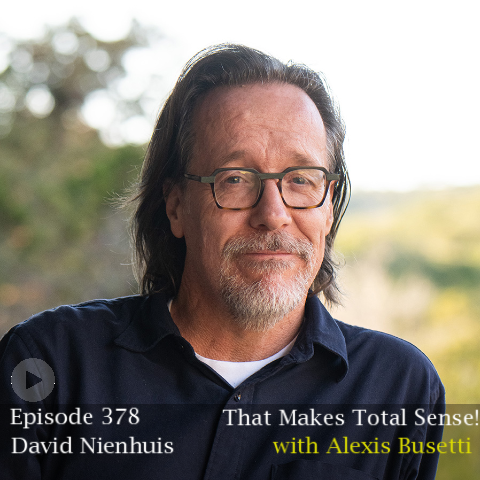
Reading the Bible in the Deep by my guest, Dave Nienhaus.
And I.
The reason I say it defies category is because there are aspects of memoir, for sure.
But I felt very much like the descriptions in the journey that you give in this book were universal in a very real sense that in many ways. And I know it's ego too, right? But I'm like, I just. I just read myself into probably 80% of this book, which was.
Which felt really meaningful.
But it also just. I think what I'm trying to say is your talk of the deep speaks so profoundly to human experience.
And so I don't discount. And I'm grateful for everything you shared about your experiences. And somehow sometimes it works this way, biblically and otherwise, in storytelling, when we understand and we can hear somebody's particular experiences, we map it onto ourselves somehow, and it helps us to understand our own particular experiences.
[00:03:44] Speaker B: And in saying that, you have just described my greatest hope for the book, honestly, because I did not write it for other people. I wrote it just for me.
But then as I began to share it, this is what I kept hearing.
That story, scripture story, your story. It's helping me rethink my own story, and I'm spending. It's speaking into my story.
And honestly, that's what convinced me to publish it eventually, because I wasn't going to for a long time. It was just too raw and too personal. Yeah,
[00:04:11] Speaker A: well, I'm so grateful that you did. And there were definitely those parts where I just thought, yeah, that, wow, this is really vulnerable. This is really, you know, this feels very personal. And, you know, even as I described the coffee I was having this morning with a friend, we were saying how it is so helpful when people.
Not that everyone is called to, but when. But when people feel and have the courage to share some of those parts of their stories.
How much.
I mean, for me, often there's relief in that, you know, where I just go, oh, my gosh, this is in the realm of normal. You know, that's usually what crosses my mind. I'm kind of like, wait, I'm, oh, so this isn't. So this isn't so far off, or someone else has had this too.
And, and so in your book, I really. I just felt so, so much of that especially.
I mean, and I, I say this as. As a seminarian, but I would say especially from a. From a theology or Bible professor, there's something about that, that.
That carries a little bit of weight in that we say, oh, you do this for a living and you also have these experiences. I mean, I'm wondering if you can talk about that, writing this as your own person with your own experiences. And I mean, you talk about the beginning of the book. It's like, it's not a scholarly book. It's not one that you claim. Like, yes, there are research sources, but this is not a. A cited, you know, kind of paper, but it is still from the mind of a. Of someone who studies this. And so what.
[00:06:04] Speaker B: Yeah,
[00:06:05] Speaker A: like, what was that for you?
[00:06:07] Speaker B: Yeah, this has been so much fun to hear you talk about this, because it really is.
You're just naming all the things that made it so difficult for me to imagine getting this thing published. And then it also Created issues between me and the publisher, like, what the heck is this book? You know, so I'll talk about all of that.
I. This is. I've published a number of books that were for scholarly folks.
Some of them written for the 500 people maybe in the world who could read it.
That's what you do when you're in my world. You publish stuff for other scholars to read and you hope maybe it has an impact beyond that.
But all through the years that I was doing that, I was also falling apart both physically and mentally.
Just going through so many horrific mental experiences from a lot of past trauma that just got worse and worse and worse and worse. The more I tried to be a normal person and especially to be a detached, disinterested scholar that, that just got worse and worse and worse and worse. And so I found myself, and I could tell more about this story eventually, but I found myself just needing to write out for myself an attempt to articulate what it was that I had gone through in terms that made biblical and theological sense to me.
Like when I fell apart, I got a lot of help from therapists and doctors and I read so widely that I became very articulate about the psychological issues at stake and the biological issues at stake. But I just found that my faith language, I didn't have words to describe catastrophic collapse in a way that didn't offend my own theological commitments, my own understanding of scripture, all that stuff. Does that make sense?
[00:07:56] Speaker A: Oh yeah,
[00:07:57] Speaker B: yeah.
[00:07:57] Speaker A: Oh yeah, keep going. So
[00:07:58] Speaker B: I just had to write and write and write and write. And what I found was because I'm a teacher, I was writing to a you, I was addressing somebody the whole time because I was just simply trying to explain.
And not just explain, I don't like that word because it assumes that these things are explainable. And that's part of the main theme of the course, is that there's all these elements of our world and our existence that dwell far beyond the world of explanations. And as a scholar, my job is to be like the man of the explanations.
And I can't do that when it comes to this kind of stuff.
And so yeah, over time, just writing and writing and writing, I, because I was talking to a you, I began to fear that maybe this was actually for other people.
And that just sent me into a tailspin as well because it is so raw and vulnerable in places.
And like on the one hand I had this self protective person on one shoulder saying, you should just keep this covered up, man. Like, because there's so much Shame.
But on the other side, I had this scholar on my shoulder saying, you need to do more to justify that claim. You know, it's more complicated than that.
If you're going to say that, you have to list off all the other alternative views. And, and it just, it was torture for a long time trying to write this.
But then eventually I, I, a good friend talked me into presenting it at a retreat, which felt like opening up a vein in front of a 70 people over a weekend. But I did it and it was just so meaningful and so transformative for me, but also just for so many people in that room that I walked out of there thinking, oh, crap, this is, this is for. I got to publish this now. What am I going to do? You know,
[00:09:50] Speaker A: I'm so glad you did.
[00:09:52] Speaker B: It launched really a three year process of trying to finalize it, trying to figure out how do I publish it? What's the form?
It is a memoir, but it's not a memoir.
Do we call it a memoir?
You know, so the official title does not include the word memoir. I don't know if you've seen that online or anything. It does not include that word. But the word memoir is in dark print at the top. Because we wanted to be able to signal to other scholars, you know, I'm. People are used to reading my stuff.
[00:10:18] Speaker A: Right.
[00:10:19] Speaker B: As scholarly works. We wanted to signal this is not a scholarly work.
[00:10:22] Speaker A: Right, right, right, right.
Can I just say though, that what you just described in my experience as a reader comes through and this is what I mean, I mentioned just a couple of things in passing. My husband was walking around as I'm reading the book and I was saying, oh my gosh.
And I think he said something like. So it's like, what did he say?
So it's like a Christian inspiration. I said, no, you don't. But, but what I mean by that is. And no, no shade on Kristen inspiration. But was that this does not read like when you say you were talking to a you when you were writing it.
I felt that. But it does not read like someone who was talking to a U with their finger pointed in the air.
[00:11:14] Speaker B: No, that's exactly right. Thank you for correcting that.
[00:11:17] Speaker A: It is not. Well, it wasn't a correction. I'm just as a clarification, I think mostly it's. It's not a. It doesn't read like this is from someone I have. Okay. Hi, I'm scholar Dave and I have this all figured out. And if you would just hop on board and you would you know, and then when we explain away these mysteries, it's fine, you know, really all you have to do is, it's like bs. That's not, that's not the point of this book. That's not the point of life, our faith journey. That's not the
[00:11:47] Speaker B: point.
[00:11:47] Speaker A: That's not any of this. It doesn't, it doesn't read like that. So when you say the struggle was there, I think as a reader I didn't, I didn't necessarily feel all that. What I felt was just that this came with a different kind of authority.
[00:12:05] Speaker B: Yeah.
[00:12:06] Speaker A: Then
[00:12:08] Speaker B: somewhere in those early pages, I maybe be the second page. I say, you know, this is neither a scholarly treatise nor a self help book.
[00:12:17] Speaker A: Right.
[00:12:18] Speaker B: It is at best a confession. And that's where I really landed was it's a confession. I'm just confessing both sides of that term. Right. Like we confess things we affirm, but we also confess things that we admit and want to hide.
And I'm trying to do both in that book. So maybe a confession would have been better at the top than memoir. But
[00:12:39] Speaker A: it's great. Let's talk about the confession in the affirming sense.
So the book travels, not hitting everything, but it travels from Genesis to Revelation and it traces the deep with a capital D from Genesis to Revelation, including parts where you share about your own experience in the deep.
[00:13:12] Speaker B: Yeah.
[00:13:12] Speaker A: And Dave, I have, I have, I have so many notes.
What I, what maybe we'll start with is this.
I'm going to come kind of combine my first few from the Genesis portions which were so powerful for me. You talk a lot about the creation story, of course, because we're in Genesis and about darkness and chaos and the waters.
And I have just a few notes and I'm going to trust your Professor Ness, that even if a real question doesn't come out, that a real response will come out from you.
So a few things I have just kind of jotted down is that were meaningful to me as I was, as I was reading you kind of helped differentiate between the darkness and the deep.
And I have a note about God. This was so great. God honoring the darkness by giving it a place in the world, which just was like that just really rang my bell and that the biblical story begins and this may even be a quote or it may be a paraphrases I was writing down. Biblical story begins with good news of a powerful God who creates light and shapes stillness amid chaos.
And then you continue to say, but it's not that simple. It's not so simple because. Because these boundaries are permeable.
[00:15:02] Speaker B: Yeah.
[00:15:05] Speaker A: That was like. Okay, mind blown.
Okay. I trust you to riff that sets the stage for this book.
[00:15:17] Speaker B: Yeah.
So behind all of that is the experience of suffering profoundly without any clear.
Here's why behind it, like, I can't say it's because of this and this and this. And if those things didn't happen, I wouldn't have. There's a whole realm of physical illness and mental illness that just goes beyond blame, all that kind of stuff. And, you know, back in Job, Right. Like, Job's friends all come and say, well, there's. There's got to be a reason why, you know, God isn't chaotic. God. God acts with reason and justice. And so if bad things are happening, there must be a reason. It's got to be you. Right.
And of course, Job just freaks out and insists on his innocence the whole time.
One of the things that I found was that so much of the Christian confession that we have in the west attributes every bit of the fallen world to human volition. Humans sinned, therefore, everything's bad.
And that's not entirely untrue. I mean, that's one way we read that creation story. But of course, when you read. I said of course. Sorry. When you read, like, the way Jewish folks read Genesis, they. They read those early chapters as God creating a world that is just full of potential and freedom. And things could go one way, things could go the other way, because that's how love actually operates.
And so when God creates the mystery of Genesis 1 is as God is beginning to create, the first thing that's there is darkness and this watery chaos and the spirit hovering over it all.
And then God begins to create the world that God wills by speaking things into existence and calls those things good.
But what's striking as you're reading along is God never, well, on the one hand, doesn't call the darkness or the deep good, but never gets rid of them.
God just creates a space for them in the world. God says, I have a job for you. So God looks at darkness and says, you're going to be night.
And then God looks at the deep and says, I'm going to call you sea, and I'm going to gather you together and do all these things.
And then God creates this dome that's this protective shield that we're in. Life can flourish within these chaotic waters. But the chaotic waters aren't done away with. They're still there. And God puts windows in the dome so that water could come in and there's fountains in the deep so the chaos waters could come shooting forward.
And then before humans do anything wrong, there's this lying, sneaky snake in the garden. Right.
So it's just not as simple to say everything's bad because humans make bad choices or because humans are prideful. That's not the actual biblical story. The biblical story is God creates a world full of potential because that's what love requires. God allows things to become creative and free on their own and gives them a call and invites them in, but does not coerce or force that.
And there are elements in our world that refuse that call.
And one of them is this power of chaos operative in the world.
Sorry.
[00:18:28] Speaker A: Oh, my gosh. No, I'm loving it. I'm loving. I'm loving all of it that I.
1.
When you talked about the, the. The serpent.
[00:18:39] Speaker B: Yeah.
[00:18:40] Speaker A: You say in part in one of your chapters that this. The serpent. One of the things the serpent invites us to do as creatures.
And I'll probably just keep.
[00:18:56] Speaker B: Yeah,
[00:18:56] Speaker A: I love referring to ourselves as creatures. It just. There's something, this creatureliness of us, about us. But the serpent invites us because you've said all of this. You've said all this about creation in the beginning and what are, what are our roles and who are we and, and, and, and, and, and where are we, you know, in the sense. And it's not as simple as we have kind of taught and learned it to be. And the serpent invites us to understand God without God's.
[00:19:35] Speaker B: Yeah.
Yeah.
[00:19:38] Speaker A: I'm like, now that's crafty.
[00:19:40] Speaker B: Yeah, right.
[00:19:42] Speaker A: That's. The craftiness of the serpent is inviting us to understand God without God's involvement.
[00:19:55] Speaker B: Yeah.
[00:19:55] Speaker A: A, what, what do you mean by that? B, what effects.
[00:20:01] Speaker B: Yeah.
[00:20:01] Speaker A: Does that have on us as, as creatures?
[00:20:04] Speaker B: Yeah.
Well. And here I'm dependent on a lot of other theologians who have said similar things, especially Dietrich Bonhoeffer's amazing book Creation and Fall. If you've ever read that, it's worth checking out.
But in short, that there's this shocking moment in that story. God has been so intimate in chapter two with the first humans. And, and God is known by God's personal name, Yahweh, the Lord God, which we'll hear about later.
And then all of a sudden, this crafty snake is there and says, so did God say in this distanced sort of way, as though God isn't like, right there.
And in doing so creates the presumption that one can. That there's a place in the world where God is absent.
That we can talk about God as though God isn't right there with us.
That we can know God without involving God in the knowing that we aren't dependent on God's self revelation to know God, but that we can sit and say what about this and what about that? And talk about God as though God isn't with us.
And so part of what that does is it creates a rupture in the relationship between the human and God because now there's something between them, but also it plants in the human's mind. There are places in the world where God is absent, that there is this thing called God forsakenness.
Right.
And, and the, the, the, the, the, the, the, the struggle of being human is having to confront this God forsakenness, this place of suffering, of death, whatever it is, where you just simply cannot access God's presence.
The, the, the task of faith is to grow in enough trust to be able to trust God. Deep dark places.
And that's very hard to do ever since the Fall. And so I would relocate the Fall on that ground rather than sin and entered the world. And thus now we have evil. That strikes me as not. It doesn't help us account for meaningless suffering.
[00:22:10] Speaker A: Right.
[00:22:11] Speaker B: Yeah.
[00:22:18] Speaker A: So
[00:22:18] Speaker B: see, what you're doing is you're showing like, I'm trying to write this book for normal people and I'm just trying to walk through the text saying, isn't this interesting?
But you can't make it two verses through the text before you're like, wait, what?
[00:22:32] Speaker A: No, it's true.
[00:22:33] Speaker B: Right. And that's what I'm trying to do is help people say wait, what?
Because I think that's where the riches of encountering scripture really happens.
Right
[00:22:42] Speaker A: There. There were too many. Wait, what?
Moments?
No, there were. It was. It. No, it was, it was great. I'm, I'm here I am with more. Wait, what? Okay,
[00:22:55] Speaker B: yeah,
[00:22:56] Speaker A: so wait what? This was another. Wait, what?
[00:22:59] Speaker B: Yeah,
[00:22:59] Speaker A: because you claim, and, and I, I don't disagree with you, that someone that scripture helps draw pain to the surface.
[00:23:15] Speaker B: Yeah,
[00:23:16] Speaker A: so, so, so you're talking about suffering and, and I'm just for the record, cosign everything that you've already said. Like I'm, I'm on board with this.
But there were again kind of a little chunk of notes here that I'm gonna, I'm just gonna toss at you and then expect you to do something with them. But so scripture drawing pain to the surface. I'm looking at that.
And you also have a place where you Say telling someone with severe anxiety, don't worry, is kind of like the equivalent of telling someone with the diagnosis of cancer just not to have cancer. Just don't have cancer.
And I remember, though, if I had a.
Someone would buy back all of my books that I purchased over the years about anxiety, like from the Bible study section at Mardell or whatever. Like, oh, my gosh.
But because I was a really, really anxious kid and that followed me into especially my early adulthood.
And I remember one of the things that I tried to do, especially in college maybe, and early adulthood, because I'm also like enneagram1. I have type A tendencies. My kids are like, mom, it's beyond tendency. But, you know, I've got some of that. And.
And I'm a rule follower to, you know, kind of tend to be. These are like my natural bents and so probably contributes to my anxiety. But. But then when I hear, you know, when I read red letters and Jesus says, don't be anxious. Right. Don't worry. Then what I have on top of that then is the stress, the shame, the whatever, that I'm actually being disobedient because my Lord has told me not to worry.
Like real specifically not to worry. It's like, love your neighbor, don't kill, don't worry, and those.
That's a lot of pressure.
[00:25:19] Speaker B: It is.
[00:25:20] Speaker A: Because then I'm worried about how much I'm worrying because I'm not supposed to worry because Jesus said, don't worry.
And then Dave says, being overwhelmed is part of being a creature.
[00:25:33] Speaker B: Yeah.
[00:25:35] Speaker A: And so much of, you know, the anxiety that I suffered, really, probably, if I'm being real about it, it just stemmed from a place of feeling really overwhelmed, you know, with the world, with my place in the world, with seeing things that are tragic, with experiencing things and just feeling a real sense of what do you do, you know, in this life. And instead of confessing, this is a normal part of being a created.
[00:26:13] Speaker B: Yeah.
[00:26:14] Speaker A: Being.
We're going to be overwhelmed because we're creatures.
[00:26:19] Speaker B: Yeah.
[00:26:20] Speaker A: And we turn it into something that it isn't. In my case, this is sin, really.
[00:26:26] Speaker B: Right.
[00:26:26] Speaker A: To be worried.
[00:26:28] Speaker B: Yeah.
[00:26:29] Speaker A: To feel that way.
[00:26:30] Speaker B: It's true. I hear you.
[00:26:32] Speaker A: And then we read Scripture and we want it. We're just supposed to be okay because we probably feel that way because we haven't prayed enough and we have it Scripture. And then Dave says sometimes scripture is actually going to surface those things that might actually make you feel a little overwhelmed.
[00:26:50] Speaker B: Yeah.
Yeah. Talk
[00:26:53] Speaker A: about it. Make it make sense.
[00:26:57] Speaker B: I know.
So here's, here's the way I, I guess I would put that. And at some level I'm going to be confessing what is a larger life project for me really as a scholar. But now it's moving to normal people opposed to, in the guild, especially in the Protestant end of Christianity, we have, we have been taught to treat the Bible as a source of theology, as a source of doctrine.
So I read Jesus say, do not worry, and I immediately turn it into a doctrine, a teaching. I'm not supposed to worry, Right.
Narrative. The vast majority of Scripture is narrative.
And the portions that aren't narrative, the largest, next chunk, are all poetry.
And so maybe 25% of the Bible is what we might call discursive speech, which include commands, propositions, things like this. 75% of the Bible is narrative and poetry. Okay.
That does not readily turn directly into doctrines.
Right?
[00:28:02] Speaker A: Oh, you would say,
[00:28:03] Speaker B: I know, well, but here's the deal, it
[00:28:06] Speaker A: doesn't because, you know, culturally, as you say, like we have done it though. But we've done it. Yeah,
[00:28:11] Speaker B: we've done that by not reading Scripture.
[00:28:14] Speaker A: That's right.
[00:28:15] Speaker B: We've done it by, by assuming that the Bible is a repository of doctrine. And so we quote it and then we build our claims on quotes.
The horrors show there, of course, and I think most Protestants increasingly are figuring this out is anybody with enough creativity and charisma can arrange the texts in such a way to make a wide range of different claims. Right.
And so part of my larger project is to say the Bible was actually never designed to function this way.
It was never actually designed to function as a book of quotable quotes.
It's designed to be read.
And reading takes you through a process of discovery.
And that process of discovery is so self involving that you get to the point where if you are reading carefully, you cannot remain distanced from the text and you cannot turn it into simple objective claims that you can then start throwing out there. I'm not saying the Bible doesn't include clear teaching, I think it really does.
But the teaching itself is embedded in a larger story and you have to be embedded in that story to make sense of those teachings. Right.
And so as you're reading along, there's a reason why people don't want to read their Bible. Because again, you get to Genesis chapter one, verse two, and you're saying, wait, where'd all this water come from? And the Bible doesn't even tell you, it just keeps going, right?
And then God's doing these things and you're saying Wait, I don't understand. Why is this happening? Why is this happening? And all the Bible says is, keep reading.
And so you keep reading and keep reading, and you're working your way through this story, and some of it is inspiring and some of it disgusts you, and some of it have, you know, people that are so worthy of emulation, but so many of them are just scoundrels that you're like, how is God blessing that person? You know? And over time, you begin to realize this is telling the story of what it is to be a creature in God's world.
And that's a different thing entirely than selectively reading the text to have my ethical or political or doctrinal views affirmed, which is how we are trained to read Scripture. So my larger project in this book, but in really all that I do, is trying to help Christians do what is actually very, very difficult, which is actually just to read and to allow themselves to be drawn in and affected by the text. I think that's what it was designed to do.
I don't even know if I answered your questions. I just started preaching.
[00:30:51] Speaker A: I'm glad you did, because now I have a whole bunch of other questions.
[00:30:56] Speaker B: Right.
[00:30:57] Speaker A: But I do. But when you.
Yeah, yeah, yeah.
So many.
So many other things came to my mind. I thought of you in this process, actually, and how the reading process does exactly what you say, but also that the writing process does that too.
I actually hate that the writing process does that because it's, like, super irritating, and I want to skip that out. And as a. An emerging scholar, I really want to shortcut that and say, no, it's in my brain. I got it. But I think the point is, it's the reading and the processing, you know, however we're doing the processing, you know, that reading part also, we don't do this with other texts in the same way. You know,
[00:31:46] Speaker B: that's right.
[00:31:46] Speaker A: I have three teenagers and one tween and I. They're all ridiculous readers, and I gave up years ago on trying to read ahead. You know what? What? Oh, let me just make sure. Like, no, I just can't. Right? Like, I just can't. But I also gave up on this idea. Not. Not that they have entirely free reign, but I do think, as you say, like, that Protestant mindset about the Bible also cultivates, in my opinion, my experience, it also cultivates that kind of opinion about other texts or other cultural artifacts where we might say, can something just be appreciated for being a story? Can something be entertaining? Can something be Designed to provoke thought. Can something, you know, now I'm taking this away from the Bible just a little bit, but to say we don't necessarily do that with other things. And so we say, yeah, like, go watch that Marvel movie or go, yeah, read that book. Or, you know, my daughters read some stuff sometimes. I'm like, you know, well, that's a little bit too scary for me. Or I don't really love fantasy, so I'm not gonna do that. But I'm not saying there's not underlying stories or something, but you don't treat them like this is the rule for your life is to do this. It teaches us, though, in a similar way to the Bible. It does teach us, though, about our creatureliness.
We read in those other stories, and that's beneficial. It's not that everything we read or we think, oh, I have to go and do that,
[00:33:19] Speaker B: right? Oh, yeah.
[00:33:20] Speaker A: Whatever it is. Oh,
[00:33:20] Speaker B: yeah. Not all of it. Not everything in scripture is meant to be emulated or practiced.
[00:33:25] Speaker A: I mean,
[00:33:26] Speaker B: they're like so many negative examples. We're learning. We're learning both what not to do, but we're also learning, yeah, this is. To be human is to be pretty faulty.
Desperately in need of each other and of God. Yeah.
[00:33:40] Speaker A: And you mentioned before. I'll take it. I'll take it back to your book.
You mentioned, you know, there's. We might see these scoundrels and think what God is. You know, God is blessing that. And we say, yeah, I mean, that happens quite a bit.
And. But then I think it takes us back to the theodicy that. That you discuss in your book, because the opposite is true too, where it's not just Job, but you see a lot of biblical folks who are going, wow, that they got the raw end of that deal for sure. And a lot of those. I think this is kind of a different topic, but I'm like, sometimes in like, our US Triumphalism, we skip over a lot of those parts
[00:34:22] Speaker B: totally
[00:34:24] Speaker A: where we're like, you want to talk about a raw deal? You know, like, we could, you know, we. We haven't stopped to even empathize or suffer with, you know, the biblical folks who. For whom those, you know, their real tragedy, you know, struck. We don't think about those stories as much as we think about, you know, David defeating Goliath or something like that. We spent a lot of time on that, but, you know, not as much time in some of the other stories.
[00:34:50] Speaker B: Yeah.
[00:34:50] Speaker A: And.
You move from Genesis to Exodus. This is one of the places Where I was like, this is one of the places where we don't spend time. And it's irritating because we don't spend time with the midwives in Exodus. Like, just culturally, we don't spend time with the midwives in Exodus. And we also don't spend time with the same pronouncement in Jesus around Jesus birth. Like, we don't. We don't spend. We don't spend the time there. This is tragic. This is suffering without reason.
This is unimaginable.
Yeah.
Unimaginable.
And this is where. Talking
[00:35:40] Speaker B: about the killing of innocence. I'm
[00:35:41] Speaker A: talking about the killing of innocence.
[00:35:43] Speaker B: Yeah.
[00:35:45] Speaker A: And this is where, again, like, you sharing this part of your story, you can share what you want. I invite you to share what you want or be as ambiguous as you want to be. But where I will take it is when you talk about the effects of the trauma that you were experiencing as an adult.
You were able to name the pinpoint that. And you call it. And I'm going to kind of use it in the same kind of, not even just metaphorical way, but you call it like the scream. It was the scream.
That was the part that was kind of the enduring, torturous part.
And those.
Whether it's something we've experienced or our neighbors have experienced or our family or in scripture, no one wants to sit with the scream.
[00:36:41] Speaker B: No,
[00:36:42] Speaker A: no one wants to sit with the scream. But that was so impactful for me when I read about it, because it just made me think about that overwhelm of being a creature. Like, as creatures, we suffer, we experience tragedy, we wail and scream, and God is.
God hears.
But there may not always be the response that we want from God,
[00:37:25] Speaker B: certainly not the rescue that we.
[00:37:27] Speaker A: That's right. That's right. Hope
[00:37:28] Speaker B: for.
[00:37:29] Speaker A: Yeah.
[00:37:30] Speaker B: Which is another theme, I mean, I think, because Christians have.
For all sorts of great reasons, we've. We've inherited a kind of victory narrative. Right. Like Jesus. Jesus has conquered sin and death.
Jesus is the answer to the questions raised in the Old Testament, all that kind of stuff.
I actually don't think reading the Bible in its entirety leaves you in a satisfied place in this way. But so much of Christianity puts all of its eggs in the victorious people basket. Right. And as a result, we are. We are people of words.
And.
And the scream points to the world beyond words.
There are things we simply. That no amount of words will make. Okay. But no amount of words will be able to explain.
And if you've. If you have been in that place yourself where Words. You don't have any words beyond crying and screaming or you've been with someone in that position. You just realize so quickly how impotent our words are.
And. And then you realize how much of Christianity in its practice is about trying to sort of tie a bow onto the horrors of this world.
And that so many kinds of ways that we practice Christianity in America, especially among Protestants and especially among evangelicals, I think, keep us from ever being able to both acknowledge that kind of unspeakable pain, but also keeps us from being able to enter into it because it seems to take us in our world. It gives us that sense that, you know, what if my words and my. What if all that's not true?
Because if I face all of this horrible stuff and acknowledge it exists in the world, it calls so many of my more naive and shallow proclamations about God into question.
And I'm convinced that Scripture and the Christian tradition does not require us to be people of simple explanations.
And we only get there if we encounter this world beyond words, which, interestingly enough, is this wonderful thing. Like I. I found that in Scripture as well. Like before God speaks, the spirit of God is out there, and the spirit of God is God's breath.
Right.
And that's already out there, hovering over the darkness and the deep. And you can't speak words without the breath operating. Right.
And so I.
I'm trying to also think about this in more trinitarian terms, like there.
What does it mean to think about breathing and pausing and being silent as being no less important than speaking and proclaiming and all of that?
To me, that's a much more fully trinitarian way of thinking about life in the world. Sometimes we speak the word of God coming out. Other times, though, as a creature, there are all sorts of things we cannot speak anything to. We can only sit before and marvel or wonder or scream and cry.
And that's what it is to be a broken, fragile, impotent creature in this world. And God made us that way.
We're not gods. Right?
[00:40:58] Speaker A: Right.
[00:40:59] Speaker B: Yeah.
How am I doing?
[00:41:01] Speaker A: You're doing great.
[00:41:02] Speaker B: Does that
[00:41:03] Speaker A: make
[00:41:03] Speaker B: sense?
[00:41:04] Speaker A: Yes.
[00:41:05] Speaker B: Yeah.
[00:41:05] Speaker A: I want to keep talking about the deep. I want to keep talking about the screams, and I want to let. I'm going to stay in Exodus for a second because now I have a confession to make. Not in the affirmation sense, but in the confession, confession sense. I was slated to preach a couple of weeks ago, and I had the choice in our lectionary.
And I will also. I will confess here. I don't love preaching out of the Gospels. Like, I kind of don't like preaching out of the Gospels.
I probably don't like preaching out of Paul more, but I don't like preaching out of the Gospels.
And I chose the Gospel text over the Old Testament text because the Old Testament text was when the Egyptians got drowned in the Red Sea.
[00:42:03] Speaker B: Yeah. Yeah.
[00:42:05] Speaker A: And I was like, this sucks.
I am not doing that. If someone assigns it to me, I will, and I'll try to make it through. But if you give me a choice.
And I don't love preaching out of the Gospels.
[00:42:16] Speaker B: Oh, man.
[00:42:17] Speaker A: I mean. And I. And I stewed about it for a while, and I couldn't do it. I just. I just didn't feel. I was not feeling it. And I was like. I just. I was like, I don't think I can. And there were a few reasons for that, but I thought of it again because this, again, my little note story of Exodus teaches us that we have enemies.
[00:42:45] Speaker B: Yeah.
[00:42:45] Speaker A: And that the deep sometimes works through humans in the forms of domination and oppression.
[00:42:54] Speaker B: Yeah.
[00:42:55] Speaker A: And.
And as a. And I will say as a fellow creature.
[00:43:02] Speaker B: Yeah.
[00:43:03] Speaker A: I don't always know what to do with that.
[00:43:07] Speaker B: Yeah.
[00:43:07] Speaker A: Because it's easy when the, you know, at the beginning, it's formless and void and it's. You know, there's. There's.
It's chaos and it's. It's water and it's. It's not. There's no personification there at the beginning. It's just. It's just deep chaos. And that's kind of easier to see the potential for evil.
[00:43:31] Speaker B: Yeah.
[00:43:31] Speaker A: In something like that. And even the image that. That the spirit would be hovering over, you know, as if the spirit. There's some. There's something there that the spirit can rectify this somehow, even if we may not understand.
But this.
But when the deep works through people.
[00:43:55] Speaker B: Yeah.
Yeah.
[00:43:57] Speaker A: That's hard.
[00:43:59] Speaker B: Yeah.
[00:44:00] Speaker A: I don't know what to do with that.
[00:44:03] Speaker B: Well. And it's. It's important that we do face that reality. I. I know that myself, coming out of white evangelicalism, we were not. I was not raised in a wealthy family. But, you know, over time, just being half awake and realizing the realities of privilege and things like this, you begin to realize that it's irresponsible for someone like me to talk about suffering and not talk about injustice and systems and all of that stuff, because I've been affected by those things negatively as well.
And, like, at one point in the book, I think it's in that Same section. I basically say, you know, all of us have to learn what. What those of us who have experienced oppression have always known.
[00:44:56] Speaker A: Right?
[00:44:57] Speaker B: And that is the deep gets. It works done, not just through phantasms of the mind, but through people
[00:45:02] Speaker A: and
[00:45:02] Speaker B: through systems.
And I was a student of Stanley Harwass's in my master's degree, and Stanley loved to talk about, you know, Protestants. You know, to become a good, faithful person, you have to. You have to grapple with the fact that you have enemies and your inability to read the Psalms, the imprecatory psalms, the ones that are condemning, you know, my enemies, indicate that you are not in touch with just how screwed up this world is.
And if you aren't saying, God, when are you going to come and fix this? And when are you going to stop that. That person? And when are you gonna heal this per. You know, then you are not awake.
And that sounds very judgy, and I'm sorry that sounds that way, but I. I did not want to write this and be accused of sort of over spiritualizing the effects of evil in the world or over psychologizing it, because both of those things happen all the time. I teach courses in what we might call reconciliation studies. It's one of my sub areas.
And just as your podcast wants to bring generosity and justice together, so much of my own work does the same thing. I want to be able to take these things that have been polarized by Western culture and say, actually, scripture holds them right over the top of each other.
And so with that, this idea that people, even though the one true enemy is death, and our enemies are not flesh and blood, but powers and principalities, Paul would be first in line to tell you that.
That the powers and principalities work through people
[00:46:39] Speaker A: and
[00:46:40] Speaker B: work through systems.
We are to view them as themselves, victim of these powers, but that doesn't excuse their victimization.
Yeah.
[00:46:50] Speaker A: Yeah. Thank you for that. It was. Well, that's a. Anyway, like I said, I chose not to preach on it. So there you go.
[00:46:56] Speaker B: Yeah, it's hard to talk about the good news of the Egyptians dead on the seashore.
[00:47:00] Speaker A: It is really.
[00:47:02] Speaker B: Yeah,
[00:47:02] Speaker A: tough.
[00:47:03] Speaker B: But see, again, that's a great example. I'm not sure we're supposed to read that. We think that everything in the Bible is just. We're supposed to say amen, like, thumbs up. Right?
But. But think about, like, you get, you know, God's gonna come and judge Sodom and Gomorrah, and Abraham gets right up in God's face, like, wait a second.
[00:47:19] Speaker A: Yeah.
[00:47:19] Speaker B: Like, aren't you gonna, you want me to do justice? You're gonna have to act justly.
[00:47:24] Speaker A: Yeah.
[00:47:25] Speaker B: And then, and then Moses comes along and Moses, like, wait a minute. You know, if you're gonna. You're the one who brought these people out, you know? Right.
[00:47:35] Speaker A: Yeah.
[00:47:35] Speaker B: And so then you get to these scenes later where you don't have somebody overtly saying, hey, wait a minute, but we are supposed to be hearing that voice in our mind all the way through, thinking, is this really okay? Is this.
What are the implications of assuming that God is first and foremost a warrior, which is the way Exodus presents it.
Right?
[00:47:55] Speaker A: You're
[00:47:55] Speaker B: supposed to say, yeah, but what about. But what about. But you can only say that if you've read more of the scripture, right?
[00:48:03] Speaker A: Yes. Read
[00:48:03] Speaker B: it out of context. And God's a real jerk. Maybe. Or God's a permissive dad with a huge wallet, or God is a vending machine. Or God is, you know, whatever, depending on how you've read.
We have to let these. You have to let scripture interrogate us.
[00:48:23] Speaker A: Yes, yes.
I want to bring. I have it open here.
I'm going to, I'm going to chapter 20, the paradigm.
Even though, gosh, you're pulling all these out of. Even though I'll confess again, I haven't, I haven't ever seen or read Lord of the Rings. Now I've lost anybody who's ever been with me.
[00:48:52] Speaker B: Totally fine. There's still time.
Yeah, you're young.
[00:48:57] Speaker A: Anyone who's ever been. It would take me the rest of my. Okay. Anyway, it was taking me a long time to get through, to get through all of that. This, this idea, though.
God does not save us from the waters of chaos.
God leads us to them and through them so we can come out on the other side.
[00:49:29] Speaker B: Yeah,
[00:49:36] Speaker A: I, I can kind of be okay with the first part and the last part.
God doesn't always save us. Done.
[00:49:51] Speaker B: Yeah.
[00:49:51] Speaker A: God brings us through.
Sure.
[00:49:55] Speaker B: Yeah.
[00:49:56] Speaker A: The idea, though, that God would sometimes bring us to these waters of chaos, even in the similar way Scripture bringing to the surface, this painter, God bringing us to the surface to waters of chaos is a hard sell.
[00:50:16] Speaker B: Yeah, yeah.
[00:50:17] Speaker A: I'm not telling you. I don't, I don't agree or I'm not open.
I'm saying that sucks.
[00:50:24] Speaker B: Yeah.
[00:50:26] Speaker A: And because that sucks, that's, that's a hard.
So,
[00:50:35] Speaker B: yeah, yeah, yeah. I, I, here's something else, I guess, that I've come away with after all these years, and it's definitely there in the book to this day when I'm teaching my undergraduates, and we're working our way through Scripture. Eventually somebody will say, do we have to suffer to be a Christian?
And I've learned to. To point out that the error in the question is the presumption that maybe we could live a life that doesn't involve suffering.
[00:51:12] Speaker A: Right? Yeah.
[00:51:14] Speaker B: And only people of a particular cultural worldview that says life is about enjoyment and success and all these things, or it's about victory or it's about healing or whatever could ever then say, but wait a minute, I don't want to suffer. So do I have to?
Right.
What I have learned by being broken open by my own suffering is that, in fact, suffering is all around us all the time.
It is in us, it is in our neighbor, it is in our neighborhood, it's in our cities, it's all around the world.
And this weird idea that we could somehow vacate ourselves, evacuate from suffering is a particular problem of certain expressions of Western Christianity.
And so when I say God leads us to the waters, I'm not saying God is taking someone who isn't suffering and then intentionally hurts them.
What I'm saying is God's very heart is in the center of the broken world.
And to go closer and closer and closer to God is to be led into a confrontation with these powers that bring about suffering and chaos, and that. That's actually the path to spiritual maturity and. And trust.
And so that's what I mean by saying, God leads us to them and through them. I get there, of course, because of that Exodus story, like, God has conquered all the Egyptian gods. God, you know, the Pharaoh says, okay, you can go.
And then God intentionally tells the Israelites, instead of going out to a safe spot, God leads them and says, you must camp right next to the water of the Red Sea. And then God takes Pharaoh's heart, hardens it again, and says, go chase him down.
Because there is this one last power that has to be defeated, and it is.
Israel must learn that God is more powerful than anything in the world that opposes us, particularly all those things that we know for a fact we are powerless against. And that includes spontaneous, unpredictable suffering. That includes disease, that includes death and. And Christian life, I firmly believe is a. Is a.
A protest against the power of death to insist that it is not the most powerful thing.
And ironically, we protest against it by facing it and taking it on and saying, nevertheless, even though it wants to end with a period, you know,
[00:54:08] Speaker A: I want to go to Mark. I'm not even looking at the time. That's Fine. Are we terrible right now? I want to go to
[00:54:13] Speaker B: Mark. I got all day. You're the one who's going to have to edit this into a manageable podcast, so it's up to you.
[00:54:18] Speaker A: I want to go to Mark to talk about the waters. But before, because of what you just said, I want to go back to Job for a second.
Near the end of the book, you come back to Job as well.
There's this great part where you're like, I think we can kind of read this. I. I have been. I have. I have done it myself. We read Job and we read God's words to Job as this kind of my words. Not your. Like, as this kind of sit down and shut up.
[00:54:54] Speaker B: Yeah,
[00:54:55] Speaker A: you know,
[00:54:56] Speaker B: it's a big smackdown.
[00:54:57] Speaker A: Yeah, yeah, yeah, yeah, yeah. For sure, sure.
And in this context, this is not how you read God's words to Job. How do you read God's words to Job?
[00:55:10] Speaker B: Yeah, yeah. I'm reading, frankly, right in line with the latest Job scholarship, particularly. I just want to drop a name. J. Gerald Jansen is my favorite Job scholar. There are a bunch. There's some great commentaries, but I just love his work. He's got a book called at the Scent of Water, which is very readable. I would highly recommend to anybody, if you want to go to deeper with the book of Job, one of them. The idea is this. You know, Job, of course, protests his innocence the whole time.
And the logic, the sort of religious logic of the day says, you know, God does not act without reason.
God blesses those who are faithful, and God punishes those who aren't. Job's like, nevertheless, I have been faithful and I've gone through all these terrible things, and so that the. The received logic doesn't work.
And all the way through, Job is demanding an audience with God.
Come and talk to me.
Let me make my case before you. Let me. You know, God wants. Job wants to take God to court,
[00:56:11] Speaker A: right.
[00:56:13] Speaker B: In the end, God says, okay, let's go to court.
And God begins to address Job in a way that does sound a bit like a smackdown, because it's just a powerful repetition of questions. Where were you when I did this? Who are you that I did this? All these things. And Job, on the one hand, Job is like, the only answer is, it wasn't me. I can't do it. I don't know. You're right.
But along the way, Job is getting this vision of the world that is so much larger than Job's understanding of the world.
So at first he stops and says, okay, you're right.
I shouldn't have spoken. I'm going to be quiet now. And God says, no, I'm not even going to let you go there. And then God continues to talk about the world and focuses specifically on these two monsters, Behemoth or behemoth and Leviathan.
The one is the most powerful creature on land. The other one is the most powerful creature in the sea. These are two creatures that no human can tame, no human could ever have control over. It represents these forces that are just beyond us, like we are nothing but victims to these things. You can't make it your pet. You can't make it your friend. You can't control it. You can't predict it. And yet God says, these are my creatures, too, and I am in charge of them, you know?
And then Job says, okay, because the first, when he first speaks, he thinks it's a smackdown. And my job is just to say, you're right, I'm not God. I'm sorry, I shut up, right? But the second time, he says, in effect, I retract my charge.
The most translations say, I repent.
But nowadays, scholars are realizing he's not actually repenting at all. And that word more is more easily translated. I retract. I take back what I said, and I take comfort, in effect, on. In my own dust and ashes.
It's very complicated. Scholars to this day are still fighting over how to translate that last line. But nowadays we're all realizing, oh, that makes so much more sense of the book as a whole, if you read it that way. Job now realizes, I can't know all this stuff. But I, alone among all the creatures of the world, I am addressed by the Creator, and I am given a vision of a world that is so much bigger than me. And I get to try to find my place in this thing. And for Job, that ends up being enough. It's not the explanation. It's the. Not the here's why. It's not even the, hey, you're innocent. God never looks at Job and says, you're innocent.
You know, which is what Job's been insisting the whole time. Job just realizes, oh, my gosh, I've been thinking about the world in terms of merit, in terms of right, wrong, who deserves what. And God's calculus is just so much larger than all of this. And what a privilege that I get to be in relationship with the cre, The Creator of the whole world. And I get a view of this world that is only revealed to me by this God. And for Job, that ends up being enough.
And. And I. And I think that's what happened to me.
I'm gonna cry.
You know, I mean, that's. That's.
I knew better as a theologian, I know better than to ask why questions and expect theodicy and philosophy to explain this to me.
But I. My question throughout the book was, how in the world do I live in this world?
Knowing.
Knowing what's going on in Gaza, knowing what's going on, knowing how good people get cancer and die when they're young, knowing that people get raped, that children die, that. That tragedies can happen with no meaning to them at all. Like, how am I supposed to live trusting God in that world? And Job just simply looks back at you and says, yeah, that's what it is to be a creature in this world. And yet God is in charge. And God addresses you, and God is present to you sometimes. And your job is to just keep holding on like. Like Jacob and saying, I'm not gonna let you go until you bless me.
[01:00:23] Speaker A: Right,
[01:00:24] Speaker B: Right. That's. That's the best we can do. And we hold on to each other. And I think Jesus models this for us.
Yeah.
[01:00:32] Speaker A: Oh, that's good. Oh, that's really good.
Okay.
[01:00:38] Speaker B: You can see why this is a complicated book, Right? Like, there's so much going on.
[01:00:42] Speaker A: It's. Oh, it's so good.
I feel like we could have cut it right there, but I don't know when to stop sometime. So I'm going to go to Mark like I said I was going to.
And this is probably. This was probably one of those times when I knew I wasn't actually that great of a Bible student for sure. And probably not that great of a theology student is because Mark doesn't really stress me out.
[01:01:05] Speaker B: Yeah,
[01:01:05] Speaker A: Mark is supposed to stress me out is what I've read. I've read that Mark is supposed to stress me out, but Mark doesn't really stress me out, maybe because, I don't know, my mind is always flooded and always going. And maybe I just feel like I'm kind of on pace with Mark. I'm like, yeah, great.
[01:01:22] Speaker B: Yeah,
[01:01:22] Speaker A: immediately. Let's go. Yep. Okay. Next, Next, Next. Next.
And.
And so here we are in Mark, and. Yeah. And I don't feel it. I don't feel the stress. But what I did feel now it's one of the. I'm like, thanks, Dave. Now I can't unsee it is the relationship of Jesus to these tumultuous waters.
[01:01:49] Speaker B: Yeah.
[01:01:50] Speaker A: I cannot unsee the deep in Mark.
And that is trippy.
[01:01:59] Speaker B: Yeah,
[01:02:00] Speaker A: like that's, that's really, that's really trippy.
So I'm gonna see if I want, I want you to, to have to have free rein on that.
The couple of things.
Maybe, maybe the one thing that I'll bring up in that is, oh, you say part of Jesus mission was to descend into the deep. Which I'm like, okay, like that. There's one sermon. Preach that sermon.
Jesus came to teach us how to sink. Preach that sermon. That's part two.
And then, you know, that also brings this whole other facet of, of the Emmanuel God, of the, of the incarnate. Of the incarnate God. Thinking back to Genesis, moving forward to Revelation, which we probably won't get you in this conversation, but you know that.
So thank you.
But also, ugh. Because I cannot unseen now Mark stresses me out. It didn't before, but now it does because I can't unsee the sea in Jesus.
There's this great song on an album by the Porter's gate, and it's called Wake Up Jesus.
He sleeping on the boat. And that's pretty much Jesus. When are you going to wake up?
[01:03:45] Speaker B: Yeah,
[01:03:45] Speaker A: like he's there in the deep.
[01:03:48] Speaker B: Yeah.
[01:03:48] Speaker A: And he is crashed.
[01:03:50] Speaker B: Yeah,
[01:03:52] Speaker A: okay.
[01:03:53] Speaker B: Yeah,
[01:03:53] Speaker A: I'm done. Go for it.
[01:03:55] Speaker B: Well, and that part of what Mark does and part of why Mark is, is so short compared to the other Gospels is because all the way through he's alluding to Old Testament passages. And you're, you're meant to hear the echo. And so when the disciples say, wake up, don't you care that we're perishing? We're supposed to hear all those psalms of people, of people crying out to God. Rouse yourself.
Wake up.
[01:04:19] Speaker A: Yeah.
[01:04:19] Speaker B: Where are you? Why? I'm drowning here. Right? There's so many psalms that have that exact theme all the way through.
And so we're supposed to hear that. And then when Jesus wakes up, we're supposed to say, see, this is what, this is what it looks like. God actually does deliver sometimes.
But oftentimes that deliverance comes in a way we would have never expected, ways that we are not trained to anticipate, and ways that will often sort of bewilder us.
And so there are three boat scenes in Mark. The first one is that stilling, the sea scene, which is directly echoing all those Old Testament psalms.
What's striking about it is if you're reading that one, you know, the, the disciples are in real trouble. Like, it's, it's basically A hurricane. And these are people who are used to being in storms on the water and they think they're going to die. So that tells you how bad this is. They're going down, right?
Jesus then miraculously is the only one out there who can. You know, what do they say? Who is this? That even the wind and the sea obey him. Right. Well, if you've been reading your Old Testament, only God can do that, right? But they're left wondering, what the heck. Then you get to the next boat scene. It doesn't say that they're sinking, it doesn't say that they are gonna go down. But they are struggling at the oars against an adverse wind. It says, right. And, and in this case, Jesus doesn't come to stop the sword. Jesus is just going to come walking on by waving at them, you know, walking on the water, he intended
[01:05:55] Speaker A: to pass them by.
So irritating.
[01:05:58] Speaker B: Exactly. And this is key, right? Because again, Jesus main goal isn't to stop the storm. Jesus is to create people who can keep on rowing even in the storm, because they know that Jesus is with them. And so Jesus is going to walk on by and say, hey, remember me? Remember I've got power over the wind and the waves.
Be encouraged, Keep rowing.
Right?
[01:06:22] Speaker A: I can't stand him. And that's.
[01:06:24] Speaker B: I know. I want to be the guy in the boat saying, get in the boat.
I want to be Robin rowing, saying,
[01:06:30] Speaker A: wrong with you,
[01:06:31] Speaker B: God. Jesus isn't going to get in the boat. Jesus wants to pass by and say, you can do this. Remember, I'm with you even though you can't see me. Keep rowing.
And of course the disciples say, ah, you know, they still go to the world that they can understand. They say, this has got to be a ghost.
And Jesus like, oh man, I'm not a ghost. And gets in the boat with them and it says their hearts were hardened and they didn't understand and all this. Right.
[01:06:56] Speaker A: I love how you have a lot of facepalm moments for Jesus in that chapter.
[01:07:01] Speaker B: Yeah. Actually that's where I would want to spin the tale. A lot of people read Mark and think that you as a reader is supposed to experience a ton of anxiety. And maybe you do. But what I think we're supposed to catch is Jesus the one experiencing so much anxiety. Jesus the one who is disappointed and left alone and discouraged and abandoned and, and, and, and so like I, I think I've got a line somewhere in the book that says, you know, we're used to thinking about us following Jesus, but, but in Mark's gospel as it gets worse and worse and worse. What we're finding is Jesus is the one following us, following us into the worst experiences we've had of being abandoned, even to the extent of. Of feeling like God has abandoned Jesus. Right.
That's what it means to say Jesus is God with us.
God. God with us in the worst as well as in the best.
Yeah. And that's, I think, what Mark's gospel is about.
[01:07:56] Speaker A: Oh, gosh. In the worst.
[01:07:58] Speaker B: Yeah.
[01:08:00] Speaker A: Okay, I'm. I.
I'm gonna ignore the rest of my notes, and I'm gonna ask you.
I'm gonna ask you to.
To wrap us up some. Sometimes when I have professors on the way, I do this is. I say we're coming to the end of class. Imagine we're coming to the end of class. We've had a great discussion. I hope that's true. And sometimes there's something that maybe you were hoping that we would get to, but nobody asked about it.
Nobody raised their hand to ask. And so my question is.
Dr. Nienhaus, what's the question? I didn't ask today.
[01:08:45] Speaker B: Gosh, you did such a great job. We covered so much ground, and this has been a wonderful conversation. Thank you.
I guess this came up in different ways, but it didn't get explicitly named.
Part of what I'm doing in the book. I don't mean to annoy anybody, but just as scripture. Scripture has a ton of through lines.
We can trace all sorts of through lines through scripture, covenant.
You know, we could trace all kinds of things.
The deep is one of the things we trace all the way through. The other thing I'm tracing all the way through this book is the thing that has really transformed my own faith, and that is really thinking through what it is to think of God as a trinity of persons as opposed to a singular, powerful being in the cosmos. Right?
We are created in the image of God, means to be created in the image of the Trinity.
And we see this in Genesis, right? God. God creates humans. But like the singular human is both male and female. Somehow in Genesis 1 and then in Genesis 2, God creates the human. And for the first time, after all these. It was good. It was good. It was good in Genesis 1, Genesis 2. It's like, oh, this is not good. The human is alone.
And so God parades animals in front to try to find a partner, but nobody fits. And so God takes the one and makes two out of the one God. God brings another human out of the human's side.
And where there was one, there's now two. But the two are designed to come back together, to be at one, even though they are different.
And so the sub line all the way through this book is that so much of our suffering, I think, I think, and this is myself. There's a lot of reasons why we suffer, but one of them is that we suffer in isolation because we don't realize that our primary, like being in the image of God is being naked and vulnerable and unashamed before the other.
This is why, like good marriages can be such a blessing or they can be such hell because of our, you know, we are to become at one with each other, not one where we, where we dissolve our difference, but at one, just as the three persons of the Trinity are one and yet different.
And so my wish for everybody is that somebody will come into your life that will enable you to be fully open before that person in all of your shame and all your fear and all your panic that you won't have to pretend that you have to be somebody else in order to be embraced and become at one with this other person. Maybe your church could actually be that. It doesn't happen very often, frankly, but it can.
I think the goal of Christian life is to rediscover our at oneness with God, with the created world, and with other human beings.
And that only happens if we can open ourselves up and confess all the good and all the bad, all the things we want to admit and all the things we want to affirm in ways that are authentic with each other.
There are ways of being church that keep us from doing that. There are other ways of being church that enable us to do that.
And that's my wish.
[01:12:12] Speaker A: Thank you.
This was great.
The book is called and the Sea Was no More. Reading the Bible in the Deep by my guest today, Dave Neenhaus. Thank you. Thank you. Thank you. This was wonderful.
[01:12:27] Speaker B: Thank you. I appreciate it.
[01:12:32] Speaker A: The links for all the resources mentioned in today's episode can be found in the show notes, music and podcast production by Seth Buscetti. Be sure to give us a review on itunes and subscribe at your favorite podcast listening app. You can also visit us@@thatmakestotalsense.com.