Episode Transcript
Speaker 0 00:00:07 Welcome to that makes total sense. A podcast dedicated to exploring God's generosity and justice. I'm Alexis besetting the Christian, aiming to ask good questions and encouraging you to do the same. Every one of us is wired by God to live out generosity and justice, but the how sometimes alludes us that makes total sense is a way for us to get together posture ourselves as learners and challenge one another to practice generosity and justice in a tangible way every day. Oh my goodness. So my guest and I today have just been laughing because we're trying to get started. We really are guys, but we're just talking about how many people or animals may or may not walk in. And we're still at the tail end of COVID. This is just real life for zoom. And so hi kitty, we're sitting a few seats,
Speaker 1 00:01:01 But the same thing's happening in our house. Yes, yes. I kinda like it. It's yeah. Perfection is, is, um, underwriting. I
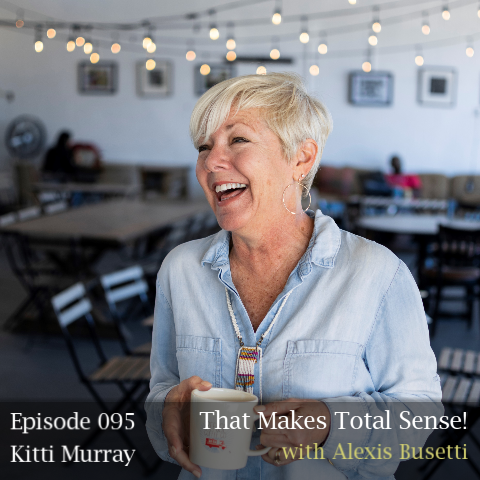
Speaker 0 00:01:12 Mean it's overrated. Exactly. Exactly. No, I love it. I agree. It's the same thing. This is real life. So I'm sitting with kitty Marie and she has, um, an incredible, I mean, I want to say an incredible ministry. She has an incredible business, um, called refuge coffee in Clarkston, Georgia, which is just outside of Atlanta. We actually got hooked up together to talk today with one of my friends, um, who lives in the Atlanta area. And she just said, oh my goodness, can I please introduce you to Katie? I think you guys would just hit it off and I think she'd be great for the podcast. And she was right. So thanks for coming on kid.
Speaker 1 00:01:52 Thank you. You haven't, we haven't had it yet. So we'll say that when we're done.
Speaker 0 00:01:58 Absolutely, absolutely. I will. So I already mentioned that you have a place called refuge coffee and I really, really want to get into, and we will, we'll spend this conversation talking about kind of what you guys do there, but I want to start because you guys serve, um, a refugee community largely in your small town. I mean, this is a, this is a small town in Georgia, right?
Speaker 1 00:02:25 Well, it's, you know, you would think that and um, but we're actually, I don't know if you've ever been to Atlanta. So Atlanta has two 85. It's our perimeter. Um, inside two 85 is mostly urban. Outside is mostly suburban, but this is you're in Houston, right? So urban sprawl. So we're really in Atlanta, Atlanta, we're about half we're, half a mile outside of two 85, our perimeter, so, okay. Which is really Atlanta. Yes. Yes. There are a lot of other little towns, like I guess most big cities and Clarkston is 1.4 square miles. There are 13,000 people here. So it's, it's actually the most densely populated city and all Georgia. So, but all of those are things that are surprising to people in Atlanta like that, that, you know, refugees have been resettled in this community for since the eighties. And if they don't know the makeup of this little town time magazine called us the most diverse square mile in the country. So, but, but people often they'll hear about it and think of it as a place that's inaccessible to the rest of the city and far away. And that's not true. So there you go. Well, thanks for clearing
Speaker 0 00:03:47 That up. Yeah, no, that totally makes sense because we've got, yeah, we've got some, um, obviously some like, like you said, some suburban cities in and around Houston that are exactly like what you're saying. I mean, like we see the sign on the highway that tells you, you know, now you're entering right. You're entering Sugarland or Missouri city or Katie, or, you know, something like that, but it's all really, you're like, this is Houston, Atlanta. Yeah. This is, this is everything here. Um, it's kind of runs kind of runs together. So yeah. Thanks for clarifying that, because that kind of makes more sense and helps me, um, kind of picture, um, when I'm picturing your truck and I'm when I'm picturing the building, it kind of helps me put that in perspective. So, um, man, you've already hit on some of the things that were just so wild to me. So the most diverse square mile in the country
Speaker 1 00:04:37 Possibly, you know, time magazine said that we've all latched onto it. Actually, I believe it was CNN that purportedly called us the most diverse square mile in the world. I don't think that can be true, but, but it is a real, I, you know, because I live here, um, it, and I've lived here now for almost nine years. It's it's home, it's normal. Um, I forget, you know, but, but I was thinking I was up at our shop and we do have another shop. Now we have one downtown and we're also opening and the Georgia world Congress center the end of the summer. So we've got other places in Atlanta and because we have coffee trucks, we sort of have a little bit of a presence everywhere in Atlanta, but, um, but our home base, um, is here for sure. And it's where we originated.
Speaker 1 00:05:33 And I was up at our shop this morning for a few hours and it was just so interesting to me. There were a group of winded women that I'm pretty sure they were from the Congo. Um, I don't even know that they bought coffee. They just came to sit and visit and be together and, you know, moms and a few grand moms. And, um, and then there were a lot of students and then there are other people in the, and then there are people that are coming from other parts of Atlanta and it's just, you know, a really fun mix of people.
Speaker 0 00:06:06 I love that. My son's from the continent though, actually, when I was seeing some of this, you know, um, some of the people that you guys, um, that are work at refuge, you know, and, and their work, um, uh, I think in one of the stories, um, that I got to watch, there was a man who is Congolese as well. And I was like, oh, this was like, that feels like home to me. Right. Um, that he's, that he's from Congo where my son is from. Um, so I want to kind of start, like, where did the idea in, and you're just living there in your home in one of the most diverse places in the country. Where did the idea for starting a coffee truck and a coffee shop in this way come from?
Speaker 1 00:06:48 Huh. Well, you know, I do need to say, I, I am not particularly very linear, so I'm not like a, um, you know, strict strategist about life. You know, I'm just used to think I should be, but I am not. So the story is gonna feel sorta like an amoeba more than anything, but so my husband and I moved here and that is actually a really cool story, how we ended up here and it was really him, um, asking me one night, if the Bible talks about widows, aliens and orphans, more than it talks about any other group of people, just about, I think the story of, and the, and the idea of her refuge coffee is really rooted in our reason to be here. We did not move to Clarkston to start anything like we, or even to be a part of anything necessarily.
Speaker 1 00:07:47 Um, my husband one night over dinner, and this is right when we were pretty new newly, um, empty-nesters so we, you know, or as we like to say, Freebirds, you know, we had the ability to kind of do whatever we wanted to do. My husband had been a pastor for years. And so we usually chose where we lived, you know, in the community of the church he was serving and what he was not in that role anymore either. And so we were kind of able to do whatever. And he worked for a nonprofit ministry. I was riding full time and able to work from home. And so one night he said to me, um, you know, if the Bible talks about widows aliens and orphans and, um, mentions that group of people, you know, I think it's, I know it's over a hundred times, you know, in other words, those are people who are important to God.
Speaker 1 00:08:44 They're on his heart. They're top of mind for him. And they're just not on our hearts are top of mind for us. He goes, why don't we have any friends who fit that description? And I was really defensive, um, which is kind of a pattern for me, I think. But, um, and I was like, well, yeah, we do. You know, and I started listing things we had done and, and places we had given, you know, not a lot, but we, you know, we done some giving and some like projects. And he said, um, that's not what I'm talking about. I'm talking about friendships and relationships. And so for us, uh, we determined that night after I got over my defensiveness that we would buy a house because we were going to buy a house. And then we were living in an apartment downtown for a little season and we would buy it somewhere that would put us in proximity to not just to a diverse population of people that, you know, were diverse in every way, you know, not just skin color, but economically and all of that, but, but that would put us in proximity to people with need.
Speaker 1 00:09:56 And, and, and so that's how we ended up in Clarkston. And we, and we, you know, we had red when helping hurts already. We'd read there's another book called toxic charity. We'd already read that. Um, so we had the idea that we weren't going to swoop in and be like the saviors of the world and, and the community didn't need us to do that nor was that, um, an appropriate way to do life. And, and we'd had that done to us a few times in just ministry settings, and we knew what it felt like, and we didn't want to do that. Of course, that doesn't mean we, we did everything perfect, like, cause we almost immediately, um, almost immediately, I transgressed in lots of ways when we moved here because I was just so overwhelmed when we moved here, but we moved in, uh, we got to know our neighbors, this community is over 50%, um, good bit over 50% foreign born.
Speaker 1 00:10:58 And most of the people who live here are resettled refugees or immigrants. So, um, th you know, it's just people making their way after massive trauma that wasn't their fault. And so it could just as easily have been us, you know, um, being a refugee as a circumstance, it's not an identity. And so, um, we moved in and we got to know our neighbors and, um, you know, and, um, sure this is rooted in my kind of wiring, but one of the things that I kept feeling was, well, I want everybody to know my neighbors. Like I I'm S I'm just a, kind of a natural networker when I meet someone that I find delightful or fascinating, I think of two or three other delightful, fascinating people that need to know them. And I think of the magic that can happen, you know, that happens.
Speaker 1 00:11:53 So, um, but it felt like the barrier to that happening was, uh, you know, I just felt like there was a barrier, um, a long time ago, even before he moved here, I'd read that 85% of immigrants to our country have never been inside an American home. And so, and which probably means we haven't been inside their homes either. So the, it felt like there was a need for a more intentional hospitality. Um, so that was the first thing. And I've always loved coffee and I love coffee shops. I love meeting people in coffee shops. I love, um, doing work in coffee shops. I love the way you can meet and the meeting doesn't have to end at a certain time and the investment in it doesn't have to be so great as if you do lunch or dinner, you know, because you just bought a cup of coffee.
Speaker 1 00:12:47 And, um, so I kinda love that. And so the, the sort of loops of conversation that began in my head after we'd been here a while were one, you know, we just need a place like that, like, so that we can introduce people to each other and, and have a place where you get to, you know, decompress, you know, and then, um, as we got to know our community, and as we began praying with people and for people, what we started hearing was, well, we, there, the job situation is as bad. And w it is, I mean, our job was right, was higher than most of the state. And that's not for lack of the will to work or for lack of, um, education often. I mean, sometimes language and education are issues, but not really. I mean, it was mostly just there weren't jobs.
Speaker 1 00:13:44 And so the number one jobs that refugees are offered when they come here at the chicken processing plants, they're an hour and a half away. Um, they're, you know, they're the jobs that typically nobody wants, but, um, and they're, and they're, you know, they're not terrible jobs, but if you come here and you have a family and you want to build a life to have to commute an hour and a half away to be in an environment where you don't get to learn English, because you're online working and not conversing with people, it just, it, I mean, it really is a dead end job for a refugee. And so the other thought was, is there some way to create some jobs? And I don't have any business acumen at all. I might have a little now just cause I've been doing this a while, but none, my husband probably has less than me.
Speaker 1 00:14:40 I mean, we're both more like relational people and, you know, we're more poets than probes, you know, that's just, that's just us. And so, um, anyway, those kind of ideas of could we create jobs, but do it with this kind of fun coffee shop thing. That's kind of how this came about was just a lot of what if, you know, and could we, and would this truly meet a need? And then eventually my husband said to me, you keep initiating these conversations about this. And, and I was, I was talking about it to people all the time. Once I felt free to talk about it took a while, but then I was having all these conversations and he said, but I think you want someone to take ownership. And he goes, and I don't know that that's going to happen. I think it might need to be you. And so, and it wasn't like nobody's going to do this. So I will, it was just like an observation that, yeah, this, this might be your gig, you know? So, um, yeah, that was a long answer, but that's the, that's the gist of it.
Speaker 0 00:15:52 I'm like, I'm kind of chuckling to myself because I'm like, some of the things that I'm doing right now are because of those same kinds of conversations where my husband's like, are you sure that's not like your, like your calling or like your thing. And I'm kinda like, I don't really know what you're talking about. You know, it's like, you know, um, no, so, so which came, which came first, the trucks or the shop,
Speaker 1 00:16:17 That's a good question. You shouldn't, because yet you're going to see this theme of me not being very smart, but I, so, so, and I'll add another piece to it. The thing I started hearing from people that, well, I own a business and I hired refugees and they didn't know how to blank, blank, blank. And it was often just kind of simple things that, that are more cultural that had just net, but it's like, well, how do you expect them to know? There needs to be some level of training. So that idea that an opportunity is great, but if there's no preparedness for that opportunity, it, um, it's a setup for failure. So, um, the idea that we would do a coffee shop with, um, you know, with, and, and involve training was became really obvious that we needed to do that. But I, so the idea was like, it sort of took root and I had maybe three pages max, maybe two and a journal with ideas. I, my, the extent of my business plan was that I drew a coffee cup and it had like three levels of something. I don't even remember what it was. And I drew little sketches of chickens on the page because my idea was that, oh, wouldn't it be fun to have a chicken coop at our coffee shop where we could sell our, you know, whatever, use the eggs for our menu. I mean, ridiculous. It has not happened. It probably will never happen, but,
Speaker 0 00:17:50 But you gotta start somewhere, right?
Speaker 1 00:17:54 Yes. But I, so I, I think I, you know, I can't remember the timeline, but at one point I thought I asked my husband, I said, can we just invite some people over? I would have to be really crass. I'll say some of my rich friends, you know, our friends that have resources, cause we really didn't at all. And I couldn't even afford to quit my day job. Like we needed me to work. But, um, so I was like, let's invite them over. And you know, I'll serve dinner, I'll get food from some of the local restaurants and we'll have a dinner and I'll sort of spin this tale of what I want to do and ask them if they will fund it. And one of, a couple of our sons said, who are smart young men, but they said, mom, this is a great idea, but you're not ready to ask for money from anybody.
Speaker 1 00:18:50 And it was a blow. I was like, oh really? Okay, well, we've already invited everybody over for dinner. Oh, we have everybody over for dinner. And I have, since I, since I've looked back and seeing the wisdom in this, but I didn't ask anybody for money. I just said, Hey, I'm thinking of doing this. You are smart people. And they are, what do you think? And so one of those women, one of the couples, she's the one who said, you need to do a coffee truck. And I was like, no. And the reason I didn't was because this element, now I can articulate it better. But this element of placemaking of I wanted to create a place and a coffee truck felt like it didn't create a place. Now a coffee truck would cost, you know, a fourth of what it would cost to set up a coffee shop.
Speaker 1 00:19:42 And that was, you know, don't, don't bother, want me with numbers, but that was really true. But, but what ended up happening, she even laughs about, she says that she made me cry. I'm not sure I cried. I think I was greatly perplexed because it was like, wait, I have this momentum of an idea and you've just changed it pretty drastically. But, and so I'm trying to listen to you, but it's really hard, you know, is that kind of thing. And it turned out that it not only was it an easier ask to say, Hey, we're going to raise money to build out a coffee truck. And then if it, if this whole thing blows up and it doesn't work, we can sell the coffee truck. Do you know what I mean? It's not. Um, but we, so we did it. I mean, we eventually did it and there's some, there's a longer story than that obviously.
Speaker 1 00:20:38 But, um, we set up at the first we had wood, there's a guy that owned a what I trying to say. It used to be a gas station, but for, for almost 25, 30 years, he, it had been a, um, used car dealership. His name was Dave and it's right in the center of the town. It is the perfect location. I also had another location in mind, but now I know would have been terrible, but I was really sold on that other location. But, um, he allowed us to use his parking lot. And his parking lot was right there on the ma our main, the main light in town, the main drag in town. And, um, he let us use the front half of his parking lot for a dollar a month. We painted a big sunflower on the asphalt and that was our patio.
Speaker 1 00:21:30 We had two tents and a bunch of Ikea tables and chairs. And two days a week, we would set up and create this little kind of ersatz coffee shop. And then the other days, if we could get people to agree, we catered and you know, we, and we just, the people that helped us at the very beginning, um, some of which are still around, just worked so hard. But so that was our coffee shop for about, for may to about, I think, October of that, of 2015. And then the guy that owned that space decided to retire. And he cleared out his whole space and let us use the whole thing. And that eventually became our coffee shop. We eventually bought it. Um, we still don't have a coffee bar kitchen inside our first truck. We have other trucks now, but our first truck is our coffee bar.
Speaker 1 00:22:28 So you order outside, but there's a huge indoor space. It's, it's about a quarter of an acre. So it's a pretty big lot, um, lots of room for people to gather. So, but when it started, like it was, you know, that summer. Yeah. It was just brutally hot under those tents. And then if it rained, you know, it was just miserable. Um, but that's, that's how it started. Yeah. So here's, let me just say one more thing just to kind of tie a bow on the story. Um, you know, I didn't want to do it that way. I want to do it another way I wanted to build community. Well, what that did was we didn't have windows. We didn't have doors, we didn't have any impediment to anything, anybody walking up to our space and we were right up against the sidewalk across the street is a train track.
Speaker 1 00:23:21 So, you know, so loud. But anyway, we would, um, I mean, we'd literally go up two people who are walking by and if they didn't speak English, we try to explain, Hey, we'll buy you a cup of coffee. You know, we're just, can we, you want to try a latte? You want to try a chai tea, you know, whatever. And, um, anyway, so it, the truck was brilliant. I mean, it was brilliant and it is, I mean, we're a nonprofit. So about half of our income comes from donations, but a big part of our income doesn't come from coffee shops because they don't make that much money. It comes from our catering, which the truck has a nebulous today. Yeah.
Speaker 0 00:24:03 That's amazing. Yeah. So I'm like, um, uh, kind of, I've got some questions spinning in my head, but I want to start with, so you've got this population of people who, um, have fled their countries are largely foreign born. And as you said, like the, the kind of the normal, I would say, like maybe the path that is tread, um, with this, uh, people in this circumstance is you come in, you're resettling here and then you're going to work in a factory somewhere, or, you know, in some plant far away. So how did you, where this is coming to my mind is advertised. Like, how did you advertise, Hey, we have jobs and this is going to be a different, you know, kind of space. Like how did you start to kind of reroute some of that well-worn path inside of the community that you really wanted to serve?
Speaker 1 00:24:55 Yeah. And, you know, that's a really good question. And I would say, and that, and that is part of the nuance of what we do, because if we're going to be a coffee shop that makes any money we have to and engages people outside of Clark. So we had to market out there. So we had to do, and of course we didn't have money, so we have to do it on social media and through friends. And, you know, I sent a text to a group of friends this morning about an event we're doing, that's very low key, not, not an official event, um, this morning. And I was like, I haven't done this in a long time. Like, we don't do it that way anymore, but, but it was very, very grassroots just us, you know, but there was also word of mouth. So, and, and this is interesting.
Speaker 1 00:25:44 And one of our staff members reminded me of this. Um, so my husband and I led a small group from our church. It was just at our house. And lead is a funny word. We didn't really lead it much. Like there were all these young people, couples and a few single set that really led it. We were just there for them and to encourage them, but the group got really big. Like at some point it was, if everybody was in our house, it'd be like 60 people in our house. Isn't that big. Um, and not everybody was there every week, but that group, everybody was rooted in this community in one way or another. And so that group became kind of our volunteer muscle, our word of mouth muscle. And they weren't the only ones, there were other ways that people got the word out.
Speaker 1 00:26:32 So when we were ready to hire our first barista trainee, you know, we didn't know what we were doing. And, um, so we got the word out to people we knew in the community and, um, Leon shabaneh, who's from the Congo, um, had been to our house for the small group. He'd been a few times. And so I w we knew him, but somebody else on our staff knew him even better and invited him to, it said, do you want? And he worked at the chicken plant. Um, and we laugh because he still works for us. And he was like, it was an adventure. And I did not know if I would have a job, you know, in six months. And none of us knew, you know, but he, he kind of signed on and we were able to pay him, you know, equivalent to what he was making.
Speaker 1 00:27:25 And so, um, he, his, and he is now our, um, what is his title? Our community, I mean, our customer experience director. So he's, he's amazing. But, um, so really, I would say the first year and a half or two, and we didn't hire that many people right off the bat, but it was mostly word of mouth. Um, yeah. And Leon tells the story. He was living in the apartment. He'd been here from the Congo. He came about a year after bill and I did to the community. Um, he, he lived in an apartment complex and we had a staff member, a part-time staff member who lived was his neighbor and another neighbors, how apartment flooded. And they met as they were helping this neighbor, like move all our furniture out. And so from then on, they've just been friends. So that's really sweet. And Leon, I'll just say, Leon, I mean, he showed up 20 minutes early for the interview.
Speaker 1 00:28:34 Um, you know, uh, Crip, crisp white shirt and, you know, Navy pants and like so eager to just work hard. And, um, and his story at the time he was here alone, um, he had children in the Congo that were missing and, and you know that, and that's actually, um, we know two other families who got here and just, everybody gets separated when in a civil war and there's so much violence and, um, people would want to hear his story and he didn't want to talk about it. It was way too painful. And it's current, you know, just because that happened in the past, doesn't mean, I, you know, we have a lot of people from Eritrea and Ethiopia right now. Well, you know, I'm, I'm always asking them, is your family, okay? Are you, is everybody safe? Because, you know, there's so many places in those countries that are at the moment still not, not stay for Sable. So Leon, eventually he married. He has, um, several children with his beautiful wife for aha, but his, um, two of his children are now here, but they found an aid worker found them. And so, you know, we've gotten to be kind of in that story with him, and it's still hard for him to talk about some of it. And so to try to honor that, um, yeah, it's important. Yeah.
Speaker 0 00:30:05 I mean, it's, it's incredibly important. And I just think like having, you know, one of the things that was provided for him, you know, through refuge was just, I I'm just thinking about the stress or the, um, the time commitment and things like that, of just being able to, to not commute, you know, to be kind of grounded, you know, in this space with people who already knew, you know, and was going to be able to have this relational, um, you know, tie with, you know, his job. I'm just like, that's what we all want. Right. Like that's why, you know, that's, that's the kind of thing, um, you know, that we want and to be able to kind of provide some of those intangibles, um, for people who they're, you know, parts of their life are really in disarray or really traumatic to be able to have some relational and occupational stability at the same time. Yeah. It's just huge, you know? Yeah. To be able
Speaker 1 00:31:07 To breathe. Yeah, exactly. Yeah. And then to dream, because I would say the, you know, not all, but many refugees have been in, in a really hard holding pattern for years, like years, we have one employee who was in a past employee who was, um, let me think about this Ethiopian, but was in a camp in Kenya for 18 years of his life, you know? And so dreaming meant just getting out, you know, and that's about it. And so once you're here, you know, you have to have some, a pause, you know, and I feel like that when refuge works best, it, it works when it is that for someone where they get to work and contribute, because the gosh, our barista trainees are very much a part of this mission of welcoming people, all people. Um, but they also get to, um, breathe and not be under a ton of stress. And that's why it was important for us to have the, their wages not be, um, something that would require them to get another job, you know? Um, yeah.
Speaker 0 00:32:24 Yeah. Yeah. So I wanna, I want, I'm wondering if you'll talk about kind of these three aspects of refuge and what you guys do with the mentorship, as we've already, we've touched on the job training some, um, and really the community support. That was kind of my biggest question is how do you provide this community, you know, support, um, for the, for the people who are working at refuge, but, but you've got kind of these three aspects that you guys have, have kind of braided together, um, in what you're doing in your business model of, of mentorship and job training and community support. So can you just maybe give us some examples or touch on each of those three things and how they, and how they work to do what you guys are doing?
Speaker 1 00:33:07 I'll try, I will say it sounds. And, you know, I do think, um, somebody asked me yesterday when I was talking to a group of like nonprofit founders. Um, no, it wasn't even that grip is a different group, but somebody said, um, were you ever nervous that it wouldn't work? And I was like, are you kidding me? I still feel that way. And I will say the reason it works is because all of those things that you mentioned, I don't really know how to do like a dome, but we have people that we either partner with or who we employ now, as we're able to, you know, beef up our, our actual team who are so good at that. And so, and, and their co we're all committed to the same basic core values, but, but what they're able to do is I'm blown away.
Speaker 1 00:34:04 So, and when we first started, you know, job training, like I laugh about it now. And I, I think about, um, I mean, friends for life, the people that we started this with that are like, they were in it with us and, um, a young woman named Jessica who now lives in Texas. I'm just missing her so much, but she was, I think, 21 or 22. And, um, she was willing to help brace some of her own support. We've never done that since, but we did that for her first year, um, because we didn't have the money to pay her. And she was our job trainer. And I was, I had no doubt that she knew how to care for people that she knew how to dignify people, that the, all the important things she knew, but she didn't know what job training was supposed to look like.
Speaker 1 00:34:57 And so we used a job training program that we had found online and, and it was great. And then, then we've added people over the years who have just really built out this very robust job training program. And it makes me dizzy to look at all of it sometimes, but it is. Um, so I would say we, yeah, we do job training. Um, and, and it's, we're always building it based on what people's needs are also. Um, and then mentorship, of course, during COVID, that almost was impossible because it just needed to be hands-on. And so we're building that back in, uh, and then the community support, that's the part that is the messiest and this, and sloppy, but sloppy because it's not our main thing. And so, but because we, again, this, it all feels very like, oh, we stumbled around and, and I hate even saying it that way, because it sounds like everybody stumbles and they don't, I feel like I'm the one that probably does the most, but the, um, I think just figuring out what that supposed to look like as things happen.
Speaker 1 00:36:16 So I'll give you a couple of examples. So we, and I think I'll anyway. Yeah. Um, I think we were two years in, um, we have a good friend. He and his wife are both cardiologists. Um, one from Syria, one from Iraq, they're both Kurdish. They're amazing people. He called me and he said, Hey, you might not have known this, but the white house isn't hosting. And if tar dinner this year, it's first time and years, decades. And, and if Dar is the dinner during Ramadan, that Muslims break their fast, it's an every night thing. My husband and I went to one at our local mosque a few weeks ago. Um, but, and it's, you know, usually in people's homes at sundown and he said, what can we do? Like he said, our Muslim community here is we're not angry, but we are sort of hurt.
Speaker 1 00:37:12 And, uh, and as you know, this was a time when anti-Muslim sentiment was super high. And so we decided to host an tar dinner and we had a week to plan it. It was a potluck. Um, it was crazy timing. We probably, our team just said, how can we not do this? Let's do it. Even though we really didn't have the capacity to do it. And we did it anyway, and I'm so proud of the whole community. So we probably had about 250 people show up. Um, we invited the mom to come and do the call to prayer before dinner. And, um, you know, there were parts of it that we didn't do, right. Like our friend and he's Muslim, but he, he announced, you know, if you're not, if you're a Muslim, if you're a Muslim, grab one of your non Muslim friends to go through the line with you.
Speaker 1 00:38:03 Well, the problem with that was the non Muslims had not found they weren't hungry. And so, and so there were a few people there who were kind of angry like the next year, we didn't do it that way. But, but, so I would say because refuge is, um, you know, we're not an advocacy group, we're not an aid agency. We don't, we're just not all those things. Um, but we have freedom because we have space, you know, and we're all about just making people welcome. And so we've been able to be kind of fluid and open up our space to invite people in at kind of the right time. You know, um, when COVID started, um, someone came to me and said, can we set up a food pantry? Like just a free, like, like the little free libraries, but make it food. And, um, we will buy the cabinet, we'll install it and we'll write all the different languages on it.
Speaker 1 00:39:05 And I thought, oh, that's kinda cool. And it's that my question is always because of what we do is this really meaningful? Like, it feels a little fluffy. It feels very much like just a surface fix. You know, there are food pantries there, food distribution groups is this, is, is this going to do anything well, shocker, like it, it was, it became so helpful in our community. And then we eventually, like, it was clearing out every few days. We eventually partnered with a group that, I mean, they brought a Sub-Zero fridge and you know, all these volunteers to keep up with it because it had become kind of a logistical nightmare and it's still there and it meets a need. We're not the only ones dealing with food insecurity. Cause there are lots of other groups doing it way smarter than we are, but we're doing it in a way that feels let, like there's no shame in it.
Speaker 1 00:40:06 You just show up and I'll see people there all the time. And I don't know if they're, they're getting food out or putting food in. I don't, it doesn't matter. You know? And so I think that's what community support looks like. And we do it, we work to do it. We don't do it perfectly. We work to do it with our community, not for our community. Like that's a big deal to me and I mess up in that way all the time, because it's really easy when you're the one with the resources, um, to sort of do that in a way that feels like we're going to win for you, you know? And that's not what we want to do. Yeah.
Speaker 0 00:40:48 I feel like that theme, um, has been one that has been, um, it's been showing up a lot for me in any conversation and in things I'm studying and, and people that I'm speaking with. And it's, it's kind of one of those things you're like, okay, now I'm realizing every time I see a red Honda, right? It's like, I'm constantly, I'm constantly hearing this. Um, and you know, some examples I have where I was talking with, um, a pastor for the, for the show, um, Lamar Hardwick, who was, um, he had, was diagnosed as being on the autism spectrum. And so he wrote a book about, um, ministering with people with disabilities, right, as the, really the largest marginalized group in the, in the world. And, um, and really works hard to make that distinction in the ministry of, we're not ministering to this people group.
Speaker 0 00:41:40 We really want to be sure that we're ministering with this people group. Right. And, um, and another author I had on who does some amazing work in Nashville with, um, people who are experiencing homelessness, right. And it's like, we're not doing this on like a social worker, client kind of level. We're doing this, like in a, in a mutually relational level, right. Where we really are just trying to build relationships and friendships, um, with people that we meet and with people who we really do want to serve, but we are recognizing like all of our humanity and all of our dignity and, and working together in width and in these mutual partnerships. And when I hear you saying the same kind of thing, I mean, it's kind of like, okay, God, you know, like I'm listening, but, um, but you know, I just think it, it just really does, even before we, um, we started, as we were having some conversation about just community, you know, this beloved community that God is putting together in us.
Speaker 0 00:42:42 And it's like, it just makes us recognize, I may be able to give something in a space. Um, and that is it's, I can be really generous because I am able to ha I have this resource, whatever it is, time, space, money, um, you know, whatever. Um, but I can also receive because there are definitely places where I have deficit that other people have, um, surplus. Right. And they can be generous and to be able to receive and have this reciprocal mutual relationship with our neighbors and with our friends, um, is really beautiful. And I think part of it is kind of looking for those ways to do that, that aren't, you know, kind of what we're used to, you know, like, well, um, I have money, so I'll donate this, or I have, I have time, so I'll donate this or whatever, but just, you know, kind of recognizing like what, um, what each of us has that we can really be generous. Um, and then recognizing, you know, those places in ourselves where we really could benefit.
Speaker 1 00:43:38 I think it's also, you know, it's, it's, this is so simple and it's taken me years and years to kind of begin to see it. But if, and I'm going to, I might step on toes when I say this, but I can say it cause I am we're here for it. I'm in church. I love the church. Um, but I think church as an institution and as a local organization can often, um, suck up all our time and energy and our gifts. And it doesn't mean we shouldn't give those gifts to the church, our time energy and our talents and all of that. But I do think we should consider, um, not, not only giving them to the church. So, um, because I think blessing our communities is our mandate, you know, as, as sojourners, as refugees on earth, you, that we're called to bless the communities we live in.
Speaker 1 00:44:45 And, um, and so, and I, and I think this idea that, oh, um, if I give it all to the church and I'm totally worn out, and so I don't have time to go to my neighbor's son's soccer game or to have dinner with, you know, the person I work with or to spend any time. I, this is it's a stark, um, example, but before we moved to Clarkston, we lived in an apartment community and we were in a, in a space in our lives bill and I were aware, we just had more time than we had had forever. And, and we were not, he was not on staff at a church. So, um, which was very new to us. Like that's kind of what we'd always done. And so we, um, in our apartment community, I started a running club. So just, and I'm the slowest runner on earth, but I would get out and run.
Speaker 1 00:45:39 And we, and so then we started training for an Atlanta half marathon, a group of us. And on the day of the half marathon, I was just with my neighbors, you know, and they're in our corral, there was a group of, from some church that had a running club. So it was a Christian running club and they had bright, beautiful shirts that said, I can do all things through Christ who strengthens me, which is a kind of less than of that verse. But, but, and you know, I, I get it, I, that thing of, oh, let's just do a lot of fun stuff and invite people to it and tell them this is church stuff. And then somehow, you know, whatever else you do with that, um, that model I just think is, is, feels disingenuous to me now. And doesn't mean that I really don't, I'm not judging it, but I am saying, should we consider different things?
Speaker 1 00:46:37 So I think for me, the helpful thing is to go, okay, what do I do? What do I like to do? Well, maybe I should do it with, or I should do it with diverse group of people, or I should do it with people who, I dunno who liked to do it too. So, so, um, I have a friend here in Cardston from Somalia. Her name is Amina. She lost her husband and all 10 of her children, uh, in Somalia. She is an amazing woman who, um, kind of recycled her own trauma into helping other people sometimes to the detriment of our own health. So as a friend, one day, I just said to her this before refuge, I know you love cappuccinos. Let's go get a cappuccino together. We went about five miles away to a cool old coffee shop in Decatur, which is, you know, another one of those little urban city areas.
Speaker 1 00:47:37 And, um, and we're sitting there drinking our coffee and just chatting and she goes, kitty, there's just never going to be anything like this in Clarkston. And I always tell people, she speaks nine languages and she, victim is not one of those. So she was just making an observation. And I asked her, you know, what do you, what do you mean? And she said, well, nobody believes the refugee community is worth an investment in this and that idea that we will invest in our own entertainment and comfort and, um, and things that are just basic life amenities for ourselves. But, um, and refugees can eventually do that and do do that. There's some of them, uh, you know, some of the most hospitable gracious, good cooks, good coffee makers I've ever met are live right here, but the resources to do that on a scale of like a coffee shop or what we do at refuge now just might not be there. And so I think, I mean, that was this huge tipping point moment for me, like, wait, maybe instead of pouring all our resources into our own, um, lives may be the Bible says we should give those things away, you know, and we should, um, yeah. Not save them as our own anyway and not claim them as our own.
Speaker 0 00:49:08 So I'm like maybe it's because I'm sitting with someone who self identifies as a networker that all of these other connections are kind of coming to my mind. But I have a, I have a book recommendation because another guest that I had at the podcast on the podcast, her name is Linda McGibbon. And she wrote a book called my vertical neighborhood. And she also lived in an apartment complex in Canada. And one of the things that she said that really struck me, um, about her story was when she had moved. So she, she not only moved into this new apartment building, but it was in a new city, in a new part of the country. So everything was new to her at the same time. And part of her story was that she went to her pastor at her new church home and basically said, Hey, like, I love it here.
Speaker 0 00:49:57 I'm, I'm proud. You know, I'm happy to be a part of this community. I just want to let you know that I'm making a change in my life basically. And that if you don't see me on Sundays, it's not because I don't want to be here or something like that. It's because I'm making space for my neighbors and for the people that actually live very, very close to me in proximity. And, and so she was doing exactly like what you're talking about saying there's not anything wrong per se, with this stuff, right. This kind of church stuff that we do, but what, what happened? Right. It's, it's kind of an experiment for some of us, right? What would happen if we just loved the people who lived right next to us, right. Who we shop with in the store? What, what would happen if we love the people that we were really in proximity with?
Speaker 0 00:50:44 And I, and I love even kind of like coming back to that beginning, part of your story, it's like, and being intentional about putting yourself in proximity. Right. Um, with people that, you know, um, God really recognizes are in situations in their life when they really need to feel the love of God. Yeah. People who have been widowed and orphans and, and refugees, right. I mean, these are people, like you said, it's not their identity. It's a circumstance and God tells us over and over and over in scripture, when you meet someone who is in this circumstance, I'm letting you know, ahead of time. They need to feel my love. Right. They need to feel it from you because right. That's, that's a really tangible way they can feel it.
Speaker 1 00:51:28 Yeah. Yeah. That's so good. Yeah. I need to, I love the book recommendations. Yeah. I, I, um, yeah, I, I think one of the, the journey for me has been even, um, you know, I think it's all of these things are true. They're true. Whether we experience them or know them or not. And so one thing is true. One thing that is true is this is I I'm, I might be misusing this term, but, but just the theology of common grace that, and I literally, I don't know that anybody ever said this to me. I don't know how I drew these conclusions, but I think I know, but I actually believed, like I remember hearing a pastor say, um, Christians are the only people who can have, who can love, like, you know, sort of the, and the so not true. Like, and so as I kind of got outside of that bubble, that sort of sub culture of Christianity, not the church necessarily in its true form, but just that subculture, I began to see how untrue that was and how God is.
Speaker 1 00:52:42 Um, you know, he, the rain falls on the, on all of them, you know, and we all get to grow things in that rain. And so I think that's one thing that happens is we, if we begin to love, as we began to, I began to even have, um, I had a short little period where I was like, oh God, well, do I even have to offer, like, is the gospel really good news? Yes, it is. Yes. He is like that. You know, I know it is, but is it, but do these people need it any more than I needed? No, like there's, there's a commonality in not only our beauty, but in our brokenness. And so I think that, and instead I, this narrative that, um, oh, those people, whether you're looking at it politically or racially, or even spiritually, those people are out to get what's ours are those people are out to get our stuff, you know?
Speaker 1 00:53:41 And I, I remember the first time I saw the bumper sticker, the coexist bumper sticker, you know, it, it made me it, I had an anger born of a fear, you know, like, no, and that's that bumper sticker, doesn't say Cole, believe all these things. It just says co-exist and we do exist and what better way to exist and to love and give each other grace. So, um, yeah, that's been a journey for me and it's a journey that I don't think could have happened without some amount of experience. So I, I used to say, oh, you don't need to move like we did, because that is done. Not everybody needs to move zip codes, you know, but I do think there needs to be movement, like embodiment of what we believe. If we believe that the stranger matters to God, then maybe we should seek out the stranger. Some, you know, and if we believe that nothing we own is ours, but it's his, then maybe we should start like using the things that feel like ours that way, you know, and obviously the standard of goodness and holiness and generosity that is God is so high. So obviously we're not all going to do it to that standard, but, but I think there's so much joy and freedom found in and looking towards who he is and how he is with us and then replicating that to others.
Speaker 0 00:55:19 Well, I think you hit on something, sorry. No, I'm glad. I'm glad. And I think, I mean, I would say as a green seminary student, I feel like you used common grace theologically appropriately. <inaudible> one of my professors is from the reform tradition. And so we had a little lecture on that, um, not long ago. Um, and so I would say, yeah, I think, I think he nailed it if it means anything coming from me. Yes. Um, but I think that you, that you hit on something with that common grace and it kind of goes back to a little bit of that mutuality, right. That we were talking about earlier, because I would say my experience in kind of the subculture inside, you know, the greater church inside the sub culture that I grew up in, I heard and was taught and believed really similar things.
Speaker 0 00:56:04 Right. Um, you know, and it, and it kind of had these kind of weird formulas to how did you get there? But the bottom line answer kind of being it's, it's, it's us like, we're the ones who are capable of love. And, but this, but this theology of common, grace teaches us a, like you said, that's just not true. Right. Um, but you know, there's, there's more to it than that. Of, of there is this, this rain falling on all of us, like you're talking about and that we are all created in God's image. And so as image bearers, um, we all experience right. These things that God has put inside of us, like the ability to love, right. And the, and the, and the desire to, to hope and to help and to self sacrifice and to be kind and generous and all of these aspects that are part of God's character at large, um, we're made in his image.
Speaker 0 00:57:05 Right. And so he's created us with these things as well. And so it is saying when I, um, I'm going to seek out the stranger because God is saying, this is really important. Um, and at the same time, I'm saying, but I'm not seeking out some one who can be a recipient of my charity because I'm better. Or I have it altogether, or one of these other things that's not true about me or any Christian, you know? Um, it's, um, let's, let's enter into this thing, you know, together. It, it makes me think about one of the most, um, I'm now picturing 10 commandments in my head. So we're going to way back to Charlton Heston, but I'm kind of picturing these, these scenes, but one of my favorite word pictures in the Bible is when God is about to rescue the people of Israel from their enslavement in Egypt.
Speaker 0 00:57:59 And there's some wording in there that we know that there are people who attach themselves to the Israelites in those moments, there were the mixed multitudes is what some translations call it. Right. And that they moved with Israel as they exited Egypt. Right. And I think this was this mutual relationship where Israel said are God's coming right. And they said, we want to know them. We went out to right. But then they go together and they journeyed together and they had different things that they were offering one another, no doubt. But they were on this journey of, of rescue and reconciliation together. Um, these, you know, people, groups who, who didn't have religion in common really, you know, or, or heritage in common really, um, or Homeland in common really. Um, but they bound themselves up with each other in the rescue of God and in the love of God and decided to move together and, and buying themselves up, you know, with each other. And we see it with Ruth and you know, now you're, we're just going to preach at each other. Yeah, yeah, yeah. But,
Speaker 1 00:59:15 You know, I just beautiful how beautiful that
Speaker 0 00:59:17 Is, is, you know, and that, um, and we have opportunity engage in that kind of relationship, you know, and it may not look like a coffee shop. No doubt. It won't look like a coffee shop for a lot of us. Right. But, um, but what does it look like? Right. It can look like a lot of different things for, for our different contexts and where we are.
Speaker 1 00:59:39 Right. And we're all in different stages of life. Like I, I always think about when I first heard, really had my eyes open to the, to, to human and sex trafficking, you know, and, and I feel like it was when a lot of people in the church were going, wait a minute, this is happening. And it's happening in our cities, on the streets in front of our churches, like what what's happening. And, and I remember that feeling of I have to do something and I, and I tend to be, and I have to do something person, which is good and bad. And, and I didn't know what to do. And you know, I'm not really good at activism. I don't, that's just not, not good at it. I appreciate people who are, I'm not, you know, we didn't have a lot of money to give at the time I did so that wasn't, I wasn't able to do that.
Speaker 1 01:00:33 Um, we, and, and I, I kept just saying, what can I do? And I ended up our church, um, we just used our church basement and I, we threw a dinner for the police officers who served, who were in that, you know, in Atlanta to thank them. And we actually, there were two departments that really viewed this issue very differently. So it was good to have them in the same room, but there was really no agenda other than, Hey, we just want you to know we're praying for you. We care about you. We appreciate the work you're doing. It was the closest I could get to it at the time. It was a very one-off, I'm not sure it was that, um, effective in any way, but I do think, oh, that's, that's kinda my thing that I do well, that, that I've never thought was a big deal.
Speaker 1 01:01:22 Like I used to tell my husband, you have meetings with people and you change the world. And I bake the brownies for those meetings and like, just really denigrated that, like just, you know, that was a little of me, my, you know, my brand of feminism complaining about the fact that I baked the brownies, but I actually loved baking the brownies. Like, I love that part of what it means to, to love people. And, and it, isn't very impressive and, but that's okay because it's my way. And it's just doing things my way, you know? And, and so I think, I think what is beautiful is this thing that if we'll just kind of listen to God, love people, do what he tells us to do the best. We know how I like it. Who knows where it'll go. I mean, that's oversimplifying, but, um, I do think if we get focused on a cause instead of just the simple love of other people, the cause will become, um, it's easy to weaponize causes. It's easy to use causes, um, to separate people rather than unite them. And so, yeah. Anyway, um, I'm rambling now, but that, I do think it's, I love, I love it when I see somebody come fully alive because they're doing what they're really good at and what they really enjoy, and they're doing it in a redemptive way, you know, that's just a beautiful thing.
Speaker 0 01:02:55 Yeah. Amen. I do too. And I, it came up from earlier in our conversation in different part, but, you know, kind of, kind of back to what you were talking about just now, it's like, I think there are some times when we, I think it was when we were talking about bringing in the food pantry, you know, but it's like, there are some times when our gifts and our talents and the things that we have to offer, sometimes we ended up discounting them because they do, they come easily to us or, you know, whatever it is. And we don't really realize what an impact that can have on someone else. And I think that sometimes we discount our own, you know, our own gift, what we, what we could do, because we think, oh, anybody could do that, or that's so easy or whatever. And if you get some people around you who can encourage you, who are different than you, then they can say, actually, no, you know, that particular thing that you do, like you couldn't pay me enough money to do that.
Speaker 0 01:03:47 You don't have to like, really, I could have gotten 15 minutes on a Saturday night and I wouldn't even care, you know? No. You know, and, and I think, again, it's, you know, that, that beauty of all of us working together, um, well, kitty, I've just enjoyed our time together so much. I want to ask you what is the best way for people to, um, to connect with refuge and kind of just see the work that you guys are doing, meet some of the people, um, where can we find you, um, in online spaces if we're not in Georgia?
Speaker 1 01:04:14 Okay. Um, I would say the best place is our website. It's refuge coffee, co.com uh, refuge.coffee works too, but refuge coffee, co.com. We, and at the top, when you open the website, there'll be a way to sign up for our emails. We don't send a ton of them, but, but those are really a good way to sort of get up to date on current things. It's sort of where I process. So sometimes, but, um, hopefully for the benefit of others. But, um, so I would say that's the first place we're on social media and it's at refuge coffee co everywhere. Um, if you're local, obviously come see us. And one of our places, I also, we are, this eventually will happen. We have just, we're about to finish a fundraising campaign to develop our own roasting program. So eventually you'll be able to buy refuge coffee online. Yeah. That's just not happening yet, but when it's, when it's time, we would love it if you would do that. But, um, yeah. So that's really it. Um, I would say those are the main ways. Um, yeah, the website, social media come see us.
Speaker 0 01:05:29 Amazing. Well, your apparel is super cute too. I mean, super cool. I kind of checked out the shop today, but when I was looking, my husband was like, well, what about the coffee? I'm like, I don't know. I don't, I don't think that they roast in. So man, I'm pumped about that. We won't be like too first on the list or pound. I'm so excited about that. We're crossing levers
Speaker 1 01:05:49 At our house. So good. We'll
Speaker 0 01:05:51 Put all of the links to everything that you just mentioned in the show notes for today's episode so that people can connect with you at refuge. Thanks for coming on kitty. Oh, thank
Speaker 1 01:06:03 You. What a pleasure. I'm so sorry. We don't live where we can go get a cappuccino together. I
Speaker 0 01:06:09 Mean, but if I'm ever in Atlanta, I'll look you up
Speaker 1 01:06:11 Please. Yeah, we'd love it. I'd love it. Thanksgiving, take care.
Speaker 0 01:06:18 The links for all the resources mentioned in today's episode can be found in the show notes, music and podcast production by Seth B SETI. Be sure to give us a review on iTunes and subscribe at your favorite podcast listening app, you can also visit us at that. Makes total sense.com.